Category: Miscellany

Anything that’s on my mind.

  • for whom the bell tolls

    Watching the world leaders attending COP 26 and G20 vehemently discussing achieving the net-zero policy makes me wonder how Greta Thunberg can get away with her angry facial expressions and vitriolic remarks that would otherwise have been simply unpleasant. How powerful Greta Thunberg’s vehement narrative on her newfound purpose in life has become! Now the world leaders vow to her harmoniously, when they should know better as expensively educated men that the goal of net-zero carbon dioxide will require live human sacrifice and stultify the truth about carbon dioxide in its relationship with the earth.

    To begin, you have to understand carbon dioxide is not evil but necessary to keep the appearance of this planet. The principal effect of increased carbon dioxide in the atmosphere stimulates plan growth, aka the fertilization effect. Thanks to its grim colorful image of the reaper as a hazardous element, its function to make the green greener sounds cynically antonymous. Also, carbon dioxide warms the planet earth, lest it turns into a dwarf planet like Saturn with frozen lakes adumbrated with gas-filled clouds. Besides, only 1/6 of a degree per decade has been increased, the amount inconspicuously perceptible and critical to producing any apocalyptic effects on the earth’s surface. Thunberg and her comrades command that all nations achieve net-zero in carbon dioxide emissions, which means using fossil fuels, which is too costly for underdeveloped and developing countries to keep up with. The poor always remain poor because of this unfair authoritarian policy without regard to the national economic system and social situations forcefully measured in the Outrageous Bed of Procrustes. In effect, most pollution in the world comes not from Western Europe but from those countries where the industrial revolution was the counter-product of colonialism or communism. Therefore, if these countries strive for the net-zero goal, they will fall by the wayside of their social progress for the welfare of the people by spending the national treasure on achieving the pyrrhic goal.

    I have never seen an aggressive environmental campaign such as this at present. Of course, climate irregularities have always existed, but humans have remarkable skills to adapt to new surroundings with the power to think as a bipedal species. Dostoevsky said we could get used to anything, even hanging. But the current seismic environmental zeal with the Swedish teenager seems more unpleasantly cataclysmic with her militant warrior approach. The matching ensemble of the haughty voice is heartless, laughing at how the famous and influential adults are fumblingly and funnily reacted to her like dolts. Could it be her ambition to prove herself to the world that despite her autism and want of beauty, she could become the most well-known and influential girl in the world? After all, even the women politicians and intellectuals fall in love and even marry. The whole scene reminds me of a teenager dissatisfied with herself venting her depression and anger with a holler from the rebels against the demands placed upon daily tasks of life. In William Golding’s dystopian juvenile literature Lord of the Flies, Jack, the antagonist, plays innocent along with his followers in the eyes of adults. Greta is the female version of Jack. And the world leaders at COP26 and G20 are the officers who rescued the band of children and boarded them on the ship, not knowing what would happen soon. But Greta has much more followers to her alter of Climate Catastrophism.

  • what if it all just happened at once? – book essay on the Denisovans by Charles River Editions

    The Denisovans: The History of the Extinct Archaic Humans Who Spread Across Asia during the Paleolithic Era by Charles River Editors

    My rating: 3 of 5 stars


    The case of Adam v. Ape in search of where humans came from seems to have waned since Charles Darwin’s seismic theory of the Origin of Species, by which we have become distant relatives of primates, whether we like it or not. The biblical Adam as the first man of Mankind is pitchforked to the first chapter of the Old Testament. The first human ancestor is now obdurately held to come from Africa, making Africans our universal ancestors. But how are we so sure about what we are as we are told to believe? What if the modern humanoid just came into existence as in the case of the Big Bang? How do you prove that the races of Caucasoid and Mongoloid originated in Africa, on the prima facie evidence of their present physical characteristics, pace the evolutionary scale of time in such a short biological time?

    The Sentinels

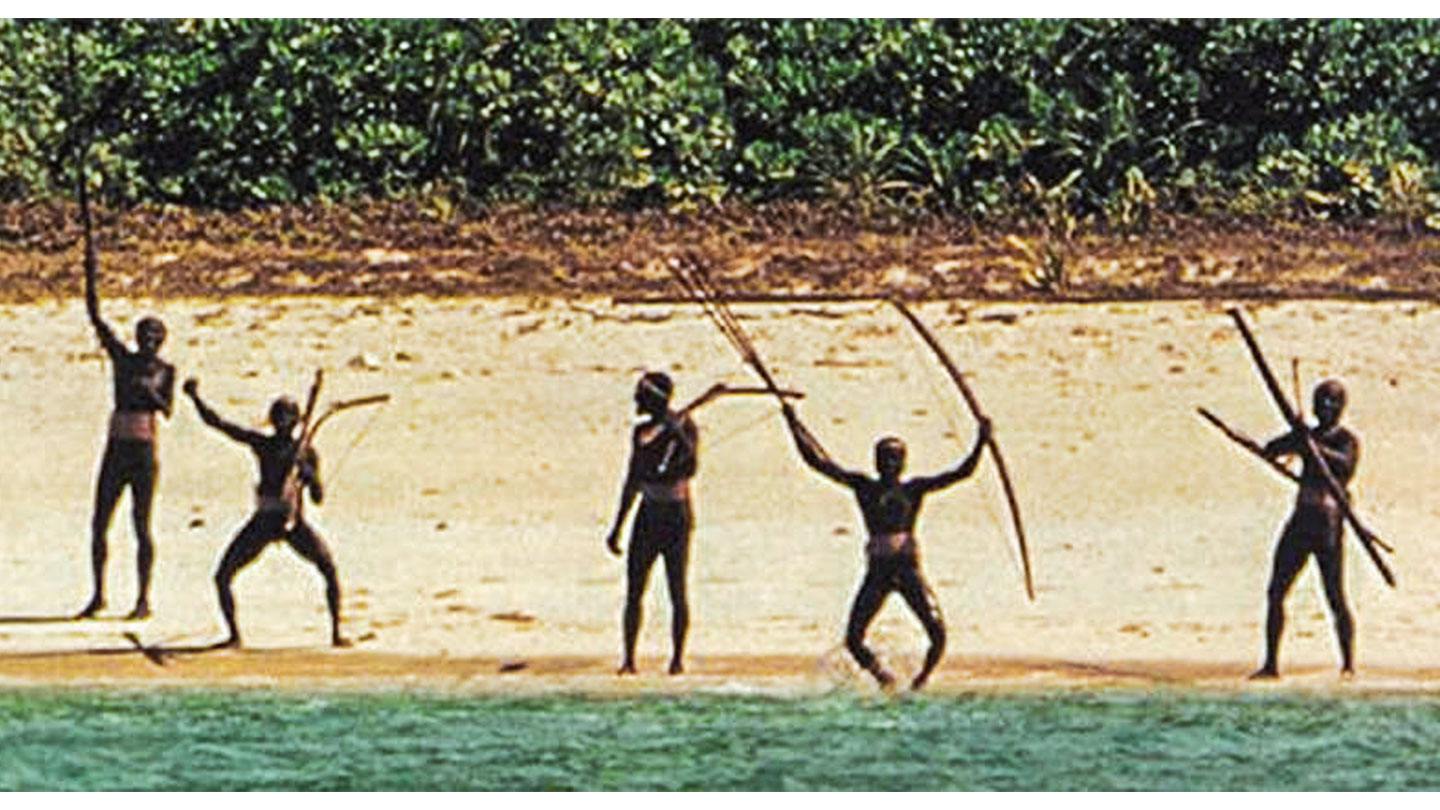
    The theory that all humans come from Africa has become infallible in the 21st century. After the fall of the Iron Curtain, peoples of nations have begun to worship ideology politics under the pretext of rewriting history, which in reality means upending the contemporary status quo of all social and cultural systems, even if some of them intended to remain valid. Then, for example, how would they explain the existence of the Sentinelese, the most primitive and dangerous tribe living on North Sentinel Island in the Indian Ocean? If all non-black races came from Africa and changed to what they look like today, why do these uncivilized people preserve the most representative features of Negroid in the most shockingly prominent way?

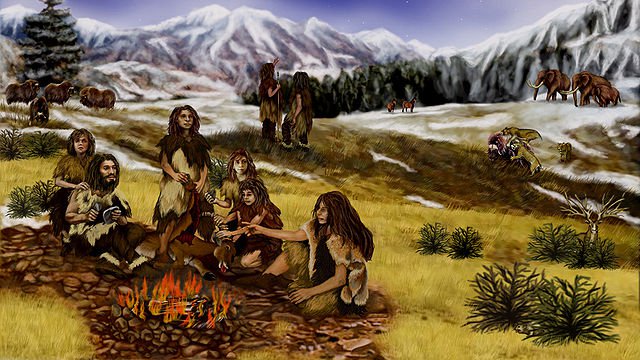
    Then scholars will retort with the theory that we all come from Homo Erectus that branched into humans, Neanderthals, and Denisovans. The missing link between the root of Homo Erectus and the branches would solve the key to what exactly our direct ancestral medium was. Would it be just another kind of primate that looked closer to humans? On the other hand, some scholars believe that modern-day humans have more Denisovan DNA than Neanderthal DNA. The latter migrated from Asia to Europe between the land bridge, just as ancient Asians crossed the Sea of Bering from Asia to North America, becoming Native Americans. Then a thesis of Africa as the cradle of Mankind requires a preponderance of onus to prove it a fact. As a matter of fact, Eurasian faces will exemplify how the ancestors of Europe would very much look like. The physical characteristics of East Asians attest to a hypothesis that the Neanderthals from the Asian continent migrated to Europe before prehistoric ears, breeding with what the population that had already existed there be it ever Denisovans or other tribes of Neanderthals.


    My view on the evolutionist theory also includes Adam as the first man after prehistoric times, the dawn of civilization. Hesiod’s Golden Age is equivalent to the archeological Paleolithic age. In the period described above, humans looked like us and produced handy tools and weapons essential for developing civilizations. If we think that Adam’s progeny dispersed all over the world a myriad of times ago, then it makes sense why we look like what we do. The gist of my argument is that race is not something that can be altered by itself. Neither a climate change nor a duration of time can change racial characteristics in themselves.

    View all my reviews

  • law of inertia

    According to Newton’s law of motion, inertia refers to a condition when a mass of an object determines a resistance to change. The bigger a thing is, the harder it is to be moved. What a splendid discovery when such truth has always existed! That is a difference between someone like Newton and other mortals who have seen it but cared more or less about it. The gist of my proposition is that inertia fits the state of my mind at present; the more I exert my cognitive facilities on articulating my thoughts, the harder they seem to operate the abilities with all their souls, with all their hearts, and with all their might.

    Today I looked into the statistics of my blog posts, realizing my literary fruits were turning sour with the leaves of the knowledge of tree desiccated in the arid land of pitiful ignorance. T.S. Eliot must have felt the same when he yeared for a benevolent pool of knowledge on the barren land of his mind, which is hardly likely to think about because – well, for what he is. No matter how much I try to use a craft of writing that I used to possess until three months ago, I realize the powers are gone with the wind to the ether and then to the blackest black hole in the universe. The words become weightless, and the images are as bleak as the Persian night. It’s like being in the middle of an adumbrating labyrinth with Ariadne’s ball thread missing or forfeited by whimsical divinity. Nothing scintillates, nothing promises, not even with a bluebird that used to guide me into avenues of hope. So whereas I still delve into reading voraciously, the words are flushed into a great abyss of darkness, a slough of despond, leaving me weeping and then crying alone. I wonder if this state of inertia can also be related to the dark night of the soul that St. John of the Cross experienced before his spiritual epiphany. Or I can identify the feeling to the sudden listlessness of Albert Speer, the mild-mannered, brilliant Hitler’s architect friend, during his long-term incarceration in the Spandau prison after the fall of the Third Reich.

    I have always professed to write for the sake of my sanity, the justice to myself with a tenacious grasp on a sense of purpose that I am not going to disappear without a trace of my existence on earth. Laura Ingalls Wilder, Jane Austen, Charlotte Bronte, and Lucy Maud Montgomery all endured the vicissitudes of life in dealing with the demands of daily life while cherishing their literary ambition and endeavoring to prove themselves as gorgeous writers whose credo was allegiance to truth and nature, using the ideal to make the real perfect and kind that God forgot to bestow upon them. They are my spiritual sisters whom I daresay can relate to due to my circumstances and kindred disposition.

    I write not to canvass celebrities for being a top-rated blogger. But then I want people to know that I write however imperfectly or abstrusely. I write because I like it, just as people like to take their selfies and post them on Instagram or make vlogs on YouTube. So while the cold receptions still vex me to my publishing of writing in my blog, my spirit resists giving it all up, which rebels against the law of inertia. Come to think of it, the witch in training Kiki in ‘Kiki’s Delivery Service’ laments about her suddenly losing the ability to fly her broomstick as she stumbled into a vertigo of existentialist distress, part of growing pain before blossoming into a wonderful full-pledged witch. Maybe I am going through the same thing, too. I like to think that way.

  • The princess fairy tale

    First of all, let me clarify that I don’t believe in fairytales where beautiful poor girls achieve social escalations by marrying handsome princes and kings. Nor am I keen on the affairs of modern-day royalty whose lives are not even desirable. And yet, the news of Princess Mako’s marriage to her college sweetheart despite forced delays and oppositions is worth writing about because it is a fairytale of the most beautiful kind becoming a truth in reality. Would it be a bit of a stretch if I relate Mako’s heartaches and ordeals to Psyche’s Wanderings and Trials set by Aphrodite to separate her son Eros from the insolent mortal? It also shows that the crowned cannot escape from the intoxication of the heart that is worth denouncing the pomp and circumstances.

    Marrying a commoner is no new in modern-day history, starting from Edward VIII’s marriage to the American divorcee Wallis Simpson and his descendants Princes William and Harry. While those mentioned above British royal members married those outside the peerages, they were not the average commoners working nine-to-five or even more or fewer hours in ordinary situations where they had to depend on the whims and caprice of their employers for the secure livelihood. But Mako’s case stands most excellently because she was determined to give up the whole royal privilege to live as a commoner by marrying the one who is not from a wealthy, not even above average family. Moreover, Mako refused to receive a considerable amount of money as a gift from the royal family for marrying a commoner. On the contrary, Harry and Meghan are considerably wealthy, living without day-to-day financial insecurity about what might happen tomorrow. Their surrendering the titles publicly will not forfeit their assets as in the case of foreclosure that many struggling hard-working Americans are unfairly subject to. After all, why do they need to hold the titular positions to make more money outside the palace? People flock to the brave Meghan and her ever-supportive husband, but why do they do when their happiness illustrates no emblem of sacrifice without a sense of proverbial entitlement?

    I cannot help but compare Mako and Kei to the famously showcased ex-royal couple Prince Harry and Duchess Meghan. Besotted by the sensual charm of his renegade, free-spirited wife, Harry decided to move his young family to Los Angles, California, for good. He joined her Dissent Division to criticize his long-time family for being racist and cold-hearted. On the contrary, Princess Mako never decried her dissenting royal families against her marriage to a commoner, nor did she rebel loudly against the constitutional monarchy outside Japan. Instead, Mako kept all of her affairs of the heart discreetly, remaining true blue to her beloved Kei despite public uproar about his below-than-expected family background for being of a problematic single-mothered household. Forget the stereotypical Japanese politeness and the prejudice on the East Asian women’s submissiveness. Her graceful acts and decencies flow from her natural disposition and upbringing, which I have hardly seen in the famous royal family members.

    Watching Mako and Kei looking at each other with the eyes exchanging affection with radiant smiles in their serenely happy faces put me into a pleasant mood to make me wish for their long and happy life together. Mako is a brave princess who surrenders herself to the love of her choice, even if it means giving up her title and privilege that would make her married life comparatively comfortable to ordinary people. Mako’s decision to live the life of an ordinary wife seems anachronistic and incongruent. Still, not everyone wants to be an Amazon or Scythian warrior, nor does she want to climb up the career ladder to prove her abilities. Mako’s declaration of independence signifies an act of exercising her right to happiness by living with someone she loved dearly. What else could she do to prove her worth for love? It is a beautiful fairytale dissolving to the truth.

  • Beam Me Up, Scotty: Admiral Kirk’s onboard

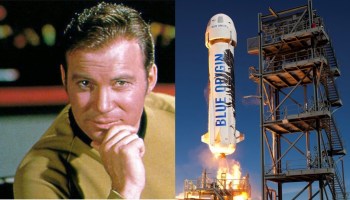
    The skies were clear blue, and the wind mild and agreeable. The day was ripe for the moment the star returned to the galactic heavens in rejuvenated buoyancy of jubilee that he would be out to the extraterrestrial world again. “Beam me up, Scotty,” the man said as he boarded on New Shepherd, treating it like his beloved ship USS Enterprise. It was art imitating life in the former captain’s bright eyes; it was life imitating art in the old star’s beady eyes. For William Shatner, aka Admiral Kirk of Star Trek, it was a one-of-a-kind experience, equivalent to an out-of-body experience in which you fly from your corporeal vessel and wander in all whither, floating weightless, groundless. It was his very Real McCoy galactic trip to outer space.

    On Wednesday, October 13th, Blue X, Amazon founder Jeff Bezos-owned spacecraft enterprise, took off from its launching site about 20 miles away from Rural Texas town of Van Horn with civilian passengers who paid astronomical sums for their space trip. But not Shatner, who spent nothing at the courtesy of Amazon founder Jeff Bezos said to be a long-time Trekkie and something of a billionaire with a flair for space cowboy. The motive for a publicity stunt to outshine Blue X over entrepreneur rivals, Elon Musk’s Space-A and Richard Branson’s Virgin Galactic Holdings Inc., is impossible to ignore, yet why not when it also produces positive effects of provoking the imaginary in the real? Shatner, at age 90, seemed no longer the dashing brilliant, just young Admiral Kirk any longer. Still, his spirit beamed up as he experienced overview effect outside the orbit, profoundly mesmerized with the deep fragility of Planet Earth, the Galaxy Blue. Shatner articulated the face of the Earth as so ethereal and impossibly gorgeous vis-à-vis the blackness of outer space that he had a eureka moment of what distinguished Light (Life-Earth) from Darkness (Death-Outer Space). Methinks that such pareidolia of the overview effect has something to do with his nonagenarian age, the last age in Seven Stages of Man, one foot closer in the grave. However, when I watched him in the news, overwhelmed by the ineffable emotions, Jeff Bezos removed his shades and embraced the old actor; all looked genuine, not an act staged for a post-trip publicity event. And even if it so, then it is a likable sort of entertainment that does viewers of all kinds good.

    Criticisms on the expensive space trip only the haves can afford are worldwide and understandable amid the unequal distribution of wealth makes earthlings live and die or live and suffer. Yet the veteran movie star reminds me of an old soldier who has lived through the vagaries of life. Overall, the 90-year-old Shatner’s space trip materializes the earthling voyage of the USS Enterprise, boldly searching for new life and new civilizations into the galaxies.

    Captain Kirk coming home
    Floating under a parachute
    Touching down on Mother Earth
    in a soft haze of excellent dust,
    Calling it home, Roger out.

    Welcome back to Earth, Admiral Kirk.

  • education is not a status symbol

    Education is not a prerogative of the fortunate who have been born into comfortably well-to-do socioeconomic families or, if deprived, sponsored by goodwill fairylike patrons for splendidly expensive private higher education. It is not a status symbol to distinguish the fortunate from the melee in ostentations display of their supposedly high intelligence, dazzling scholastic aptitude, and a means to continue such expensive education as a symbol of confidence, competence, and cleverness.

    But Joshua Angrist, an Israeli-American Nobel laureate in Economics of the year 2021, doesn’t think that way, not least because those who enter expensive elite schools are already brighter than their ordinary or troubled peers. The Nobel-Prized theory of education in the context of the selective admission process has become a concrete, incorruptible credo for the elite academic institutions and enflamed the already swelled up egos of the diploma holders doing well in their lives. When I read about him from today’s newspaper, I had to re-read his saying that “the reason graduates of those schools tend to do well has more to do with selective admission than education.” I understand his intention to demystify social legend that an Ivy-league diploma will guarantee you lifelong flowery roads to financial security and commensurate social status. However, it has more to do with his defense of continuous selective criteria to muster a pool of academically, and usually economically affluent, prospective students than anything else. What he argues is, “Don’t mess with the elite schools’ admission processing, for they select only the smartest ones!” Therefore, his argument calls for changing social agendas for changing such selective admissions to improve public education.

    Angrist himself is a product of privileged education that some people wear like fancy hats on their pointed heads. He went to Oberlin College for BA and Princeton University for MA, Ph D. He teaches at Harvard University, which has become the infallibly supreme Ivory Tower in the States and most East Asian countries. Based upon Angrist’s focus on causality and effects on social impacts, it will be natural for him to defend the selective admission process, and I say go for it.

    But it irks me to read from the Nobel laureate that supreme education is not for everybody. Since Angrist prides himself in employing real-world empirical evidence in his theory, does he marginalize those who have ambitions and aspirations to receive such quality education but are disadvantaged of the opportunities to learn the skills apt for demonstrating their minds? What about them, and how can he help them to access such opportunities? He’s not a social worker, which I don’t think he will not be pleased to be associated with even, but as an intellectual, he has a social responsibility to answer such vital issues. And if this unequal distribution of privileged educational opportunities is not worth studying, I wonder if those Nobel Prize panels thought his opuses deserve such international recognition. After all, Economics always comes last in the Nobel Prizes, with its being on the criteria most recently in the late sixties mainly begetting Americans.