
FOREWARD: In celebration of today’s National Classic Movie Day, this post is written as my contribution to 6 from the ’60s Blogathon for National Classic Movie Day’ as hosted by Classic Film and TV Cafe. Thank you, Rick, for this awesome invitation 🙂
Ah, the 60s. Doesn’t it chime the bells of your cultural acknowledgment that resurrect all the images related to this provocative era? Whether or not you were a child of the ethos, it was the age of new wave, it was the age of revolution, it was the epoch of change, it was the epoch of experimentation. The zeitgeist of the 1960s called for a new mode of thinking. Through the seditious waves of societal changes, the thematics of films needed swiftly to adapt to the changing circumstances. That’s why I regard the 60s as a renaissance of the film, which I dare say elevated its status to that of the classical theaters in terms of quality of the thematics that attempted to portray the complexities of human nature amid the changing social norms and values at variance. That said, here are my best films of the 60s.
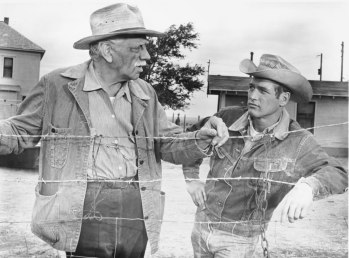
“The Hud” (1963) – Although dubbed as a western, this film betrays its habiliment by representing the eclipsed glory days of cowboy machismo that seems incongruent and anachronistic amid the rapidly changing social circumstances. The characters struggle, tenaciously gasping on their cattle and Modus Operandi, but the results are all over but the shouting. I think it is also Paul Newman’s best performance that shines through the film as a fictitious embodiment of the collapsed grand narrative of American machoism.
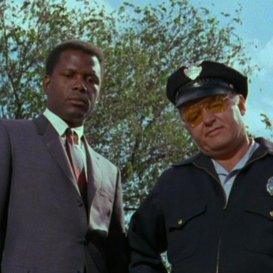
“In the Heat of the Night” (1967) – Attempts to portray social injustice are most cleverly and artistically translated in this excellent film about policemen of members on the opposite social continuum. Rather than antagonizing the characters, the film connects them with a mutual goal of finding truth and justice in their own ways that are seemingly diametric yet ironically similar in their steadfastness in upholding the most common human nature: pride, ambition, and compassion.

“To Sir with Love” (1967) – Based on a true story, this British drama is packed full of visual and audio delicacy. This film doesn’t, however, turn out to be a grand grave social activist movie about racial tensity. It shows how a dedicated teacher with mind and heart can lead his recalcitrant but misunderstood students to responsible adulthood without sanctimonious pedagogy or reign of terror. It reflects Plato’s cardinal virtues of Prudence, Justice, Temperance, and Fortitude embedded in the way the brilliant teacher treats his students despite their outward rebelliousness and general distrust in adult figures. The selfsame song by Lulu gives the atmosphere of the film all the more alluring and unforgettable.

“A Man and a Woman” (1966) – This French film that won a Grand-Prix in the Cannes Film Festival is an art itself, with beautifully ambient cinematography, doubled by the hypnotic leitmotif of a main musical theme that invokes the idea of ideal love that is never vociferously effervescent but quietly enduring, a perfect admixture of eros and psyche. The love between a man and woman can be this beautiful, and even smoking looks so artistically suitable to the theme of the film, making it all the more riveting.
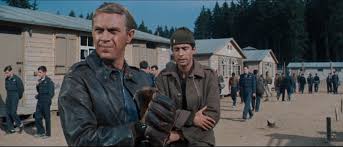
“The Great Escape” (1963) – What I like about this film is not the luxuriant cast of top-class Hollywood actors but the underlying theme of fortitude, courage, and patience, wrapped in a package of humor even in the times of trial. Although this is regarded as a war movie, no undertones of the campaign against the enemy or propaganda promoting wartime vitriol are underlined here as the dichotomy between the captors and the captives is often blurred by their day-to-day personal interactions within the ambit of conscience and humanity. That said, even the Nazi prison authority headed by stern but fair and conscientious officers is hard to invoke animosity or contempt. It’s more of personal ambition of achieving success in what the characters are driven to do – whether it’s escaping the prison or preventing it – This film is not about who escaped but who survived.
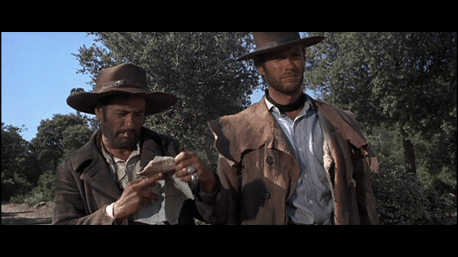
“The Good, the Bad, the Ugly” (1966) – Who says that you have to be born into the culture if you want to talk about it? Often dubbed as a Macaroni Western, this is the most iconic western film made by a brilliant Italian director whose fascination with the Old West and artistic ingeniousness made him capable of crisscrossing time and territory as if he had been born in the 19th Century American west. Besides, unlike many American-made westerns, this film does not have black-and-white ethical characters, either extremely evil or angelically good in nature, nor does it propitiate moral values or didactic lessons. It also employs the music by Ennio Morricone as an effective vehicle for creating the mood of the film without superlative narratives or gratuitous action scenes. It’s all about the naked human nature surfacing when temptation beckons with irresistible allure. What’s more, the film was entirely shot in Spain that looked so much like California.
In sum, the aforesaid films are innovative in incorporating visual presentations of stories with ambient music to translate the world of make-believe reality onto the screen in the most natural way. They are also bodacious in choosing the thematics that reveal the changed look on society in general, rendering the verisimilitude to the stories in order that the audience can feel relatable and sympathetic. For these reasons, my selection of the six films, I think, stand the test of time and merit their own places in the classic canon of masterpiece theater of motion pictures.






You must be logged in to post a comment.