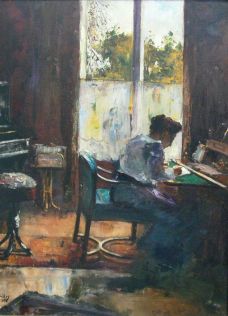
Keeping a journal is, I believe, a vehicle for creating myself, my sense of selfhood. Every page of my dairy is to be breathed with my heart that does not have to entertain anybody but myself. It’s also proof that I have lived situations which today would seem uncertain and fretful, that I have climbed up the paths of my life thus far to reach the peaks so ambitious, so adventurous. Above all, I want to bring out every treasure that is buried deep in my heart. So writing day in and day out in my Midori Traveler’s Notebook is my daily ritual to remember what it is to be me, which is always the whole point of doing it.
I carry about my traveler’s notebook everywhere I go to write my journal and reading pointers from books I read, and some occasionally attempted drawings for practice. There are three notebooks: One is used categorically for my freedom of thoughts, feelings, and just about anything that is to be kept only for myself. It’s not to be shared by anyone, so my soul can rest herself there. Another one is for notes I take from reading that I need to refer to when I write book reviews. And the last one is reserved for jotting down anything out of brainstorm, from devising storyboards for my short stories, to scratching some images of my poems, to making bullet lists to do, and to practicing my newly inspired drawings for more balanced nourishment of my soul. Most of the times – that is 5 days a week – before heading into my job, I usually go to a coffee shop and write in my beloved Midori. It is during this writing time when I feel creative and special out of the melee, out of the existential horrors of every day, and out of the humdrum of daily life.
I love combining drawings and a variety of crafting to my writing to heighten the expressions of feelings and deepen the depths of thoughts in the way I want them to. The only obstacle I have to huddle is drawing. As someone whose aesthetic standard is as high as that of Pope Julius II, who commissioned Michelangelo to fresco the Sistine Chapel, I only wish I could draw things I see to its exactness with fine details. But then I always remind myself of the adage: “A flower does not compare itself to other flowers. It just blooms.”
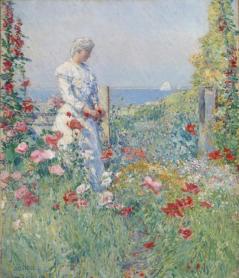
Therefore, keeping a diary is a veritable record of myself, a personal treaties on the breadth and depth of being who I really am. It sounds grandiose, but writing in my Midori gives rise to the elevation of my weltanschauung in reflection of contextualizing concepts and beliefs kept in me and also helps me unearth hidden treasure in the realm of unconscious mind. And by creating a kind of work relating to the crafts of the arts, I like to think that I am fulfilling my purpose of life to live a meaningful life, for the sake of ego qua meaningfulness. That said, I like to cherish Kurt Vonnegut’s advice that the arts are what makes the human life bearable and livable in dealing with existential matters of daily lives, for practicing any form of the arts – however clumsily or amateurishly done – is a noble means to attend My Secret Garden of Mind full of Begonias of Fancy, Roses of Beauty, Tulips of Passion, Lavenders of Devotion, all blooming and bountiful around Spring of Eternal Youth.

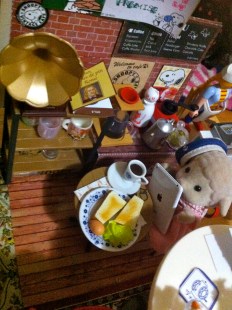 Sally was enjoying alone at Baroque her respite from the demands placed upon her weekly tasks and responsibilities at her new job. Baroque is a newly opened coffee house where her best friend Bonnie is both a manager and attendant, provisioning customers with delicious pastries, cookies, freshly-brewed coffee and exquisitely beautiful Baroque music composed by Bach, Handel, Pachelbel, Vivaldi, et al. at the behest of her aunt Laura, who is the proprietress of the establishment. It is all the more fitting to Sally’s musical taste and sensibilities. Which is why she has made it her elbow room where she can rest herself reading and writing enveloped in an atmospheric ambience of highly sophisticated cultural surrounding rare to find these days.
 Bonnie was smiling at her friend Sally’s intoxication with the music outwardly manifested on her pretty face in the form of dreamy look with her eyes closed as if she were watching musicians playing it on stage just for her. That’s one of the reasons Bonnie likes her friend: Sally’s artlessness unsullied by her intelligent prowess makes her trustful, beautiful, and soulful. When Sally opened her eyes, she smiled at Bonnie and started piping up: “You know Bonnie, I love this music so much that all my grief, angst, and trifles desiccate, then die… It’s very vivacious and and jubilant, uplifting my otherwise somber mood to make me believe that the world isn’t that such a bad place to live.” Sally’s eyes becoming sparkling with verve and her cheeks flushed with rose pink, all because of the love of the music. And her rhapsody of love began as follows:
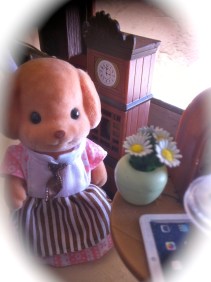 While listening to Sally’s lecture on Handel and the sinfonia, Bonnie was envisioning in her mind’s eye a scene in which she as a chaste and beautiful bride in wedding gown like a valley in a vale was entering a cathedral to proceed to the altar where her gallant husband was waiting… That’s a nice change of mundane scenery of life, Bonnie thought. Ah, the power of the music is so irresistibly masculine and impossibly arresting that the only way you can escape from its fatally sensuous intoxication is to yield to it. It’s all because of the magic of music, moody food that is bartered for love. The Bard knew it as well: “In sweet music is such art: killing care and grief of heart fall asleep, or hearing die.”


You must be logged in to post a comment.