Lord Byron famously professed his taste of fame thus: “i awoke one morning and found myself famous.” Well, not exactly famous, but my new day after a long Thanksgiving holiday weekend began with such a delightful pleasure of likes cast upon by Dr. Suglia, a profound scholar of literature and philosophy and a sui generis writer par excellence, for my posts on my blog! I am so elated by his appreciation of my humble work! Thank you very much!
Blog
-
Friends in need are friends indeed
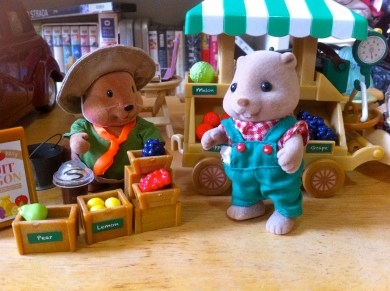
“Hey Ed! What are you up to this Sunday? Aren’t you going to a regular Sunday morning Mass with your wife and daughter?” Ralph asked his ever affable chum who stopped by his fruit stand early on the morning of an ordinary but blissful Sunday. Non-conformist he may be, Randy is a deeply faithful man who believes in the existence of God and prays for his divine guidance in his heart, never proselytizing his belief and forcing it on others. He is like Henry David Thoreau, who never went to church in his lifetime but practiced Christianity in everyday life by appreciating the beauty of nature and the love of humanity in its pristine essence in his poetic sensibilities. Ralph is proud of being a bohemian poet/fruit vendor as a confirmed bachelor, who has disembarrassed himself from the burdens of attending martial responsibilities and duties. That being said, seeing his married friend Ed Beaver gives him an associated feelings of sympathy and curiosity, of confinement and comfort, all packaged in the Pandora’s Box of Conjugal Life.
 “Hey, Ralph. Well, I am coming from the church after dropping them off there. I would rather bask myself in the Sunday morning sunshine than sit on the dreadful pew and suffer an hour or so by enduring the fidgeting and disquieting of the little ones who have not reached the intelligent age of learning the Catechism preparatory to their First Communion. These kids… are recalcitrant urchins! Moreover, the parents are complacent about teaching their children how to behave properly in church! That would be no point of hearing a Mass amid the shambolic commotion! That would be a sacrilegious irreverence!” Upon decanting his subdued disaffection toward the uncivil, Ed felt his mind was taken off the anxiety and anger. It’s always so reassuring to talk to Ralph, who’s at once a good listener and reliable friend, thought Ed, who continued: “By the way, do you know Andrew Redfox just opened his mobile hotdog shop? He started it a couple of weeks ago on Grand Avenue, and it got quite successful! The newspaper covered a favorable article about his business a week ago, and people have been talking about his hotdogs and waffles, all handmaid by his wife Monica. Did you try any of the food?”
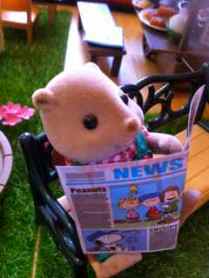 Ralph heard about the news but did not venture to try the proverbial hotdog or waffle yet because although Ralph was a benign character well balanced with intelligence and humor, he’s quite lazy, succumbed to the habitual routine of staying put in one place, which is his fruit stand. Ant yet, as a self-professed bon vivant, Ralph’s spirit was willing to fly over to Andrew’s hotdog van and have a bite on it, for a hotdog is one of his favorite food in the world. “Yes, I knew Andy’s new hotdog business. Do you want to go there later today? I am planning to wrap it up at 4:00 PM today. Hope Andy’s open today.” “That sounds great, Ralph! Yes, Andy is on the counter today because Andy said he would need to reach his projected profit by the end of this year to pay off his overdue rent fees. You know Andy had been out of job for eight months, and his unemployment benefit was on the brink of being exhausted when his daughter Julie had also lost her job… So this is his big breakthrough in his drifted life, I presume.”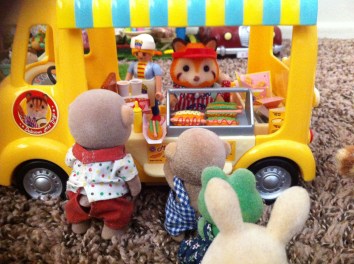
Hence, both Ed and Ralph went to Andy’s hotdog van and saw it was a success by a glance at a long line of customers to buy hotdogs or waffles, all handmaid at home by his wife Monica according to her honest-to-goodness family recipes passed down from her Belgian maternal great-grandmother. The men were happy to see their friend starting anew once again from the bottom of his existential dilemma beset by economic deprivations and hoped that this new fortunate chance to right the ship of his reinstated life accompanied by his family would sail through. After all, helping a friend in need is what good friends can do because friendship can double the joy and cut the grief in halves. Isn’t that what friends are for?

-
‘Essays in Aesthetics’, by Jean Paul Sartre – review
 Essays in Aesthetics by Jean-Paul Sartre
My rating: 4 of 5 stars
Jean Paul Sartre was something of a celebrity in the European Intelligentsia in the Swinging Sixties; despite his rather homely exterior equipped with a pair of thick horn-rimmed spectacles covering the squint eyes, Sartre was brought into celebratory limelight with a panoply of illustrious epithets- L’Enfant Terrible of the European intelligentsia, a precursor of modern existentialism, and husband of Simone de Beauvoir, a trailblazer of modern feminism – The truth of the matter is that Sartre loved the attentions bestowed upon him. In fact, he thrived on it. On a question of fame relating to his celebratory statue as an intellectual, Sartre answered with forthrightness: “Fame is good, even at forty or fifty is desirable; there is happiness, an intense enjoyment, in pushing one’s way into the spotlight like this.” It is this unusual, feisty frankness in conjunction with his audacious existentialism vis-a-vis Viktor E. Frankl’s Logotheraphy that inspired me to find out more about the man’s school of thought in this book written by Sartre himself.
This light volume of essay collection draws on Sartre’s exceptional knowledge of the arts and the creators and yokes it to the tenets of existentialism, which means that the reader should have at least rudimentary knowledge about existentialism. The substratum of existentialism is the experience, the action taken by himself, which constitutes a man’s identity in the world. This might sound materialistic and even bathetic at first blush. However, do we not tend to judge our own self or other people based upon the manifested achievements or deeds, regardless of the character, personality, and/or other planes of circumstances pushing the doer into such actions? With every one of our actions, we particularize our self, thus creating a ‘self’. It is this realization of the abstract self existing as an abstract essence that results in the following dictum: Experience precedes our essence, establishing our own self identity in society.
In terms of existential analysis of a meaning of life or a sense of purpose in life, our actions becoming our experience make us responsible for our own lives, including our missteps and achievements. In other words, this explication of existence shows us how we look and what we are like as the touchstone of our existential selves in everyday life, as the Russian writer Anton Chekhov once said: “”Man will become better when you show him what he is like.” In this regard, existentialism coincides with Logotheraphy, which identifies a meaning of life, freedom of will, and will to meaning with fulfilling demands placed upon our daily tasks, to achieve ego qua meaningfulness.
In sum, Sartre’s existentialism strikes the zeitgeist of our time convoluted with reality shows, fake news, selfies, social media approbation, and grand collapsed narratives in which we often find ourselves uprooted in the midst of inflated self-aggrandization, however overtly and incorrectly exalted. Sartre tells us: “Man can will nothing unless he has first understood that he must count on no one but himself in the midst of his infinite possibilities without help.” That is, the purpose of our life is to live it, to taste experience to the utmost by actualizing our purposes amid our daily lives, for we are what we do and create our own reality of the world by acting out our ideation. This book will be a good primer on more in-depth world of Sartre’s existentialism with his no-nonsense perspectives on the nature of humanity and proverbial touchy-feely approaches to the real world and a man’s place as a human being therein, all marked in his literary craftsmanship that is all the more enjoyable to the reader.
-
The etymology of black friday

There were long lines of people everywhere today here in this otherwise peaceful sunny Californian city. As I swiveled my head in wonderment to figure out possible causes for the formation of the lines, my eyes directed me to a sign posted on a window of one of the outlet stores bearing “Black Friday Sale.” Hmm, so it was that time again. In fact, the word ‘Black Friday’, I think, always renders me an ambiance of Dystophia where desperate citizens resulting from a carnage of wars and great famine are hell bent on looting stores for a paucity of goods. Besides, it is named so very dull, tawdry, and crude that the very sound of the name boasts a lack of cultural sophistication of its obscure name-giver who seems to me nothing but a philistine following a cult of Mammon.
That being said, to come upon an article about the origin of this consumerist feast day from a magazine seemed pat in the paradoxical sense of animosity colluding with curiosity on this whimsically leisurely Black Friday. It’s rather unsurprising to discover that the etymology of the term ‘Black Friday’ is ambivalent in origin. There are four a posterior grounds of the birth of the term as follows:
- Black Friday was the day when financial markets collapsed on September 24th, 1869, as a result of the disclosure of a Wall Street conspiracy to raise the gold price.
- It was the day after Thanksgiving Day when police in 1950’s Philadelphia, having sacrificed their holiday leave, concentrated the force on the cresting influx of shoppers and American football fans into the city.
- In 1961 retailers in the selfsame city foresaw the potential to galvanize business by choosing the term “Black Friday” as a catchy-phrase.
- The retailers saw it as the day by which they could have procured sufficient revenue for the year, so that they could move their accounts written in red to black, finalizing a profit for the year.
 In my opinion, the third postulation seems the most plausible, which logically constitutes the fourth one as a basis for the etymology. It’s always this mercantile ingenuity that prompted cults of consumerism, such as Valentines Day, White Day, and Christmas Day. Inevitably, in our modern capitalistic society such promotional encouragement of spending money on consumer products is the grist to the mill of market economy and greases the wheel of monetary circulation for the behoof of the vivaciousness of societal atmosphere in general. Yet, the hustling and bustling of the mindless shopping spree blindly egged on by the media prompting to buy things that you really do not need in frenzy appears to live beyond the principle of the Golden Mean, the virtuous moderation of restraining yourself from indulging in lavish expenditure, as advocated by Plato in corporation with the inscription written on the terrace at Delphi, “Nothing in Excess,” which chimes the bell of our ethos embroidering on conspicuous consumption.
 -
Lord of The Flies – When Id controls Ego

Lord of the Flies by William Golding is a mind-boggling story about a band of English young boys aged from 7 years and 12 years marooned in an island after a plane crush in the wake of atomic world war. Written in 1950s, the book questions the defects of human society in respect of the defects of human nature as symbolized by the stranded boys who have once civilized under the parental/societal guidance descends to savagery, the primitive state of human condition, which is operated by Id alone. And it only takes about 2 weeks or so to return to the instinctual stage of mankind. Which is all the more scary yet true whether we accept.
There are two extreme characters in the story: Ralph, a headstrong, sophisticated boy whose father is a naval officer. His primary goal is to be rescued by a ship, to return to the the world of civilization where all’s will be normal and he will live normal. So his main concern is to keep fire ablaze to signal his existence, the last remnant of civilization, the surviving Ego that “wills” his societal existence struggling for existential meaning that a civil community confers upon his singularity and uniqueness for recognition. As Ralph asserts, “No fire, No smoke, No rescue.” To him fire is Hope that will save him from falling into savagery by which other boys blindly and almost unconsciously have become animalistic, acting on instincts to satisfy their most basic desire only: Eating by Hunting.
The Hunters are led by obstreperous, belligerent choir leader Jack. In fact, the figure of Jack represents many interesting aspects of psychotherapy. In the respect of psychoanalysis by Fraud, he symbolizes Id that “drives” all his acts and modus operandi. To him fire does not seem to matter. He does not even want to be rescued. What he excites him is a process of hunting a pig – especially a female one – for provisional entertainment and survival on an island. In the view of individual psychology by Adler, gaining power over his “tribe” of the boys and becoming a chieftain by forcefully and unjustly abdicating the legitimate Ralph takes precedent of anything, including keeping fire and going back to the cradle of civilization. The limit of ego qua responsibility does not apply to Jack, who lets his Id dominate his being. According to logotheraphy by Viktor E. Frankl, Jack has ceased to fulfill his responsibilities as a cooperative cohort of Ralph to work together to protect themselves, to guard fire, to maintain their orders until a rescue comes their way.
And there is pitiful Piggy. We don’t know the real name of Piggy. But we know that he does not want to be called such but that the boys, including the civilized Ralph, who can blow a conch by the encouragement of Piggy. The narrative tells us that it’s not that the accents or fumbling that makes him a buffoon of the boys; it’s his corpulent appearance that loses him respect among the boys. Besides, he’s the only one that wears a pair of spectacles are used as a magnifying glass to gather heat to make fire. In fact, I view the figure of Piggy as a voice of the intelligentsia. As Ralph laments at the tragic death of Piggy, he’s the one who “talks sense.” In fact, his spectacles, cruelly damaged by the sneak ambush led by Jack and his savage tribe, symbolize the perspectives of the intellectual that view the state of human nature in danger of retrogression and decay to Zero, the raw, primitive nature devoid of existential meanings and values attached thereto. And the boys ridicule him, deriding his attempts to call their attention to reality of their situations and to address the substantial issues to be reckoned and resolved. Piggy is a Thinker, a voice of Rationality that does not seem to be a matter where Id and Ego stand in contention when human nature is stripped to its nakedness outside human society.
To recapitulate, Lord of The Flies by William Golding attests to loss of humanity as a result of catastrophic event in which a survival of the fittest seems only true. This may include a war in consideration of the year the book was written; it’s 1954, only 9 years after WWII. Golding saw the evils of the war – the countless deaths, the famine, the ruins of houses and building and nature – the Wholesale Destruction of Humanity. What had once been a great civilization fell into a great catastrophe by the hands of Humankind. A Paradoxical truth that ascertains decay of human society debased into brute savageness operated on ferocious instincts for survival… Lord of the Flies is the fable of the lost children for the adults.
P.S. This is my another bygone writing about William Golding’s dystopian novel Lord of the Flies that I had written prior to the inception of my blog.
-
Ah, Bartleby! Ah, Humanity!
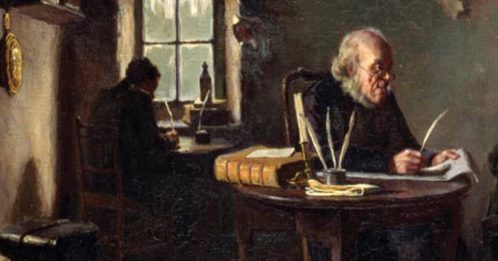
It was more than 10 years ago when I first read Herman Melville’s Bartleby, a short story about an unwonted young man employed as a scrivener by a Wall Street lawyer. At that time, Bartleby stroke me as a very eccentric, imprudent worker who had the temerity to reject his boss’s orders. He was just a mentally deranged man with only a few words, other than “I would prefer not to do …”
But now I see him different. Since I re-read the story this afternoon, I have felt bottomless sympathy for Bartleby. Mixed with pathos and sprinkles of humor in the narrative of his benevolent former employer, the figure of Bartleby evokes springs of human compassion and humanity itself. And my feelings for this tragic scrivener amount to what the narrator felt about his former employee.
I am not intent on “analyzing” the psychological aspects of Bartleby and his former Wall Street lawyer boss. And I think not that even the writer Melville himself had such psychoanalytical views on these characters in mind when he wrote the story. To me the story itself shows what made a sensitive man like Bartleby to such demise in the eyes of a compassionate man – and a decent employer seldom found these days. Loneliness, Hopelessness, Sorrow, and Reality of Death all packaged in written forms burned in flames stagnated the humanness in the forlorn scrivener. The Death of Humanity, that is. Having worked in the Office of Dead Letters at Washington would suffice it. Surely, there is no doubt that Bartleby was mentally disturbed, but who would hate or even despise him for his malaise?…
Then readers might object to the premise that it’s only a fictional story in which no such characters will/would exist in reality. But I think not so. As a matter of fact, I have always believed that fictions are always built upon factual elements of human life to a certain degree. Dismissing stories as creations of imaginativeness seems to miss the fundamental truths laid under changes and choice of our human life with a bit of creative imaginations. Ditto Stephen King, who has once said that the stories are artifacts that are not really made up, but that are based upon preexisting objects we discover.
The tall, lean, pallid and lugubrious image of Bartleby the Scrivener still lingers in my mind… Having dealt with tons of letters from those who died in despair, those who died hopeless, and those who died suffocated by insurmountable sufferings, Bartleby had lost his own sense of existence, feeling utterly dispirited, pessimistic, and lethargic in performing demands of his duty. It was the loss of meaning of life that made him passively resistant to all the ordinary functions of daily life which all seemed insignificant to him. The life itself was nihilistic and hence non-existential to Bartleby. Humanity in the expressions of feelings and emotions meant nothing to him; it had ceased to exist in the form of dead letter attesting to existential horrors, which had led the authors to death, which had taken the poor Bartleby as the witness thereof.
Thus, the lamentable outcry of the narrator still deeply reverberates in my mind even after I closed the book: “Ah, Bartleby! Ah, Humanity!”
P.S. This is my bygone writing about Herman Melville’s classic short story of “Bartleby, the Scrivener” that I had written prior to the inception of my blog.


You must be logged in to post a comment.