Blog

  • Walking on Sunshine

    IMG_3914

    After four consecutive days of rains and clouds, the sun is finally resplendent with its divine fiery halo in the high blue sky. What a pretty Saturday morning it is! Naturally, Bonnie could not help but perambulate the avenues and streets of Avonlea with her two twin brother and sister called Amy and Eddie in a perambulator. Bonnie and the twins became orphans when their parents died at sea from the sinking of Zeus five years ago. Since then, the children have lived with The Collies because Laura Collie is their distant maternal aunt. Laura and her husband consider them as one of their own, provisioning them with all the necessities of comfortable life. And yet, Bonnie feels that there’s a certain feeling of sadness, loneliness, and yearning all integrated into a crystal ball  of melancholy placed in a jewel box of her heart. It’s like having a dainty music box where you keep your sentimental treasure, such as jewels from your grandmother and your locket from your childhood, and put them on when you reminisce about the memories and are intoxicated with the fragrance of nostalgia that belongs only to you.

    IMG_3896

    “Good morning, Bonnie! Are these twins your brother and sister? They are so cuddly! What are their names?” Betty Beaver is so enthusiastic to see the babies that she is almost panting with excitement. Betty has her baby brother named tommy, aged 3, and loves him dearly. But seeing this pair of twins makes her heart leap with ebullient joy. “They are Amy and Eddie. Amy was born three minutes earlier than Eddie, who was actually holding her plump ankle while coming out into the world.” Bonnie regrets providing extraneous information on the moment of the twins’ birth because she doesn’t like to be overly talkative, revealing too much about herself. But then it’s such a pretty Saturday afternoon promenade with her brother and sister that she could be lackadaisical about it and all other existential dealings that lay ahead of her.

    IMG_3956

    After the nice brisk sauntering, Bonnie and Helen are having nice lunch together at Sylvanian Restaurant down on Petticoat Lane, where food is honest-to-goodness made on the premise 6 days a week. (The  proprietor is a very devout Catholic lady, so she attends every Sunday Mass.) Helen feels liberated from her domestic obligations for being a wife and a mother while she’s alone with her neighbor Bonnie. And Bonnie? Well, it’s not exactly freedom secretly entertaining because she never felt burdened with her duty to take care of her twins. But she could at least forget about worries and chronic anxieties about what tomorrow would bring  and dispel her occasional bouts of melancholy by wallowing herself in delicious food and confabulating with Helen. That’s a simple joy of life that Bonnie wants to keep with small pleasures that make her feel loved and content. Simple soul with streaks of melancholy as she may be, Bonnie ‘s philosophy of life is livable and lovable with all its artlessness and genuineness.

    thanks-for-reading-Rok-Hardware

  • Don’t be Wussy; speak out! – review

    il_340x270.780791336_h9qsAs the insurgence of #MeToo movement is now a daily recurrence in the media, taking no prisoners at all times regardless of statutes of limitation, it seems that men now live in vigilance of what accusations they might one day be faced with for the misdeeds of the past. In this predominantly matriarchal social epiphenomena born out of latent political dissensions in the background of virulent partisan ideologies, it’s only a woman’s story afflicted with her tearful narration of the tainted experience that we hear. It’s a no man’s world. It’s an amazonian world where women’s voice means dominance, power, and truth. But then we live (or like to think we live) in a highly civilized world of democracy where Reason takes precedence over Appetites (raw feelings and unbridled emotions) that leads to Judgment of Truth. However, this draconian #MeToo tribunal forfeits men’s chance to speak for themselves so that we can hear the other side of the story, whereas there are two sides to every story.

    That all women are victims and all women are veritable is a dictum of the movement, which exempts all women from their blemish pasts. As a woman myself, I know that we women can become malicious, vengeful, flagrant, and mendacious if we are hell bent on doing harm on ones who have damaged our egos or destroyed our ambitions. There is no god-given dichotomy of human nature between man and woman. But this mobilization of alleged sexual accusations has, I think, gone too far. It reminds me of the craze of the Salem witch trials, the Jacobean Reign of Terror, and Bolshevik Regime in terms of the vitriolic sound-and-fury rhetoric and militant attitudes toward their sworn public enemies. Any man who has had even the faintest shadow of doubt cast on a supposedly unseemly behavior is now guilty of the generalization of the misdeed and deserves of social defenestration, let alone personal stigmatization for the rest of his life. In sum, he becomes a pariah wearing a scarlet letter till his death.

    For instance, we all know the case of Bill Cosby, the legendary comedian who was charged with rape this week and sentenced to a 10-year term in prison, despite his attorney’s plea for leniency on account of his being 81 years old. I can’t say what the women accused him of was true or false, but his accusers do not seem very credible to me, either. Their manners of speech, deportment, and contents of accusations seem all but flamboyant and tritely bromide. And many of the accusations are over 10 years old. They say his punishment meted out justice. What a grand measure of justice, when there are even worse cases of injustice, such as evicting the poor out of their homes for the behoof of gentrification and systematically perpetrating sexual harassment tacitly  against women of low social status at work, including female janitors whose stories once covered in the LA Times? These people seldom or hardly tweet the injustice they have experienced to lay it bare to mete out justice to the perpetrators.

    Another example is the case of Ian Buruma, the editor-in-chief of New York Review of Books, who was recently made to resign from his post because he published an essay by a certain Canadian DJ named Jian Ghomeshi, who recounted his personal feelings about being a victim of the #MeToo tribunal without being given a proper stand to tell of his side of story. Just as anyone defending any innocent aristocrat during the French Revolution or any guiltless bourgeois person during Bolshevik Revolution was also punished ruthlessly for being sided with the public enemies, Mr. Burma’s journalistic conscientious act of publishing the other side of the story was thwarted, being condemned for his courageous deed that was regarded as treachery.

    I am not here to defend the unseemliness of all men reputed to be lecherous. Not an iota. But looking at this insurmountable #MeToo movement riding on the crest of demagogic wave emboldened by the gratuitous social and political tendency of accusing almost anyone for vindication, I am egged on to say that we should be critical in deciding the credibility of accusers in the context of regarding the nature and truth of all cases as reported based upon evidence, not supra-abundance of vehement hatred and malice to destroy a man’s life for good. The Greek historian Thucydides also knew mendacity of popular belief and warned of eclipsing impact on the truth of any such event; hence he always tried to find out the veracity of historic events by toiling to investigate them through records. Therefore, it is imperative that we also give equal chance to the other (that is, men) to decide who’s to deserve ignominy. That is why I find Cosby’s sentence and Mr. Buruma’s resignation a fortiori fiendishly harsh in the wake of bellicose textual campaign that seems less plausible and empathetic.

    P.S.: This essay is based upon my review of an article called “Men should be angrier about #MeToo” by Lionel Shriver in this week’s The Spectator. Ms. Shriver’s perspective on this subject matter strikes a chord with mine. This courageous article emboldened me to write this essay on the subject that I felt strongly about for its politically motivated element. Mind you that real victims do not reveal themselves in fear of retribution and ridicule in public.

  • Eros and Psyche: Sweet Sublimation

    M-17-343x450

    His love was fixed but unsought
    By the ostentation of Eros’s Play,
    The casual making-love façade
    With no precondition of the soul;
    But that which it consummates
    Is a union of the two existences
    Of Body and Soul, the sovereign
    Surrender of the self to the beloved
    Becoming a whole, an ensemble
    metastasizing  “I” lovingly, willingly
    Directed toward “Thou” entirely
    In trust of one another wholeheartedly
    making him of her and her of him magically.

    P.S.: A short essay called “A Courtship of Twenty Years” by John Stuart Mill (1806-73) reveals his infatuation with his friend’s wife, who eventually became his wife. It’s a rhapsody of his admiration of everything about her, her moral character, intellectual gifts, and graceful beauty. This secret affair of the heart is not, however, tinged with a lascivious desire for his friend’s wife thanks to his elucidation of her virtues that benefited him to become wiser and more wholesome; his love for her is a sublimation of the ego, which was capable of integrating the sexuality of the id into the personality. Nowadays reductionism is responsible for interpreting love as a mere sublimation of sex and conscience merely in terms of the superego. But love is the precondition of sex, not the result of the sublimation thereof. What might have been his physical attraction to her at the inception of his love affair was elevated to the actuality of Love, the wholeness of Eros (Body) and Psyche (Soul), which is the essence of love between the lovers. 

  • Tarantism: St. Anthony’s Fire – review

    My-Neighbour-Totoro-5-940x460
    This was exactly what it was like while I was waiting for my bus to work.

    The Kingdom of Rainfall, Dampness, Stuffiness, and Grimness reigns supreme all day long today without a ray of sunshine peering through the heavily downcast gray sky so lowly hung in the celestial ceiling of the Atlas that it almost looks like collapsing to earth. While basking myself in the typical Atlantic grayness of this somber weather, I could understand why the legendary lost Roanoke Colony was doomed to fail in the late 16th century; it was primarily due to this grim and damp weather condition only congenial to mosquitoes and other kinds of pest that thrived on the unpleasant sogginess. In the reign of the somber weather, to come upon an article in this month’s National Geographic History called “Killer in the Rye: St. Anthony’s fire,” which was also related to the gloominess of the weather seemed a tad pat.

    300px-Pieter_Bruegel_the_Elder_-_The_Cripples
    “The Beggars” by Pieter Bruegel the Elder is said to have portrayed the victims of rye poisoning, most likely of St. Anthony’s Fire, as shown herein.

    Between the middle ages and the 17th century, inhabitants living in the proximity of the Rhine (Austria, Germany, and Flanders) where damp climate affected the crops adversely were frequently subject to a diabolical malady caused by a consumption of infected rye with symptoms of seizures, hallucinations, and infected limbs with excruciating agony that was said to be similar to the spiritual torment suffered by St. Anthony of Egypt. Hence the naming of the agricultural disease ensued. It all started with eating grain infected with a fungus called claviceps purpurea, black growths resembling a rooster’s spurs. This heinous fungus became ergot, toxic alkaloids cutting off the blood supply to the body’s extremities, which caused the hellishly burning sensations to the limbs. Since the cows were not immune from this fungus by dint of eating the infected crop as a staple diet, large parts of the population were exposed to the risk of contracting St. Anthony’s Fire.  In fact, this rye poisoning was multifariously diabolic in the saintly names, such as “St. John’s Dance” and “St. Vitus’s Dance”; the victims displayed tantrums of bodily movements – also known as tarantism – as if they were possessed by demons. Although the rye poisoning began to die out in the Western Europe as wheat replaced rye in the kitchen, the most recent cases of the rye-poisoning disease were seen in the early 20th Soviet Union and Ethiopia and India in the late 2oth century.

    My-Neighbor-Totoro-Rerelease-2018-30th-Anniversary
    Sun, Sun, Sun!

    Indeed, to happen on the article such as the aforesaid while I was sulking in the unpleasant conditions of damp weather gave it an extra fillip. Maybe I am being grumpy about one of those lousy weathers that may be beneficial to the others on the other hand, such as farmers needful of precipitations for their parched land or vendors and manufacturers of umbrellas and rain boots whose businesses hinge on the whims and caprice of Mother Nature.  But as the aforesaid historical records evidence, when dampness and cloudiness in partnership reigns supreme, it turns the world grim and dreary, listless and lethargic. And that is why the ancient civilizations began and prospered in the places where the gods of sun Ra, Apollo, and Helios claimed their sovereign powers among the dominant high gods and goddesses and retained their divine radiance.


  • The Sun Also Rises – short story/novella

    IMG_3826“Hello, this is Sally Lamb of 62 Errant Terrace, Apt 1C, Ritterford. May I speak to someone in the accounting department?” Sally really did not want to call her apartment management company. She would avoid calling them at any cost because it was operated by the descendants of Scrooge; or so they seemed. Despite the fact that Sally had been a conscientious tenant who paid her monthly rent fees on time, the company never responded to her requests for any repair of out-of-order fixtures through no fault of her own. Their response was always uniformly scripted as thus: “Put it in writing.”  She had acceded to the blimpish command  as dutiful tenant to landlord, but she then gave up pleading for any mercy with the shylock company. You see, it took Sally’s guts to call the management and asked for the particularly supercilious woman dealing with her apartment matters.

    IMG_3790“Yes, what is the matter?” the usual callousness of the woman on the other line punctured her heart, but Sally tried to muster what vestige of courage left in her spirit. She was Lamb to the slaughter. “Yes, I just would like to know when you can pay me back for the overpayment of my apartment rent fees? Can I get it next week?” Upon decanting what had troubled her spirit and soul for long, Sally was still unsure if she had done the right thing because she had a premonition that the request would be thwarted. “No, it will not happen soon. You have to wait at least for 30 days to get your money back. It’s our company policy!” Then came silence on the other line. The minion of Scrooge hung up on Sally after shooting off her mouth. This made Sally godforsaken and dumbfounded. How could anyone possibly do such an inhumane thing? Sally wondered if that woman would still attend Sunday morning Mass tomorrow and receive the Communion for the sake of her family and her shamelessly haughty self.

    IMG_3946

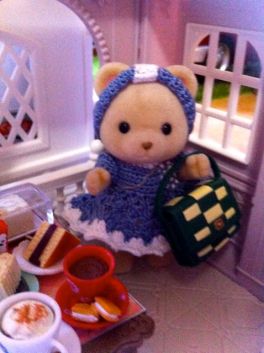
    Sally became distraught, but her spirit resisted being downtrodden. Fretting over tomorrow and languishing over what happened will do nothing good for me. Come on, Sally. you know it better than anyone. Cheer up! Emboldened by her ever resilient spirit, Sally got herself together and changed her cloth to get out of her delipidated apartment and headed for Snoopy’s on Main Street to get fresh coffee and a cake. When Sally got there, Ms. Long, the spinster owner of the coffee shop, greeted Sally in a way a loving grandmother would do when seeing  her dear granddaughter. Ah, that touch of love and kindness touched Sally’s heart. Sally wondered what if she would have only heart not intelligence like a kind of sweet imbecile; would the condition enable her to deal with strains of daily life easily, since the brain would not command “pain” to the neurons in the senses? ‘Oh, just forget about all the worries for now, and let me enjoy this moment of comfort and warmness. For didn’t Jesus say “Do not worry about tomorrow because tomorrow will worry about itself, and each day has enough trouble of its own”?  Well, I have experienced a day’s woe and endured it, so no more anxiety is granted. It’s all in the past now. ‘ Thereafter, Sally began to read a new issue of this week’s The Spectator.

    thanks-for-reading-Rok-Hardware


  • ‘Proust and the Squid: The Story and Science of Reading Brain’, by Maryanne Wolf – review

    Proust and the Squid: The Story and Science of the Reading BrainProust and the Squid: The Story and Science of the Reading Brain by Maryanne Wolf

    My rating: 4 of 5 stars

    The act of reading is a noble achievement of mankind that has been developed through a succession of ages; it is a collective biological, cultural, and spiritual progress because human beings were never born to read according to Maryanne Wolf in Proust and the Squid. Wolf guides the reader in the capacity of a learned cicerone to the ancient worlds of Sumer, Egypt, and Greece to show us the cultural history and the neurological development of reading through a succession of ages. Wolf’s provocative theory that we were never meant to be natural readers corresponds to Darwinian evolutionary theory in terms of its illuminating reconstruction of fundamental beliefs in the reading brain that we take for granted in this book about the magic and mechanism of reading.

    As the title of the book indicates, Wolf’s analysis of the history and development of reading encompasses the two dimensions in the reading process. – biological/neuronal as symbolized by the squid with tentacles of each different function vis-a-vis cognitive/spiritual by Marcel Proust, a French visionary writer who sublimated a reading experience into a sovereign miracle of transcendence into a spiritual realm. These two complementary dimensions in reading process are a testament to evolutionary traits of our reading brain and our innate spiritual essence that is our prerogative. Wolf starts with explaining the neurons and the brain structure responsible for decoding letters and grasping their meanings in coherent linguistic arrangements. We come to understand the context of reading by dint of retinotopic organization of the eyes and capabilities of neural circuits until the received information reaches the frontal lobe, the control room of all our cognitive activities. What seems to happen in a blink of eye is the grand beginning of a wondrous phenomena of human psyche from the moment of perceiving letters to passing over to the world of the book itself and mind of the writer. In fact, this reading brain is an epigenetic manifestation, which explains a modification in our genes can upend the whole functions of neuroplasticity (the ability of the brain to rewire the connections between neurons) and neurogenesis (the ability of the brain to form a new neuron). The epigenetic revolution in the brain started with the invention of writing in the form of Sumerian cuneiform developed out of accounting necessities. Then came the Egyptian hieroglyphs, the Phoenician, Linear B Script of Crete, the Greek, and the modern day global lingua franca English, and what’s more fantastic is that the evolution still continues in our time.

    The leitmotif of this book is to know the history and development of our reading brain, which are a remarkable collective human biological, cultural, and cognitive progress, and to preserve it against the prohibitive surge of the Internet on which we mindlessly surf the on-screen letters for instant information. Wolf’s concerns about the increasing dependency on the Internet for easy information relate to Socrates’ disagreement to the encouragement of reading at the time when the ancient Greece was in transition from the oral tradition into the written culture. It was not that Socrates was a Greek version of luddite against reading, but that he distrusted the effects of the written words to become internalized knowledge itself in the minds of readers because by reading, readers would absorb the letters without wholly understanding the gist of the meanings. The mutual misgivings of Wolf and Socrates are understandable, but I opine that they stem from the unfamiliarity of the new modes of learning at their incipient development. Just as Socrates were unfamiliar with the power of the written words as an unlocking key to the inner dialogue with the mind of the other, Wolf seems to magnify the manifest and latent dysfunctions of the Internet that can be used as an effective educational tool for spreading knowledge under sagacious guidance. For instance, nowadays volumes of classic literature can be retrieved from the Internet, let alone be downloaded as e-books on Kindle. Books are books in whatever form they are fashioned. A book is merited by its content, not by its design or form. Moreover, it’s up to the reader’s ability to merit the content of the book and to reach the most profound realm of spiritual experience, which Wolf seems to disregard.

    Perhaps, Wolf should have considered the case of Maximilian Kolbe, the Polish Roman Catholic priest who volunteered to die instead of a married Polish man in a Nazi concentration camp; he was all for the advantages of modern technological inventions, such as films and radios, to use them for the benefits of mankind under wise discretion, instead of worrying about the presumed dysfunctions. All of the human inventions are neutral, and whether or not they are harmful to our human enterprise boils down to our own wisdom and guidance of how to use them to our advantage.

    Written in a kindly tone of an altruistic scholar trying to explain the modus operandi of the reading brain and process as easily as possible, the book is not entirely intended for the uninitiated without  basic knowledge of neurological terms and the brain structure in the background information on the ancient civilizations. Also, Wolf’s frequent dichotomy between the Chinese language and the English language in attempt to differentiate the neuronal and cognitive functions in the mechanism of the reading brain is less effectual than her assumed efficacy, for the syntaxes of the two languages are not totally apples and oranges. It could have been more apt for Wolf to pinpoint a language whose grammatical structure is wholly different – say, Japanese or Korean belonging to the Ural-Altaic lingual family that also includes Turkish, Finnish, and Hungarian – from English of the Indo-European lingual family.

    Notwithstanding the dissension as aforesaid, the book is an informative guide to the history of how our brain has been geared to read through the ages, which speaks to the wondrous capabilities of the brain and the infinite varieties of the human mind that is always in progress of evolution. All in all, the book transforms an act of reading to an act of magicking in the panoply of the biological, cognitive and spiritual dimensions that creates the wonders of connecting us to the minds of the others in solitude, uniting us with the souls of the book, and thus making us a citizen of the world. For this reason, we become what we read, and we are never the same ones we were before reading the books of our choice. And Wolf wants to make sure we know of this secret magic of reading. That is the beauty of this book.