
All’s over, it’s all over – and then?
Does truth sound bitter and brutal
as you wish not to believe it again?
Look, it’s Shadow, ever centrifugal
In his whimsical silence I see thru
The lover once clutched to you alone.
In midday’s light, his fidelity is shown thru;
In darkness of sunset, he leaves you all alone!
Will you believe it’s all over then?
Blog
-
The Shadow
-
Playing a legal gambit – Immunity under the aegis of the 2002 SAFETY ACT:
RE: July 28th 2018 article of “Immunity in case of attack: the 2002 SAFETY ACT would prevent legal claims from survivors by Matt Pearce of The Los Angeles Times
The cardinal purposes and functions of law in any civilized society per se are: (i) establishing standards; (ii) maintaining order; (iii) resolving disputes; and (iv) protecting liberties and rights of citizens, all of which transcend the subjectivity of time and culture in the universality of Reason as illustrated in the canons of the Decalogue, the Hammurabi Code, and the Napoleonic Codes. Since the law itself is immaterial – that is, devoid of feelings, emotions, and thoughts, its intrinsic nature is neutral. There is nothing either good or bad, but interpretation and applicability makes it so in the execution of justice.
That is exactly what MGM, the owner of Mandalay Bay in Las Vegas, is trying to do with the law called the 2002 SAFETY ACT (“The SAFETY ACT”), which the company wants to use as an indemnity against their liability from last year’s Las Vegas shooting survivors’ lawsuits. The SAFETY ACT is an acronym for “The Support Anti-Terrorism by Fostering Effective Technologies Act” passed after the Sept, 11, 2001, which allows companies to apply to the Department of Homeland Security to seek verification that their security products and services were beneficial. In exchange, Homeland Security would provide certification under the law, which is a portent immunity claim in federal court in case of a terrorist attack.
The SAFETY ACT defines the nature and kinds of terrorism in its own terms, discrete from the traditional counterparts based on an ideological agenda of law, thus leading to multitudinous interpretations of the law. To illustrate, the SAFETY ACT defines terrorism as acts “intended to cause mass destruction, injury or other loss to citizen or institutions of the United States.”
Could MGM, then, successfully escape from liability for the massacre of fifty eight people at a concert in Las Vegas last year on the ground of an act of terrorism under the protection of the SAFETY ACT with certification issued from Homeland Security? It all seems to me that human nature has not changed at all throughout the history of civilization. For example, indemnity from liability in the form of certification reminds me of the sale of Indulgence by the church in the medieval times, especially in Germany, which ultimately gave rise to Reformation led by Martin Luther. Or shall I compare it to a letter of Marquis from the Crown kept and carried about by English privateers (or more popularly known as “pirates”) because it protected them from being pursued by the Navy and gave free rein to pirating in open seas?
In my opinion, defendant MGM’s argument of the massacre as an act of terrorism does not hold water, full of sound and fury, signifying nothing because the company was responsible for duty of care owed to the concert attendees on the ground of a breach of duty by neglecting an assumption of unforeseeable and foreseeable risks. For if the case is rendered in favor of the company, it could be all systems go for all other negligent companies to misappropriate the otherwise sovereign protection from the SAFETY ACT over any incident that lacks such political motive, such as this Vegas case. The authority of law should lay bare the facts and the truth, and there should be no fettering of authority in deliverance of justice.
-
Walk like Poet Henry David Thoreau!

Sally, the Thinker “Give me a box of bonbons and a pouch of fruit candy assorted with gummy worms to sweeten my vapid imaginations! Oh, and a cup of Hazelnut coffee with a little bit of half-and-half to spark up my dormant spirit that resists to awake after a day-off.” Sally was hoping to make a new Monday as vivacious and jovial as possible, so she decided to meet with her lovely alter ego Bonnie for brisk morning sauntering. Yes, sauntering. Or even perambulating, which in fact reminded her of a baby perambulator.
“Hi, Sally!” Bonnie’s euphonious soprano voice manifested her presence like a spirit conjured up by a magician in an esoteric ancient language. Sally saw her dear friend approaching her from a distance waving effervescently at her with genuine smile. ” Oh, Dear. You look a bit pale… Have you eaten well? And please tell me not you are in a diet because you need it not.” Bonnie was concerned about a noticeable difference in Sally’s outward view: she looked thinner than before, and it did not look becoming to Sally. No, it was not out of that cardinal jealousy of womankind that knew neither friendship nor truth. In the eye of Bonnie, Sally looked prettiest with her round cheeks and dimpled elbows.
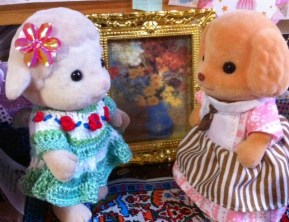
“No, I am not on a diet, but I just did not have any appetite… I like walking than eating! Well, let’s call it our “sauntering” as the great poet Henry David Thoreau defined. Do you know Thoreau himself was an aumbulater nascitur non fit? He was an avid walker who used to spend about two hours walking in nature. His study was out of doors like his poet pal William Wordsworth.” “Oh, I did not know it, Sally. I only know that Thoreau was a great naturalist poet and died from consumption. “Yes, Bonnie. That too was right. Soon both adorable ladies were embarking on their ritualistic morning sauntering along the Avenues of trees and flowers with larks and bluetits vivaciously chirping and tweeting, all in nature’s symphony that could make you forgive your foes and love humankind at least for that pristine moment of pleasure.
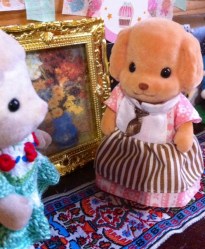
Bonnie, La Bonne amie Thoreau was right: the act of sauntering in nature would blot out the strains and cares of contemporary life and anesthetize your weary body and minds against the strains of everyday life. It’s absolute freedom from all worldly engagement. Like Thoreau, Sally thought that sauntering was not an exercise but a kind of enterprise, an adventure of a day that invigorated her spirit and mind. And Sally was hoping that Bonnie would share her pleasure of appreciating the symphony of nature. “You know Thoreau was something of an eccentric genius,” Sally decided to add some tidbit of gossip on the poet. “Oh, really? How so? ” Bonnie seemed intrigued. “Well, he never went to church but believed in God; did not marry, nor did he cast vote, nor did he pay taxes! But this very individuality endowed him with a crown of literary ascendancy, I think.” “How could he not pay his due taxes as it’s his sacrosanct duty and responsibility as a citizen? You know what, Sally? That’s why I do not like any of these intellectuals who put ideas before their civic duties and personal responsibilities.”
Bonnie’s truculent remark was a bit startling aberration of her usual diplomatic modus operandi of expressing her opinion. But come to think of it, she couldn’t agree more with her friend about the duplicity of so-called the intellectuals, the new ecclesiastical estate of our modern society. And Sally was inwardly glad to have a friend as thoughtful and truthful as Bonnie. But still, Sally wanted to spare Thoreau from the supercilious learned elites.

The ante meridian sun was suavely sunny in the fiercely blue sky that would remind you of the celestial garb of the Virgin Mary in Rembrandt’s paintings. The Italians would call the color “azure,” and they were good at making the pigment for Renaissance painters who raved about its lucidity and vivacity of the exquisite hue. And the fragrant breeze was a blessing of the beautiful Titan-goddess Aura for their friendship bound by mutual understanding and love of history and literature. As the two good friends were continuing to enjoy their sauntering in nature, it seemed right that without even going to church on Sundays, you could find the evidence of the Creator in awe of nature’s beauty and feel the presence of the existence just as Thoreau and the late Pope John Paul Second had felt and expressed.

-
“Mind Your Language” (TV Series 1977-1979)

Have you ever tried to explain a certain colloquial expression, such as “kick the bucket,” “shoot off his mouth,” or “until the fat lady sings” to someone whose mother tongue is anything but English? You probably have been delighted to find out how meanings of words can yield multifarious feats of creative interpretations, which can also, in turn, be prospective nouveau vocabulary of the most effectively deployed Lingua Franca of our time. After all, that’s what Geoffrey Chaucer and William Shakespeare, and George Bernard Shaw did to the English language, which is still kicking and alive in keeping up with the evolution of our own cultural progress. And certainly, the students in the evening English class are a tour de force of such cultural enterprise in this hilarious original British sitcom “Mind Your Language.”
The story of Jeremy Brown, an ingenuous young academic teaching English to his slightly offbeat motley crew of foreign adult students at evening classes in an adult education college in London forms the basis of the show. Mr. Brown has to deal with his students’ creatively wily answers to his questions, while trying to instill in them the elements of the English language with his Oxford-educated academic credentials. In fact, it’s the class that gets the laugh by pushing their naive enthusiastic young teacher into an imbroglio of jocular situations all for the celebration of joviality in their evening English class after hard days of work. In bewilderment of his students’ wily but innocuous chicanery, Mr. Brown’s affection for his class grows bigger and deeper as the show continues; you see him becoming something of Jack of all trades for his students as well as the principal, Ms. Courtney. You will find Mr. Brown at the police station, in court, in hospital, on the dance floor at the school fete, and of course at the pubs with his beloved students or Sidney, the cockney school caretaker.

The Cast of “Mind Your Language” The delightful peals of hearty laughter, the bounty of warmth, and even remedial lessons of English embroider on these three scintillating series of the show produced by London Week Television between 1977 and 1979 for ITV in England. Each of the episodes was ingeniously written with simply brilliant feats of words and ideas on the grounds of realistic situations relating to anyone who speaks English as a foreign language or anyone who deals with such person in reality. Also, the collective efforts and performance of the cast with each actor and actress harmoniously contributing the best of the self to the respective character is the ipso facto gem of the perennial popularity of the show to this date. All in all, the setting, the topic, the storyline, and the cast of “Mind Your Language” give you the idea that in order to make a good TV comedy show that strikes the chords with a wide range of people regardless of ethnic, racial, and/or social backgrounds, all you have to do is to look into the everyday life around you and see if there is anything that transcends the subjectivity of the aforementioned backgrounds in order to reach the universal code of humor and humanity without pontificating social/political ideology. For these reasons, “Mind Your Language” is an unmissable feast of comedy of intelligence, wit, humor, and a touch of innocence that deserves of its recognition in the canons of British Classic Comedy.
-
She lived in a Glass Palace

She lived in a glass palace
by the uncharted sea of the Nereides
riding on the shinning crest of sea waves
in breezy dalliance with gods of winds.A Lady was shining in Auburn luster
Graceful as a queen, bright as a star –
whom there were none to adore
And none to fall for evermore:Among the alacrity and levity
of the the paramours and their Nereides,
She lived in anonymity, in virgin liberty
Hidden from the unwanted eyes.A Spirit and a Woman with a countenance
of sweetness laced with strangeness,
She lived incognito, and none could know
Till her Two Crows named Thought and Memory
told him so. -
Lonely Planet California by Lonely Planet
 Lonely Planet California by Lonely Planet
My rating: 5 of 5 stars
FORGET La La Land. Horace Greeley, founder and editor of the New-York Tribune, writer, and statesman whose ingenious wit melded with erudition and humanity endeared him to the American public urged the people on the East Coast, especially educated unmarried women in the east – to move to California for its primordial beauty: “Fly, scatter through the country, go to the Great West, anything rather than remain here.” Also, Henry David Thoreau described California as a pristine virgin land where a terrestrial River of Lethe flew the Lethe of the Pacific. The collective literary rhapsody comes to life in this world-famous travel book with its signature vivid colorful pictures and detailed, itemized information on the region in suavely offhand convivial narrative style that entices you to love California at first sight.
Abundant with its rustic and restive natural beauty unsurpassed by glamour of tinsel cities and its unique melding of multifarious cultures and rich history, California is a sun-kissed prize of the States. Take a hiking in Mt. Shasta, and this awe-inspiring mountain will stir your imagination and makes you believe it a home of a sky-spirit as the native tribe believe. If you are in mood for being in touch with the caress of the blue waves away from the meele and reality just for one day, you can elope with your beloved or with your own weary self to Big Sur. Nested against mysterious-looking redwood forests, the Big Sur Coast has all the elements for being a lovers’ paradise where you can be in your most unguarded self and be a Phoebe Cates or her lover in movie Paradise. On the next day, a visit to Santa Barbara will be quite a cultural feat by visiting the 18th century villas, shops, and churches built by Spanish conquistadors and priests. Or you and your fido friend can do some super-fun splashes or even venture surfing at Huntington Beach on weekends. And of course, there are Disneyland and Universal Studio if you want to meet your favorite characters from childhood and roll with what the best amusement parks can provide to your wildest dream at the best.
This book is a comprehensive overview of the places and history of California in addition to rich remedial information on the rates of currency and estimated expenses expected of traveling the region if you come from a different country. Written by several veteran globe trotters and well-traveled Californians in compilation, reading the book will give you a sensation of listening to your friend’s travelogue or experiencing a jolly tour guide by an amiable cicerone all to yourself for free. Moreover, the book will equip your mind with knowledge of the region, so that when you actually go there, you will appreciate the beauty of the region like never before.


You must be logged in to post a comment.