
There was a girl, and she had bangs
Right below her crescent eyebrows.
And when she was happy,
she was sweets to the sweet,
And when she was sulky,
she was colds to the coldest.
There was a girl, and she had bangs
Right below her crescent eyebrows.
And when she was happy,
she was sweets to the sweet,
And when she was sulky,
she was colds to the coldest.
Daniel Defoe (1660-1731) was something of a daring noble rebel. If the name does not ring a bell to you at first blush, the name “Robinson Crusoe” will dawn on you with the popular images of the character and his faithful servant Man Friday constellated in film and animation firmaments. Defoe’s timeless classic Robinson Crusoe popularized the form of English novel along with Samuel Johnson’s epistolary novel Pamela in the canon of English literature. A writer conscientious as well as prodigious, Defoe did not hesitate to put his credo into actions by wielding his pen across paper. His bounteous works were in fact used as his arsenal of intellectual arguments against the ills of the society he did not fail to notice in all aspects of everyday life, such as the mistreatment of women, the poor, and those whose beliefs did not conform to the Church of England in his time. Defoe was neither an intellectual snob nor a hypocrite; in fact, he was not afraid of speaking his mind in a most poignantly cogent way as manifested in this short prose “Charm School for Women” from his essay on The Education of Women (1719) in which Defoe pillories canonical discrimination against women as grave injustice against humanity.
Defoe believes that it’s a lack of education that makes a woman proverbially turbulent, clamorous, and uncouth by comparing the soul in the body to a rough diamond that must be polished to its most naturally brilliant luster in order that its true beauty is manifested, just as the soul is thus distinguished from nondescript melee or even brutes. Defoe criticizes that men make women brutes by preventing them from being made wiser by dint of denying them the advantage of education because of the fear that the new enlightened womanhood will vie with the manhood in their improvements. Defoe then suggests that women be taught languages, especially French and Italian with a special focus on a subject of history so as to make them understand the affairs of the world and how they swing and thus wise.
In my point of view, such emphasis on the study of history strikes the chords with John Milton’s provident observation that: “Poetry makes us witty, but history makes us wise.” Knowledge of history enables you to realize a commonality between the bygone eras and our time in the discovery of truth of human nature across a great divide of time and space, so that we may learn from the past and use the knowledge as to better the world in our time, which will be an ongoing cultural enterprise so long as the human race exists. The universality of truth in satisfaction of reason and the cyclical nature of human affairs have been manifested in the Holy Writ as follows: “There is no new thing under the sun” and “Old things are become past; and lo! All things are become new.”
Defoe’s viewpoints of women’s education is far from patronizing or condescending in the capacity of a sympathetic or lenient master deigning to address to his maids. On the contrary, he speaks as an altruistic, eager academic who feels for the pathetic states of women deprived of the privileges of education that will do a world of wonder to womanhood if equitably given. He avers that proper education will teach women the proper management of their natural wits, so that they will prove to be very sensible and retentive. Therefore, to withhold women from the crown of education is injustice itself, which in my opinion also goes against Christian charity in terms of sharing what you already have with those who do not in order to double the joys and cut the misery in halves. Moreover, the refined women’s souls as a result of education are the grist to the mill of society with more culturally refined and publicly civil-minded individuals. In light of Defoe’s provocatively humanistic perspectives on the education of women that does not smack of flagrant political ideology to gain popularity of womankind and his beautiful allusion of a woman’s soul to a rough diamond in its primordial form, this brief treatise on the importance of education of women is an illuminating read worth the noting with a nod.
RE: 8/12/2018 article of “Broken Guy goes down with plane” from the Los Angeles Times
However bleak and and fatalistic his views on Death of God and Nihilism might be, the one definitive thing German philosopher Friedrich Nietzsche knew was this: “Anyone who has a why to live can bear also any hows.” How reassuring it is because it means that even if life presents you anything but shattered dreams, aborted hopes, and clipped anticipations for whatever you try to work out, as long as you still hold steadfastly onto a sense of purpose – that is a why to continue this so-called “life”- your life will not end in nil, or in crash such as the man I read about in the newspaper today.
His name was allegedly known as “Richard Russel,” according to his bantering with an airport controller during his audaciously precarious aerial heist of an passenger aircraft he had stolen from Sea-Tac Airport in WA. He was reported to be a 29-year old former ground service agent at Horizon who had also run a bakery with his wife until 2015. It is reported that he died in crash on a wooded area on Ketro Island south of Seattle, WA by saying, “I wasn’t really planning on landing it.” The plane did not hit any structures nor did it cause any collateral damages to private properties, since the island itself is underdeveloped. The whys and wherefores of Russel’s quixotic joy ride have not yet been manifested in the course of the current FBI investigation, but judging from his communication with the controller, he might have been suffering from existential vertigo in which he had lost a sense of purpose, a why for continuing his life in dealing with demands of tasks that everyday life had imposed on.
In case of art imitating life, Russsel on the passenger aircraft reminds me of Don Quixote who, on his beloved Rocinante, gallops toward the huge windmill to vanquish it, a stereoscopic symbol of pompous hypocrisy of life that generates nothing but the ills. Foolish, yes, needless to say. But heinous or even insidious? Hardly so. Stealing is one thing, but ending his life out of emotional distress is another thing, as they are apples and oranges in the sense that he meant no fatal harm on anyone by using the stolen aircraft as a weapon of mass destruction as in the case of the terrorist carnage of 9/11. I wonder what might have gone through his mind in the cockpit of the plane as he was nearing to the end of his life: a phantasmagorical display of his memories that he had collected through life, willed or unwilled? Perhaps, being a pilot of the plane might have given him a tactile sensation of being capable of piloting his own life, that ineffable stupendousness of capability, which would have given him the equal dose of confidence at the spur of the fateful moment.
Playing a pseudo psychiatrist is not my forte, but it is viable to think that Russel ‘s contemporary strains of life and postmortem malady that anesthetized his Reason and thus emboldened him to do such a foolhardily venturesome act at the expense of his own life are something that we can feel pathos at the least. And that is why I find it hard to criminalize him by putting him into a moral/ethical Procrustean bed, which also brings me back to an act in Macbeth:
“Life is but a walking shadow, a poor player that struts and frets his hour upon the stage; and then is heard no more; it is a tale told by an idiot, full of sound and fury, signifying nothing”

Philippa is pushing through busy Main Street on a sunny Friday afternoon with her son Fred in the backseat of her bicycle by dint of solicitation and fortitude of the valorous McGreen family. Fred, an orphan abandoned at the age of two weeks on the step of her gingerbread lookalike house, is her de facto son, the middle one between Alfred, the eldest son of herculean feats of athleticism and the youngest, Philip, “Phil,” who, on an account of the solidification of hereditary traits of the adventurous family, goes for jocular adventure. But Fred is a different soul, he is a sensitive soul with a great mind and a tender heart. And today the foundling of Philippa is very ill that requires a doctor’s immediate attention; hence the mother is forcefully working pedals to Dr. Hobson.
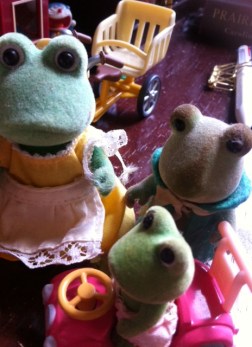 The mother and the son is also escorted by a trusty entourage of Phil, who is also concerned about his dear brother. Small as he is, Philip is all bravery and cheerfulness. He wants to make sure all’s well with Fred, who always reads him sweet bedtime stories by his nightly bedside as well as other illuminating stories about ancient Greek heros and the gods and goddesses of the Parthenon, great historical figures, and oeuvres of fine writers throughout the western civilization. Fred to Phill is what Yoda is to Luke in the Star Wars. Philippa is pleased to see her sons bound by Charity, Hope, and Faith, the three theological virtues, not by dint of mere blood relation that is often devoid of the virtues by default.
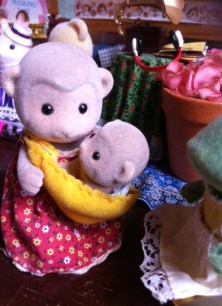
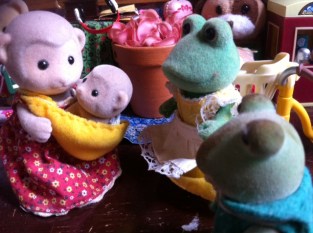 When the McGreen trio arrives at Dr. Hobson’s office on Kingsbridge road, they are amiably accosted by Helen, one of the prettiest and kindest ladies in Avonlea who is married with three children to a grocery proprietor Priam, who fell in love with her at first sight by thinking, ‘She’s beautiful, and therefore to be wooed. She’s a woman; therefore to be won.’ Helen and her three-old son George are pleased to see her neighbors there and wants to know what has brought all three of them to this far. “Fred has been in agony for two weeks due to a serious case of abscess on his right shoulder,” says Philippa, “But Fred did not tell me and his brothers until this morning, enduring all to himself only the gruesome pain that stymied his everyday activities, such as eating and working. In fact, the pain even prevented him from reading a book!”
 Helen does not understand Fred’s reason of silence that was broken this morning, so she ventures to inquire about the cause. “Fred, why did you not tell your mother when it began to hurt you? Had you told her about it earlier, you would have been cured.” Fred is absorbed in all the dialogues between his mother and Helen and forms the most honest and provident answer to the lady’s inquiry. “At first, I thought it would go away because it had happened before. But although I tried myself applying to a topical ointment and taking doses of pain suppressant and high hopes, it just became worsen… What’s more, I did not want to worry mom because she was always very busy with running the restaurant and the household all by herself. Now I am in great pain now, which has compelled me to alert mom about it.”
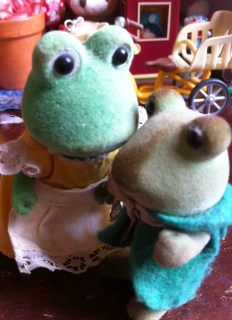
Upon hearing such stream of heartfelt soliloquy of Fred, Philippa’s eyes are welled up in tears and with an insurmountable gushing power of pathos and charity (which actually means “Love” as its original meaning of Caritas,) she hugs her dear son Fred and tells him tender words that can only be true if carried out by the one who possesses such spirit and soul: “O, my dearie Fred! You really shouldn’t have worried about my work and myself because I am your mother. A mother is ascribed to attend to her child with unconditional love, and it is an immutably, intractably, cardinal duty of Mother, who is also endowed with magical power to endure anything. So you do not have to worry about me, ever, Love.” Feeling the heartbeat of Fred against her own, Philippa reminds herself of her mother’s advice that it is a wise mother that knows her own child. All the more, she believes that love’s reason’s without reason, especially in the family.

“Hi Stephanie, wow what a great and well-written review. Thank you very much for posting it on your blog! We will share it on our Facebook page and have also retweeted it!”
A very well-written and comprehensive review of our new book on Marie Antoinette. Check out the blog post and discover more about this controversial queen of France.

My book review of Marie Antoinette: A Captivating Guide to the Last Queen of France Before and During the French Revolution, Including Her Relationship with King Louis XVI by Captivating History was posted on the publisher’s Facebook today. Although I held no intention of being publicized by the publisher of the book when writing the review, it’s certainly good to be recognized by such a credible, esteemed establishment.
I write not to impress anyone, but I simply like doing it out of sheer egotism and aesthetic pleasure, both of which strike the chords with George Orwell’s reasons for why he writes. Writing is in fact an act of fulfilling my creative and experiential values that chimes the notes of Viktor E. Frankl’s Logotheraphy, a third Viennese School of Psychotherapy based on existential analysis focusing on ego qua meaningfulness, i.e., will to meaning as opposed to Adler’s Nietzschean doctrine of will to power or Freud’s will to pleasure.
Kurt Vonnegut’s immutable, timeless adage should resonate with bells and trumpets to remind us of the nobility of being a creator of art: “To practice art, no matter how well or badly, is to make your soul grow. So do it.” That’s so patently true. Remember the ever popular catchy advert phrase? Just do it. Think Nike.


You must be logged in to post a comment.