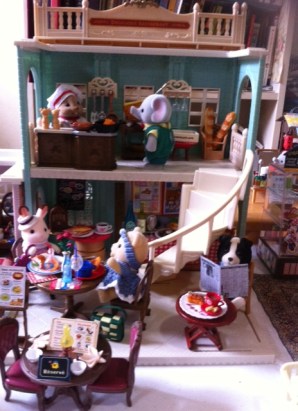
 Since the opening of a chic French Restaurant La Boum, it has gained a reputation for serving a mune of homestyle dishes at reasonable prices in a very lovely atmosphere. Notwithstanding auspicious popularity of his restaurant, Randy the chef and owner of La Boum is still a simple man at heart, always finding happiness in every little way like St. Therese of Little Flower advised and practiced in the 19th century. In fact, it was Randy’s consistent positiveness and pleasant deportment coming from his heart that impressed highly enterprising and brilliantly intelligent John Elephant, a town’s real estate developer who owned most of the commercial and residential properties in Avonlea Consequently, John let Randy rent the restaurant for for an unspecified period on one condition that Randy’s monthly due would always be made on time.

“Hey, how’s it going, Randy?” Looks like your restaurant is in boom like the name of it, La Boum.” was John’s affable greeting to his new friend and tenant Randy. “Hey, buddy! Couldn’t be better! I mean. ever since I opened up the restaurant, there has never been a day where there is an empty seat. I did not advertise on my restaurant on the media myself! I call it a miracle!” Randy’s heartfelt rhapsody of the successful launching of his restaurant business amused John all the more. That’s why Randy was a good friend of him. John needed Randy’s rustic and artless simplicity. Everything Randy said and did was of ingenuousness, which John had scarcely encountered. Maybe it’s really an act of Providence that Randy and John were good friends.
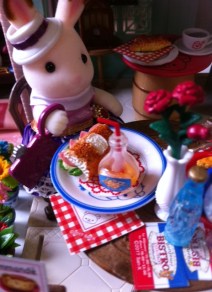 In the meantime, Seraphina and Mathilda were having their afternoon lunch in the restaurant after their fabulous window shopping in Lotte Department Store newly renovated with more variety of selections from apparel to shoes, cosmetics and household appliances, chocolates and restaurants. “I don’t like the new version of the department store.” Seraphina, who was tired of walking around the aisles, confided to her friend Mathilda before her first bite to a Chef’s Sandwich, one of Randy’s specialties. “It’s just all a pompous hyperbole of the same stuff only arranged and called differently. But I have to admit that the whole interior design of the lobby is quite elegant with aromas of sohistacately scented perfume that sweeten the entire floor.
 Mathilda thought that Seraphina was often hard to please, critical of anything glamourous or popular contrary to her fashion-conscious appearance that seemed to belong to a crowd in a Vanity Fair. “I like the remodelled store. It has now a wider aisles to walk around with attendants with more professional but nicer attitudes and more various items to select. It had taken about 8 months for the store to open it again. And I honestly think they had put quite a few huge efforts to make it better to accommodate themselves to today’s demanding satisfaction of us customers. So we should give them a laudable credit even just for the bona-fide efforts. Don’t you think so, Seraphina?”
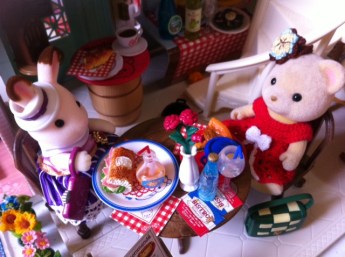
Having heard all this, Serapina felt herself a bit ashamed, or modified for being so critical of anything new or modified because a new thing always terrified her; she lacked adaptability. She’s conservative at heart, but thanks to her good and graceful nature, she wasn’t a conventionalist. “Mathilda, I did not intent to criticise the store’s generally improved atmosphere. In fact, I liked how the whole lobby smelled with perfumes of beautiful scents that were totally different from the ones you could get in drugstores or some other shoddy places. Maybe I was just too tired after walking around the store because I get easily peeved for such things… But I am glad to come out with my good friend today and enjoy this moment of repose with this delicious food. ” Upon finishing her apological statement about her abrupt curtness in the beginning, Serapina began to eat her sandwich with pleasure, which made Mathilda smile and start enjoying her custard pie with her heart’s content.


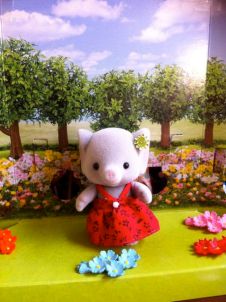
 The Elephants are a new family joining an illustrious body of residents of Avonlea. They are from Cape Town,, South Africa, where English is the official language, which makes them easily acculturated to the new environment. The Elephants are shown here they landed at Montgomery Airport named after the founder of Avonlea, “Lucy Maud Montgomery,” located 3 miles away from Avonlea.







You must be logged in to post a comment.