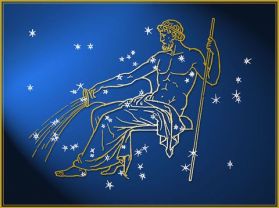
Those thousand stars of imaginations
Those divine feats of brave deeds
flow from the celestial sea of Saturn and Uranus,
making you of Olympian Spirits and Minds.
Those thousand stars of imaginations
Those divine feats of brave deeds
flow from the celestial sea of Saturn and Uranus,
making you of Olympian Spirits and Minds.
 Why We Get Fat: And What to Do About It by Gary Taubes
My rating: 4 of 5 stars
We all have read about books about dieting and exercising. We all have tried most or some of the methods as provided, but the bottom lines are all the same: that eating less, exercising more is the sine qua non of getting thin and staying healthy. Does this res ipsa loquitur (a thing that speaks for itself) model really work wonders to all? Then why doesn’t everyone following this principle get the uniformed result?
Gary Taubes does not believe so. In fact, he subverts all such received ideas of what we have so far known as norms of dieting rules and regulations because they are scientifically fallacious and commercially expedient based upon his years of punctilious research on this subject matter. In this book, Taubes goes back to the primordial question of what makes us fat despite our efforts and offers head-turning advice which “stands the the received ideas of dieting and exercising on its head”.
He criticizes such faulty knowledge on calorie intake/outtake as a result of insufficiently conducted experiments of nutritional science of the 20th century. (He calls it the product of “bad” nutritional science”) This belief of less “calorie take-in” and more “calorie-out” contradicts the science of physiology – i.e., how it works as regards to how our body digests food, where it is stored, and how it influences our body.
Furthermore, he looks into a role of genetics playing in metabolism. Which one is more influencing in making us thin? Exercising or your genetic composition? Besides, does meat really make us fat? Should we become vegetarians to lose weight and stay gracefully thin? Taubes answers these questions in detail and enlightens us from the mass hypnotic mantras of the calorie intake/outtake that have been permeated in our society for more than a century. If you are on the verge of abandoning your will to lose weight, or tired of listening to the fad dieting, or want to try something new and really effectual just as I did, this book will make a breakthrough guidance book for your healthy life.
A high cold star on a winter’s night
chiming the notes of her emotions
entering a forgotten melody in the past
is the word she feels for her pathos.
 The Writer’s Guide to Everyday Life in the Middle Ages: The British Isles From 500-1500 by Sherrilyn Kenyon
My rating: 4 of 5 stars
Although the Middle Ages (roughly from the 5th to 15th century) is often dubbed as “The Dark Ages,” the epitaph coined by the thinkers of the Renaissance, this was the period when many important social institutions, such as universities, hospitals, marriage as a sacrament, and use of surnames, which have become norms of our society, were established. In this book, the author Sherrilyn Kenyon succeeds in closing the great divide of time and space between modern readers and the folks living in the medieval time by presenting general aspects of life in the medieval England ranging from food to medicine and so forth which are not so much outlandishly different from what we are familiar with in one way or another. This review of mine intends to provide the facts on the two of the necessities of the human life, which are food and clothing, plus medicine to share the fun of knowing them and of learning about the misty but not too distant past on an evolutionary clock.
Food
The folks in the Middles Ages were not usually voracious eaters; breakfast consisted of a loaf of bread and some wine for the nobility or ale for the peasantry, partaken of after a daily morning mass. Then between 10:00 AM and Noon, a dinner was served, and supper at the time of sunset was prepared. In the castle of a lord, during a supper time, a traveling minstrel (a wandering singer-songwriter) entertained the host of the castle and received food or coins in return. The most perplexing fact about the medieval table etiquette involves attitudes toward the dogs: food scraps were forbidden to be given out to the dog while the diners were at the table. It further prohibited tossing a morsel of food to the dogs even after the meal.
With respect to the kinds of food mostly available to the folks living in the middle ages, the following were some of the common staples of the nobility and the peasantry:
Clothing
Despite the class differences, there was a little difference between the styles of clothing and the types of fabric worn by the nobility and the peasantry at least during the early middle ages due mostly to limited trade caused by poor travel conditions. Merchants and peddlers could not travel far with their carts and wagons as a result of such poor road conditions and a peril of highwaymen. So Nobles made their fashion statements with jewels as accessories for their garments. When the power of kings and nobles grew stronger, they also controlled the roads, decreasing the risk of robbery and violence. Consequently, this new social mobility led to an increase in trade, bringing a greater variety of fabrics and colors. Moreover, the term “Fashion Police” was originated from this period when this deputy of the nobility literally patrolled the streets and checked all to make sure they were wearing clothes appropriate to their social class.
Medicine
I was especially interested in this subject due to my recent urgent medical treatments. What was it like being a patient of painful ailment? Contrary to my previous beliefs of barbarian methods of curing the sick without anesthesia and other superstitious ways of treating common diseases, the medieval doctors were actually quite competent to heal the wounded with surprisingly inventive surgical tools and remedies that can be adopted to tend to the modern day patients. Also, Jewish doctors armed with the knowledge of Arabic and Greek were most highly esteemed and exclusively employed by kings, nobles, or wealthy merchants in their castles or manors. Also, many women were licensed to practice medicine equipped with knowledge of various remedies passed from their elders. Some of these women specialized in eye diseases.
The common types of ailments in the middles ages are as follows:
Further to the notable medieval medical achievements as listed above, here are some interesting information on how the folks at the time tried to cure their physical weaknesses which I think might benefit us:
To encapsulate, this easy-to-read book is a great guide to the ordinary customs of the middle ages that are compiled by the author’s diligently thorough research on the social/cultural aspects of the medieval England. In fact, as the title of this book presents, it will be also an excellent reference book for writers interested in creating stories set in this time period. Besides, the book shows readers that however arcane or backward the way of life in the medieval time may look to be in our modern standard, the medieval folks lived in what they imagined as “modern” time compared to the ancient Greek and Roman times. Therefore, we should cast away our fallacy of the human ego that makes us look back at the past and think we are better than they were. After all, the medieval was not altogether a grim and gloom dystopia ruled by religious didacticism and scientific ignorance.

The day’s act has come to an end,
The scenes are become past,
The curtain falls on the stage
with the sound of nightly lullaby.
 The Alpine Path: The Story of My Career by L.M. Montgomery
My rating: 5 of 5 stars
As one of millions of readers in the world who have loved Canada’s most famous red-haired Anne of Green Gables in books, films, and animation, I have always admired Anne’s creator, Lucy Maud Montgomery’s choice of words and illustrative descriptions of characters, things, and situations that make the story at once vivaciously realistic and fantastically romantic. Naturally, when I came across this book, I knew I had to read it with a heart to find out more about her life written by herself.
The Alpine Path is her autobiography, originally published as a series of essays in the Toronto magazine Everywoman’s World in 1917 at the request of its editor to write about her writing career. Montgomery found it odd because she did not think it as a “career” but something of a niche where she would always find comfort, happiness, and life itself abounded with the memories of beautiful Prince Edward Island whose chaste and restive loveliness was unsurpassed. Added to her natural affinity for words was her incessant diligence in practicing writing on a daily basis. Her topics of writing ranged from scribbling her thoughts and feelings to biographic accounts of her cats and critical book reviews.
Of all her fortes that enabled her to arrive as a writer, it was her indefatigable will combined with commendable perseverance and brilliant imaginativeness, all grouping around her indomitable aspiration to become a writer, as discerned in her narrative. Montgomery believed in herself and struggled in secrecy and silence by making writing activities strictly private because deep down, under all rejections, discouragement, and rebuff, she knew she would arrive as a writer someday.
What makes Montgomery’s books entertaining and approachable to readers of all ages are her ideas of a good story that consists of the following components: (1) absence of a moral undertone in a story lest it should be a didactic textbook or a fable devoid of literary merits and entertaining quality because literature should be “art for art’s sake and fun for fun’s sake”; and (2) use of imagination, which is a powerful tool to create a world of make-believe, based upon studying people and observing scenery in life to render realistic feelings to the imaginary world of fiction. To Montgomery, making use of the real to perfect the ideal is what gives to art its true meaning.
To illustrate, the famous liniment cake episode that happened when Anne made the selfsame cake by accident for the parson and his wife was based upon her own experience as a school teacher in Bideford boarding at the Methodist parsonage there; the parson’s wife mistakenly put liniment in a cake, but only the parson himself did not recognize it. Also, while working as a reporter for The Daily Echo in Halifax, she was often asked to write up a society letter when it was not sent by the requested lady of high society. Montgomery used her wide scope of imagination by writing such a letter as if she were the lady of high society, which gained popularity from readers.
As Benjamin Franklin once said, “Heaven helps those who help themselves,” Montgomery’s unyielding will and diligent practice of writing every day were the sine qua non of her meet reward as a successful writer. This charming autobiography is a must-read for not only fans of her books but also those who love writing and cherish in secret the thought of becoming writers. Furthermore, those who are struggling to rise above the planes of biological, psychological, or sociological inhibition through what means they deem inspirational and meaningful to achieve will find a kindred spirit in this book. Montgomery encourages her readers to climb up the alpine path so steep, so hard that it will eventually lead to the height sublime as she once did.


You must be logged in to post a comment.