Blog

  • Billy Budd by Herman Melville

    Billy Budd, SailorBilly Budd, Sailor by Herman Melville

    My rating: 4 of 5 stars

    The ageless question of human nature pertains to the paradoxical mysteries of human personality shaped by our perception of the world, as reflected in ancient mythologies. Herman Melville saw this intricate irony in this representation of reality in connection with the development of complex human personality in the characters of Billy Budd, John Claggart, and Captain Vere in this nautical novella.

    (1) Psychoanalytic perspective: The characters are emblematic of Freudian elements of personality. They are id represented by Billy (intuitive mind), ego (conscious mind) by Claggart, and superego by captain Vere (ethical consciousness). Billy’s ingenuousness, unalloyed beauty both in physical appearance and inner qualities, and young age symbolize the earliest phase of development of human personality. Hence the name “Budd” seems to betoken this emerging state of metamorphosis into early adulthood. When Dansker warns him of Claggart’s malicious intention to do harm on him, Billy dismisses the advice and insists on Claggart’s friendly treatment of him. In Billy’s representation of reality, Claggart exists as what he sees: a kind officer who does not give him a hard time. In fact, it is this innocent child-man like quality that becomes Billy’s fatal flaw.

    Billy Budd is doomed to be ruthlessly crushed when he is transferred as a foretopman to the naval ship HMS Indomitable. Here he meets his Valkyrie John Claggart, Master-at-Arms equivalent of Chief Police Office or discipline officer, who is always down upon Billy, for a reason indicated none other than his being divinely beautiful and angelically kind. It is the old veteran sailor named Dansker who regards Billy as his little child and informs him of Claggart’s devious motive. All these characters are at the helm of Captain Vere (whose name is derived from the Latin word Verite, meaning truth. Here the vessel is a model of representation of reality surrounded by seas, which is the world it anchors in.

    Claggart’s reason for his hatred of Billy is clandestine. He appears to act according to his ego, the conscious mind which Socrates considers as spirit. It seems that Claggart’s loathing of Billy becomes inflamed when Billy accidentally spills pea soup on his feet because he believes it to be Billy’s intentional effrontery. Claggart seems to act by his emotions based on the purely abstract reasoning of the mind. Therefore, Claggart’s model of reality is a result of his own way of interpreting the situation with his faulty assessment of the character that defiles his mind with dangerous antipathy toward the youth.

    Captain Vere, a figure of authority that convenes both Billy and Claggart on the subject of alleged mutiny as instigated by Billy, represents the ethical mind, the superego, the reason. He acts as an executor of justice to gird up the loins of discipline among his crew amid the revolutionary wars on the sea. Vere feels that Billy is innocent; however, when Billy hits Claggart to death at his false accusation of him as a mutiny leader, Vere is convinced of Billy’s alleged guilt and orders his execution by hanging. In a way, Vere represents an amoral authority figure dealing with individual citizens or subjects according to law and order minus spirits and appetites.

    (2) Mythological perspective: It is also interesting to look at this story of Billy Budd as folklore tinged with a mythological undertone of heroism akin to Norse mythology. The figure of Billy Budd reminds the reader of an ideal hero dying young; the hero can prove his nobility of character by death because often heroism depends on lost causes. The young welkin-eyed Billy Budd’s death gives rise to the high concept of this Nordic hero because the real power of good is shown by continuing to resist evil while facing certain death as the legacy of Billy Budd is immortalized in the seaman’s ballad. In my opinion, this story of the welkin-eyed young hero reflects Melville’s model of a heroic individual whom he once envisioned in his sailing days. Or perhaps, Billy Bud could be what Melville wished his two sons lost in unfortunate occasions (Malcolm, the eldest, who died of a self-inflicted gunshot wound in 1867 and another Stanwix, who died in 1886 in San Francisco) to be like. It would have been Melville’s mournful tribute to the deaths of his sons as enshrined in the mythological figure of Billy Budd.

    The book is written in an intricate prose style with the literary vocabulary used in the 19th century and historical allusions to the revolutionary wars and the great Admiral Nelson’s naval wars to give to the story a more realistic setting. Melville, who was a seaman himself in his youth and later settled as a customs inspector in New York City, wrote this novella in 1891, the time of his death. It was actually his postmortem work, published in 1924, 33 years after this death. And it was this work that kindled widespread interest in Melville’s works.

    Reading this tale of an angelic sailor will give the reader a sense of reading a Norse mythological tale because the protagonist of the story is evocative of pathos flowing from the complex human nature that is sublimated into heroic triumph over the face of the harsh reality of the world.

  • Into a new beginning

    costa-rica-colorIt doesn’t mean anything,
    It doesn’t mean anything at all;

    For all left behind me is fleeting
    And it will not make me fall.

    It doesn’t mean much,
    It doesn’t mean much at all;

    For all left behind me is now out of touch
    And it will not catch me once for all.

  • Pomp and Circumstance

    drummer-boy

    He bangs the drum and makes a grand entrance,
    annoying gentlemen and terrifying ladies
    in their fine costumes and sparkling jewels
    grimacing at his brave face
    radiating his crimson valor to break the silence
    sealed in proprieties, the pillar of formalities, the flagpole of vanity fairs.
    Forthwith he enters the ballroom full of all eyes and ears
    and makes the ether vocal with a rude awakening of wild senses.

  • Episode IV: Lunch at Rainbow Bakery

    Lunch at Rainbow Bakery (Click here.)

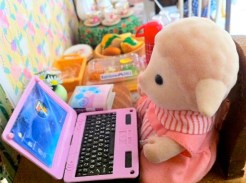
    73eea028ace6869003bb394a78d4e400It’s after a wintry weekend, and the boys of Avonlea met together at Rainbow Bakery for lunch. It’s their elbow room where they can sit down with a set of delicious food, always freshly cooked on premise by Mrs. Lompstrompf according to her old world recipes from her grandmother in Norway and enjoy their time there as long as they like. In terms of the food, Anika, Mrs. Lompstrompf’s only granddaughter who can speak both Norwegian and English thanks to her grandmother’s bilingual teaching since she was a toddler, always adds a great touch of many inventive flavors to the food. In fact, were it not for Anika’s delightful fusion of diverse flavors from all over the world, the little ones would not make Rainbow Bakery their yummy den.

    There was also Sally at the bakery after a visit to her doctor’s office on Kingsbridge Avenue early this morning.  Sally had been suffering from an unfortunate case of abscess on her neck. It gathered and burst 5 days ago, which lessened the pain considerably. She thought that there would be no need to see a doctor for such because she could be healed of as time would go by, but her ma and pa told her to see to a medical provider’s help. So Sally, being always a good girl with full of humanity and great filial duties, hearkened to her parents’ advice and took a trip to the office by tram.  Sally endured the pain of treatment with ladylike dignity, got her prescription from the doctor, and decided to go to Rainbow Bakery to rest herself with the food prepared by her aunt Mathilda to brighten up her weary soul and weakened body. Now she felt much better and relieved, thanks much to the hearty food and the ever gentle kindness of  Mrs. Lompstrumpf (“Grandma” as Sally endearingly refers to and calls her) and vivacious Anika’s personality.  Grandma cheered up Sally with a mug of hot peppermint tea she made especially for the poor girl.

    The lunch at Rainbow Bakery is always pleasant, and even a total stranger would feel included just by sitting there with a cup of coffee and a donut. There is no time limit for how long one can stay there regardless of the cost of food from the menu; you can buy just one croissant and sit there until you are bored with sitting. That’s why the little ones, Sally, and others regard the bakery as their elbow room.


  • It’s a Strange Place, England by Jack Strange

    It's A Strange Place, EnglandIt’s A Strange Place, England by Jack Strange

    My rating: 5 of 5 stars

    Jack Strange’s England is never a bore; it is a mystifying country with its tempestuous history and colorful characters populated by the ever undead of the bygone eras still roaming their past abodes or workplaces among the quick. It is a quaint country where history meets myth and legend. This book will guide the reader to Strange England where fanciful folklores and historical facts are anchored in the traditions and customs.

    The author admits that England is perhaps arguably one of the most haunted countries in the world, thanks to its religiously and politically tempestuous pasts spanning the wheel of time from the Roman colonial period to the present. To illustrate, in Derbyshire a spectral Roman sentinel is often seen leading a parade of a circus comprising gladiators, chariots, and slaves, then all of them disappear into the mist. Another lovelorn Roman soldier is witnessed alongside Hadrian’s Wall in Northumberland, wandering in despair of his betrayed love for a fair English maiden. The phantom English residents also encompass the Benedictine monks led by St, Cuthbert in Lindisfarne, which was a target for frequent raiding by Norsemen who also threatened the cradle of English Christianity. It is said that the best time to see the saint or the monks is when the tides are high and a full moon lights the shore as a natural lantern.

    England is also a home of many interesting sports that are historically – and sometimes by happenstance – originated. The World Gurning Championship in Egremont in Cumbria was originated in 1267 when the Lord of the manor gave out crabapples to the locals. One can imagine without difficulty the consequence of tasting the apple, and thus can master the art of making as ugly face as possible. Hence this hilarious tournament comes to exist to this day. It’s open to everyone – yes, even to the fairest of all – , and it’s all about fun and participation. Also, there is Black Pudding Throwing Championship in Ridge, Lancashire. Originated in 1455, this tournament shows English humor mixed with historical irony, which makes it all the more convincing. It was during the period of “War of the Roses” elegantly referred by Sir Walter Scott (who was a Scot) to the feud between the House of York whose symbol was a white rose and the House of Lancashire a red rose. At the Battle of Stubbins in Lancashire in 1455, both forces decided to throw puddings at one another instead of lances. Believe it or not, the descendents still commemorate the incident by holding a championship every year with mirthful popularity.

    Subsequent to Strange Tales of the Sea, the author Jack Strange has done a marvelous job gleaning the extensive historical documents and cultural artifacts from his tireless research to provide his reader with interesting facts about his England. Strange is a gifted artificer who digs artifacts buried in the depths of forgotten times and lost folklores. Strange is also a mysteriously reclusive figure himself because there’s no personal information about him. Maybe that’s why his writings are so hauntingly attractive and oddly addictive. Strange is an excellent storyteller who weaves a tapestry  of legends and folklores imbued with his impressive knowledge of the history of England and his English humor permeated in his writings. This book is Strange’s winking invitation to his beloved England that spins a general image of the country with enchanting oddity and wide-eyed wonder that the readers will not tire of.

    저장

    저장