Blog

  • ‘Enlightenment Now: The Case for Reason, Science, Humanism, and Progress’ by Steven Pinker

    My rating: 5 of 5 stars

    Gods may be crazy, as the tribal men thought when they picked up a bottle of coke dropped from an airplane. But the world is not crazy and will not be crazier unless you wish it. So you’d better lose faith in the doomsday industry that prompts you to think so because our faculty is intuitive rather than reasoning, rather physical than metaphysical. Steven Pinker points out in this book that we need rationality or a habit of rational thinking to aspire to objective understanding lest we should fall back on the doomsday scenario of a dystopian world.

    To begin with, the enlighten movement is not a product of the west but rooted in human nature as the universal feature. The spirit of the enlightenment movement is “Dare to Understand,” which means applying knowledge to understanding our world to enhance our human welfare to the full effect and force. Enlightenment is comprised of Reason, progress, science, and humanism. However, the currents of modernity flow into global populist tractions that champion totalitarian relativism from individual modes of thinking to social and political policy-making in the name of progressive liberalism or conservatism, when it is not with the absence of Reason and humanism. The proponents of the ideologies described above take precedence of faith over Reason, nation, or culture over individualism and metaphysical over real because they couldn’t care less about it.

    The most impressive finding that I have described from this book is Pinker’s perceptive analysis of the counter-enlightenment movements run by both conservatives and liberals, especially in the States. As many people might conjecture, Pinker is not an ultra-right-wing intellectual because his view on former President Trump and his cult is logically solid and intellectually revoking. He explains that the philosophical roots of Trumpism are a synthesis of a militant derivative of Nietzchean school of philosophy and anti-enlightenment humanism. It’s not conservatism but racism lite, shading into authoritarian populism and romantic nationalism, harping on the good ole days, which weren’t good in respects of the quality of living conditions and level of human rights.

    Amid the bipartisan world of ideologies, the heightened pessimistic opinions of our planet from the environment to social services, Pinker’s education on what Enlightenment means on human progress shines like a beacon of light on Slough Despond. This book gives the world a sense of self-confidence in our cultural progress this far as a collective human enterprise. The history of the world is not cyclical or linear, but progressive and in progress as long as humanity continues. It is this humanity that Pinker emphasizes in the truest sense of Enlightenment that the thinkers such as Voltaire and Kant also professed to be an inseparable element of human progress. Progress without humanism is not progress. Humanism is not a sign of shallow intellectual culture akin to pastoral romanticism or unproductive ideals. Humanism represents the sense, as science reason, which are universal human traits common to all. That is what this book wants to teach us.

    View all my reviews

  • New Odyssey

    Sail away to a new beginning
    sail away from an old harbor;
    Sail, Ship of Destiny, ongoing
    Across life’s wide oceans
    Thru the tides of fortune;
    The year has swiftly gone
    let her go, and look at the star;
    Sail away to the bright anon
    Sail away from the dark afar.

  • live to tell

    I just read an article from the January 2021 issue of BBC History about a British family’s real-life experience in China during the Chinese Cultural Revolution in the 60s. It was so engrossing a read that prompted me to put pen to paper.

    Kim Gordon’s live-to-tell childhood memories during the turbulent times in the country where he and his parents had believed to be a model communist haven as accounted in his diaries and letters put it on the same pedestal with Louise Malle’s Au Revoir Les Enfants and Anne Frank’s Diaries in the context of regarding political turbulences through the eyes of the tender age and the lasting impacts on the minds of the young.

    Gordon’s writings are a prime example of historical records, which George Orwell called a reason to write in his “Why I Write.” In fact, reading Gordon’s account of his memories of forceful detainment in Peking gives me an association with reading one of Orwell’s war correspondence and his first-hand experience as a voluntary tramp in London to report the reality of homelessness and unemployment.

    I think his writings deserve far higher recognition and broader readership in the publication of a memoir, for which I will read forthwith.

  • Patience and Fortitude

    My misery will be beatitude
    Smiling at grief, grim and gray
    Till I see two little birds afar, fly
    Tweeting in fugue of melodies unknown
    And sit on the back of my weak palm
    Frolicking with the beads of Rosary
    Wreathed by pearls of wishes porcelain,
    Bringing the message from the Queen
    Above to her votary sentenced in sadness
    Patience in Blue and Fortitude in Green.

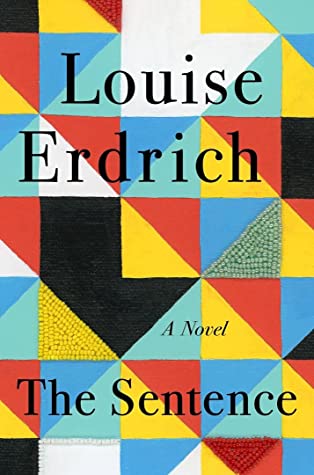
  • Spirit Away: ‘The Sentence’ by Louise Erdrich

    The Sentence by Louise Erdrich
    My rating: 4 of 5 stars

    The Sentence by Louise Erdrich is about the power of words, spoken or written, awakening the spirits of the author, storyteller, characters, and readers, all adrift and luminous as the boundary between the real and the ideal collapses. It’s a polyphonic work of trauma narrative, cultural studies, social commentary, and philosophical memoir interwoven in multiple strands of a joint account.

    The story evolves around Tookie, a doubting bibliophile who thinks books have everything you should know except what actually matters. Books are no more than a portal to mental escapade, a world of make-believe in the likeness of truth or reflected in the highest ether of reason and sentiment, which makes no defining impact on her checkered life as if it were her sentence from the judges of this world and the beyond. So much so that when Tookie finds that the newly deceased soul of a regular customer haunts the bookstore, she works at, she laments her fate of chaos that seems ever to stalk her small wish to live a quiet everyday life. Is it her sentence to live In perceptual existential malaise? And yet, Tookie ends up living daily life with a loving husband and daughter in a house of their own with a steady job as a bookstore attendant. Isn’t it what is considered an everyday life? So why can’t Tookie let the ghost alone when ghosts refuse to depart for the other until they finish their businesses in the world as part of their spiritual sentence?

    I decided to read this book after reading a review from the NYT Book Review a couple of months ago because of Tookie for being exceptional wanting to be ordinary. I felt for her, which was valid until the middle of the book. But as Tookie became settled with her husband in their own house burgeoning as a knowledgeable employee at a local bookstore, she began to lose her fabulous, unique luster. Indeed, I was all high fives for her happiness that I felt deserving, but the further I progressed to pages, the more my heart parted with Tookie’s existential frustration, except the touching moments of love between her and her husband. Also, unlike the book’s general introduction as a ghost story, It is not a supernatural book that will fulfill your cravings for an intelligent horror story. Instead, it is an extended short story featuring a ghost as a fire-starter of narratives connected by bibliophilia. The author believes bibliotherapy is a recipe for the existential malady to quiet the anxious mind. There is no more enchanting than a book, electronic or bound. The lifeless words become alive as the reader awakens the book’s spirit by entering the world of make-believe through the labyrinth of stories leading to the secret garden of truths that the author has fruited.


    View all my reviews

  • the sentence

    Order tends toward disorder. Chaos stalks feeble efforts. Normal is not default, and sadness is nature. I see it all as a gift of the fates that I have to grin and bear with stoic charm like a Sisyphus rolling up the boulder on a hill in Hades. So much so for the morning’s episode that shadows the day’s remains.

    I had to cancel my counseling appointment for tomorrow at 7:00 pm due to training at my new prospective job after work. Should I have rescheduled it instead of canceling? Anyway, the counselor could have asked about such an option if she had been a caring and considerate licensed listener. Writing usually shows a person’s character, however brief it is, as proven by my text communication with her earlier today. Her response was curt and short with a timbre of haste, artful courtesy of an empty reply to her client. I know it because of my divine ability to look through people’s psyche by the mode of speech, writing, or twitching facial muscles. Depending on how you look at it, you can call it a blessing or cursing, but I call it nature. For what’s worth, my extrasensory perception tells me that it’s high time that I prepared a slow parting with her with the pain of disappointment and resentment for betrayal.

    In retrospect, she has never provided me her feedback on my mental state since the onset of counseling sessions. Once I had asked her opinion, she was obliged to tell me reluctantly that I had traumas due to an unfavorable family environment, interacting with lots of missed lucky opportunities and debauched aspirations. Then was heard no more. My understanding of counseling is active communication with constructive feedback about the client’s mental state and what to do. However, she only listened, smiled, said goodbye, and continued. Although my heart is weeping for the loss of paid listener whom I could turn to for talks, sorrow will dissipate into the currents of time. Goodbye to you, Ms. A____. I may see and talk to you again, but my spirit will not welcome you again with all my heart and all my mind.