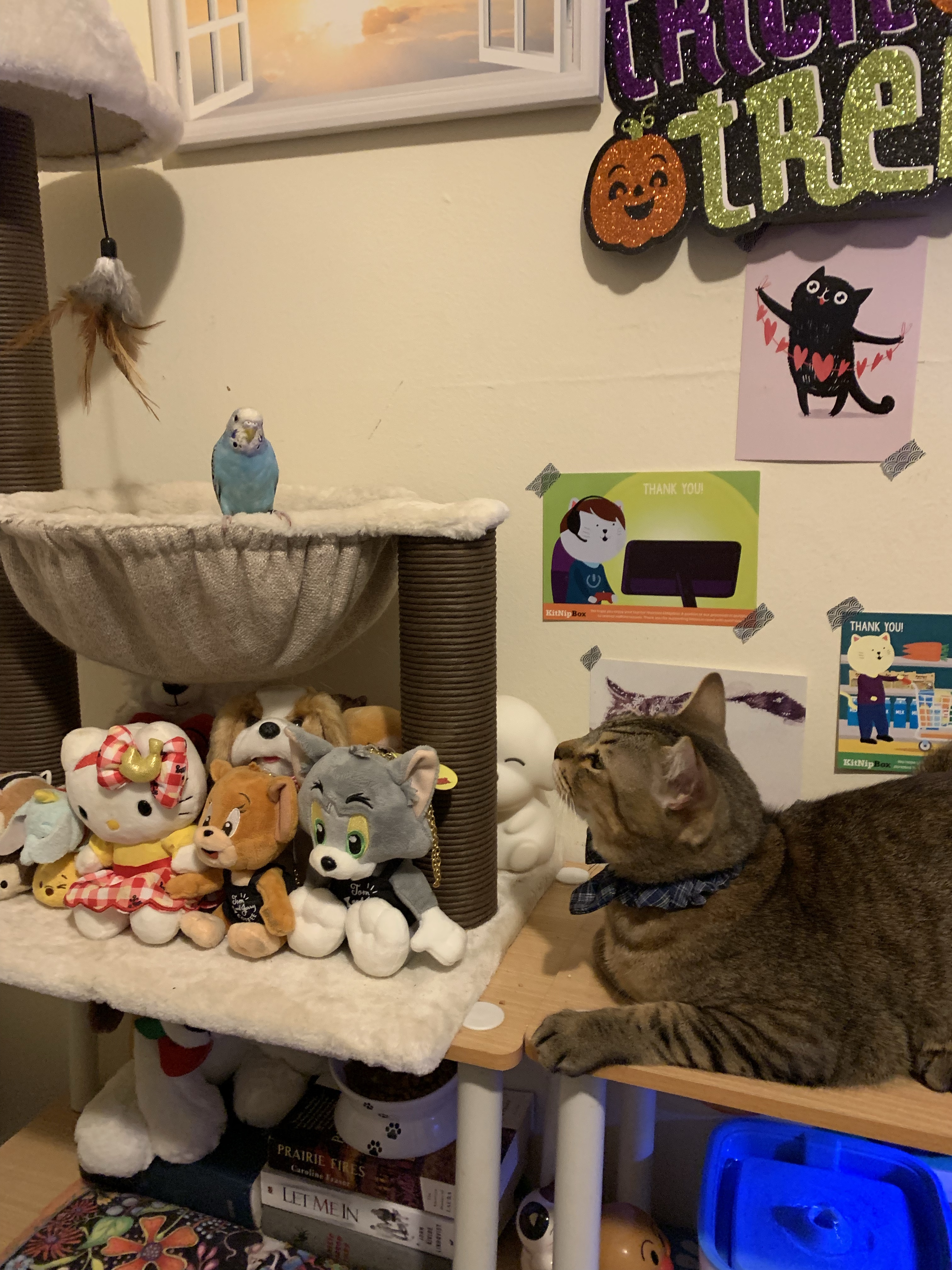
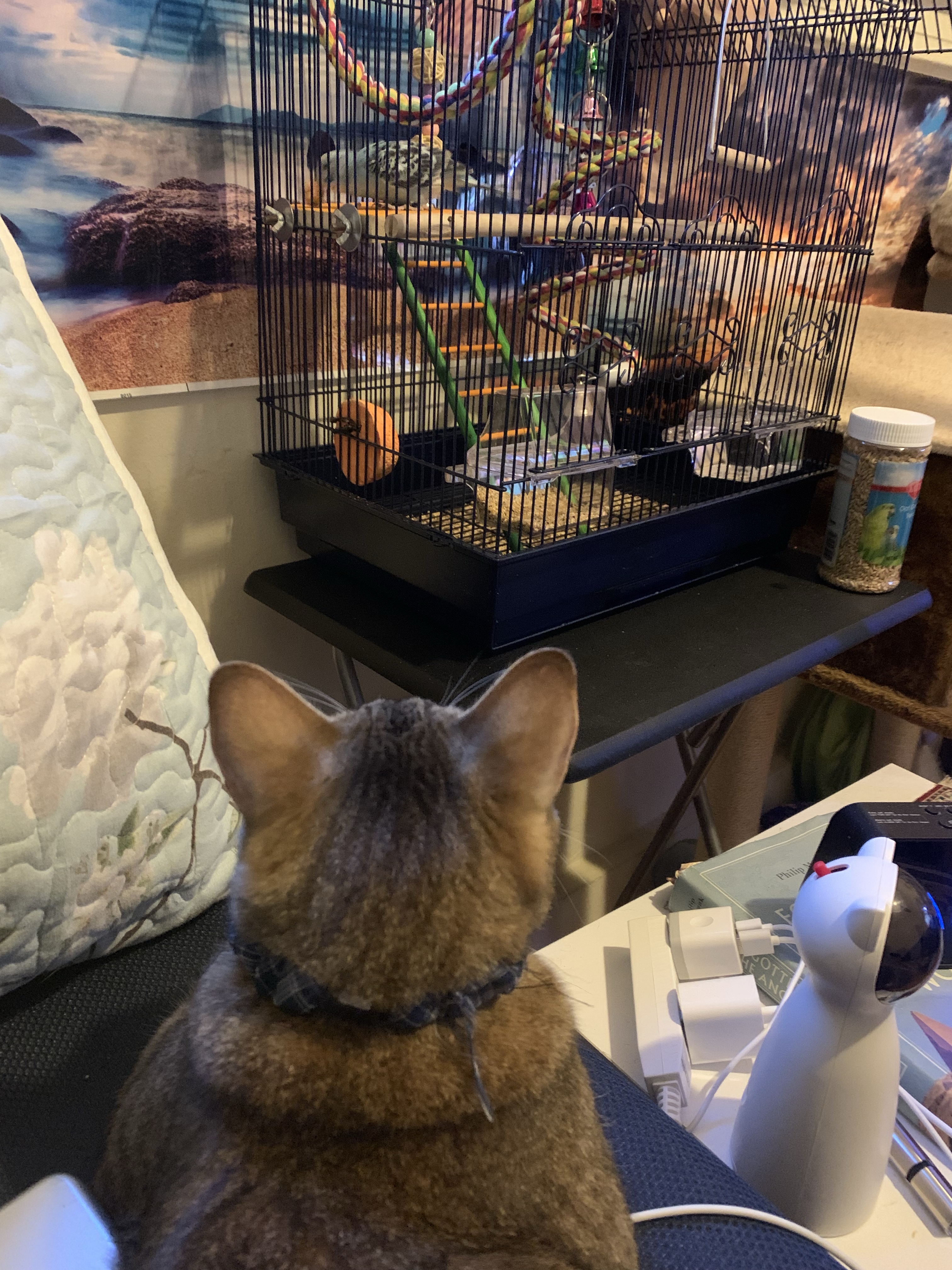
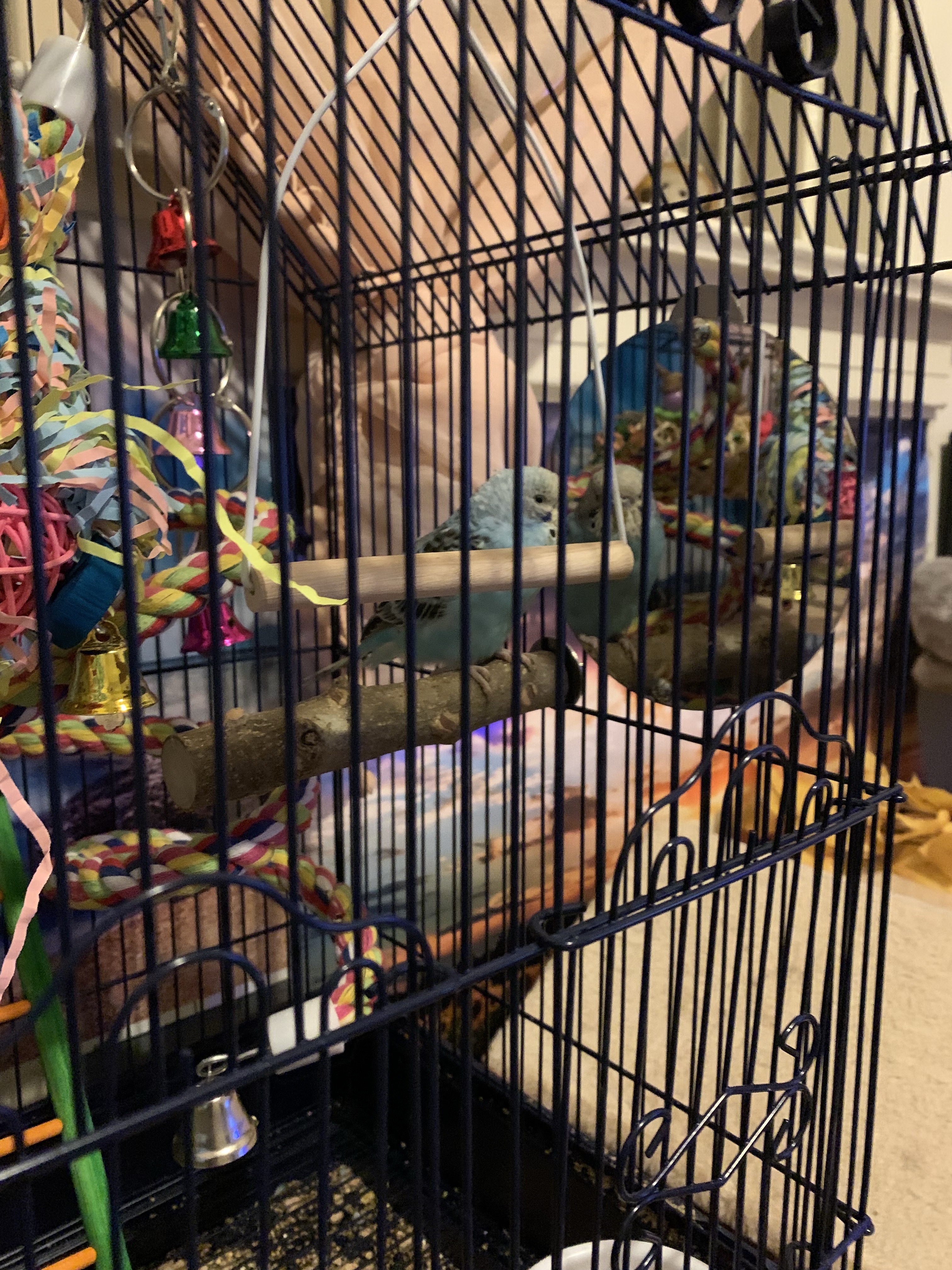
The bird in a cage
Trills on a swing.
Delight beckons.
Under the dome of the spirit
In the palace of the soul
The bird tells the future.
The bird in a cage
Trills on a swing.
Delight beckons.
Under the dome of the spirit
In the palace of the soul
The bird tells the future.
The Denisovans: The History of the Extinct Archaic Humans Who Spread Across Asia during the Paleolithic Era by Charles River Editors
My rating: 3 of 5 stars
The case of Adam v. Ape in search of where humans came from seems to have waned since Charles Darwin’s seismic theory of the Origin of Species, by which we have become distant relatives of primates, whether we like it or not. The biblical Adam as the first man of Mankind is pitchforked to the first chapter of the Old Testament. The first human ancestor is now obdurately held to come from Africa, making Africans our universal ancestors. But how are we so sure about what we are as we are told to believe? What if the modern humanoid just came into existence as in the case of the Big Bang? How do you prove that the races of Caucasoid and Mongoloid originated in Africa, on the prima facie evidence of their present physical characteristics, pace the evolutionary scale of time in such a short biological time?
The theory that all humans come from Africa has become infallible in the 21st century. After the fall of the Iron Curtain, peoples of nations have begun to worship ideology politics under the pretext of rewriting history, which in reality means upending the contemporary status quo of all social and cultural systems, even if some of them intended to remain valid. Then, for example, how would they explain the existence of the Sentinelese, the most primitive and dangerous tribe living on North Sentinel Island in the Indian Ocean? If all non-black races came from Africa and changed to what they look like today, why do these uncivilized people preserve the most representative features of Negroid in the most shockingly prominent way?
Then scholars will retort with the theory that we all come from Homo Erectus that branched into humans, Neanderthals, and Denisovans. The missing link between the root of Homo Erectus and the branches would solve the key to what exactly our direct ancestral medium was. Would it be just another kind of primate that looked closer to humans? On the other hand, some scholars believe that modern-day humans have more Denisovan DNA than Neanderthal DNA. The latter migrated from Asia to Europe between the land bridge, just as ancient Asians crossed the Sea of Bering from Asia to North America, becoming Native Americans. Then a thesis of Africa as the cradle of Mankind requires a preponderance of onus to prove it a fact. As a matter of fact, Eurasian faces will exemplify how the ancestors of Europe would very much look like. The physical characteristics of East Asians attest to a hypothesis that the Neanderthals from the Asian continent migrated to Europe before prehistoric ears, breeding with what the population that had already existed there be it ever Denisovans or other tribes of Neanderthals.
My view on the evolutionist theory also includes Adam as the first man after prehistoric times, the dawn of civilization. Hesiod’s Golden Age is equivalent to the archeological Paleolithic age. In the period described above, humans looked like us and produced handy tools and weapons essential for developing civilizations. If we think that Adam’s progeny dispersed all over the world a myriad of times ago, then it makes sense why we look like what we do. The gist of my argument is that race is not something that can be altered by itself. Neither a climate change nor a duration of time can change racial characteristics in themselves.
View all my reviews
Royalty’s Strangest Characters: Extraordinary But True Tales of 2000 years of mad monarchs and raving rulers by Geoff Tibballs
My rating: 4 of 5 stars
It always amazes me that some people can get away with their character flaws and faults under the aegis of social status and wealth, such as modern-day celebrities. The celebrities of the bygone days were kings and queens whose God-given authorities indemnified them from punishment. Their entitled strangeness swiveled my head in wonderment at the stupendousness of freakiness. Ironically, this anecdotal recounting of the cruel-to-be kind potentates reminds me of a tenet of Logotherapy, which explains that a healthy dose of suspense in life helps us escape boredom, resulting in excessive indulgence in perverted pleasure-seeking.
This book tells of the infamous kings and queens and some aristocrats. They are famous and lesser-known, mainly from Russia and Eastern Europe, which gives a somber ambiance to the tales of weirds born with silver spoons in their mouths. The most memorably horrible and ignoble characters that left indelible marks on my consciousness are as follows:
1. Elizabeth Bethany: This diabolically perverted Hungarian countess whose uncle was a king of Poland had a fixation on blood and pain in devotion to youth and beauty. Some say she was trained to be cruel, but I think it has to do with her connatural inclination for cruelty passed down in her lineage. Her aunt was a Satan-worshipping noblewoman who sought erotic pleasure in young girls, which Elizabeth also learned and practiced in her castle. She had her trusty three maids lured beautiful young girls, usually from poor families, under the pretext of training them for top-rated maids-in-waiting with generous munificence to the families. What happened next was all over but the shouting. Bethany tortured the girls in unthinkably cruel ways and bathed in their blood because she believed doing it would restore youth and beauty. She deserves no revisionist or appeals on the crime against the girls under her care. Nevertheless, modern-day feminists and the radical leftists are moved to portray her as a wrongfully accused Calvinist woman in a time when sectarian religious rivalry and antipathy were rampant. Her being charged by a Lutheran minister in the town does not ipso facto constitute Lutheran machination of destroying the Calvinist influence in the region. If the minister conspired to concoct any such plot, he would have targeted a man, not a woman whose social status was not entirely regarded as equally significant as a man even in high birth.
2. Vlad the Lad, aka the Impaler, aka Dracula: The proverbial bloodsucker ruler had a penchant for impaling men, women, and children for leisure and punishment. The point was to give them slow deaths to heighten the apex of pain till the last breath. The legend of Count Dracula is loosely based on this Romanian ruler who might have inspired an idea of shashlik, kebab. Or any skewed food. Thanks to the detailed accounts of how Vlad artistically mastered impaling, I swore off any such skewered food lest it should conjure up the vista of the impaled helpless.
3. Frederick I of Prussia: A stout and short, the king’s obsession with men in great height was his actualization of ideation. He had the tallest men in all the regions of Europe, especially from the North, to establish the royal military version of a freak company called “The Potsdam Giants.” The recruits, or in many cases, abductees, were consisted of a former woodsman, laborers, and farmers, allured by abundant compensations promising dazzling delights of secured lives. Yet it was an empty promise, beguiling the simple-minded low-class foreigners, who were subjected to mistreatments and even punishments should they attempt to escape. The king’s pastime was to call upon the guards at any time anywhere, including in his chamber at night, and watch them in full uniform, admiring their impossibly imposing physique that he coveted but could never have. Thank God that his son Frederick the Great disbanded the freakish guards no sooner than had he succeeded his father upon his death.
I wonder if these royal characters were due to in-breeding abnormalities, which were usually customary in European dynasties to preserve their noble royal lineage. It also testifies that keeping means in one’s life is a blessing because extreme wealth and poverty lead a soul astray due to listlessness and exasperation, resulting in amoral walking dead subsisting on the pain of the others. Robinson Crusoe’s sagacious father was right in saying that the best is the upper station of low life. Mel Brooks once uttered, “It’s good to be a king.” Unfortunately, it only applies to these afore-described weird and evil characters. A good king or queen doesn’t.
View all my reviews
Freya rides in her new celestial chariot driven by two Norwegian Forest cats named Bygul and Trjegu. The Norwegian forest cats came from a single-fathered family when their father felt unsure how to raise them after their mother left the family. So the father asked Thor for godly help. Thus Thor gave the kittens to Freya, thinking that they might be helpful to her as companions or messengers.
But the intelligent and beautiful Freya has a better idea: they could drive her divine chariot to travel across the skies and seas, not to mention land given proper training and times of experience. So rather than smothering their natural agility, unfailing alertness, and admirable persistence, all of which are excellent traits for hunting prey, Freya finds the most brilliant way of a beautiful kind to let her cats drive the chariot. There’s no need to goading or hollering to spur Bygul and Trjegu because such application is unnecessary for performance when the cats love their roles with all their hearts, souls, and minds. When in doubt, read Old Possum’s Book of Practical Cats, and you will soon believe me. If you have cats, see for yourself, for they do when they like, not what you want them to.
Toro, aka the Curious Tabby, is contemplating joining the team, imbued with high hope of running Freya’s chariot from sunrise and sunset, flying from one end of the horizon to the other, over the ruffling waves of the deep cobalt seas. As one year and three months old, Toro thinks he can apply for Freya’s training school, where Bygul and Trjegu are instructors. At the thought of it, euphoria envelopes his body in a vista of the magnificent chariot, and his spirit now soars up in the garden of ether, intoxicated with the weightless levity. No more boring days, no more need to call the attention of Judy, his human sister, to let him out to the living room, which is always and ever tiresome.
It’s not that Judy lacks care and affection. Hardly so. It’s because of her cantankerous elderly mother, who doesn’t like him to roam around the living room where she usually stays, watching the repeats of talk shows on YouTube. Toro understands Judy’s dilemma between her willingness to let him out and her submission to her mother’s scolding because otherwise, she knows that the mother will discipline Toro with her walking stick. Toro loves Judy, but his curiosity doubles up with aspirations, whetting his desire for driving Freya’s chariot at least just for once. But then it would mean leaving poor Judy alone behind with the horrible old woman. Hence Toro is thinking hard again.

According to Newton’s law of motion, inertia refers to a condition when a mass of an object determines a resistance to change. The bigger a thing is, the harder it is to be moved. What a splendid discovery when such truth has always existed! That is a difference between someone like Newton and other mortals who have seen it but cared more or less about it. The gist of my proposition is that inertia fits the state of my mind at present; the more I exert my cognitive facilities on articulating my thoughts, the harder they seem to operate the abilities with all their souls, with all their hearts, and with all their might.
Today I looked into the statistics of my blog posts, realizing my literary fruits were turning sour with the leaves of the knowledge of tree desiccated in the arid land of pitiful ignorance. T.S. Eliot must have felt the same when he yeared for a benevolent pool of knowledge on the barren land of his mind, which is hardly likely to think about because – well, for what he is. No matter how much I try to use a craft of writing that I used to possess until three months ago, I realize the powers are gone with the wind to the ether and then to the blackest black hole in the universe. The words become weightless, and the images are as bleak as the Persian night. It’s like being in the middle of an adumbrating labyrinth with Ariadne’s ball thread missing or forfeited by whimsical divinity. Nothing scintillates, nothing promises, not even with a bluebird that used to guide me into avenues of hope. So whereas I still delve into reading voraciously, the words are flushed into a great abyss of darkness, a slough of despond, leaving me weeping and then crying alone. I wonder if this state of inertia can also be related to the dark night of the soul that St. John of the Cross experienced before his spiritual epiphany. Or I can identify the feeling to the sudden listlessness of Albert Speer, the mild-mannered, brilliant Hitler’s architect friend, during his long-term incarceration in the Spandau prison after the fall of the Third Reich.
I have always professed to write for the sake of my sanity, the justice to myself with a tenacious grasp on a sense of purpose that I am not going to disappear without a trace of my existence on earth. Laura Ingalls Wilder, Jane Austen, Charlotte Bronte, and Lucy Maud Montgomery all endured the vicissitudes of life in dealing with the demands of daily life while cherishing their literary ambition and endeavoring to prove themselves as gorgeous writers whose credo was allegiance to truth and nature, using the ideal to make the real perfect and kind that God forgot to bestow upon them. They are my spiritual sisters whom I daresay can relate to due to my circumstances and kindred disposition.
I write not to canvass celebrities for being a top-rated blogger. But then I want people to know that I write however imperfectly or abstrusely. I write because I like it, just as people like to take their selfies and post them on Instagram or make vlogs on YouTube. So while the cold receptions still vex me to my publishing of writing in my blog, my spirit resists giving it all up, which rebels against the law of inertia. Come to think of it, the witch in training Kiki in ‘Kiki’s Delivery Service’ laments about her suddenly losing the ability to fly her broomstick as she stumbled into a vertigo of existentialist distress, part of growing pain before blossoming into a wonderful full-pledged witch. Maybe I am going through the same thing, too. I like to think that way.
You must be logged in to post a comment.