Blog

  • On Philip Pullman’s Republic of Heaven

    A great writer of our time is Phillip Pullman in his moment of pleasure.

    Great writers are great because they know how to tell entertaining and enduring stories without religious and didactic overtones. Moreover, they are unafraid of speaking their minds without a qualm of conventional belief or sectarian principles. Yesterday, I read an essay called “The Republic of Heaven” from Demon Voices by Philip Pullman, a renowned British best-selling writer whose intelligently tongue in cheek styled narrative raises the dander of the Catholic Church for his acerbic view of the orthodox teaching. With my reading of Candide by Voltaire still fresh in mind, I find Pullman and his philosophy of free thought familiar with that of Voltaire and realize that true intellectuals think among people and live in social companions of public spirits for the good of humanity. Thus, here is my discursive impression of Pullman’s “The Republic of Heaven.”

    Pullman urges us to step aside from habit, a banal molded frame of life, to see the world outside the box, which will lead to an immense world of delight, the Republic of Heaven, for we are worthier than we think we know because we are such stuff made of wonder. Pullman’s heroine is Charlotte Bronte’s Jane Eyre, who has resisted against the magistrate of grim and gray puritanical ethos that decries an expression of feelings and emotions under religious disciplines. She remonstrates against the cold-hearted Mrs. Reed thus: “You think I have no feelings and that I can do without one bit of love or kindness, but I cannot live so.” Her demand for love stems from her need for it, which is an essential food for the soul that serves a purpose and pique for life. This sense of love so wanting in Jane cannot be quelled by false optimism that such distress is the best for the best of all possible world. On the contrary, it is an outcry of the soul desirous of warm and soft human touch that thrills the heart and invigorates the mind. Human beings cannot live by Reason alone, forced to utilize when the right of five senses is forfeited and bound by misconceived religious concepts and false moral measures.

    The founder of Logotherapy, the third Viennese school of psychotherapy, Viktor E. Frankl, witnessed a learned Jewish woman in his concentration camp killing herself despite daily recitation of wise sayings of the Torah supposedly being a consolation. Frankl affirms that we humans cannot live without the joy of life, that is, an appreciation of pleasure to the senses because otherwise, we will degenerate to a provisional being living day to day like prisoners of dreary dungeons in the darkness of hopelessness. Pullman agrees with Franklin the creative and experiential values of pleasure that keep a journey to live a purposeful and meaningful life.

    The creation and experience of art spark the joy of moments that can be synonymous with a meaning of happiness in life. Some find consolation in religion, but it does not give them whys to live for, nor kindness to show hows. Pullman’s concept of the Republic of Heaven comes to a head prominently when we are stranded in the chaos of existential vacuum, the kind of which the loyal and conscientious butler Stevens felt when he lost his faith in his idealized employer in Kazuo Ishiguro’s The Remains of the Day. However, if Stevens pursued his love for Miss Kenton and appreciated the pleasure of love he consciously denied, he would not have felt the sudden void in his life. The sense of delight in the physical world is the essence of the Republic of Heaven that he and we are conditioned to ignore. The point of Pullman’s philosophy is that we are too serious about the pleasure our physical world provides. And it’s not a chemical-induced euphoria for escape from the world but a new attitude toward our perspectives of it. Elenore Roosevelt also knew how to become a citizen of the Republic, thus: “Do one thing every day that scares you.” I should try that.

  • Philosopher, Poet, and Doctor

    Edgar Allan Poe’s tribute of “To the glory that was Greece” sprang from my mind when I received this month’s subscription to a British history magazine BBC History Revealed. It came in the magnificent package of ancient Greece Special, ranging from the Archaic to Hellenistic periods, from slaves to Socrates, and from Auspices to trepanation. I feel dutiful that writing about my thoughts from the reading serves a purpose of writing to achieve experiential value to gain refreshing knowledge about the famously glorious ancient Greece and creative value to record my thoughts about following impressive findings.

    Surprising Opponent of Democracy
    Socrates was the one who called upon Philosophy from celestial paradise into the world, took her to the villas and huts of mortals, and persuaded her to stay among them. He was indubitably the father of philosophy as Herodotus was of western narrative history. His submission to drinking fatal poison as execution for corrupting the Athenian youth by saying “Bad law is still law” is immortalized in works of art from painting to engraves, poems and plays. Woe betides anyone who would disbelieve that the most democratic thinker opposed democracy in his time. Yet don’t let sorrow turn into disappointment in betrayal because democracy in Socrates’s time was different from our modern concept and practice of republican democracy. Athenian democracy directly involved people of all classes in politics without representations for constituents. Any Athenian citizen- excluding women, slaves, and foreigners- could voice out and execute their wills however uncouth and unreasonable. This form of mob-style demagoguery without desires being reined by the judgment is what Socrates criticized, not freedom of human spirits. Naturally, having seen his venerable teacher killed by the will of demagogues, Plato was an even stronger opponent of Athenian democracy that ceased to reign in the early 4th century BC following the Greeks’ unsuccessful revolt against Macedonia rule.

    Nothing is better than the simple.
    Anyte of Tegea was a very popular poet of circa 3rd century BC. Anyte is considered one of the first poets to focus on the simplicity of beauty found in nature and life, which is different from most ancient Greek poetry eulogizing the mighty achievements of heroes and the majestic powers of gods. Her eloquently crafted poetry with comprehensively accessible use of simple language gorgeously manifests richly delicate emotional sensitivity that collapses the millenniums between her writing and our reading them. Although her popularity earned her the sobriquet of “Female Homer,” a comparison to nineteen-century American poet Henry Wadsworth Longfellow is deemed more apposite and understandable for both poets sublimated the ordinary to the sublime with the feeling of beauty and love for nature and life.

    A hole into the skull
    Trepanation was a medical technique that Hippocrates, the father of medicines and doctors, codified in circa 5th century BC. He believed that there were four humors in the human body: Blood – Air, Yellow bile – Fire, Black bile – Earth, and Phlegm – Water. The idea of humourism consisted of thus: if one of them was redundant or deficient, ailments of spiritual and physical kinds arose. Therefore, drilling a hole into the skull of the affected suffering from depression, headache, fractures, or other symptoms of a mystical condition, would relieve the patient of malady. The Inca civilization was indeed famous for successful cases of trepanation, more favorably effectuated than those of 19th century American Civil War experience. However, it was Hippocrates who contextualized the procedural and impacts of the prehistoric operation. Trepanation is still performed today in the name of craniotomy.

    The mists of the past seem strangely distant due to our conditioned sense of evolutionary scale in the continuum of prehistoric and modern times. However, history shows us in today’s world that the people who lived before us millenniums ago had emotions and concerns similar to ours and that human cultural progress is a collective enterprise without fully recognizing it within the circumferences of time and space. Just as Herodotus was gobsmacked by the sight of great pyramids built centuries before him, our descendants will be awe-struck to see the ancient ruins of the Statue of Liberty or the Empire State Building and the tires of the New York City or of Los Angeles. Time and culture are ephemeral, but cultural heritage and artifacts in the treasure of works of art and humanities passed down to posterity are eternal as long as the human race exists.

  • An Invitation from the Forgotten

    12504609_f520

    Of the dusty ruins of the misty pasts
    When gods were kings of kingdoms
    Far across the great divide of the seas,
    Lies a vase carrying ancient stories.

    Love, War, Nature, and Magic – Humanities
    Of Ancient Life, so distant in times and spaces-
    Are conjured up in holography, jettisoned from
    The spell of Oblivion of Time by the Cycle of Time.

    Suddenly, from the horizon afar that seems endless
    An Old Man appears in a grand chariot of two horses
    And tells me, “I am A’as, king of gods of the Hittites.”
    I ride his great chariot and vanish into the endless horizons.

    저장

  • All for the best: a tale of ‘Candide,’ by Voltaire – book review

    Candide by Voltaire

    My rating: 5 of 5 stars

    Candide is a touchy-feely whimsical story about the absurdities of optimism against realism in a delightfully witty guise of romantic adventure fiction. An entertaining satire that is both intelligent and humorous at best, it is a collective coming-of-age story of a man whose anfractuous life passages enlighten him of the reality of life and the world.

    As the novella’s title betokens, the protagonist Candide grows from a naïve young man sheltered in the Edenic castle of privilege and prestige in the protégé of philosopher Pangloss. Pangloss indoctrinates in Candide Leibnizian optimism, which posits that all is best for the best of all possible worlds. Candide’s expulsion from the castle because he was fascinated with his uncle’s beautiful daughter Cunegonde marks his journey toward the truth to the purpose of his suffering and what it means in life. Doctor Pangloss, a parody of collective complacent philosophers, keeps telling him that it is God’s will and that his life change is a manifestation of immanence, an intellectual belief in God’s presence in the world concreted by Spinoza. He preaches a pre-established harmony in the world because it is already the best in its most perfect form. Pangloss is an abstract philosophy and institutional religion incarnate in his glorious scholastic appellation and unyielding intellectual pride that refuses to recognize truth.

    The adventure of Candide is similar to that of Gulliver in his travels to unknown worlds in Jonathan Swift’s Gulliver’s Travels. Gulliver is a ship’s surgeon full of ideals shaped by established a priori schools of thought until he encounters wondrous creatures in mysterious lands, all exhibiting the best and worst human characters manifested in their appearances. Swift wrote Gulliver’s Travels to criticize the ills of society’s need for reformation as one of England’s leading literary figures with social consciousness. Swift was also one of whom lent a kind hand to Voltaire when he stayed in England to avoid the growing fury of France’s church authority. Volatile Voltaire was known for capricious terms with his literary peers, but his admiration of Swift’s work and him as a brilliant satirist remained loyal. Voltaire’s Candide is more straightforward and realistic, sans mysteriously curious creatures of a wide arc of imagination. However, both Candide and Gulliver share the same thematic elements of parodying the hypocrisies of religious doctrines, and human nature laid bare in the style of chivalric adventure fiction.

    The story is a carnival of characters united by deceptive fallacies, chased by untenable ideals, tangled by insatiable desires, obstructed by variants of life, and succumbed to deceptive pleasures. Nonetheless, one can’t weigh the misfortunes of humans and set a just estimate on their sorrows just as Pangloss deigns to aver, for humanity is imperfect in the imperfect world. Therefore we must strive to make it better for the common good of society as best as we can. Voltaire dreams of a new community with callous palms of laborers conversant with more delicate tissues of resilience, self-respect, and heroism in real life, whose touch thrills the spirit in the most exhilarating way than the idle hands of thinkers and priests. By writing Candide, he creates a society of people who sailed through the vicissitudes of life in the triumph of epistemological a posteriori truth over ontological a priori precepts.

    Candide is surprisingly easy to read and wastes no time for boredom. Voltaire himself was a man of no-nonsense whose simple but effective use of words is reminiscent of Hemingway and Stephen Crane, who were titans of literary realism. John Milton’s metaphysical poem Paradise Lost rang hallow in its abstruse display of classical knowledge. Homer and Dante lost their luster in the words that people did not use any longer. An authentic intellectual lives among people and puts his learning into action for the good of people. Candide is an excellent company to console your weary spirit and sorrowful heart if you are tired of eternal optimism and forceful positive thinking that has become a still fashionable mass mantra.


    View all my reviews

  • Hakuna Matata! ‘The Lion King’ (2019) – film review

    Whether animated or dubbed, good movies are conversant with more delicate tissues of conscience and spirit than others replete with vehement manifestos. I am talking about ‘The Lion King’ (2019 film),’ that is. It is a wholesome movie with simple adages of friendship, love, patience, and courage—only the more vividly alive and visually superb with the Cute factor. The film is also what Plato says in the Republic, a work of art that best imitates the objects and events of human life, a good entertainment.

    The a priori reasoning is sometimes apt, and so was the movie. I admit that had it not been for the cute Simba’s face in the movie’s advertisement on my newly subscribed Disney Plus channel, I would have passed it. Besides, living with nature in the form of thirteen-month-old tabby cat Toro at home perfected the inclination to watch it. What captured my eyes most was the realistic animals and landscape that rendered undoubtful verisimilitude of natural wildlife in Africa. It’s a hybrid of the 21st science and timeless imagination that created the world’s awe-inspiring symmetrical view of natural beauty in cinematography. Contrary to unwelcome and acerbic opinions about the movie for its lack of fluid emotions and spectacular action scenes, I find it genuine and honest. It illustrates the natural habitats and habits of the animals in the wild as authentically as possible, which may seem less than what today’s audience inured to gratuitous special effects and outpourings of dramatic gestures. However, nature is simple, and Leonardo da Vinci saw it as the ultimate sophistication of beauty.

    If Aesop’s Fables are the ancient Greek’s way of teaching morals or virtues to people of all ages, this film follows the tradition of teaching the good in the audience’s hearts. There are four types of love subtly construed as thematic subjects in the movie: (1) Eros – passions between lovers; (2) Philia – friendship; (3) Storge – love between parents and children; and (4) Agape – humanity. Furthermore, the Homerian code of honors that Simba and his father Mufasa possess and the eponymous virtue of arete consists of moral integrity and physical finesse. The goodness described above incarnates in the pride of the lions and alludes to human characteristics laid bare in the majestically untamed landscape of the Pristine Wild.

    ‘The Lion King’ (2019 film) is thought-provoking and entertaining. Plato, whose view on the best of art as the best imitation of the physical world, would approve of this film as a wholesome entertainment in the constellation of the great minds. But, notwithstanding his approval, the film is worth watching when you feel lonely and need some pick-me-up spirit with smiling cheer. After all, a good mood in the buoyancy of a cheerful soul with hope for an uncertain future is what makes our lives pleasant. Hakuna Matata!

  • the castle east of the sun west of the moon

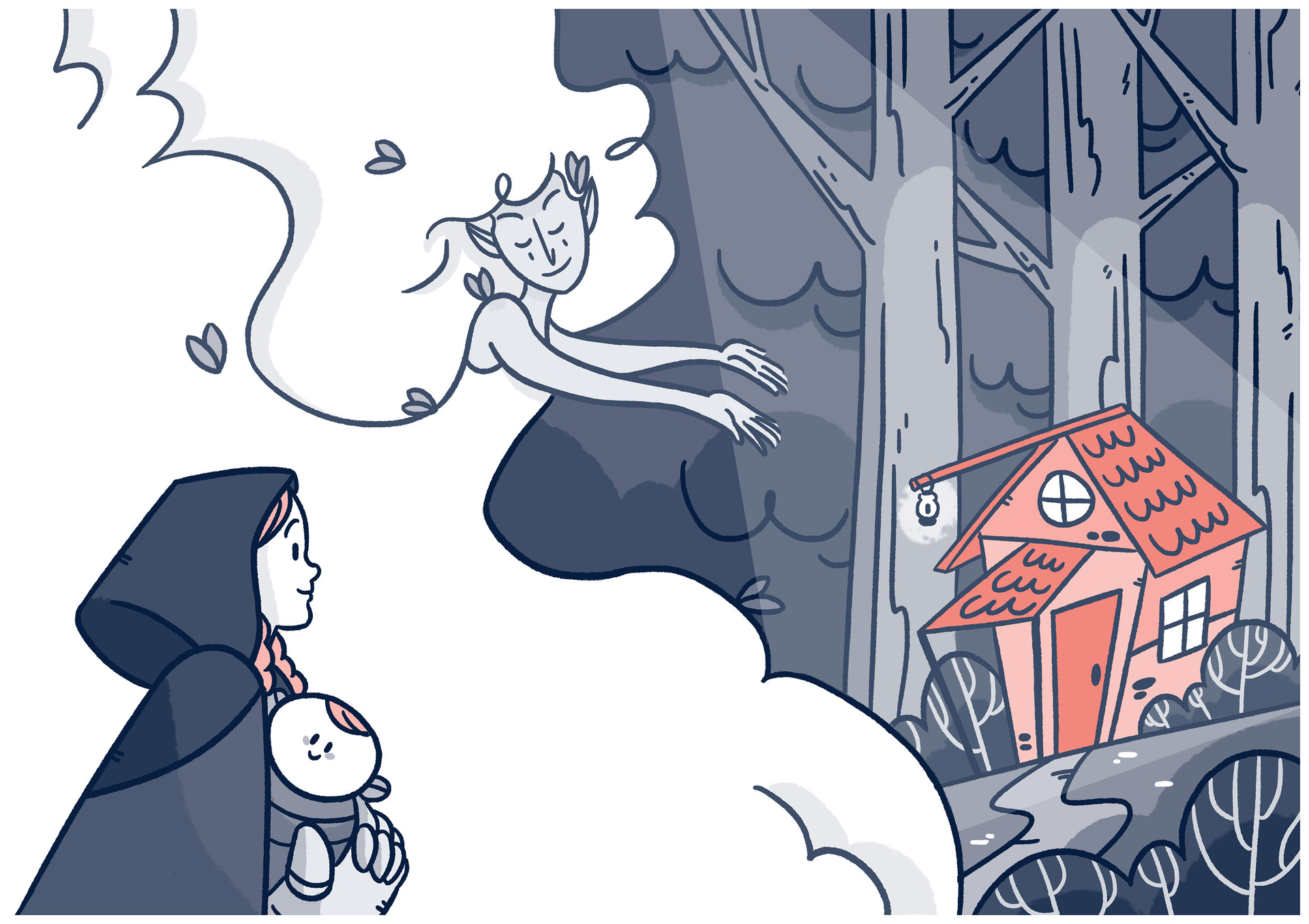
    She sits under the shades of willow
    Where she came from, no one cares
    The castle East of the Sun West of the Moon.

    Then the leaves of the tree whisper to her ears
    “Ride on the wings of the Four Winds therefrom
    The Castle East of the Sun West of the Moon.”

    She speaks in the language of the wind, Aeolian
    And calls for the Four Winds to carry her home
    The Castle East of the Sun the West of the Moon.

    First East wind comes, she rides on his wings anon,
    West Wind, South Wind, and to North Wind reaching
    The Castle East of the Sun West of the Moon.

    Ere the Sun goes west and the Moon comes east
    Or she will never get to her beloved home
    The Castle East of the Sun West of the Moon.