Tag: arts

  • prompt returns

    Daily writing prompt
    What’s a promise you made to yourself that you’ve actually kept?

    I collect promises like Swarovski jewelry, from necklaces to earrings, to bracelets, and more. I love pretty things, so I change them, but it all comes down to a few select ones that I usually wear to my heart’s liking. So are my promises. There are many, but only a few of them remain, and one of them makes it out to a World Cup final.

    I have always wanted to write a book that I can leave as my legacy, just so to prove I have lived, that I, Stephanie Joori Suh, lived, saw, and wrote. The thought that one day my body will become a speck of dust or ashes gives me a panic attack amounting to losing my eyesight completely. The ancient Greek poetess Sappho also felt the same, as found in one of her surviving fragments. Besides, there is something in me urging me to write as it is my nature. My father once told me that he had the same urge to write poetry, as his mother did too. Maybe it’s in the genes, like a family of practicing ancient secret rites.

    What I have done is to write my first chapbook of poetry this year. It is a collection of poems I wrote from my East Coast years to the present West Coast years. I auto-published a short story before as a Kindle Read, but this is my first time submitting a poetry chapbook to editors of ten presses. Some of them are for chapbook prizes, and some are regular chapbook submissions. And… one of them sent me an email last Wednesday that they wanted to publish my chapbook. I do not want to open a champagne early until I have an actual chapbook of mine in hand. Still, I feel I am in the procession of poets from the misty past and continuing as long as humanity remains.

  • Mirror Lake


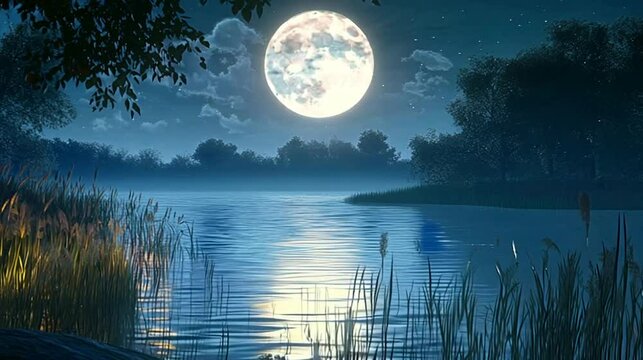
    Tonight, the sea is a sheet of glass,
    holding the moon’s timid face.

    “Don’t look at me—
    but don’t look away.”

    I lean toward her under the water,
    my face bruised with sadness,
    trembling beside hers
    in awe of still beauty.

    Two girls gaze back at me—
    sheepish, curious, luminescent:
    one made of ache,
    one made of flame.

    Her eyes—two diamonds
    cut from the tears of indifference.
    Drops fall into the lake,
    ricocheting sorrow into smile.

    I reach to touch their faces,
    but their reflections dissolve—
    a shimmer undone by my hand.

    I try to gather the pieces,
    but the more I gather,
    the deeper they sink
    to the bottom of the water.

    I lost the only friend
    who looked like me.
    Now my face alone—
    a ghost-girl drowning in her own reflection,
    born from love, but never for it.

    If you like this poem, you can support my writing at Ko-fi:

    https://ko-fi.com/steph79650

  • Paul Gauguin: With Sixpences Beneath a Visiting Moon

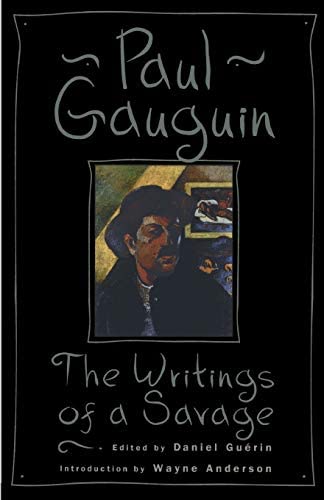
    The Writings of a Savage by Paul Gauguin

    With sixpences beneath a visiting moon, Gauguin could produce wonder. He was an artist in an endless pursuit of the rising sun at the dawn of a day with a flaming glory in dazzling magnificence. He was an intellectual with a wealth of knowledge drawn from a wide range of reading and classical Jesuit education. Gauguin was a man of irony, with contrasting colors reflected in the soul’s spectrum, from the passionate red to the sanguine blue, hopeful green, and melancholic purple, which is why he left Vincent Van Gogh alone in Arles, in never-ending loneliness. He craved recognition in a grand salon, yet he longed for independence on an island beneath an ancient sun. So, naturally, I wanted to know about Gauguin from his own writings, not from another in the form of a biography. Hence, The Writings of a Savage by Paul Gauguin.

    The book is an attractive compendium of mostly letters to his select few friends and, occasionally, to his wife, as well as essays and articles on the arts and religion, demonstrating Gauguin’s erudition and introspection. While reading the book, I could not help but think that if he had been a professional journalist or an art critic, his artistic talent would have basked in the glorious dawn sun rather than a struggling painter always on the verge of starvation. But most of all, what I wanted to know was if Gauguin had cut off Gogh’s ear, as I heard the rumor. Before reading this book, I had already assumed Gauguin was a man of temper because his image was incompatible with the Dutch painter’s delicate, sophisticated, and sensitive appearance and temperament. But while my prejudice was not entirely faulty, Gauguin proved himself innocent as he talked about it before his impending death away from civilization. Besides, my reading of Gauguin’s writings convinced me that he was not culpable for the injury, even if some like to assemble circumstantial rumors to make the French pariah artist appear jealous and violent toward the suffering Dutch genius. Gauguin might have been passionate, but his passion is directed toward his artistic creation of the worlds he sees in his mind, while the snobbishness of critics and bureaucrats curates the works of painters who know nothing about the arts.

    Imagination, innovation, and independence are the jewels of Gauguin’s prime colors that create his artistic Elysium. Gauguin was liberal in social stance, especially against clericalism, but sovereign in his artistic philosophy that how to draw doesn’t mean an exact copy of the figure because that’s not the purpose of art for art’s sake. As the title suggests, Gauguin was a noble savage who, as a disciple of Rousseau, returned to a primordial state of humanity to escape the over-intellectualized inertia of civilization, which depreciated and ignored his art. I still can’t say the book converted me to the cult of his paintings, which differ from those of Renoir, Monet, and Pissarro. But the book is a medium of looking through the labyrinth Gauguin has built, leading to his secret garden, wondrously vibrant and dazzlingly radiant.

    If this review moved you, you can support my writing at Ko-fi: https://ko-fi.com/steph79650

  • I Spoke Once, and Never Again

    Painting: Claude Monet, 1875. Public domain via National Gallery of Art.

    I keep it to myself, and myself—like a girl with no lips.
    And so, no one sees me. I’m forgotten, forsaken.
    Still, I am flesh and bone—the quiet soul, the raging spirit.

    Recognition is not my thing, or so I try to beguile.
    But the crying heart longs for it, like a flower needs water.
    The calm sea always hides the surge of roaring waves.

    I wanted to be someone’s one—even if he knows me not.
    I wanted to be a lover’s lover—even if he is someone’s one.

    When I shared what I felt, with streams of salt-sad fire,
    it was too much for them. They turned away.
    So I stopped confessing it altogether, evermore.

    I wish for nothing now—not tomorrow, not ever.
    With no expectations, I let the days pass—and fade away.

  • slipstream

    The doors of time closing
    The candlelight flickering
    In the wind of the hour
    Entering the chamber
    The dying candle shows
    The last slipstream of times
    Wistful images of memories
    Even those I want to forget
    Yet I don’t want to forsake.