Tag: arts

  • Lion’s heart wrapt in Sari – on Jayaben Desai

    gettyimages-3361989
    The Unlikely Fighter: Jayaben Desai

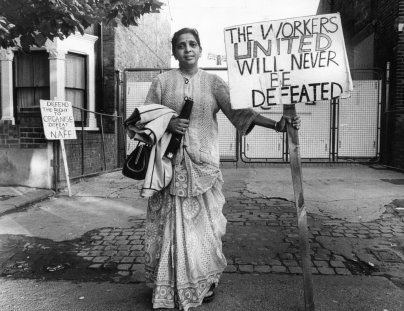
    It was one sweltering summer day of 1976 when 43-year old Jayaben Desai finally culminated over the demeaning mistreatment and delivered her tirade against her manager of the Grunswick Film Processing Laboratories in London and stormed out of his glass office that sealed her outcry of frustration and indignation that had been smothered under the daily duties of existential needs for livelihood for years. So when her manager told her to work overtime at the very last minute as usual, again and again, Desai couldn’t take it any longer. For Desai’s personal life and her right to freedom after work meant nothing to the management whose discriminating attitudes toward their southwestern Asian immigrant workers were beyond pale. No More Docile Asian Woman who, unlike her English counterparts, would acquiesce to her despotic manager’s orders. This time Desai transformed herself into a lioness unafraid of the goading. This time was hers, and hers and her fellow immigrant workers. 
    methode2Ftimes2Fprodmigration2Fweb2Fbin2Fa5713c8f-2620-3ab4-aa9b-b4ef080ed87e
    A Lion’s Heart wrapt in sari

    Upon reading the article “We are the lions, Mr. Manager” in my subscribed BBC history magazine, which was about the famous Grunswick Strike in 1977 led by then-unknown former Grunswick employee, Jayaben Desai, I could not help but take pen to paper for the following reasons: (1) it was about the first remarkable calling for a solidarity for the rights of workers on the periphery of social recognition;(2) it was the first and foremost Asian women’s strike against the industrial injustice backed up by the establishments, including that which they claimed to be for the people and by the people; and (3) it manifested the deep-seated general British public’s sentiment towards their Asian immigrant neighbors who were regarded as socially and culturally inferior to theirs based on race and culture. 
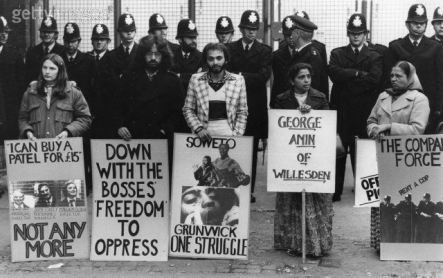
    grunwick
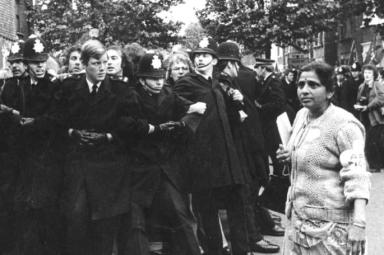
    Despite Desai and her collaborators, mobilized support from politicians and trade unions was conspicuous by its absence.

    What really made me incendiary about the one woman’s protest against the exploitation of the race and gender for dignity and justice was the absence of massive support from her fellow English workers. She was reminiscent of a lone frontier woman in a duel against her heartless landowner with hoots and holler from his ilk. Although supports from people with goodwill and conscience were impossible to ignore, a majority of established social organizations did not lend helping hands to Ms. Desai and her fellow hardscrabble workers sending a distressed SOS call to their English peers. Where were their so-called English contemporary counterparts who were also economically disadvantaged and socially oppressed? Was the outcry of their fellow immigrant workers only a barbarous shouting trying to threaten their jobs? 

    Although Ms. Desai’s heroic legacy has left an indelible footprint in the world’s social history encompassing racialized minority workers on social radar, labor disputes concerning the exploitation of race and gender are still rampant. What’s more, it still happens in our digitalized social media-governed age all over the world, including here in the States. How to stop or ameliorate the social ill shouldn’t be treated as a stylish, popular subject to gain constituents for political party ideology. Until then, the exploited will remain invisible in the dark and dank corners of the society willfully ignored and utterly abandoned.   

  • primal scream

    my poem


    Don’t go easy with the crowd,
    Charity is an empty gesture;
    Humanity is a risible caricature,
    For they will rip your heart off. 

    False smiles, vain expectations;
    The abused that weeps alone
    Asks the heart what it knows. 
    Shout and shout it aloud!

    The pain makes you bleed
    The shame eats you alive; 
    Don’t go easy with the crowd. 
    Shout and shout it aloud! 

  • backstreet blues


    image-20150424-14574-3z9ww1

    The uneasy head with a crown,

    But his crown is not ours.

    The throne breeds caterpillars:

    The court becomes rotten.

    Still we depend on Fortune,

    Carrying men’s burden

    Till death comes as Physician.


    Author’s Note: I read today’s Reuters article about an old African-American barber in the northwestern suburb of Detroit who said that Impeachment is not really a ready remedy to ease everyday man’s daily struggle with life. What concerns him more than this national headline is how he survives with a paltry daily income in harsh reality. I think it pretty much sums up a general opinion on the political pandemonium. Such stoically cool outlook on the political scene has been constant of ages, regardless of race and culture. Surely, Aristotle said that if you are not interested in politics, you must be either a beast or a divine being. But did he in fact include the ordinary folk? It has always been the common people whom the powers-that-be use as their henchmen for political hegemony. The current impeachment news only tangibly matters to the politicians and their ilk. Apart from the universal news about the epidemic Coronavirus, the article lingers in my mind with the vista of the hardworking old barber doing his daily duties to make his living in his small barber shop.

  • Aquarius

    download

    It’s the stars that make you Ethereal Wanderer

    Making you of Air that breathes Independence,

    Fire that lights a Spark of Curiosities

    Dew that wells Spring of Senses

    and Spirit with Beautiful Diamond Eyes

    riding on the Radiant Meteors evermore.


    Author’s Note: This is my tribute to all whose stars are met in the Aquarius, the Beautiful Drifters. Let’s celebrate!

  • ‘Adam Smith kidnapped’ by Stuart Kells – review

    In the case of life imitating art, you tend to find meanings of events in life, to liken them to values of adversity in life, and to sublimate them to the divine auguries of purposeful human existence. In fact, this existential approach to the causality of certain human behaviors and characteristics can help you to understand whys and wherefores of the way people are and thus can even disarm all hostility towards strangers without prejudice. Such is the case of Adam Smith, the father of modern idea of Capitalism, author of “The Wealth of Nations” whose such proverbial reputation had piqued me no more than as a boring illustrative curriculum vitae of just another stuffy intellectual with privileged educational and social backgrounds until I read Stuart Kells’s article about the Real Adam Smith whom I might never have known.

    Adam Smith, a posthumous son of a successful lawyer and customs official, was a rather melancholic, lonely, but humane thinker who liked to spend time with himself alone but also kept his foot in reality by observing everyday people’s lives and considering them to employ in contextualizing ills of society as a result of ineffective rules of law failing to protect the welfare of subjects. Smith’s brilliance shines on the simple and lucid illustrations of his thinking in common language that the literate and the illiterate could understand. He was a soul of the wit distinguished from his peers and progenitors favoring abstruse expressions of bombastic words pedantic of their academic learning. 

    Kells enlightens us that this humane trait in Smith can be originated from the traumatic experience of being kidnapped aged four at the home of his Scottish maternal uncle allegedly by a set of vagrants called ‘Tinkers’ or a party of Gypsies, the Wandering Egyptians. Although who the real culprit of this kidnapping is still a mystery to this day, what the event affected the tender mind was all over but the shouting. It was Smith’s first interaction with the world outside the safety of class, the innocence of childhood, and the security of the family. Already fatherless, the very young Smith must have felt powerless, hopeless, and homeless at the hands of his kidnappers. And this melancholy spell cast upon him became his curse and bliss as it made him look into the pains of other people and meditate on the causes and effects thereof by sympathizing with their sorrows and emphasizing with the sorrowful. 

    The kidnapping incident of Adam Smith read like a piece of sensational news to me, a kind of new awakening, the equivalent of modern-day news that a bestseller writer or a prize-winning writer hails from a poor family without expensive private high education. And it makes you think about what makes a person become who he or she is and appreciate the person’s values that overcome adversity. In this respect, Adam Smith is in league with Charles Dickens, who turned his suffering into works of art. It’s a triumph of the human spirit over the travesty of life. All in all, thanks to Kells’s telltale article about the wondrous event, I have abandoned my prejudice against Smith as a cold, stiff upper lipped economist and warmed to his humane side. Maybe I might even read “The Wealth of Nations” into the bargain.

  • is not the truth the truth?

    mucha_alphonse_1

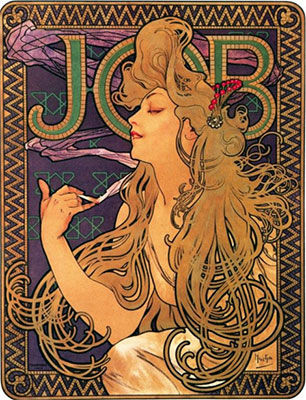
    Though it may be a gossamer of allure,

    Beauty tames the roars of the brute

    and works a magic spell in nature,

    bewitching the savage with witchcraft.


    Author’s Note: They say beauty is only skin-deep, but I don’t believe it. Power is to a man is what beauty is to a woman. So much so that Oscar Wilde said, “The only way to behave to a woman is to make love to her if she is pretty, and to someone else, if she is plain.” William Shakespeare then quipped in: “She is beautiful; and therefore to be wooed.” Beauty purchases indemnity for wrongdoings. You see Beauty Does Matter.  If you disagree with a grinding teeth or a grimacing face, think about a root of racism. It’s all based on how one looks. Capeesh?