
Hollow cheeks
Sunken eyes
The #gaunt poet
He may look,
Passion fills
His heart with
Paramount excitement,
Truth quenches
His mind with
Imperturbable reason
In his Palace of Soul
Stone by stone
Prisoners of Reality
Against the minions
Hollow cheeks
Sunken eyes
The #gaunt poet
He may look,
Passion fills
His heart with
Paramount excitement,
Truth quenches
His mind with
Imperturbable reason
In his Palace of Soul
Stone by stone
Prisoners of Reality
Against the minions

A Man Without a Country by Kurt Vonnegut Jr.
My rating: 5 of 5 stars
A man without a country is a connoisseur of humanity, appreciating the universality of sentiment and reason common to all humankind beyond the demarcation of the territorial, cultural, and racial ambits. In that regard, Kurt Vonnegut is not only a great American writer but also an honorable citizen of the world.
Vonnegut was liberal and socialist without being Marxist, but he was also a traditionalist and Christian without being conservative and religious. He was on the side of the underdogs because he regarded himself as one by being a kind of black sheep in the literary circles for his studying engineering, not English literature. However, he wasn’t a grumpy sullen dark literary figure but a funny, talkative writer who stroke conversations with anyone in daily life. Vonnegut refused to lose his days in unsocial solitude and decided to become – as Samuel Johnson called – the sun in his evening declination, remitting his splendor and maintaining his magnitude, pleasing more, though intimidating less.
A Man without a Country is a charming little book packed with thoughts, wits, and knowledge. Vonnegut was only a human because he saw the heart of human nature and wanted to help people bring it out and nourish it thus: “To practice any art, no matter how well or badly, is a way to make your soul grow. So do it.” Vonnegut was a writer who practiced what he preached. So why not read this book by such a writer?
View all my reviews
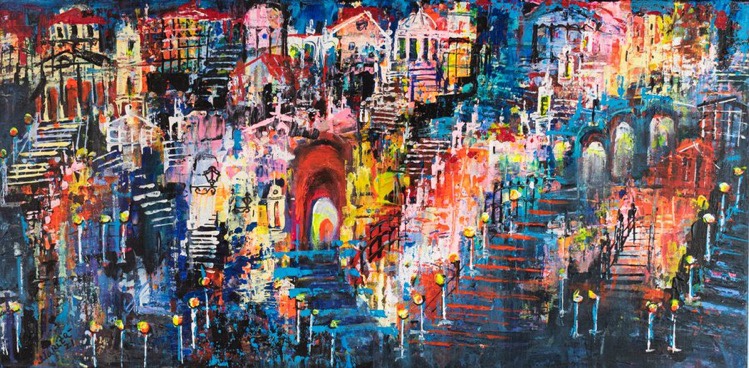
Step by step
Side by side
Left and right
Near and far
One mind more
One world more
A band of hearts
Marches together
In parades poised
Honoring Humanity
Along Life Route
Into Avenue of Hope.
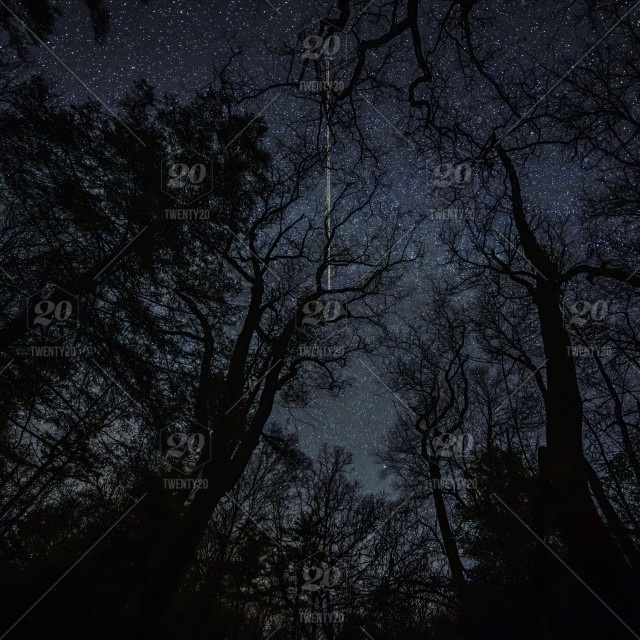
The witching hour
Like a raven’s hair
The moon’s gone
Few stars shone
The heart’s beating
The body’s shaking
Pan’s flute fills fear
Hecate’s prime hour
A traveler’s lost in it
Wandering in circuit
Of roaming, wandering
neverending.

Here’s a young mother with a five-year-old daughter freshly divorced from her husband who thinks she’s delusional, paranoid even, and wants to keep sole custody of their daughter. The daughter is everything she has reason to live, a life that has been so hard to endure with an indelible traumatic childhood. Yet, because she sees herself in her daughter needing constant unconditional love, which she was not allowed to have, she will do anything to protect her from the harsh reality of life, even from the supernatural peril of the beyond reality.

So the story of Dark Water (2005) narrates Dahlia, a young divorcee trying to take full custody of her daughter Ceci away from her assiduously hostile husband. Instead, he embarks on a legal battle to claim sole possession of Ceci because of Dahlia’s unstable mental state. Dahlia, a once copy editor from Seattle, takes a low-paying administrative position at a Manhattan Radiology office for livelihood in a delipidated apartment in Roosevelt Island with Ceci. The semblance of the apartment is the working-class version of Rosemary’s apartment. Dark water is leaking everywhere: from the elevator to their bedroom ceiling, and the laundry room, which is a prelude to the finding of a tank on the rooftop where the traumatic ends of a certain young Russian girl abandoned, unloved finds her and her memories. Or is it Dahlia’s phantasmal delusion of confronting her own child self in her painkiller-induced pill to alleviate the cruel migraine caused by the yoke of woes?

Dark Water is an American adaptation of the original Japanese film Dark Water (2002) by Koji Suzuki, the famous writer of the Ring trilogy, excellently translated to an American audience who will find broad universal themes of human nature, psychology, and behavior. You don’t have to have perfect childhood fed on parental love to be a loving parent. Of course, unhappy childhood will affect the development of one’s character and behavior pattern more or less, but it all boils down to one’s nature to be loved and be loving. Dahlia wants to counteract the demon of the past, which still grabs her with its tenacious tentacle of recurring nightmares and murderous migraine, by being constantly -and eternally – loving and kind to Ceci despite her unhealed scars left in her child self. Perhaps that is why her name is Dahlia, whose flower word is loyalty, dignity, courage, and support due to its withstanding of harsh conditions.
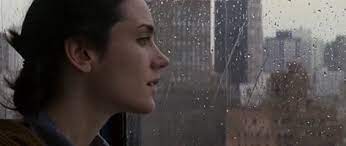
Jennifer Connelly, playing Dahlia, is not only beautiful but also talented in a way that few actresses on screen possess in our time. Her presence in scenes is unique in that her character is downright realistic yet oddly out of the world in a riveting way, as exhibited in this film. No wonder the late film critic Roger Ebert admired her for the same reason. With her exceptional performance and the storytelling that grips the eyes and ears of the beholder, Dark Water is a worthy film for those who delight in supernatural horror without blood and screams.

For all her life
She’s built
Castles herself:
Stone, wood,
Sand, she lived
To tear it down
And again left;
Now’s crystal
she can only
break it down
To pieces by pieces
To destroy the images
Haunting, gripping
To erase the traces
Of nightmares when
She wakes up again.


You must be logged in to post a comment.