Tag: blogging

  • prompt 36

    What’s the hardest decision you’ve ever had to make? Why?

    I have my share of making the hardest decision that I want to divulge in the hope of making the readers see that your problems are not unique but common to all of us and, therefore, support you to do what your heart tells you to do.

    Do you like Dickensian stories? So the story goes.

    It happened at my workplace, where I started this past March. I landed this job through a referral of an employee who was a friend of my acquaintance. I am thankful that I got this job, which is highly competitive with decent pay and benefits here in Los Angeles, CA. But the gratitude should not exploit my dignity and vulnerability at no expense. The employee who referred me to the job became my supervising manager, but it didn’t take long for me to realize her uncontrollable temper, topped with tantrums and mistreatment of me in public. She constantly berated my performance – even if my mistakes were not fatal, resulting from her inept management and leadership skills. She caviled at my appearance, saying it’s too thin and thus pauperish and haggard. That didn’t end there. She shouted at me over the phone every Friday when she worked from home, tainting TGIF in Evil Friday. And the torture continued.

    My colleagues who shared the same office space witnessed such malice and urged me to talk to HR so that they could put me on a different team. However, I was hesitant to do so, though my spirit was yearning, because I was afraid of the worst scenario of my getting discharged from the position since I was still on a probation period. So, I waited until a divine sign resulted from my prayer. Days passed, and finally, the moment arrived on a Friday. I couldn’t take her insult any longer, so I took the matter to HR in person and via email. The result was the change of my team from hell to heaven. Now, I work under an organized manager with leadership/management skills and a graceful personality as a bonus. So, in sum, my hard decision to voice out a cry of the heart was fortuitous. Happy Ending.

  • prompt 35

    If you didn’t need sleep, what would you do with all the extra time?

    A deprivation of sleep would be a nightmare to me. Sleep is the most natural and safest palliative to forget worries, however temporarily it is. But if there should be any other props for this natural medication, I could keep my promises.

    I want to read and write as much as I should after returning home from work and generally at home. I used to work in an office where I could write during the lull, but for this year, the cognitive processing activities have been reduced to about 10 percent of my daily life because I have been feeling mentally exhausted. It has become psychosomatic by preventing me from sitting at the desk when I am home. My best regular place has become a sofa bed, watching YouTube continuously. I don’t even play with my cats as much as I should because of this sense of powerlessness combined with the weight of existential despair. When writing – which I am doing now during my one-hour lunch at my workplace – I feel so much better with the fogginess of the mind cleared and the heaviness of the spirit relieved.

    Therefore, engaging in activities that use the body and the mind would be the best thing I should do during the extra time because, as the ancient Greeks called it, Mans Sana in coporore Sano. (“Sound Mind, Healthy Body”)

  • prompt 34

    Name your top three pet peeves.

    Pet peeves are subjective, and they say something about the personalities of the narrator. I have mine, and here they are:

    1. Poor listening skills – I hate when people fidget with their bodies or smartphones when I talk to them. To see them behaving in such ways is downright disheartening. It shows they are not interested in what I am talking about or who I am. Or even if they seem to listen to what I am taking, when I check what I have told them, they don’t remember any of it.

    2. Discrimination of expressing greeting – I see it very often that when you smile, the world will not smile unless you are within their cliques or type of favor. It plunges my spirit to a dismal low. For instance, in stores, you see store associates greeting and helping customers with their likes. I mean it in the context of appearance. If you are attractive, you will be treated nicely. This meritocratic tendency extends to workplaces. Most readers may disagree with this statement, but the dissenters may be of the Attractive Club.

    3. Loud people – They are absolutely a disgrace of community life. From my apartment to workplace, people who disregard the quite peace of mind of others by opstrepeously bellowing, hooraying, and laughing as if they were a center of the universe should be put in a stone-made castle kept by a malicious witch in a deep forest until they cry for Mercy.

    I wonder why people who have contributed to my pet peeves and thus galvanized me into writing this during my lunchtime at work continue to behave as they do. Do they think such behaviors are cool and an expression of freedom? Indeed, they are not educated well enough to learn that freedom and responsibility go hand in hand. Hence, these are my three pet peeves, and I hope you will understand me.

  • Old People (2022) – Film Essay

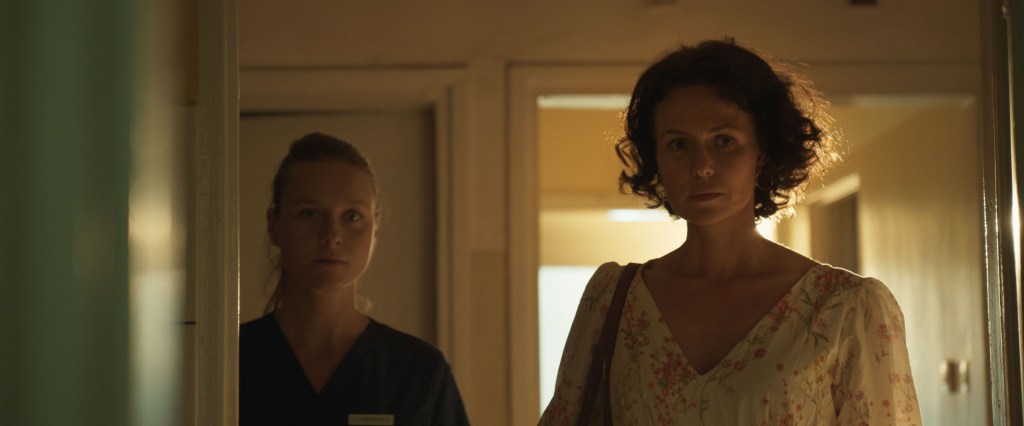
    Old People shows the issue of the generation gaps between the young and the old, not in the adolescent revolt against the adult institution, but in the societal and cultural context regarding the weakening familial bond between wife and husband, child and parent, and grandchildren and grandparent.

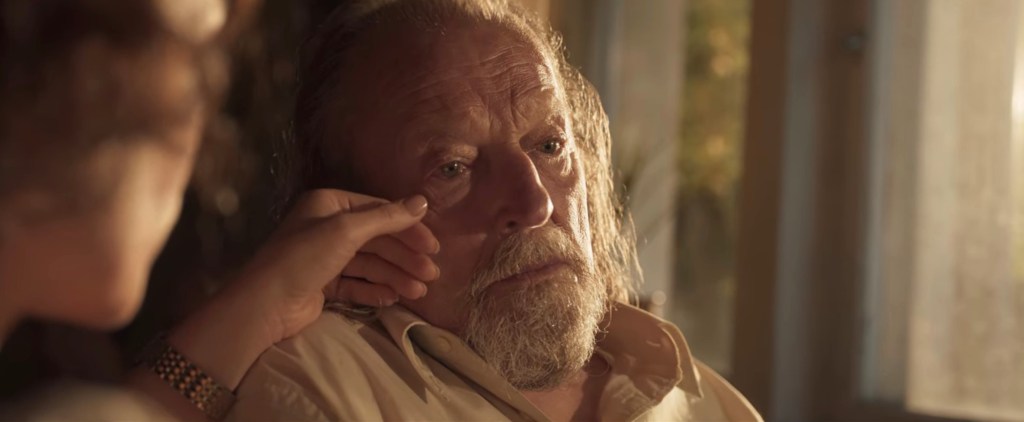
    Melika is a successful lawyer from a city heading with her children to her sister’s wedding at their childhood home in a village. Upon arrival, Melika finds her once beloved father, who loved her and her children so much, is sent to a nearby nursing home whose environment is no better than a mad asylum in atmosphere and appearance. Seeing her father spiritless and aimless alone in a dark room gives her a pang of leaving him behind for her ambitious future as a city lawyer, but she tries to suppress it by bringing him home just for the wedding day. But that is her self-induced wish to relieve herself of guilt, for her father is so broken with a shattered heart that his daughters deserted him, driven away from their home, their happy life that he still longs for. Such sadness is collected among all the old people in the nursing home, abandoned in dreadful isolation from the community that has put them into such an institutional grave and buried alive. The rest is a prelude to a symphony of carnage burning in the fury of the undead and neglected.

    Although this movie is presented as a horror movie, it really isn’t in terms of its thematic and contextual subject. It is a horror that we as a society have become Logan’s World, where ageism and lookism prevail over humanity and discriminate against those who do not fit in their touchstone of the ideal. And what is old, and how old is old? Are we not all advancing in age? Youth is wasted on the young, as Oscar Wilde cleverly concluded. Being old should not be a curse but a celebration of experience in life and, therefore, must be embraced with respect and dignity. Just because we become old doesn’t mean our feelings are dead, as the grandfather tells his beloved grandson: “Oh, yes! I love you so terribly much!”

  • “A Man Called Otto” (2023 Film)

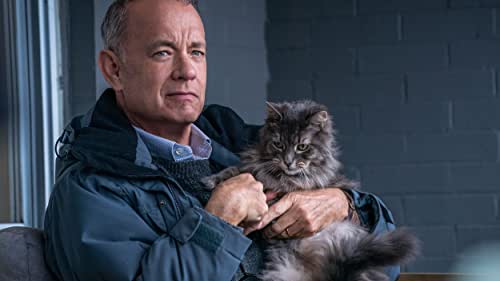
    If you run into Otto on the street or in a store, your eyes will see him as a grumpy old man who would cavil at one cent for everything. But if we look at him with the mind, he is quite a character for sure, and you will fail to dislike him once you know him and his secret. He is very good at fixing machines, from dishwashers to radiators, bicycles, and cars. He is also a fine babysitter and a great driving instructor. But as God is arguably fair in evenly distributing talents in us, Otto has a hard time mastering one thing: the art of killing himself. And boy, shouldn’t he thank God for such failed experience?

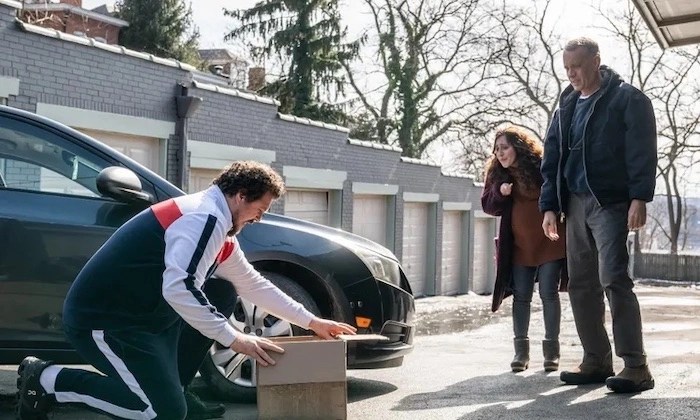
    Otto is a lonely man in his sixties who lost his love of life and dear wife, Sonya, to cancer. Sadness comes not in a single spy but in the battalion, for he has just been forced to retire from his long-term job due to the juggernaut of changing generations at his workplace, as with other places. He has no children but himself, and as Sonya was the beacon of Light in his already reticent and shy life, he sees no light, joy, or meaning in life. The world suddenly turned grim and dreary. Otto is wrapped in his sorrow and besieged in loneliness under the roof of distress. We are privileged to look into the psychology of the destitute in the darkest night of the soul distressed in utter loneliness, which can be broken with a light of kindness and humor as shown by Otto’s new lively and lovely neighbors Marisol and her family. 

    Humor is a handmaid of Hope, which Otto needs on the dark night of his soul. So, as the name suggests, Marisol and her pleasantly vivacious family bring the beauty of Sea and Sun to Otto’s Dungeon of Despondency with lots of laughs followed by tears and more laughs that will make anyone harnessed with a yore of life lightened. And since Otto is secretly a big-hearted person – literally and clinically – he slowly but surely warms to the warmth of friendship and love and shows his true colors as radiantly gorgeous as afternoon sunshine showering the brilliantly golden orange trees in summer. Oh, and there is a homeless cat that seems to be Sonya’s familiar in cat skin sent by her from heaven to be his company.

    Otto is one lucky person to be surrounded by a loving community of neighbors, who becomes an alternate form of a family with emotional support and care, often overlooked and ignored by overtly advocated individualism with no face of humanity. Indeed, that doesn’t mean returning to agrarian society or something to the effect of the notoriously puritanical Salem, where everyone cast a jaundiced and suspicious eye on the targeted loner in the community, with trademark gossiping and ostracizing. Showing care shouldn’t be complicated because one can just say hi by trying to understand why the person behaves the way they are. I believe that is how we can prevent suicides by detecting sadness from the person instead of devolving the person to a therapist or counselor or ignoring them as if they were invisible or a burden to care. Just like Marisol and his family have shown, Light defeats Darkness. And everyone deserves Laughter.