Tag: blogging

  • The Pope and the Heretic by Michael White

    I first learned about Giordano Bruno through a tweeter thread about Shakespeare discussing his one of many influences, including this Don Quixote-like miscreant Dominican priest who wrote The Art of Memories, the subject I was and still am keen on to improve my regressing memory. Since then, Bruno has resided in my memory chamber as an enigmatic pariah, a formidable rebel without compromise. So when I came across this book by Michael White, a former member of the 80s pop group Thompson Twins, I knew I had to read it.

    White describes Bruno as a martyr of enlightenment, thinking ahead of his time. Unfortunately, Bruno was born into the wrong place at the wrong time, so he suffered from the Catholic Church’s authoritarian rule that dominated the World’s knowledge. However, Bruno’s theory that Jesus was preternaturally a superb magician and therefore not the Son of God, not to mention that the Holy Ghost was the spirit of the World and that Satan would be saved, was sufficient to raise the eyebrows of the ecclesiastical figures. Also, he opined that the stars seen in night skies were actually suns and that there were other worlds in the universe where living beings like humans existed. I speculate such an opinion might have influenced a modern-day belief that we are not alone in this universe because there are extraterrestrial beings. All these ideas were indeed revolutionary. But unlike Galileo, who was said to murmur, “Still, the earth circles round the sun” after he was acquitted of heresy, Bruno was stubborn in his ideas. He proudly defied the Church’s intention to pardon him if he would recant before the death sentence. In his excellent lyrical portrayal of the dramatic confrontation, White sees it as the microscopic representation of the conflict between religion and philosophy, myth and truth, superstition and science.

    Notwithstanding White’s admirable wealth of knowledge used in defense of Bruno, I cannot help but think that White’s stance on Bruno overlooks or connives at some facts. The Catholic Church put him at stake on account of his theological errors, deemed dangerous to the spiritual formation of the Church and the Faithful as a priest to the Church. Bruno was not a willing martyr of his ideas but a Simon Magus-like figure trying to trade his knowledge for recognition in the arms of different sects of Christianity, such as Calvinism, Lutheranism, and Episcopalianism, across Europe.

    It’s an irony that rather than the man written about, the man writing about him turns out to be a genius in writing. Perhaps White, a former musician, attributes this to his lyrical rhythm of narration drawn from his emulous erudition. Moreover, he writes the language of the general reader in the panoply of academic disciplines, and the reader will find no time for disorientation or disinterest. This book carries a tone of what the Italian anti-Catholic activists campaigned against the Church, with Bruno as the symbol of persecution against what they believed in. Nevertheless, it is worth reading it if you are a proponent of Giordanism or just a curious bystander like me.

  • Hounds of Night

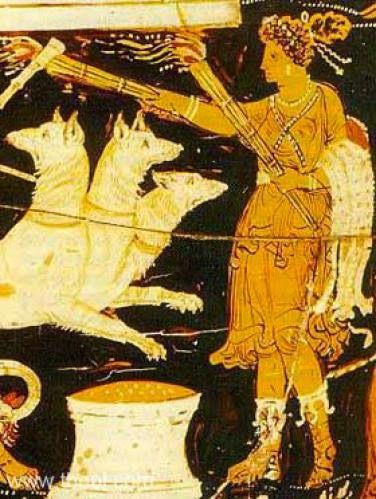
    The curtain of the night has drawn. Selene has started her nocturnal promenade with a moon mirror carried on her celestial chariot across the starry highway. Then the earth begins to bellow with great silent roars, trees to dance with leaves rustling in the wind as the chariot is racing, owls to call with their wings flapping, and the hounds howl from the end of the horizon in the glimmering light of the distant stars like lamps flickering in the desolate wilderness amid the haunting sound of Pan’s flute yonder. It’s Hecate’s Time, the Wandering Goddess of Night, appearing from the crossroads with her faithful hounds, heralding the staging of their divine mistress.

    Hecate has often been associated with all things witchery, magic, and death, not in the least due to modern-day Wicca practice identified heavily with the Greek goddess, but there’s more to her. She is a protector of the wrongfully accused, a goddess of retribution against injustice and impurity, and an advocate for underdogs. Perhaps, that’s why her animal is a dog, not a cat, which betrays a common association of the latter with someone like her. (In fact, Artemis is the only goddess whose animals are a cat because she was once transformed into it when chased by a besotted man.) Her hounds all have names: Kynegetis (Leader of Dogs from the Orphic Hymn), Kyneolygmate (Howling like a dog), Kynokephalos (Dog-headed), Kyon Melaina (Black Dog), Philoskylax (Lover of Dogs), Skylakitin (Lady of the Dogs). Of all the hounds, Kyon Melnia, aka Black Dog, used to be the wife of the last Trojan King Priam named Hekabe, who threw herself into the sea after the collapse of Troy by the Greeks. Hecate took pity on the queen and transformed her into a great black dog that became her familiar. What a manifestation of divine mercy it was.


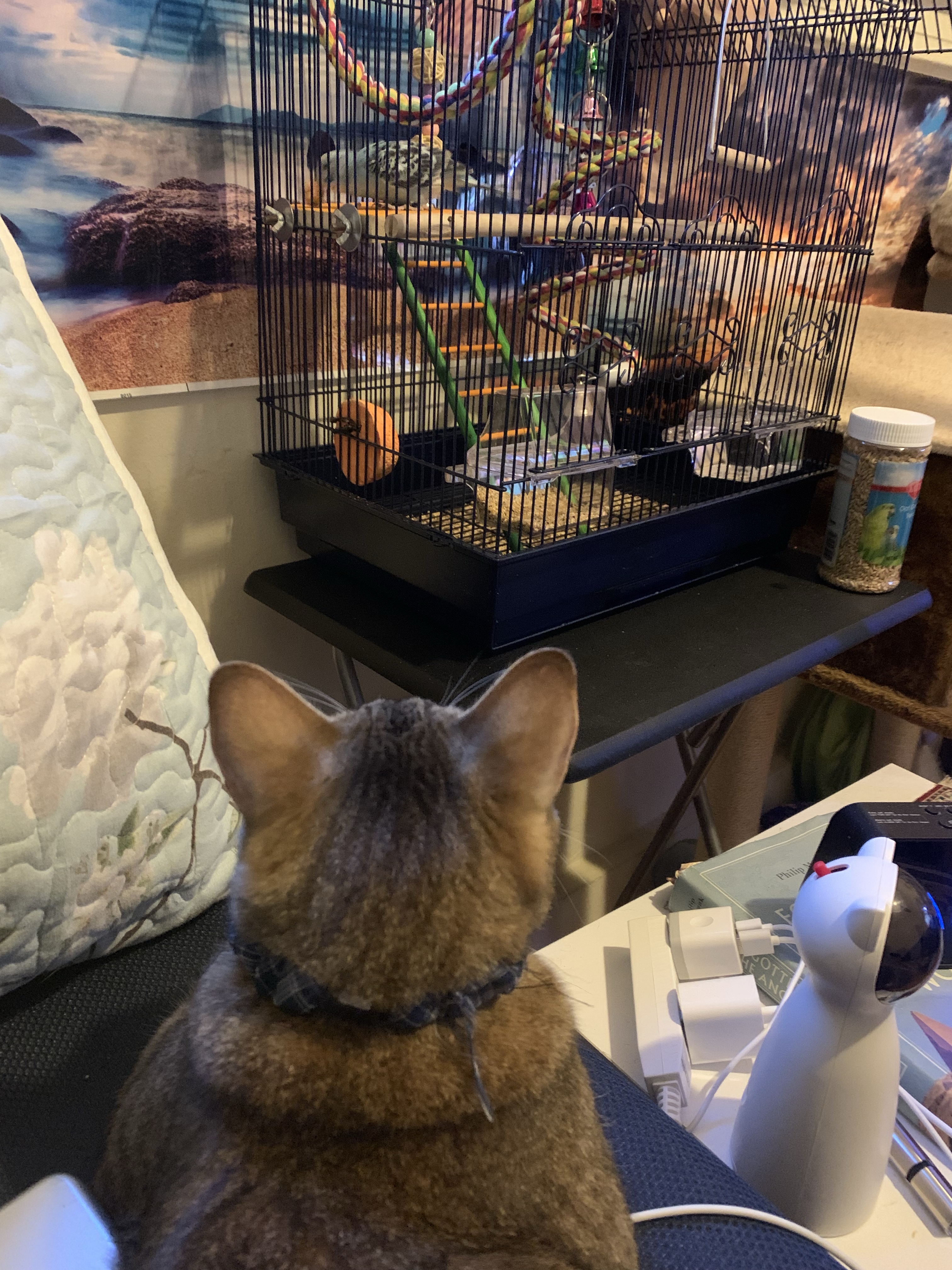
    It is said that dogs and cats see the spirits of the dead, especially at night. If you have heard a dog howling, another howl, then another, and so forth, as if all of them sing in a canine polyphonic coda. When Hecate’s hounds howl, mortal dogs respond to their divine canine entity as the goddess and her entourage pass by. The hounds also bring victuals offered to Hecate to their mistress at a cemetery where she partakes her daily victuals. So if you think it’s just an ancient myth, listen carefully when your dog or any dog within your earshot howls. It’s either it sees a spirit or Hecate and her nine hounds. For me, well, I have a tabby cat named Toro, and he sees it and them but won’t participate in the chorus because he has her mistress at home.

  • as if it were a dream

    My heart is longing
    Though my mind is confused.
    My soul is tired of sighing,
    My spirit is revolted,
    Time flows rapidly,
    Woes disappear slowly,
    I’m tired of repining,
    Will the universe conspire
    To reset it all anew
    As if all of this were a dream
    In the likeness of truth?

  • Dying today

    For all this time beneath this visiting moon,
    Where treasure is, my heart has not been at it
    with the lights of the lamp glowing in the gloom.
    But now I see the voracious time
    devour the kingdom of the shore,
    And the solid earth rule over the liquid main,
    Increasing store with loss and loss with store;
    When I see such vicissitudes of state,
    Or fate itself repeated over and over;
    Splashes of battle have taught me to ruminate
    That nothing stays the same to remain forever
    And I can’t depend on anything that changes.
    This thought is a truth that hope chooses
    And in the dying moments of today, fears I lose.

  • the unlikely family

    “So you have now the earth, the water, and the sky in your room! Awesome!” That was my brother when I told him over the phone about my recent adoption of a parakeet from a Petco. The paroxysm of excitement catapulted me into the awareness of a reality that I did bring a bird—those small but sharp beaks and those wrinkled tarsi feet manifesting the atavistic characteristics of dinosaurs, particularly the T-Rex. The truth that I now have to cohabitate with the least-likely coveted descendent of T-Rex still swivels my head in wonderment as if the ghost of Alice in Wonderland possessed me. So why the bird then?

    Dreaming of Sinbad and Serah

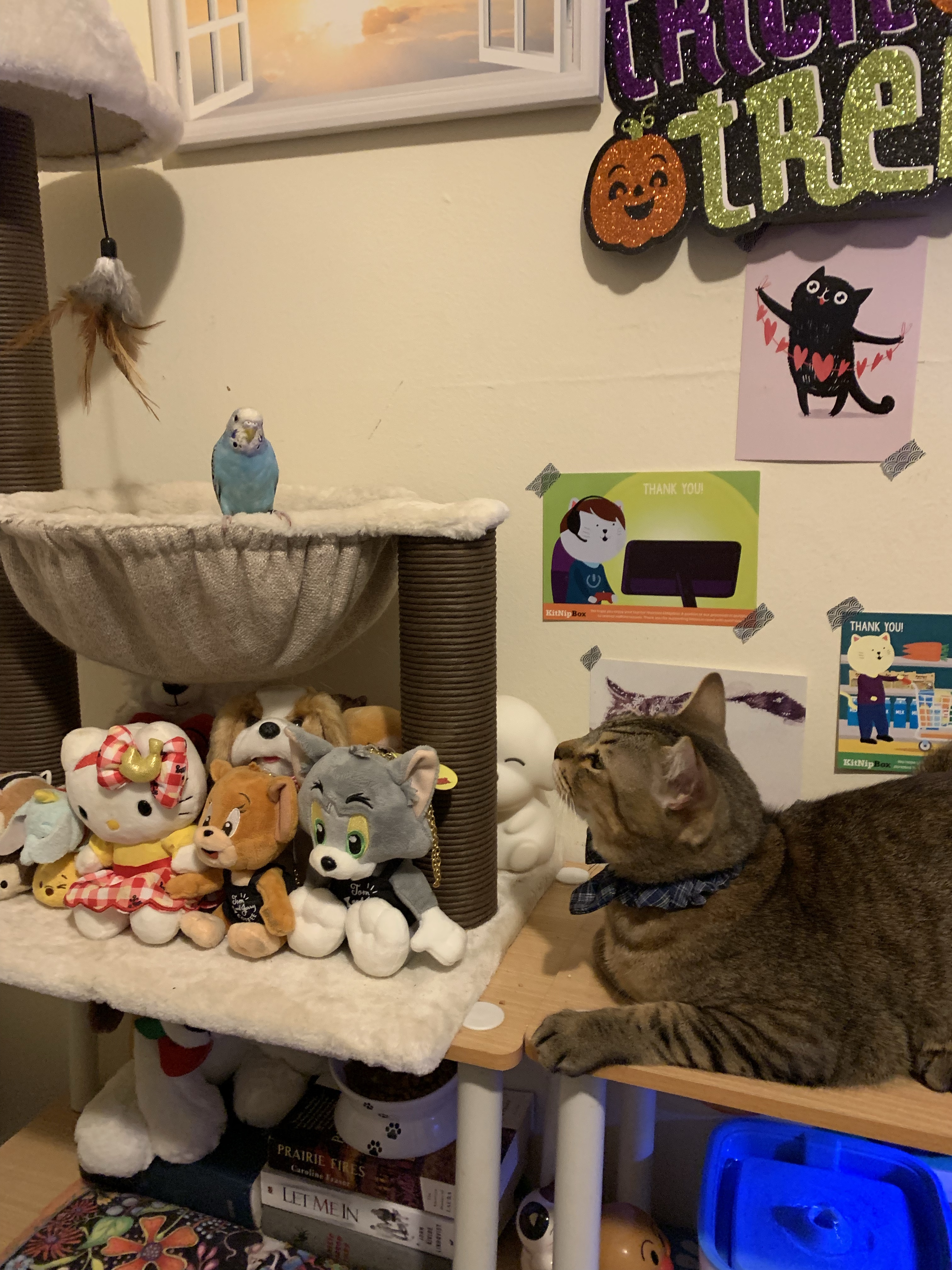
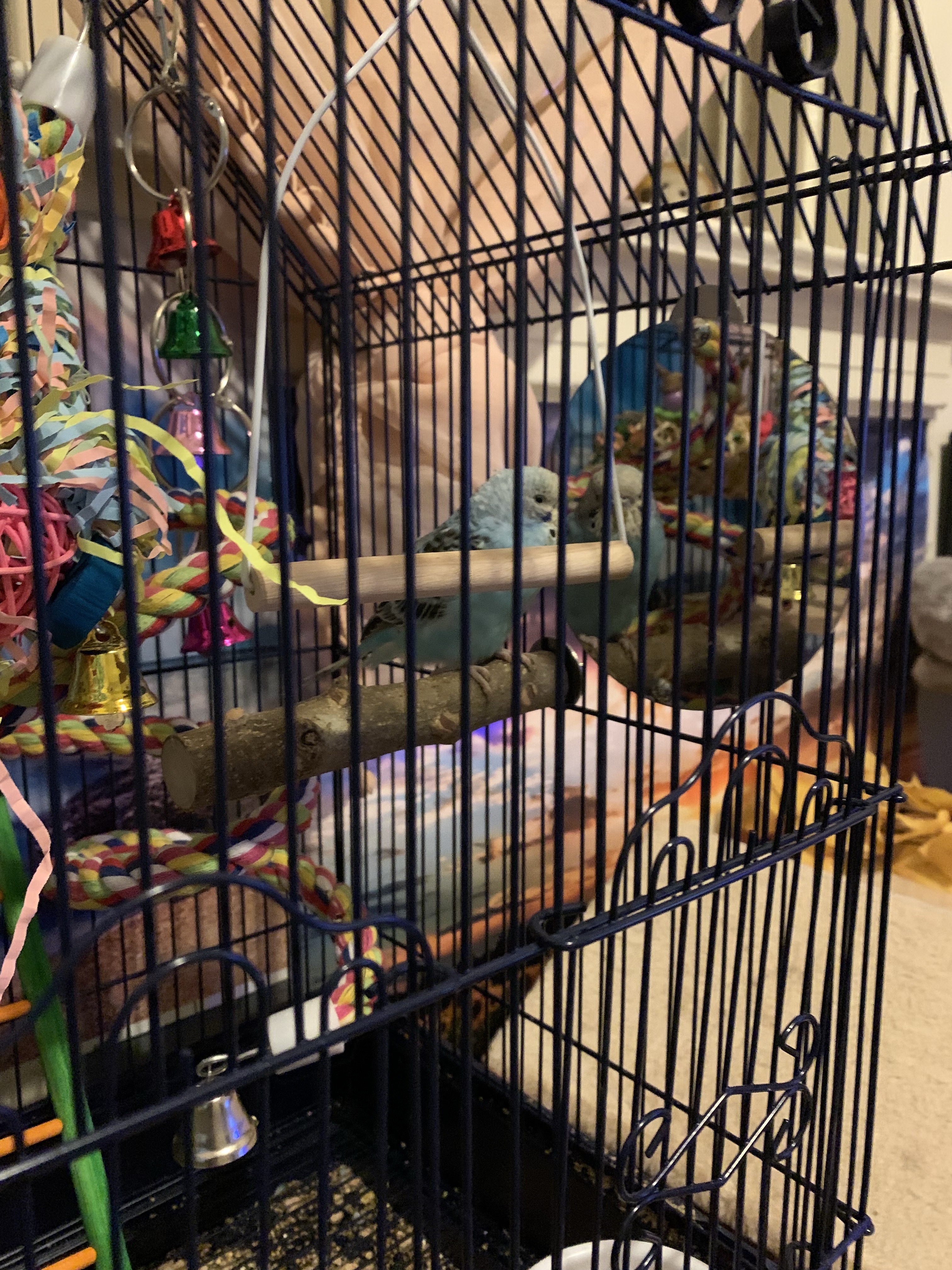
    While there might be the remotest chance of using my parakeet as a divine medium to consult my future, I have recently brought Sera home with great expectation of making a friend with the lonely Toro. Toro is now one year and four months old, and his growing curiosity calls attention for a playmate to share his enthusiasm and vociferous nocturnal stamina. Of course, the kinship of feline presence is the best option to fulfill the requirement. Still, the existential circumstances of present life eliminate it. Hence the lot fell into a blue parakeet I named Sera after the talking bird Serah, a travel companion of Sinbad the Sailor, from my favorite childhood cartoon. As you can guess, Sera is a girl who spends most of her time in front of the mirror and then trills in high soprano like a pretty and prim starlet prima donna.

    The crossed Sera befriends a reflection of loneliness.

    My endless attempts to tame Sera to sit on my finger and her constant ignorance of my presence are both disheartening and ireful. Toro is a susceptible and timid cat who denied looking at dead fish by turning away his head from the sight. Even though Toro wishes no harm on his new friend Sera, who fastidiously avoids him with all her feathers and beaks, she defends herself from him with all her might. Toro looks at me with his large sad eyes full of liquid heartaches whenever the conflict occurs, and I comfort him in my arms. Sera then flaps her tiny pretty wings, returns to her castle, and ensconces herself on a twiggy perch with a loud and snappy chirping as a sign of victory over the feline Goliath.

    I still don’t know if my decision to extra-species friendship is counterproductive amid Sera’s callous attitude toward Toro and me despite our apologies and continuous endeavor to reconcile with her. Perhaps I should not have taken Sera yet from the cage while she might have been still not familiarized with her new home. Still, there’s hope in my Pandora’s Box weaved in a rope of sparkling diamonds that promises a dazzling delight of trust and love filling the loneliness of the little hearts in our room. Who knows, one day Sera suddenly talks both Korean and English and tells me my todays and tomorrows? You never know.

  • On Aristotle and Philosopher’s Stone 💫⭐️✨

    Edgar Allan Poe expressed his contempt for readers who habitually flocked to books by famous authors on the sheer merit of their popularity without an individual appreciation of the contents. Likewise, I have a handful of the famous, the great people whose celebrity I hold no regard as I am going to unveil now. I have never liked Isaac Newton, albeit his genius is doubtlessly uncontested. Cantankerous, bellicose Newton was horrible to deal with, especially when you were his servant or maid or whoever he thought insignificant in his Elysium of high intelligence. He was also a closet occultist masquerading with the face of Rational Man with long-faced gravitas adorned in a long wavy wig. So how come Newton became a votary of Aristotle, who took the virtues to be central to a well-lived life? Since I tend to disassociate any such persona non grata (Newton, obviously) from one in my high regard (that is, Aristotle), I wanted to find out the incompatibility of the sullen scientist and the benign thinker.

    Aristotle’s ethics, or study of character, is constituted around the premise that people should achieve an excellent character as a prerequisite for living a meaningful life. It is an essence of metaphysics in which Aristotle holds that there must be a separate and unchanging being that is the source of other beings. Only by becoming excellent could one achieve eudaimonia, happiness/blessedness that constitutes the best kind of human life. This philosophical perspective also applies to the ideas of self-sufficiency by Ralph Waldo Emerson and of Amore fati, the intellectual love of life by Friedreich Nietzsche.

    Emerson regarded two separate elements as being united to create the world inside of you for the former. They are raw experiences gained from somatic sensory stimulation transformed into ideas and thoughts in the realm of reason, a process akin to a caterpillar transforming mulberry leaves into gorgeous silk. Nietzsche’s Amore fati is theologically conceived in an attempt to manifest the presence of Providence or God’s will with his infallible existence through Immanence by which an adequate idea of simple attributes of formal essence of God is applied to an adequate knowledge of the simple truth of things. It might be akin to the Eureka moment when Archimedes started running naked around the town in the enthusiasm of knowing the weight of the gold in the king’s crown from his water-filled bathtub. Or it could be the Ecstasy of Saint Teresa captured by Bernini as a cherub was mischievously thrusting the arrow back and forth into the heart of the virgin. In sum, Aristotle was right in saying that knowledge isn’t innate or guaranteed prima facie but gained from the reports of the senses and logical inference from self-evident truth.

    I still believe that someone like Newton had no regard for moral excellence any more than gaining the knowledge of the universe because studying humanity was anathema to his lofty vision of the world and beyond, such as the alchemical realm. Newton was keen on Aristotle’s theory of the 5th element on top of the earth, air, fire, and water – that is, space of aether. Methinks, Newton was trying to get Rosetta’s stone in manipulating the 5th element proposed by Aristotle. He had not known that it would have become such a magical element to turn stone to gold. Notwithstanding Newton’s beguiled ambition to be a perfect Gargamel with the help of Aristotle, so to speak, my appreciation of Aristotle’s metaphysical school of thought decides that his brilliance is brighter than Plato and on par with Socrate in the constellation of philosophers’ stars.