
And the daffodil looks lovely today,
the golden blossom of happy hope
sparkling vivaciously in such beauty
that is not vanity but full of agape.
And the daffodil looks lovely today,
the golden blossom of happy hope
sparkling vivaciously in such beauty
that is not vanity but full of agape.

He wondered as a lonely hunter
who chased after the North Star
Fluttering in the flickering twilight,
vanishing in the pale hues of sunlight,
with a twinkle in the hunter’s eyes.
Aristotle averred that man is a political animal by nature. Anyone uninterested in politics is either a divine being or a beast considering his contemporary volatile political situations in city-states due to the Peloponnesian War. He must have noticed that an unstable government naturally spawned the populace’s grunts, usually in matters of economic hardship and arbitrary measures of civil conduct. That was millenniums ago; you might say, at least not in the United States, some might say. Then why are the scenes of the disaffected ancient Athenians overlapping with those of the disappointed Americans now at the end of this Pandemic Year like an army of living ghosts in my mind’s eye?
It all began with Covid-19 that showed politicians’ true colors, which are neither bright nor dark but only gray, grayer, and grayest. To add clarity to the grayness, the current tug-of-war in Capitol Hill regarding the Economic Impact Payment (“stimulus check”). The sudden news of the second stimulus check was a dim light of high hope for low heaven for most people whose livelihood depended on paychecks from work, social services, or other possible aid agencies. Then another beam of hope shone from the Congress that they would push for a higher amount of the stimulus check to be passed in the Senate. Woe betides anyone who believed in human kindness! The big wigs in the Senate thought that the increased amount of the check would be spent inordinately by people who would not need the monetary aid, such as the employed and others unqualified for whatever deemed unfit in the eyes of the moralists confusing coldness with principles.
As the Pythagorean theorem does not formulate life, no one can expect the exact sum of need, subject to individual circumstances. As in other countries, our political leaders do not have the right to measure their political rhetorics with personal egos in the guise of moral rectitude. They should not dictate what people do with the government-issued pittance because that the first and foremost a sign of totalitarianism over individual freedom. Once the money is given, then it’s up to the donee how it is spent, come what may. Besides, the amount of stimulus check is not as generous as the senate majority thinks. It barely covers a month worth of food, transportation, and some utility bills in most households. But then, beggars can’t be choosers. People want it, and they want it now to get by. Does the Senate know about it? I doubt it.
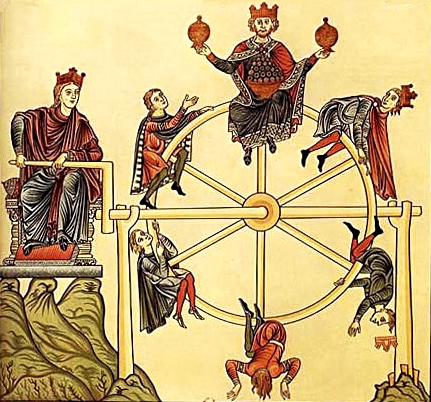
Those who regard folks in need of financial aid as the annoying mendicants mooching off others’ packets should know that the swift is not to victory, the strong not to wealth, but time and chance befall to all. The government should not play the role of the goddess of fortune blindfolded spinning the wheel of fortune, missing the wheel’s lucky compass to those in need of it.

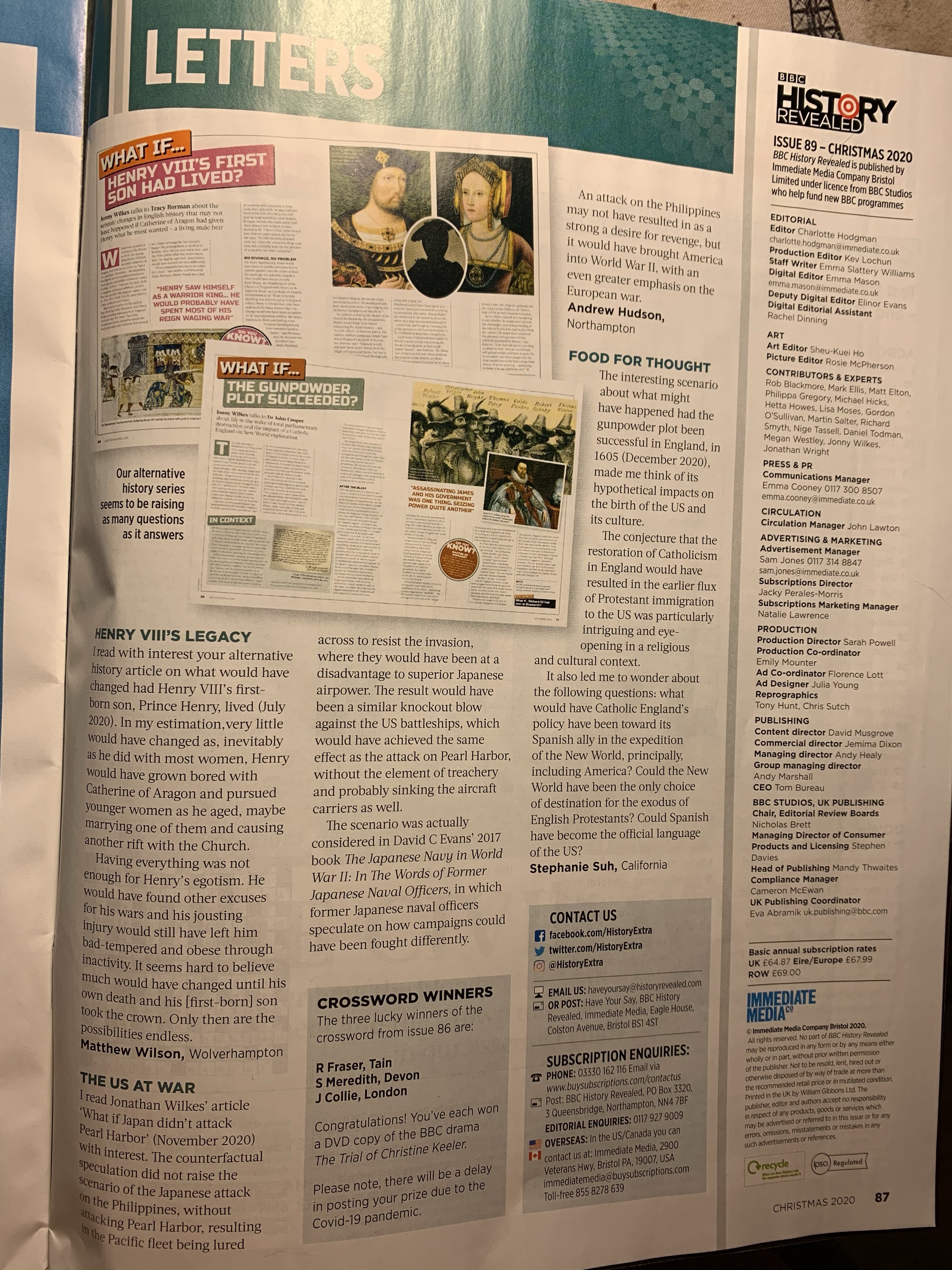
Reading the history of ancient Greek, Egyptian, and Western Civilization, in general, gives me mental refreshment. It connects me to the people who lived before me, crossing over the boundaries of time and territories. So, it was a pleasant present after a day’s work when Mom handed over to me a Christmas issue of the BBC History Revealed magazine that had arrived at home. To my delight, I saw in the magazine my letter to the editor about my questions on the hypothetical consequence of the successful gunpowder plot, which is best known for the Guy Fawkes Day in the U.K. The following is the transcription of my published letter, which is titled “Food for Thought.” In fact, this is the 6th time that the magazine has published my letters! Wow!
“The interesting scenario about what might have happened had the gunpowder plot been successful in England in 1605 made me think of its hypothetical impacts on the birth of the United States of America and its culture.
The conjecture that the restoration of Catholicity in England would have resulted in the earlier flux of protestant immigration to the States was particularly intriguing and eye-opening in a religious and cultural context.
It also led me to wonder about the following questions: what would Catholic England’s policy have been toward its Spanish ally in the expedition of the New World, principally, including America? Could the New World have been the only choice of the exodus of the English protestants? Could Spanish have become the official language of the States?”
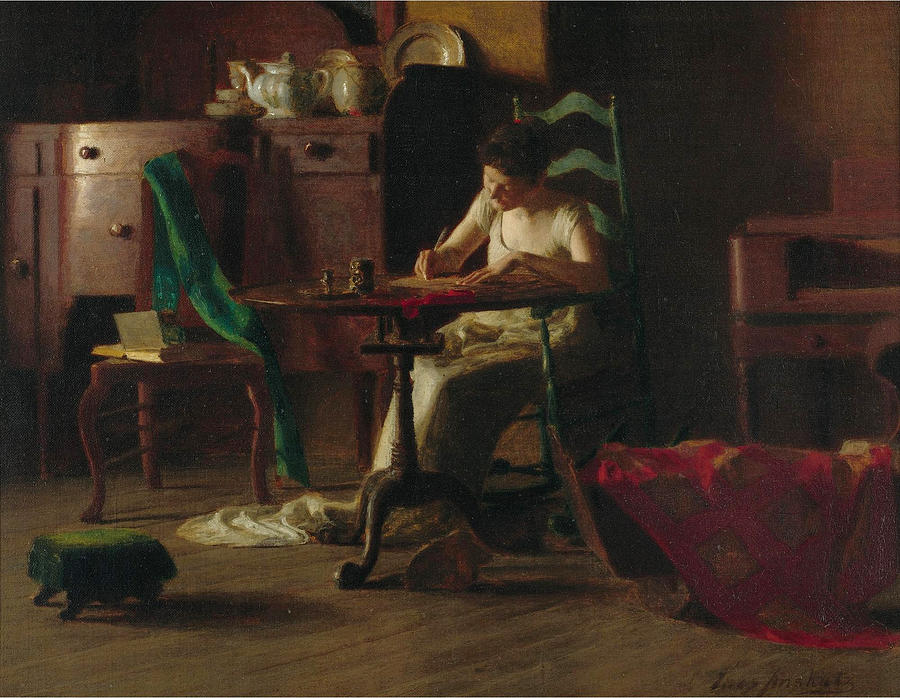
Suppose a brownie or a leprechaun I happen to rescue from a Gargamel lookalike wizard insists what my three wishes are as a quid pro quo (depending upon how friendly the fairy is). In that case, I will say forthwith one of them is the Marvel of Writing, which I have lost somewhere in the course of life. I can turn myself into a great writer with the magical pyramid of power from a hodge-podge reality of indigested letters of reality as black as Persian Night.
Johnson’s essay on the role of the scholar evolves from Francis Bacon’s adage: “Reading makes a full man, conference a ready man, and writing an exact man.” It rings a bell with the Nietzschean idea of Superhuman, superseding any mortals known for their erudition perennially enshrined in the history of human civilizations. A truly knowledgeable person I principally associate with a great writer can digest what he reads, explain it to others in facile terms, and substantialize it in writing, a mental Osmotic process that nourishes the mind and invigorates the body.
Although I agree with Bacon as Johnson did, I am more with their ancient Greek teacher Socrates. Socrates warned his pupils about regurgitating what they heard from his lectures without putting it in their own words. That was one reason why the great philosopher disapproved of writing practice that had just emerged in his time. Copying letters of others without understanding them on his own would stun the cognitive powers rather than promote a broader and deeper range of cognition. Reading was not as popular in Socrates’ time as in ours because it was at the beginning of the new intellectual dawn of Greek Civilization. So, Socrates was a thinker, neither a reader of texts, nor a writer of tablets. Does this make him less of his students Plato and Aristotle?
Does the amount of reading necessitate that of writing? Wouldn’t too many words go undigested inside and clog the pipes of thoughts when writing? For example, an ambitious amateur writer wants to write as if she were possessed by the spirit of Patience Worth, who transformed an ordinary homemaker into a brilliant writer. She adheres to a writer’s gospel of “Read a lot. Write a lot,” but it is easy to be said than to be done. The more she reads, the worse she writes. She wants to reason the perplexing reason with frustration and disappointment. She feels lost in the middle of midtown Manhattan where there are many streets and avenues but nowhere is her niche. Yet once she gets out of town, the state, the coast, her mind becomes clear, imbued with a fresh breath of inspiration that moves her hands on the keyboards automatically. Contrary to Johnson’s opinion that grandstands with all other established writers and academics, the amateur writer feels liberated from a siege of letters that intimidated her army of thoughts equipped in her design of armors and shields with her coat of arms sovereign and beautiful. Her reasoning power was buried under a chaos of indigested learning.
Although Johnson’s magnanimous advice of the equilibrium of reading, writing, and speaking on a writer’s continuum is respectful and worth reading, its reality is subject to the individual aptitudes of learning, ways of reasoning, and natural dispositions. One may write better because of reading more, while the other has the opposite consequence. A hermit – let us say more realistically, an introvert – is not always an incompetent, anti-social, sullen loner whose airy petulance barricades against others whose intelligence may seem intimidating to be dealt with. I think to write more is far better critical than to read more because writing is a sovereign act of expressing an individual mind and spirit, free from the comparison of the florid words of others with the writer’s own that would dispirit the vivacity of the creative spirit. To conclude, I thank Thomas Mann for his affirmative saying:” Solitude produces originality, bold and astonishing beauty, poetry.” Truth is truth to the end of reckoning. Then it is yet another truth of others, not necessarily yours.
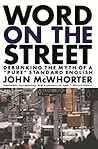 Word On The Street: Debunking The Myth Of A Pure Standard English by John McWhorter
My rating: 5 of 5 stars
Sometimes, the courage to express my thoughts in English as a second language meets with insidious challenges between the grammarian Scylla and fault-finding Charybdis, lurking in the safety of anonymity on social media to stalk the prey with perverted joy. So, it is only natural for me to find encouragement from the books reassuring me that the mastery of language does not equate with intelligence. So, it is no wonder that I have the pleasure of reading Word on the Street, an invigorating narrative told in scholastic zeal and impressive erudition flavored with street-smart audacity. McWhorter, who belongs to the constellation of brilliant linguists, such as Samuel Johnson and Steven Pinker, talks about language in terms of social and cultural contexts, making the academic subject a hot topic of a Charlie Rose talk show.
McWhorter takes his view against language relativism that language shapes thoughts. The possession of words does not determine the thought process to contextualize the mentalese. Therefore, slang, idioms, and parlance outside the elite group of society and the educated middle class are not denigrated as improper English. In this sense, Pidgeon English, the quaintly charming admixture of scattered English words and a speaker’s native language, is not a corrupt version of pristine English but a hybrid of languages born out of the ingenuity of the human mind and changeability of language in nature. Isn’t English a living proof of the incredible amalgamation of languages still undergoing evolution? Who would have thought that English of the underclass would shine as a lingua franca?
What strikes me most about the book, which concurs to his fellow linguist Pinker’s point of view on language not as a touchstone for one’s cognitive ability, is that solecism in spoken and written language does not reflect the user’s less desirable trait of academic ineptitude. To put it more bluntly, just because your grammar is besotted with errors doesn’t mean you don’t know what you are saying, or forthright, you are less intelligent. Take Leonardo da Vinci, the Renaissance polymath, who had no fewer than six grammar books on Latin and Greek to grasp the syntax of the classical dead languages he was so hopeless to learn thanks to his lack of formal education. In fact, da Vinci’s writings are ridden with misspellings and amorphous sentence fragments, just as Leo Tolstoy, Jane Austen, and Emily Bronte showed in their manuscripts. So, did their imperfect language skills overrule their force of imagination and contextualizing it in words? Does this betray that language shapes thought?
McWhorter can transcend the demarcation of race in the communication of this extensive knowledge about the subject drawn from a wealth of learning and scholastic industry with urban wit and debonair guy attitude to his readers, academic or general. His intelligence freely crosses over time gaps, chasms between class divide across continents and oceans with a universal theme of words that we, as human creatures, have spoken thus far. And he tells it using full of scintillating metaphors, examples, and anecdotes, which helps the reader comprehend otherwise monotonously academic subject without pressure and enjoyably. Samuel Johnson said that the possession of knowledge is to share it, and the possessor of the knowledge shines when he applies the knowledge to the crowd of life. Well, Word on the Street shows it all.
View all my reviews


You must be logged in to post a comment.