Tag: book review

  • Charles Dickens wanted to…

    untitled
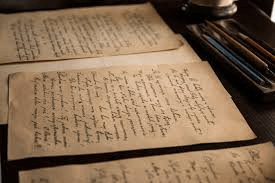
    Letters revealing Dickens’ attempt to accuse his wife of being mentally unstable (from Google)

    All would have been well if the truth had remained buried under the dusty files of forgotten letters from the past in the bottom drawer of History.  Alas, it happened – a recent revelation of the letters delineating Charles Dickens, a literary great whom I admired, concocting a plot to send his sane wife to a mental institution in order that he and his 18-year old paramour could be forever together.   

    How and why these forgotten letters have been brought into light out of the blue are clandestine from my reading of the article about such letters from the recent issue of a history magazine. Besides, the possession of the letters is curiously divided between the Atlantic Ocean because some of the letters are held by Harvard University in the U.S., while the others by the University of York in the U.K. The article does not provide the reader with more detailed information as to whys and wherefores of such divisional custodianship of the letters, not to mention the background of such uncovering of the provocative textual artifact that would certainly do no good on Dickens in any way. Methinks it would be a possibility that a descendant of the estranged wife Catherine Hogarth or even of their eldest child might have staged this rather dramatic publicity of the letters revealing the other side of the great writer out of indignation as comeuppance for his sins of adultery and perjury, which in a twist of whimsical irony befits the ethos of #MeToo Movement.
    CatherineDickens200
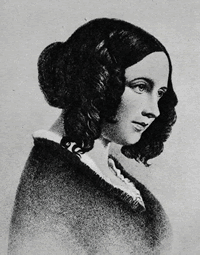
    Mrs. Catherine Dickens

    The content of one such letter written by a neighbor of Catherine Hogarth details the following: (1) Dickens at the age of 45 fell madly in love with 18-year old actress named Ellen Ternan: (2) it was the death-knell of the marriage, pace Dickens’ complaints about his legal wife; (3) his wife confronted him when a bracelet meant for the young actress providentially was delivered to her, after which she separated from him by moving to a house in Kent with their eldest child. The rest of the children were in the care of their aunt, while Dickens continued his relationship with the actress until his death; and (4) after the separation, Dickens tried to seek for divorce from the court by trying to prove that his wife was mentally unstable and that she would be sent to an asylum. However, the attempt to seek such remedy was foiled by the absence of proof of her insanity.

    The whole scandalous charade of this great literary figure reminds me of the axiom by Ralph Waldo Emerson that the admiration of great works of geniuses should not become the worship of idols. That is, one must disembarrass the idea of a story from the person of the author, who is only a fallible, whimsical, temperamental human. The works of writers, I believe, are a separate reality based upon their epistemological knowledge magically alloyed in imaginativeness, ideals, and dreams in the peculiar alchemy of literature that deserves of distinguished approbation and recognition. In this regard, my disappointment with Dickens as a person should be kept separate from my admiration of the humane characters he created and the benevolent stories he entertained. Sometimes, it’s better not to know much about whom you like lest his follies and faults should dishearten you against your wishes and imaginations. For these reasons, I am more in sorrow than in anger upon reading this troubling article about Dickens, one of my all-time favorite writers, which leads me to the lamentation of Et tu, Mr. Dickens?

  • ‘The Signal-Man’, by Charles Dickens – review

    The Signal-Man (Original 1866 Edition): AnnotatedThe Signal-Man (Original 1866 Edition): Annotated by Charles Dickens

    My rating: 4 of 5 stars

    Charles Dickens wrote this short story of a lonely signalman in 1866 based upon the Clayton tunnel crash in 1861. The setting of the story was a station by this tunnel with a dismal and eerie atmosphere around it, which dovetailed with the ambiance of the story itself. But while I was reading the story and thereupon, I was unsure of who’s the ghost here: the narrator or the signalman? First of all, the image of the narrator calling the signalman’s attention to him from above seems to me uncanny enough to conjure up the calling of a spectre wandering about the haunted tunnel. Or it might be that the signalman, the station, and the train per se were all in fact illusions, bewitched elements of the tunnel crash victims eternally haunting the place, not knowing their demise. Or in terms of modern psychoanalytical perspective, either the narrator or the signalman saw his own representations of the reality in his own mind, the hallucinations, which were different from and invisible to the others. And that is what I found this story at once hauntingly rueful and lingering with the images.

  • small simple sweet

    A merry heart goes all the day, warding off evils of everyday existential life. The Bard said, “Frame your mind to mirth and merriment, which bars a thousand harms and lengthens life.” Which also strikes the biblical chord of “Refrain from anger. Turn from wrath. Do not fret; it leads only to evil.” It all fits Sally’s way of fulfilling demands placed on her daily tasks in life and enjoying small pleasures in the simple and sweet novelty of it all.

    Author’s note: with my new iPhone, nothing is impossible 🙂 I hope to make a short film, using a series of stop motions, in future.

  • ‘Legally Haunted Houses’ by Dylan Clearfield – review

    Legally Haunted HousesLegally Haunted Houses by Dylan Clearfield

    My rating: 5 of 5 stars

    For a person like me who likes to read genuine supernatural stories free from dramatic accounts of witnesses, psychic, paranormal investigators, and/or parapsychologists, this is a perfect read consisting of historical cases in France, England, Canada, and the States that were rendered haunted by the court of law.

    For example, the case of Stambovsky v. Ackley in the appellate division of New York Supreme Court has become a bedrock case law of caveat emptor, which is literally translated as “Let the buyer beware,” meaning that the buyer alone is responsible for checking the quality and suitability of goods before a purchase is made. The appellate court ruled that since the buyer should not/could be able to ascertain a condition in which haunting occurred upon reasonable investigation in due diligence on the buyer’s part, the plaintiff Stambovsky was awarded the rescission of the contract of sale of the house.

    All of the stories contained in this collection of the cases are recorded in historical as well as legal documents, which weigh heavily against sensational TV programs and hyped-up accounts of psychics and the like in its genuineness. And it’s a light read readers can finish at one setting. Mind you, truth can be scarier than fiction.

    저장

  • ‘On Talking Terms’, by Turid Rugaas – review

    On Talking Terms With Dogs: Calming SignalsOn Talking Terms With Dogs: Calming Signals by Turid Rugaas

    My rating: 3 of 5 stars

    Calming signals are genetically inherited canine language used for  communicating with each other to maintain healthy social hierarchy, since dogs, like their wolf ancestors, are pack animals dependent on sensory input, such as olfactory, auditory, and visual perceptions. Accordingly, dogs communicate with themselves through body motions, such as turning their heads to the other side (as a goodwill gesture in greeting between two dogs), lifting a front paw (showing peaceful intentions), yawning (as a way of reducing stress), bowing (releasing tension), etc. In this book, Ms. Turid Rugaas, an internationally acclaimed Norwegian canine behavioral counseling trainer, primarily focuses on the needs of understanding these signals from dogs as their way of communicating to and with their canids and humans alike. In the context of regarding the essence and importance of calming signals from dogs, this book offers a visual glimpse of what they are like with pictures of the dogs in each accordant motion, which I find helpful to perceive it.

    However, the book does not provide the reader with more in-depth knowledge on the calming signals on the grounds of scientific terms; rather it is more of a pamphlet introducing the basic concepts of the calming signals. In fact, this book of less than 100 pages recounts the author’s personal experience with her beloved dog Vesla, who had been her faithful and effective assistant in helping other dogs’ behavioral problems solved, in her close observation of their calming signals expressed and exchanged. It is needless to say that such personal experience saturated with her firm conviction in positive training of dogs is deemed highly valuable and thus contributes significantly to the purpose of this book, which I wholeheartedly appreciate as a kindred spirit. But it is also equally tantalizing to whet my desire of discovering more about the origins of the calming signals, the comparison with those of wolves in terms of evolutionary aspects, and more examples thereof.

    In summary, this book is a lovely quick read about dogs’ calming signals at a glance. In addition, the reader cannot help agreeing to the author’s view of dogs not as her subordinates to be trained with dominance but as her “children” who need love and patience because dogs as being of conflict-solving nature want to keep us in their company by trying to speak to us through calming signals. So if you just want to see what these calming signals are about in a nutshell, this is an informative and affectionate read.

  • ‘The Saga of the Pony Express’, by Joseph J. DiCerto – review

    The Saga of the Pony ExpressThe Saga of the Pony Express by Joseph J. DiCerto

    My rating: 5 of 5 stars

    19th Century America was rapidly expanding her territory to the west with the growth of population. So the inception of a rapid mail service across the continent to deliver important business documents, letters of importance both private and governmental, and newspaper articles was inevitable. But it was a risky business to do because crossing the continents at that time meant a perilous adventure fraught with hostile Indians, highwaymen, treacherous desert weathers and temperature, and other unforeseeable elements indicating danger.

    DiCerto tells the reader of historical and cultural backgrounds on which the birth of The Pony Express as a joint venture of William H. Russell, Alexander Majors, and William B. Waddel was founded against the odds, when the United States as a young nation in the world started to mark herself as a burgeoning western country with booming commerce and increasing population on a vast land in comparison with the European counterparts. During its operation, the service reduced the time for messages to travel between the Atlantic and the Pacific coasts to about 10 days, which is remarkable even for today’s standard of mail transit time. And it is a notable achievement of the Phony Express that the message carrying President Lincoln’s Inaugural Address was delivered from St. Joseph, MO to Sacramento, CA by a legendary pony rider Bob Haslam in record 8 hours.  In this book, the author explains about how the Pony Express came to exist despite its short lifespan (April 3rd 1860 ~ October 1861) with the advent of the transcontinental telegraphic system.

    The author also relates with his consummate story-telling skills venturesome tales of the fearless young riders of the Express and their work routine, work conditions, and their interesting anecdotes, all of which are based upon veritable document records with pictures. The book is never a bore with the scintillating discourse of the historical context smacking of wits and love of the subject matter by the author who, in fact, asserts that this book is his child out of a long labor of love and passion for this awesome historical enterprise in the American history.