Reading Day — Thursday, August 20, 2026 On D. H. Lawrence’s “The Thorn in the Flesh”
Lawrence must have hated the military. Well, more exactly, the rigid discipline used to tame the naturally untamed. It is against nature, against free will: the controlled mindset that conditions you to believe that if you fail, you are a loser to be put in the pillory. Not a man. Not man enough.
Is that really so? Lawrence asks. No. A man is a man when he witnesses his desire being reciprocated in the body of his lover. Virility is true manhood because it requires no weapon of killing.
The young German soldier in this story recovered his lost confidence through sensual passion, which collapsed the wall between institutional dehumanization and being fully alive. Naked with his lover, the soldier felt no shame in wanting and loving her. The erection of sexual passion restored physical vulnerability.
We know Lawrence for his controversial Lady Chatterley’s Lover. So, it may be convenient to call him a sensationalist whose agenda was to challenge religious doctrine and restrictive social norms. Instead, he was a writer who stood at the heart of humanity and showed us the beauty of being human in the expression of passion, in wanting and being wanted.
The Thorn in the Flesh is Lawrence’s version of Dostoevsky’s “Only beauty can save the world.”
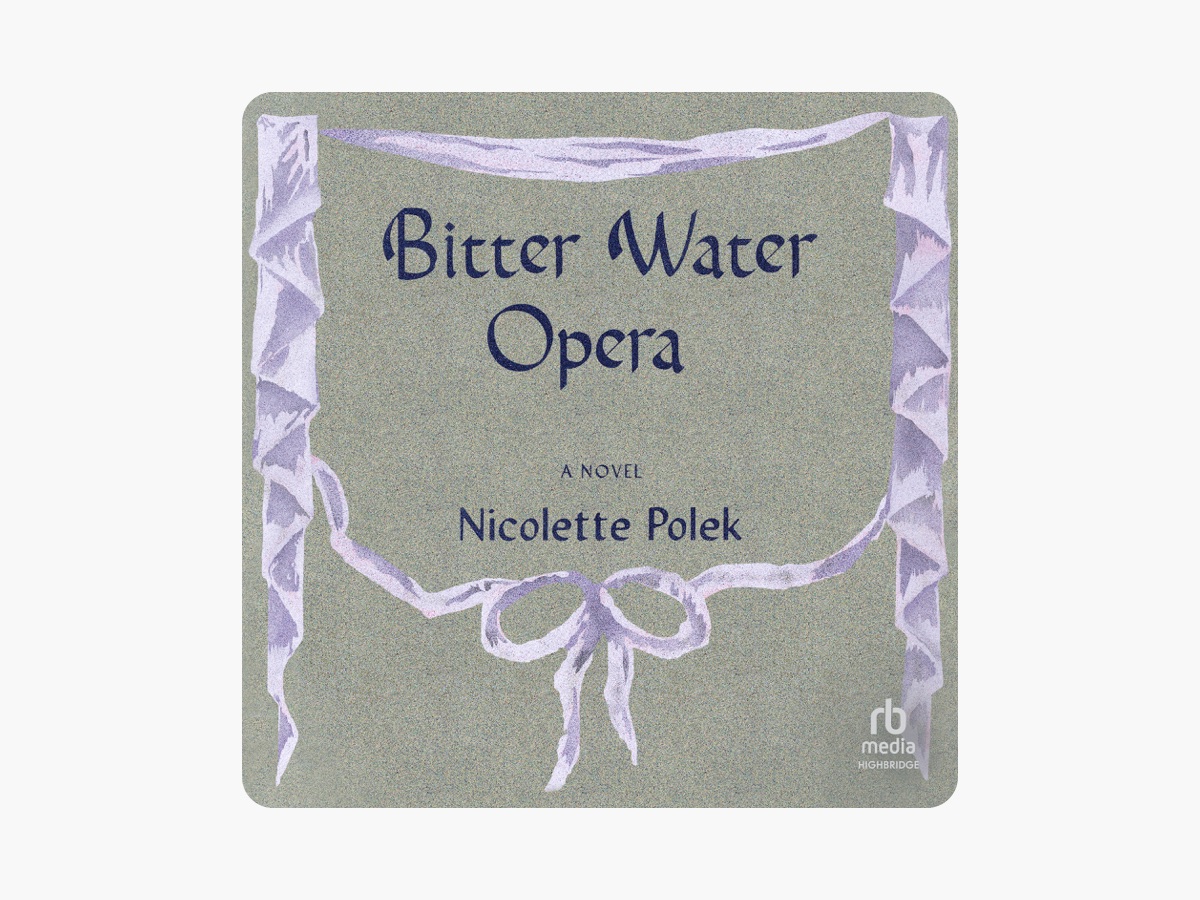
My first time in the harbour: at the dock, standing in the sea breeze. English air. An unfamiliar coast, oddly familiar. But this is not a book about the cozy English sea town in a postcard.
I have read only the first few pages of the book, and it has already given me its weather and atmosphere. I feel the harbour holding the secrets of the townspeople. I feel the sea carrying the flotsam and jetsam of life quietly and bringing them into the harbour—an always moving inside a never-arrival.
The characters I have met so far are ordinary in the sense that none of them has that fierce individualism, existential malady, or anything that instantly piques the senses. But people may find pornography in Jane Eyre: the tension, the ache, the desire. They are not spoken but felt. People keep them in the mind, as if giving a voice to the forbidden would desecrate Jane Eyre.
I think that is what the book wants us to see: what may seem ordinary on the surface, like a calm sea, hides a storm spiraling into a pillar of fury, discordance, and disorientation. I have not yet come to know the characters, except for Prudence, whose two Siamese cats love pushing their small heads against her legs. It is the cats that draw my attention to her, but she seems to have a story to tell as a beautiful young girl who does not act like a beautiful teenage girl.
Prudence is Prudence: Quaker in name, puritanical in action. But she may turn out to be someone different from what I have seen as I progress through the pages, although I want her to remain as I see her now. I want her to be beautiful without being popular.
That is life, isn’t it? Change is human, an uninvited grace. You want someone you like to remain the way you know them. That is what I want to know after I complete reading the book.
The sea will remain the same. The harbour may not.
With sixpences beneath a visiting moon, Gauguin could produce wonder. He was an artist in an endless pursuit of the rising sun at the dawn of a day with a flaming glory in dazzling magnificence. He was an intellectual with a wealth of knowledge drawn from a wide range of reading and classical Jesuit education. Gauguin was a man of irony, with contrasting colors reflected in the soul’s spectrum, from the passionate red to the sanguine blue, hopeful green, and melancholic purple, which is why he left Vincent Van Gogh alone in Arles, in never-ending loneliness. He craved recognition in a grand salon, yet he longed for independence on an island beneath an ancient sun. So, naturally, I wanted to know about Gauguin from his own writings, not from another in the form of a biography. Hence, The Writings of a Savage by Paul Gauguin.
The book is an attractive compendium of mostly letters to his select few friends and, occasionally, to his wife, as well as essays and articles on the arts and religion, demonstrating Gauguin’s erudition and introspection. While reading the book, I could not help but think that if he had been a professional journalist or an art critic, his artistic talent would have basked in the glorious dawn sun rather than a struggling painter always on the verge of starvation. But most of all, what I wanted to know was if Gauguin had cut off Gogh’s ear, as I heard the rumor. Before reading this book, I had already assumed Gauguin was a man of temper because his image was incompatible with the Dutch painter’s delicate, sophisticated, and sensitive appearance and temperament. But while my prejudice was not entirely faulty, Gauguin proved himself innocent as he talked about it before his impending death away from civilization. Besides, my reading of Gauguin’s writings convinced me that he was not culpable for the injury, even if some like to assemble circumstantial rumors to make the French pariah artist appear jealous and violent toward the suffering Dutch genius. Gauguin might have been passionate, but his passion is directed toward his artistic creation of the worlds he sees in his mind, while the snobbishness of critics and bureaucrats curates the works of painters who know nothing about the arts.
Imagination, innovation, and independence are the jewels of Gauguin’s prime colors that create his artistic Elysium. Gauguin was liberal in social stance, especially against clericalism, but sovereign in his artistic philosophy that how to draw doesn’t mean an exact copy of the figure because that’s not the purpose of art for art’s sake. As the title suggests, Gauguin was a noble savage who, as a disciple of Rousseau, returned to a primordial state of humanity to escape the over-intellectualized inertia of civilization, which depreciated and ignored his art. I still can’t say the book converted me to the cult of his paintings, which differ from those of Renoir, Monet, and Pissarro. But the book is a medium of looking through the labyrinth Gauguin has built, leading to his secret garden, wondrously vibrant and dazzlingly radiant.
My Camille is unwell now. He eats, drinks, and defecates, but I know there’s something wrong with his demeanor, mood, and aura. No, it’s not a hyped reaction from an overly protective spinster guardian, but I ohknow. It worries me to death; it pains me to no end. I am so thankful for his little heart pumping beneath his sleek, straight black fur, and on the other hand, I inwardly recoil in fear that what if it begins to slow and then stop?
I have noticed that when I pet Camille, he secretes a fluid with a noticeable smell, which isn’t terrible. I thought it was his way of expressing content when petted, and my research shows it’s partly true. Partly it is due to his anal gland charge, which worries me. So, I think maybe it’s a complication of the anal glands and other organ infections, such as liver or urinary.
And it plunges me so low into the abyss of grief, echoed in guilt for Camille’s condition because I have not been so loving or patient with Camille’s urge to play. He tends to eat frequently, almost every 10 minutes or so. Even though I always ensure my cats’ bowls are full of dry food with water, Camille prefers wet food. He eats small but many times. It might indicate diabetic symptoms. I feel like a terrible guardian, and more terrible is losing him – which is unthinkable! Let present fears less than horrible imaginings!
I just made an appointment with a vet to check him this Saturday. I hope Camille is not seriously ill.
I always think that people born in the 1970s are in-betweeners. Visible, yes, but not conspicuous. It’s the transitional generation, crossing over the boundaries of the 21st and 20th centuries like faerie children, hybrids of yesterday and today. The last generation of the 20th century fully lived and ended in the new era. And it’s hard to encounter them in reality for some mysterious reasons. It makes one feel like a changeling among new and newer waves of generations.
The choice of this book is, therefore, something akin to encountering an acquaintance among total strangers in a strange land, even if such excitement is not reciprocated. The 1970s was when the world we know now began to form its familiar landscape with the birth of new words as society became more technologically advanced and culturally enhanced. Here is a list of the terms we use, like commodities born in 1974: Touchscreen, telecommute, supermom, CT Scan, memory card, transgender, wake-up call and GOTCHA.
It’s not about being proud of my generation or criticizing their generations. It’s about the generation I see as half visible and half invisible, especially in the current workforce, from law firms to the entertainment industry dominated by millennial babies. Of course, Watergate and the inflations from the oil shock imprinted on the generational pictures, but those born in the 70s grew up to enjoy the privilege of fully appreciating the digital age and its conveniences in every aspect of life. The Who’s “My Generation” should be the soundtrack of my generation.
People try to put us down (Talkin’ ’bout my generation) Just because we get around (Talkin’ ’bout my generation) Things they do look awful cold (Talkin’ ’bout my generation) This is my generation This is my generation, baby
If there was a biography about you, what would the title be?
Wandering Ghost without face
A ghost wandering with the streams of sorrow’s salt fire billowed on her glass heart, shattered, changed forever, has no face because she knows not what face she has. She sees it beautiful, yet severe, bright but dark. No one wants to see her, and everyone decides to ignore her. She has become invisible, and by and by, she loses her face and thus becomes invisible as people want her to be. Just like her star losing the brightness of the fire, her spirit loses the luster of light. Alas, never to acquaint joy, footless to wander evermore.
You must be logged in to post a comment.