Tag: book reviews

  • Walk like Poet Henry David Thoreau!

    photo (1)
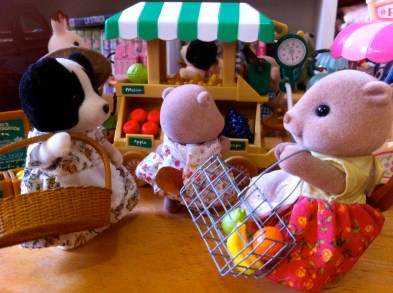
    Sally, the Thinker

    “Give me a box of bonbons and a pouch of fruit candy assorted with gummy worms to sweeten my vapid imaginations! Oh, and a cup of Hazelnut coffee with a little bit of half-and-half to spark up my dormant spirit that resists to awake after a day-off.” Sally was hoping to make a new Monday as vivacious and jovial as possible, so she decided to meet with her lovely alter ego Bonnie for brisk morning sauntering. Yes, sauntering. Or even perambulating, which in fact reminded her of a baby perambulator.

    “Hi, Sally!” Bonnie’s euphonious soprano voice manifested her presence like a spirit conjured up by a magician in an esoteric ancient language. Sally saw her dear friend approaching her from a distance waving effervescently at her with genuine smile. ” Oh, Dear. You look a bit pale… Have you eaten well? And please tell me not you are in a diet because you need it not.” Bonnie was concerned about a noticeable difference in Sally’s outward view: she looked thinner than before, and it did not look becoming to Sally. No, it was not out of that cardinal jealousy of womankind that knew neither friendship nor truth. In the eye of Bonnie, Sally looked prettiest with her round cheeks and dimpled elbows.

    photo (2)

    “No, I am not on a diet, but I just did not have any appetite… I like walking than eating! Well, let’s call it our “sauntering” as the great poet Henry David Thoreau defined. Do you know Thoreau himself was an aumbulater nascitur non fit? He was an avid walker who used to spend about two hours walking in nature. His study was out of doors like his poet pal William Wordsworth.” “Oh, I did not know it, Sally. I only know that Thoreau was a great naturalist poet and died from consumption. “Yes, Bonnie. That too was right. Soon both adorable ladies were embarking on their ritualistic morning sauntering along the Avenues of trees and flowers with larks and bluetits vivaciously chirping and tweeting, all in nature’s symphony that could make you forgive your foes and love humankind at least for that pristine moment of pleasure.

    photo
    Bonnie, La Bonne amie

    Thoreau was right: the act of sauntering in nature would blot out the strains and cares of contemporary life and anesthetize your weary body and minds against the strains of everyday life. It’s absolute freedom from all worldly engagement. Like Thoreau, Sally thought that sauntering was not an exercise but a kind of enterprise, an adventure of a day that invigorated her spirit and mind. And Sally was hoping that Bonnie would share her pleasure of appreciating the symphony of nature. “You know Thoreau was something of an eccentric genius,” Sally decided to add some tidbit of gossip on the poet. “Oh, really? How so? ” Bonnie seemed intrigued.  “Well, he never went to church but believed in God; did not marry, nor did he cast vote, nor did he pay taxes! But this very individuality endowed him with a crown of literary ascendancy, I think.” “How could he not pay his due taxes as it’s his sacrosanct duty and responsibility as a citizen? You know what, Sally? That’s why I do not like any of these intellectuals who put ideas before their civic duties and personal responsibilities.”

    Bonnie’s truculent remark was a bit startling aberration of her usual diplomatic modus operandi of expressing her opinion. But come to think of it, she couldn’t agree more with her friend about the duplicity of so-called the intellectuals, the new ecclesiastical estate of our modern society. And Sally was inwardly glad to have a friend as thoughtful and truthful as Bonnie. But still, Sally wanted to spare Thoreau from the supercilious learned elites.

    1-210

    The ante meridian sun was suavely sunny in the fiercely blue sky that would remind you of the celestial garb of the Virgin Mary in Rembrandt’s paintings.  The Italians would call the color “azure,” and they were good at making the pigment for Renaissance painters who raved about its lucidity and vivacity of the exquisite hue. And the fragrant breeze was a blessing of the beautiful Titan-goddess Aura for their friendship bound by mutual understanding and love of history and literature. As the two good friends were continuing to enjoy their sauntering in nature, it seemed right that without even going to church on Sundays, you could find the evidence of the Creator in awe of nature’s beauty and feel the presence of the existence just as Thoreau and the late Pope John Paul Second had felt and expressed.

    hqdefault

  • Lonely Planet California by Lonely Planet

    Lonely Planet California (Travel Guide)Lonely Planet California by Lonely Planet

    My rating: 5 of 5 stars

    FORGET La La Land. Horace Greeley, founder and editor of the New-York Tribune, writer, and statesman whose ingenious wit melded with erudition and humanity endeared him to the American public urged the people on the East Coast, especially educated unmarried women in the east – to move to California for its primordial beauty: “Fly, scatter through the country, go to the Great West, anything rather than remain here.” Also, Henry David Thoreau described California as a pristine virgin land where a terrestrial River of Lethe flew the Lethe of the Pacific. The collective literary rhapsody comes to life in this world-famous travel book with its signature vivid colorful pictures and detailed, itemized information on the region in suavely offhand  convivial narrative style that entices you to love California at first sight.

    Abundant with its rustic and restive natural beauty unsurpassed by glamour of tinsel cities and its unique melding of multifarious cultures and rich history, California is a sun-kissed prize of the States. Take a hiking in Mt. Shasta, and this awe-inspiring mountain will stir your imagination and makes you believe it a home of a sky-spirit as the native tribe believe. If you are in mood for being in touch with the caress of the blue waves away from the meele and reality just for one day, you can elope with your beloved or with your own weary self to Big Sur. Nested against mysterious-looking redwood forests, the Big Sur Coast has all the elements for being a lovers’ paradise where you can be in your most unguarded self and be a Phoebe Cates or her lover in movie Paradise. On the next day, a visit to Santa Barbara will be quite a cultural feat by visiting the 18th century villas, shops, and churches built by Spanish conquistadors and priests. Or you and your fido friend can do some super-fun splashes or even venture surfing at Huntington Beach on weekends. And of course, there are Disneyland and Universal Studio if you want to meet your favorite characters from childhood and roll with what the best amusement parks can provide to your wildest dream at the best.

    This book is a comprehensive overview of the places and history of California in addition to rich remedial information on the rates of currency and estimated expenses expected of traveling the region if you come from a different country. Written by several veteran globe trotters and well-traveled Californians in compilation, reading the book will give you a sensation of listening to your friend’s travelogue or experiencing a jolly tour guide by an amiable cicerone all to yourself for free. Moreover, the book will equip your mind with knowledge of the region, so that when you actually go there, you will appreciate the beauty of the region like never before.

  • Stardust!

    Sometimes I feel like a mad scientist who relentlessly pursues any signals of supernal intelligent being in the universe when I write my book reviews, poems, and occasionally attempted short short stories on my little lonely blog. I do it because for the love of act of writing and the ambition of writing better. Simple as that.

    And Voila! At last, I was able to catch such signal coming from the most unexpected galaxy of Great Writers this week: That my book review on a fabulously well-written modern thriller, The Flight Attendant got the attention of its equally fabulously brilliant author, Mr. Chris Bohjalian, who not only read the review but also gave me kindly comments on the review thwarts all of my provisional existential worries like magic.

    So I guess my endeavors to improve my writing skills for love of literature and history have not been in vain after all. Francis Bacon’s timeless adage of “Reading makes a full man; conference a ready man; and writing an exact man.” has been one of my credos. Now Mr. Bohjalian’s warm encouragement shall be my new, fresh literary memento. What more can I say? I now have stardust.

    https://www.facebook.com/plugins/post.php?href=https%3A%2F%2Fwww.facebook.com%2Fstephanie.suh.35%2Fposts%2F587631201604148&width=500

  • The Mysterious British Isles by Charles River Editors

    The Mysterious British Isles: A Collection of Mysteries, Legends, and Unexplained Phenomena across Britain and IrelandThe Mysterious British Isles: A Collection of Mysteries, Legends, and Unexplained Phenomena across Britain and Ireland by Charles River Editors

    My rating: 4 of 5 stars

    Great Britain, which is composed of England, Scotland, and Wales, is arguably one of the ancient lands imbued with history and tradition, full of primeval sites, historical artifacts, unique landscapes where skyscrapers casting shadows over castles, and a people of equally unique heritage and culture. But most of all, to me England appears to be a gem of the Crown, the archetypal image of Great Britain because there is London that has existed for thousands of years. The Mysterious British Isles by Charles River Editors offers the reader an elegant history of London with interesting information on the city itself, including backgrounds of famous buildings, places, and on its equally fascinating inhabitants who lived and worked to make their ends meet before our time.

    London has been a cosmopolitan city for centuries, and it is a city of amalgamation of the ancient and the new with churches built atop pagan temples, ordinary commercial buildings grounded around medieval burial grounds, and so on. To illustrate, St. Paul’s was built upon an old temple to Diana, the Roman version of Greek goddess Artemis. Also, Westminster Abbey, dating back to the reign of William the Conqueror and the Norman Conquest, was originally located on the Isle of Thorney – supposedly the site of a Roman temple to Apollo, which was destroyed by an earthquake and then replaced with an Anglo/Saxon temple to Thor. It was in 610 A.D. that it finally made Christian by King of the East Saxons, who had converted to Christianity, in dedication to St. Peter.

    In addition to the aforesaid great churches, the ancient Roman time street named Hounds Ditch, still running through the City of London, was used as the old London’s dumping ground. But Hounds Ditch is not the only place of the disposed remaining to be seen today. There are quite a few modern buildings with part of their plots unused, bits of empty lands in crowded, expensive London with signs warning people to “Keep off the Grass.” In fact, they are old plague pits, mass graves used to place a myriad of infected corps during the period of great plagues in London.

    Since London has been the center of economic activities, many professions have been come and gone as a consequence of changes of social and economic systems. Some of the worthwhile professions to mention in memory of the people who worked in them for their livelihood are listed as follows:

    • Chimney Sweep: It was city law that people should keep their chimneys clean due to a fire hazard. So many poor boys aged between seven and eight started becoming climbing boys, serving the apprenticeship to master sweeps. Unsurprisingly, may of them died of suffocation, suffered from deformity, developed scrotum cancer as a result of residue of soot.
    • The Mudlark: It was a popular job for poor boys in the 18th and 19th centuries; many of them were orphans. They scored the banks of the Thames for items of value. When the tides were low, the mudlarks looked for items through the muddy banks and became easy targets for police harassments, one of which was to throw the boys to the river. So the mudlarks were also good swimmers.
    • The Tosher: After the Great Stink of 1858, a genius engineer named Joseph Bazalgette developed a citywide sewer system that is still in use. It was this great Victorian engineering feat that gave birth to this profession. Toshers were specialized in the sewer system for any valuables dropped out of the pockets of Londoners.
    • The Linkboy: Before the late 19th century, London night was as dark as Persian night without public lamps. Hence these linkboys whose parents were dead or were so impecunious that they had to allow their little child to roam London’s dark nights became the essential night guides with lanterns on poles to drunken citizens or travelers or theater-goers. Sometimes, linkboys were also employed to decoy to guide customers to brothels in addition to their tips.
    • Sandwich Men: As a rise of advertising due to prosperous cheap printing with growing disposable income in the early 19th century, shops and stores were eager to hire the city’s impecunious citizens however old or young to use them as mobile advertisement. These sandwich men worked with poor pay by standing out in the sun and rain for up to 12 hours with their front and back covered with boards held up by ropes over their shoulders. In fact, the term was originated by Charles Dickens’s description of such man as a “piece of human flesh sandwiched between two slices of pasteboard. Sandwich men survived the centuries despite several attempts to ban the profession. Although the Westminster City Council prohibited the presence of sandwich men in 2008 in effort to upgrade the city’s shopping ambience in West End, the other boroughs of London have not yet perished sandwich men.

    The Mysterious British Isles by Charles River Editors encapsulates some of the most interesting facts of Great Britain, such as the aforesaid history of London and facts of its inhabitants. It also covers subjects such as famous criminals, fairies and giants, and legends of historic places throughout the Isles. It is worthwhile to read this book as a concise but essential reference book on Great Britain either to satisfy your curiosity for the country where the Sun never set on in the past or to occupy yourself with something at once entertaining and informative during your lunchtime, coffee break, or before going to bed.

  • Intellectuals (or Talking Heads) by Paul Johnson

    Intellectuals (From Marx and Tolstoy to Sartre and Chomsky)Intellectuals by Paul Johnson

    My rating: 5 of 5 stars

    The violent collapse of the ecclesiastical caste precipitated by the French Revolution has given rise to the secular intellectual armed with their scintillating rhetoric and dazzling display of scholastic aptitudes; these social, cultural elites have become guardians of cultures and devised moral and ideological innovations, thus replacing the ancient regime of the priestly caste. Paul Johnson’s Intellectuals lays bare the human frailties of these beneficent intellectuals – ranging from Jean-Jacque Rousseau to Leo Tolstoy, to Henrik Ibsen to Ernest Hemingway, and to Noam Chomsky – and invites us to question the duplicity of these intellectuals that contradicts what they preached for the sake of humanity.

    Intellectuals have traditionally proclaimed themselves to be liberals, torch-bearers of fraternity, equality, liberty since they became new potent oracles of societies dictating modes of life and modus operandi of political, social, and cultural systems. However, they are actually bound to the canons of external authority and to the inheritance; that is, the intellectuals are and were by no means free spirits as they profess themselves to be. They are the substitutes for the pagan gods and the elites of Prometheus, who stole the numinous fire for humankind into the bargain under the pretext of shaping our attitudes and institutions and of prescribing us panacea for the social ills.

    However, many notable intellectuals who have influenced the arts and shaped our modes of thinking were deficient in rectitude toward their kin, families, friends, and others in their everyday life. To illustrate, Rousseau was an absolute egoist, a brilliant self-publicist, tending to equate hostility to him with hostility to truth and virtue as such. He disdained women of low birth, such as seamstress, chambermaids, and shop girls, while he claimed to love people of all walks of life. In fact, this trait of egoism can be also found in the figure of Percy Bysshe Shelley, a great English poet known for his proclamation that “the poets are unacknowledged legislators of the world.” A sublime egoist with a strong moralizing bent, Shelley assumed that others had to applaud his decisions and when they failed to do so up to his expectation, he was quick to display a sense of outrage. And there was also Ibsen, who changed the social thinking of his generation and that of posterity by preaching the revolt of the individual against the ancient regime of inhibitions and prejudices. He did not want to help others, let alone his own family, for richer he became, the less inclined he was to make any contract with them.

    To encapsulate, Intellectuals serves as a literary stethoscope to examine the moral and judgmental credentials of select intellectuals most known to us throughout the modern western history. However, this is not a book to slander their intellectual contributions to the enrichment of culture and society on the whole by revealing their personal history. Rather, it is to show us readers a peril of effaced humanity undermined by the importance of ideas as held by most intellectuals, for ideas – or ideology – were their new gods or new mammon. They put ideas before their families, friends, and people for the sake of perfection of the arts, politics, or society. Moreover, so many intellectuals have jumped on the bandwagon of liberalism in favor of careerism. It is this hypocrisy that Johnson wants to bring to light in Intellectuals. And I think this book is one of the must-haves we should keep on our bookshelves to discern true intellectuals who practice what they preach, such as Ralph Waldo Emerson or George Orwell from those who are no more than learned careerists or demagogues or just talking heads of abstract ideas.

    저장

  • The Brilliant Legacy of the Mycenaeans: Ancient Greece’s First Advanced Civilization

    The Mycenaeans: The History and Culture of Ancient Greece's First Advanced CivilizationThe Mycenaeans: The History and Culture of Ancient Greece’s First Advanced Civilization by Charles River Editors

    My rating: 5 of 5 stars

    Before Homer wrote about the fearless warriors and extraordinary heroes enshrined in the temples of the Olympians in Iliad and The Odysseys, there were a people of invincible spirits and adventurism on a par with those of the characters – The Mycenaean, the torch-bearers of a great Aegean civilization in the Pre-Classical Greece existing from 2000 to 1200 BC, whose bravery and enterprising minds inspired Homer to pay tribute to them as immortalized in the two great Classical epics in the history of western civilization. Accordingly, The Mycenaeans: The History and Culture of Ancient Greece’s First Civilization by Charles River Editors takes us to look back on the Mycenaean culture in the Pre-Classical era when these ancient ethnic Greeks ruled the Aegean Sea as the maritime power and left their indelible marks on the posterity of the Classical Greek culture.

    The Mycenaeans, the first Greeks, were never unified under a central state and were a collection of several kingdoms. Influenced by the earlier Minoan civilization (2000-1450 BC) at Knossos, Crete, the Mycenaean adapted the Minoan art and religious practices and developed them to their highest expectation of militaristic and cultural ideology. For example, the Mycenaeans developed Linear B Script, which was the writing system comprising hieroglyphics, used between 1450 and 1100 BC especially in Knossos and Pylos, the corporate headquarters of the Late Bronze Mycenae. The letters were mostly written in clay tablets largely concerned with documenting economic transactions of the palace administration and various business transactions. In fact, the Linear B Script, preserved as the oldest Greek writing system, indicates that the Mycenaeans were the linguistic and ethnic ancestors of the Classical Greeks.

    In addition to transcribing economic activities Linear B Script also lets us glimpse into the belief system of the Mycenaeans with the names of the deities they worshiped, such as the head of the Pantheon and Poseidon, the god o f the seas whom the Mycenaeans paid special due respect for their being sea-faring people. The Mycenaean reverence for Poseidon is worth noting because it betokens the importance of the Mycenaean as the maritime power of the Aegean Sea as well as the most of the Mediterranean Sea. They eclipsed the Minoans and their Aegean neighbors in terms of open sea trade by establishing trade routes with the islands of Sardinia and Sicily as well as the Libyan coastline and importing more goods than exporting, such as grain from Egypt and metal from Cyprus and Anatolia to make weapons.

    With respect to artistic and cultural historiography of the Mycenaeans, the art of burial practices entailed the Minoan influence assimilated into the Mycenaean of their own accord, which was akin to the fashion of Hellenism, the spread of the Greek culture through enculturation by Alexander the Great centuries later. Likewise, after then conquest of Crete, the Mycenaeans continued to employ many of the Minoan artistic traditions one of which was burial practices and their beliefs in afterlife as expressed in the Hagia Triada Sarcophagus on the island of Crete. Made in a Minoan style under the rule of Mycenaeans, it depicts scenes of funereal game held in honor of a fallen warriors and dead kings, consisting of the following athletic events as part of the ritual:

    • Chariot Race – Popularized by the Hittite and the Egyptian as a symbol of power and prestige; powered by 2 to 4 horses carrying a team of 2 to 3 men. The Hittite had 3 men – a driver, a shield bearer, and a warrior- while the Egyptian simply had 2 men – a driver and a shield bearer. The Mycenaeans would most likely to have either of the styles, though not manifested.
    • Armed Combat – conflated with the Hittite sport
    • Boxing – popularized by the Minoan and developed by the Mycenaean

    In fact, the actuality of the aforesaid athletic sport events is alluded in Homer’s Iliad, suggesting a Bronze Age tradition of funerary games in Greece with vivid descriptions of the games to honor the slain Greek warrior named Patroclus, which were all coordinated by Achilles. However, contrary to the nude events of the Classical Greece Olympics, which were the offspring of the Mycenaean funereal games, the competitors in the funereal sport events wore loincloths called “zoma.”

    The demise of the Mycenaean Kingdom resulted from several factors one by one in a period of times, including the invasion of the Sea Peoples and the emerging of the Dorian in the north, all of which represented the end of the Mycenaean Age, coinciding with the collapse of the Bronze Age in the ancient Near East, where the Mycenaeans played an important role as a formidable trade partner with the Egyptian. Notwithstanding the fall of the Mycenaeans as the major sea power in the ancient Bronze Age, the brilliant legacy of the Mycenaean culture still thrives in; (1) the form of Linear B Script, the oldest writing system of the Greek language before the adoption of the Phoenician alphabet system many centuries later; (2) the belief system in which Zeus and Poseidon were first recorded in the writing tablets and revered with due respect; and (3) the initiation of  the sparks of the organized athletic events developed into the Olympic Games in posterity. It is this ingenuity imbued with the spirit of adventure and the policy of engagement in adopting cultural traditions of other people that exemplified themselves among other Pre-Classical peoples, which is something we in the modern time should adopt as well, so that our posterity can benefit from what their ancestors learned and experienced, for it also becomes our legacy of heritage and culture to pass it down from generation to generation.

    저장