Tag: books

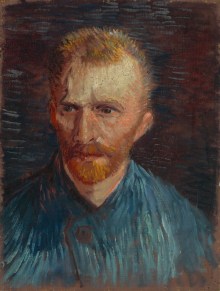
  • portrait of Vincent Van Gogh


    vangoghmuseum-s0135V1962v-3840
    Self-Portrait of Vincent Van Gogh

    A man without an ear had no friends

    To show him the face of compassion

    To lend him an ear to listen always

    To the cries of a soul grim and ashen

    Lost in the gallery of a dark house

    Where nature oppressed ruled the mind

    And commended it to suffer with the body. 

    The Studio of the South in tatters

    assailed a reservoir of dreams;

    The Southern Sun of Arles in shreds

    speared his soul with a shout of taunts

    And made his heart sink in the abyss

    Till it burst with an outcry evermore

    Of the man with the unseen voices

    That grew loud and grew louder

    As he was estranged from himself

    And left the world with a thunder

    Of fire, a fire of freedom from 

    The frights of the broken soul. 

    Thereby hangs a tale of a painter

    Breathed with poetic madness of arts. 

    P.S.: I have recently come across an article about the nature of Vincent Van Gogh’s mental illness that eventually resulted in his suicide in May 1889 with a pistol that punctured his heart in Saint-Paul-de-Mausole asylum in Sant Remy, France.

    It is said that Gogh had shown symptoms of disturbed mental states since he was 17 years old when his parents tried to get him committed. He was later seen eating coals while painting and told of hearing voices and seeing hallucinations. As a matter of fact, Gogh was from a family with a history of mental illness: his maternal aunt was epileptic, and two of his siblings died in asylums and two others by suicide. Surely, this doesn’t aver that mental illness is hereditary and therefore brings grist to the mill of eugenists.

    In my opinion, it seems more likely that Gogh’s tragic life story comes from a combination of Gogh’s disappointment with the failed reception of his works and frustration with his ability to deal with the existential reality interacting with the unfavorable circumstances surrounding his struggles to mark his existence through a medium of art, which deserves of recognition for its beauty of his highly innate artistic sensibilities that glow in the dark night of the soul. To me, whether Gogh was clinically insane is to miss the gift of the artist to humankind that always thrives in the beauty of arts. 
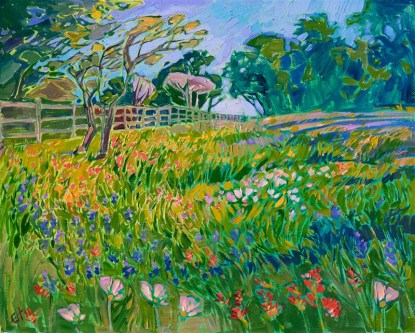
  • Afternoon lark

    ER4oDQvXUAEEChQ

    The sky’s blue and endless

    The sun’s high and bright

    The hill’s green and gorgeous

    The field’s vast and earthlight

    The bird’s happy and twittery

    My spirit’s pretty and sassy

    In a scene of noonday play. 

    P.S; I was reading a book this afternoon and heard a bird singing from the bough of a tree outside the window; it was very pleasing and made my spirit flit in a mind’s garden. It was a beautiful Saturday afternoon, which resulted in this improvisational little poem. 

  • The Mad, the Beautiful: ‘The Highly Sensitive’, by Judy Dyer – review

    The Highly Sensitive: How to Stop Emotional Overload, Relieve Anxiety, and Eliminate Negative EnergyThe Highly Sensitive: How to Stop Emotional Overload, Relieve Anxiety, and Eliminate Negative Energy by Judy Dyer

    My rating: 4 of 5 stars

    Come and read this book if it’s about you. –

    If you feel why life can’t be lived at the same pitch
    Of your mind’s notes written in the heart’s chamber;
    If you find the utter cry of your heart without a hitch
    In a solitary sea of words rolling and heaving under
    A rainbow of vivid imaginations and fleeting emotions;
    And your spirit often rebels and refuges in the ether
    From the detritus of broken promises and shattered dreams,

    You were born of the mystic race of the Highly Sensitive
    Of Fire, Spirit, and Dew in the wondrous alchemy of beauty,
    So beautiful, so pleasing, so delightful that your eyes are lit
    With twinkles of sparkling waters, sparkles of diamonds
    That which adonize you with the Supreme One of Mystery.

    View all my reviews

  • poesie #

    ff76df2297dfacf05d029d5abb4988d3

    When the night gently descends upon the day on the earth’s bed

    And he silences her secretly with a force of darkness

    Whispering softly in delirium, murmuring faintly in fever

    blinding her with an extraordinary frisson of ecstatic fear

    the spirts of tragic heroines of love – Dido and Ariadne-

    run to the top of the hill where the sky lies above the earth

    and lament their earthly journeys that ended in love alone

    as Hounds of Love howl beside the beautiful losers in love

    till the lovers’ tryst ends in a mist of passion and intoxication.


    P.S.: I am always inclined to the stories of beautiful losers whose loves for their figures of the affairs of the hearts are not returned because there’s something tragically beautiful in them. Dido, the beautiful queen of Carthago, was cruelly forsaken by trojan refuge and founder of Rome Aeneas and chose to end her own life thereafter. Ariadne was a Cretan princess who helped Athenian prince Theseus to kill the Minotaur and to bring out the Athenian youths from the labyrinth with her inscrutable ball of threads as a guide to a route out. But Ariadne was also later deserted by Theseus and let alone on an island and forced to marry Dionysus, the god of wine. Hence this poem about those who are unlucky in the affairs of the hearts. 


  • Who were the First People? – ‘The Neanderthals and Cro-Magnon’, – review

    The Neanderthals and Cro-Magnon: The History and Legacy of the First People to Migrate to EuropeThe Neanderthals and Cro-Magnon: The History and Legacy of the First People to Migrate to Europe by Charles River Editors

    My rating: 5 of 5 stars

    You don’t have to feel obligated to believe that apes are your distant relatives lost somewhere in the missing link because it is one of many theories based on educated guesses anyway.  In fact, few species in the natural world are more indubitably wonderful and incredibly mysterious than mankind that Shakespeare swiveled his head in wonderment and uttered, “What a piece of work man is!”  Accordingly, the origin of races has always piqued the curious, fanning the fiery imaginations of the human race and the wherefores of modern humankind in the discovery of the two kinds of the First People from Africa around 1.5 million years ago. The Neanderthals and Cro-Magnon: The History and Legacy of the First People to Migrate to Europe by Charles River Editions will present you these two unlikely yet compatible hominids in the panorama of human evolution that is unrolled as it narrates the sequentially arranged series of scenes from Africa to Europe and Asia.

    The book helps you to unwind your conditioned belief that the unkempt, clumsy Neanderthals were not the ancestors of strictly non-Europeans; In modern populations of Europe and certain regions of Asia, DNA derived from the Neanderthals makes up between 1% and 6% of human genomes. In fact, the Neanderthals, who evolved separately in Europe, are a member of the genus Homo like Homo sapiens and share approximately 99.7 of their DNA with modern humans. This also leads to a wonderous finding of the co-existence of the Neanderthals and Homo sapiens migrating from Africa roughly between 40,000 and 30,000 years ago, about the time when the former slowly began to extinct due to weak immune systems, incompatibility with the changing environments, and gradual domination of the latter who knew how to manipulate fire as an essential living tool. The interbreeding of these two different peoples was most successful if a Neanderthal man mated with a Homo sapiens woman because then the offspring became fertile, contrary to the sterile progeny of a Neanderthal woman and a Homo sapiens man.

    In addition to the Neanderthals as an intermediate evolutionary phase between Homo erectus and sapiens, you will come to know that Homo sapiens developed in Africa left the continent in the second wave of migration around 150,000 years ago and settled in Europe and Asia, thereby continuously living and occasionally mating with the Neanderthals, who were eventually displaced by more hunting savvy and physically advantageous Homo sapiens with their domesticated canine companions appearing around 36,000 years ago. The movie ‘Alpha’ will supplement the pictorial vividness of the history of the first anatomically modern human race with their first domesticated beast whose symbiotic relationship continues to this date.

    In all likeliness, this book is a comprehensive read on the pre-historic legacy of the first anatomically modern people and the other hominid whose genetic similarities still manifest their evolutionary linkage in parts of modern Euro-Asian populations. Written in plain language devoid of elaborately subjective interpretation of the theory of evolution, the book will entertain your spare time, and your mind will feed off the sensation of exotic kind of knowledge that will enhance the treasures in your cabinet of curiosities. On a note of persecuted minority creation science follower, this book will provide you with a much less outrageous theory of human evolution than the hardcore origin of the species that graphically strips off even a remotely anatomically human semblance of the supposedly very early human species in despair. That’s quite a catch, isn’t it?

    View all my reviews

  • #ShakespeareSunday

    dam_monet_claude-road_in_the_wheatfields_at_pourville_1

    “My gracious silence, hail!… Ah, my dear, Such eyes the widows in Corioli wear, And mothers that lack sons.” (‘The Tragedy of Coriolanus’, A2 S1). “And all my mother came into my eyes, gave me up to tears.” (‘Henry V’, A4 S6). Thereafter, “my thoughts were like unbridled children, grown too headstrong for their mother.” (‘The History of Troilus and Cressida’, A3 S2)


    P.S.: This week’s theme is “Mothers and Children”, and the above is what I have found to be fit for the subject. In order to incorporate the quotations into one coherent paragraph of a drama, I have also slightly adapted the original texts to create a smooth flow of the narrative.