Tag: california

  • Coffee with Bach and Thoreau

    la-patisserie-jean-beraud
    La Patisserie by Jean Beraud

    It was still early when she got to downtown. And it was still an hour early before her day at the office was to start. That feeling of earliness needed to be indulged by the leisure of solitary coffee time at her regular coffeehouse that had lovely outside seating where you could enjoy a capricious respite with a cup of coffee and watch the swing of things, the world in motion, and the parade of the human race. That time was precious time for Julie, and it was to be observed religiously  in a way the Vestal Virgins guarded the sacred fire in the temple lest it should die out, as that would mean the peril of the Eternal City. The aroma of freshly brewed hazelnut coffee could do so many wonders, and one of them is vitalizing your listless, half-awaken stupor under which you would find yourself an unconscious somnambulist or a peevish whiner. This rhapsody of morning coffee is also testified by a testimonial of Johann Sebastian Bach, the father of Baroque music, who described himself as a “roast goat” without having a cup of sensuously aromatic coffee in the morning.

    Julie, as a faithful myrmidon of the power of wonder beverage, got her first morning hazelnut coffee and placed herself in the corner of her regular coffeeshop to set her cognitive functionality for a work day in motion by reading her subscription on Kindle Fire and writing down some notes from the reading. In fact, there was a set of rules of reading Julie adhered to: reading hardcopies on her commuter train and Kindle in coffee-shops because she found such modus operandi of reading quite congenital to her mental exercise. So there she was, doing what she always did, unless otherwise there was anything else that called for her urgent attention to attend before her work hours began. Then when her silver pocket watch indicated twenty minutes to nine, Julie headed for the office. That was how Julie began her normal work days. That was how she began to live another existential everyday.

    That particular morning, which was Friday, was a lucky one, for no exigency was awaiting for her to execute first thing in the morning. Julie was a legal assistant at a litigation firm, where a myriad of pleadings, discoveries, settlements, and confrontations were norms of the trade. And it had been only a week since a happy chance placed her into the position offered by goddess Fortuna, who had finally countenanced her new future on the frontier. Yes, it was a frontier, a new land of unyielding dreams, high hopes, and exciting desires that Julie had felt deprived of in that grey, grim land by the Atlantic Ocean. Even Henry David Thoreau attested such tenebrous somberness of the ocean as a Sea of the Old Habits and Constraints that bound people in the Memory of their aborted wishes and crushed ambitions and encouraged them to migrate to the Elysian Fields by the Pacific Ocean, which he romantically compared to the River of Lethe in his poetic pathos. Reader, you might think it as a humbug or even a jest in your most postmodern mode of thinking in the ethos of textual parallax thriving on non-platform media. But when you become known that our life is still woven by the Fates under the supervision of Fortuna and that you are made of spirit, fire, and dew, you will swivel your head in wonderment in recognition of Thoreau’s poetic perspective on the Exodus to a New Land where nature is all the more conspicuous by the relative absence of the Gothic skyline that rudely dominates the vault of heaven on the Other Side of the Continent. Julie knew it all, and that was why she wanted to start anew in the West, where the Lethe of the Pacific flew, where the rugged hills and primitive mountains setting against the deep blue ocean still maintained the rustic charm of a village maiden.

    저장

  • The Ills of Gentrification

    RE: 8/10/2018 article of “A Home for Homeless Vets” by Teresa Watanabe of The Los Angeles Times

    It has always been the case that those who who have suffered from afflictions of life appear to give helping hands to the bearers of the suffering. In Vigil’s Aeneid, when Aeneas and his people arrived at the shore of Carthage after the fall of Troy, the beautiful queen Dido welcomed the refuge with open arms and provisioned them with food and shelter and told Aneneas, “because I was once a sufferer of the affliction, I know how you and your people feel.” Now the time and space is translated in modern day California, and this very noble act of humanity in the figure of an old veteran solder continues.

    A certain Japanese-American WWII veteran campaigns to provide affordable housing for veterans as well as low-income individuals and families at the risk of homelessness. He has even gone out of his way by establishing “Go for Broke National Education Center” in order to develop a five-story building on leased city land that would house the center and as many as seventy affordable housing units for the aforesaid applicants who find themselves between a rock and a hard place on the threat of eviction from their homes by landowners.

    The article in fact brings light to the increasing number of homeless population that results from urban gentrification by which private developers plan to evict low-income residents from their newly acquired properties, so that such reworked properties will accommodate to the level of comforts required by those who can afford high rents, and thus create a totally new residential and commercial environments commensurate to the economic levels of the gentry.

    The projection of building a low-income housing complex should be put into action forthwith without fail; it’s not about creating Skid Row, pace the popular opinions on such project in fear of tainting the atmosphere of communities and affecting the economic activities adversely due to the substantive presence of exiguousness incarnate.

    I firmly believe that there should be more consorted efforts of fellowships of humanity as aforesaid to actively, substantially and tangibly help people in need to the extent possible by providing them with many more supportive “permanent” housing programs, not ad-hoc homeless shelters. It makes my head swivel in wonderment why politicians do not champion such existential programs, instead of hackneyed willy-nilly metaphysical ideologies that only divide this nation built upon liberty and justice. For if people are ruthlessly kicked out of their abodes just because they are undesirable in the eyes of the businessmen, where can they find liberty and justice to live their sovereign lives as resonated by the Gospel?

    Suppose there are brothers or sisters who need clothes and don’t have enough to eat. What good is there in your saying to them, “God bless you! Keep warm and eat well!” – if you don’t give them the necessities of life? (James 2:15-16)

  • Lonely Planet California by Lonely Planet

    Lonely Planet California (Travel Guide)Lonely Planet California by Lonely Planet

    My rating: 5 of 5 stars

    FORGET La La Land. Horace Greeley, founder and editor of the New-York Tribune, writer, and statesman whose ingenious wit melded with erudition and humanity endeared him to the American public urged the people on the East Coast, especially educated unmarried women in the east – to move to California for its primordial beauty: “Fly, scatter through the country, go to the Great West, anything rather than remain here.” Also, Henry David Thoreau described California as a pristine virgin land where a terrestrial River of Lethe flew the Lethe of the Pacific. The collective literary rhapsody comes to life in this world-famous travel book with its signature vivid colorful pictures and detailed, itemized information on the region in suavely offhand  convivial narrative style that entices you to love California at first sight.

    Abundant with its rustic and restive natural beauty unsurpassed by glamour of tinsel cities and its unique melding of multifarious cultures and rich history, California is a sun-kissed prize of the States. Take a hiking in Mt. Shasta, and this awe-inspiring mountain will stir your imagination and makes you believe it a home of a sky-spirit as the native tribe believe. If you are in mood for being in touch with the caress of the blue waves away from the meele and reality just for one day, you can elope with your beloved or with your own weary self to Big Sur. Nested against mysterious-looking redwood forests, the Big Sur Coast has all the elements for being a lovers’ paradise where you can be in your most unguarded self and be a Phoebe Cates or her lover in movie Paradise. On the next day, a visit to Santa Barbara will be quite a cultural feat by visiting the 18th century villas, shops, and churches built by Spanish conquistadors and priests. Or you and your fido friend can do some super-fun splashes or even venture surfing at Huntington Beach on weekends. And of course, there are Disneyland and Universal Studio if you want to meet your favorite characters from childhood and roll with what the best amusement parks can provide to your wildest dream at the best.

    This book is a comprehensive overview of the places and history of California in addition to rich remedial information on the rates of currency and estimated expenses expected of traveling the region if you come from a different country. Written by several veteran globe trotters and well-traveled Californians in compilation, reading the book will give you a sensation of listening to your friend’s travelogue or experiencing a jolly tour guide by an amiable cicerone all to yourself for free. Moreover, the book will equip your mind with knowledge of the region, so that when you actually go there, you will appreciate the beauty of the region like never before.

  • Gone with Tears


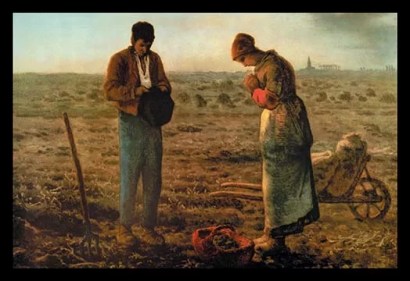
    The+Angelus+by+Jean+Francois+Millet+Painting+Print
    ‘The Angelus’ by Jean Francois Millet

    Gone with tears are the four hearts of four souls,
    Weeping for the world pitiless, merciless, cheerless,
    Overawing and expiring the tiny flames of four lives, and
    Leaving their remains soaked with tears with no friend.

    Hope? Forget about the vanity of ethereal remote longing,
    Unavailable to them, unthinkable to them, for their suffering
    Was theirs, theirs only, theirs alone, not ours, not yours, not mine,
    Thinking “Thank God, it’s them, instead of me” with a glass of wine.

    Where was Charity when the four souls- two parents, two babies-
    Were forced to wander around in the vacant lot nights and days
    Facing daily unkindness, hopelessness, rejections, humiliations
    Gnawing every part of them till their spirits plunged to a low bottomless?

    Woe is to the four souls aborting their Fates so hard, so harsh
    In defiance against such Fates that even allowed no remote wish
    For instant happiness and now wandering the Place of Grief where
    They tell us their failed dreams and disappointments hard to bear.


    P.S. : This poem was written in memory of the family of four found dead in the backseat of a van in the parking lot of a CVS store located in Garden Grove, California. It is said that the family seemed to live in the van for about six months or so. The family was composed of a father, a mother, a two-year old daughter, and a nine-month old son. Although the Police is  investigating the cause of death, I can’t shake away my strong speculation that it must have been a case of suicide… Hence, this is how I feel about these souls who had no choice but ending their own – including the little ones of their own- . If the father or the mother could have gotten a job, or if anyone could provide them information on how to get public assistance, such as acquisition of housing and food stamp, they would have been with us… They should have not died… I wish they would rest in peace., especially those little ones as my heart is crying…

  • By Ox Team to California by Lavinia Honeyman Porter

    By Ox Team to California: A Narrative of Crossing the Plains in 1860By Ox Team to California: A Narrative of Crossing the Plains in 1860 by Lavinia Honeyman Porter

    My rating: 5 of 5 stars

    I like reading historical and social accounts of writers both famous and ordinary, such as travelogue, diary, and letter because they reveal something about the authors’ personalities and the social milieus of the times that look to be beguilingly fictitious with frankness and stupendousness that reality brings about.  In this regard, this book is an informative and enjoyable read.  It’s a story of an intelligent and brave woman’s narrative of her six month journey with her husband, younger brother (although he later decided to stay in Colorado instead of venturing to California), and their little son overland to Sacramento, California by an ox-driven wagon. The story is read as if the author were telling her tale of pioneer adventure to West for a fresh new start. In the course of her narrative, readers can also peep into the general outlook on the Native Americans whom the author shows sympathy toward and the panoramic view of immigration trail usually congested with ox or mule driven wagons. This is a valuable record of an enterprising and educated woman unafraid of the perils of long journey overland with a “go-aheaditiveness” attitude which is still so uniquely part of the American character.

    저장