Tag: cinema

  • ‘The Boy’ (2016) – film essay

    Invitation, Manifestation, and Escape are typical acts in horror movies from ‘The Exorcist’ to ‘The Changeling’ and to ‘The Others’, all of which are supreme ones of the genre, demonstrating the genuine scare is without a masked slasher on a killing spree that seems to revive forever like a Phoenix. But what about ‘The Boy’ (2016)? The movie is a lackluster flick, a smart apprentice of the masters mentioned above but without depth and breadth of knowledge of the essence of things, natural and supernatural.

    It follows a young American woman with a past named Greta (very German or Grimm maybe?) hired by the overtly strange elderly couple as a nanny to their little son Brahms (possibly Bram Stoker?), a porcelain doll. As in Kubler-Ross’s Stages of Death, she shocks and denies, then accepts that she is a nanny to the doll. Of course, pretty Greta is not lonely because a young, good-looking grocer named Malcolm courts her as politely suavely as an English can be. Then Greta’s ex-lover Cole, who is the epitome of big, rough, and domineering man, suddenly manifesting from America in the English mansion, demanding she should leave for the states in the morning with him. And that’s not the end, for we are rudely introduced by a third character (or the same?), and the stupendousness of the story swivels in the flashes of screams, blood, tears, etc.


    Watching this movie last night on Netflix made me think that the classic horrors of the 70s and 80s were indeed long gone and would not revive – at least for now. What begins as a classic supernatural story ends as a tepid escapade from one big mess. Greta’s coming to England is loosely explained, not to mention Cole’s sudden appearance in the English countryside manor is abruptly shoehorned into the story, breaking the thread of subplots, changing the atmosphere of the movie into a thriller that is not supernatural at all. Nevertheless, Lauren Cohan’s performance as Greta is commendable for her naturalness and arduousness in portraying her role that is the only gem of the movie that makes it watchable without turning it off.

    Maybe I am either anachronistic or fastidious in selecting horror movies because of my propensity for subtle but incredible supernatural thematic elements without monsters, deformed humans, or amorous lovers. So be it. It’s all about how a story is intelligently and entertainingly told on the screen with minimum special effects, gore scenes, love scenes staging in either big swanky English country houses or big deserted mansions that are conveniently used as thematic elements. Reading the background information on this movie, I have noticed that there are quite a few production companies involved in making it. Would it be the reason for turning this otherwise excellent thematic element into a dull child’s play? Did all the companies know a thing about a movie not in monetary terms but art for art’s sake? I wonder.

  • ‘The Entity (1982)’ – film essay


    “The Entity (1982)” is an American film based on the real-life event of Dorothy Bither, who was habitually raped by evil spirits that followed her everywhere. In the movie, Dorothy is Carla Moran, a young, intelligent single mother of three whose life becomes a Circle of Hell incarnate on earth in which she becomes a sexual slave of the unseen unclean spirits. Despite the physical signs of attacks, her well-meaning but over-zealous psychiatrist Dr. Phill Sneiderman believes that her unhappy childhood and different anfractuous life experience generate the mind’s play. He then forces his belief into her with a superior sense of academic and professional pride, even if her children have witnessed supernatural powers are attacking their mother. Carla catches at straws in the form of parapsychology to set herself free from the demonic forces, even if the help is not entirely altruistic and may turn on a full circle of violation of her body, her heart, and her spirit.


    The film agrees to the truth on the supernatural essence of rape by portraying Carla as a woman of diligence, intelligence, and heart who goes to a secretarial school at night for a better future. Her love and affection for children are filled with kisses and smiles, even to her head-strong adolescent son. Her childhood memories and paths she treaded upon thus far might have been labyrinthine, but just because you have past wounds doesn’t mean you are stigmatized for the malady of the heart forever. Dr. Sneiderman’s attitude toward his patient Carla is reminiscent of the late Victorian and early 20th-century institutionalization of women with checkered lives, the victims of violence, into crudely primitive asylums where any sane person was sure to lose a reason before long. However, Carla rejects her telltale testimony to the supernatural terror to be nothing but a tale told by a lunatic woman, full of sound and fury that means nothing.


    ‘The Entity’ is a classic movie of supernatural phenomena in the ordinary surrounding of Los Angeles, CA. What makes this film classic in its pure literary sense is the absence of gory scenes accompanied by shrill screams of overtly acted characters who know what will happen to them. Nudity is present in the film not as gratuitous scenes of repertories of box-office horror movies but as realistic segments of what and how it happened all. I initially avoided watching this film by its thematic subject of rape and its naturally subsequent psychological narrative analysis as someone craving for a true supernatural story without frequent staccatos of blood splashes and big sharp tooth. It was a low hope for high heaven when the film was impressively indelible in my mind after I watched it last Saturday. If you prefer watching 70s and early 80s supernatural films over slash movies after the golden periods of the genre, ‘The Entity’ will entertain your sentiment and satisfy reason. And remember this: “There are more things in heaven and earth than are dreamt of in your philosophy.” Don’t forget that.

  • ‘Moonlighting’, (1982) – directed by Jersy Skolimowski – film review

    The history of immigrants equals to the history of humankind. It has always been and will be part of the civilization of the world: Adam and Eve’s expulsion from the Garden of Eden, the Trojans’ migration into modern-day Italy, the Israelites’ exodus from Egypt, the Norman conquest of England, peoples of all continents landing on America, and many others still counting to this date. It is innately natural for man to move to a place for different reasons, whether they result from cohesion, or volition, or a little bit of both. Jersy Skolimowski’s “Moonlighting” (1982), a British film about a polish electrician named Nowak leading a team working illegally in Lonon, focuses on his daily moments of existential vertigo between the winds of the world and provisional needs of livelihood.


    Nowak is an intelligent laborer who accepts the offer from a Polish government official to renovate his house in London with lucrative promise, plus a taste of glamourous capitalism. Yet at the first taste of cold London and cold Londoner that makes his presence miserably pathetic and casually ignorable, Nowak decides to survive in a game of hide-and-seek as best as he can. The work is his only painkiller that rids anxiety and worries off his chest, but the effect is only temporary and minimal. As Rome is a great city when you have money, so is London, and Nowak and his team live their provisional days in hiding and stalking under the suspicion of their not-so-gentlemanly and kindly English neighbors. They regard the Polish workers as no more different than poor foreigners unsuitable for their daily English landscapes. Nowak chooses to be a Hector of his own with his crew of non-speaking polish in a vertigo of existential quandy.


    Setting in the early 1980s when Poland was going through her first labor pain of democracy with Lech Wałęsa leading Solidarity Movement, the film’s realistic portrayal of illegal workers’ dailiness is visually palatable. The narrative of Nowak transcends to a ballad of Man anxiously adhering to a sense of purpose that gives him a reason to live in a harsh land surrounded by strangers who don’t like them. It’s a film about how changes in the world affect an individual’s daily life based on a symbolic interactionist theory. The present and future of Nowak and his team cannot escape from the winds of changes crossing their faces, which change the compass of the wheel of fortune.

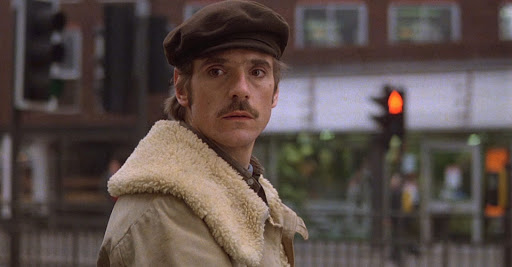
    The film is a hidden gem, starring the veteran English actor Jeremy Irons, whose excellent performance of Nowak deserves special recognition from the Polish audience. Irons is so convincingly Polish in appearance, manners, and speech that the non-speaking performance of the other Polish actors as his team of laborers serves to make his presence more outstandingly Polish. Also, the director being Polish himself contributes to the genuineness of the story’s narrative, which guards against patronizingly officious outsider’s perspectives of the people he wants to tell about because it is also his story. For these reasons, Moonlighting is a bracing film that makes you think whether existentialism in which experience proceeds essence is right.

  • ‘This Sporting Life’ (1963) – film essay

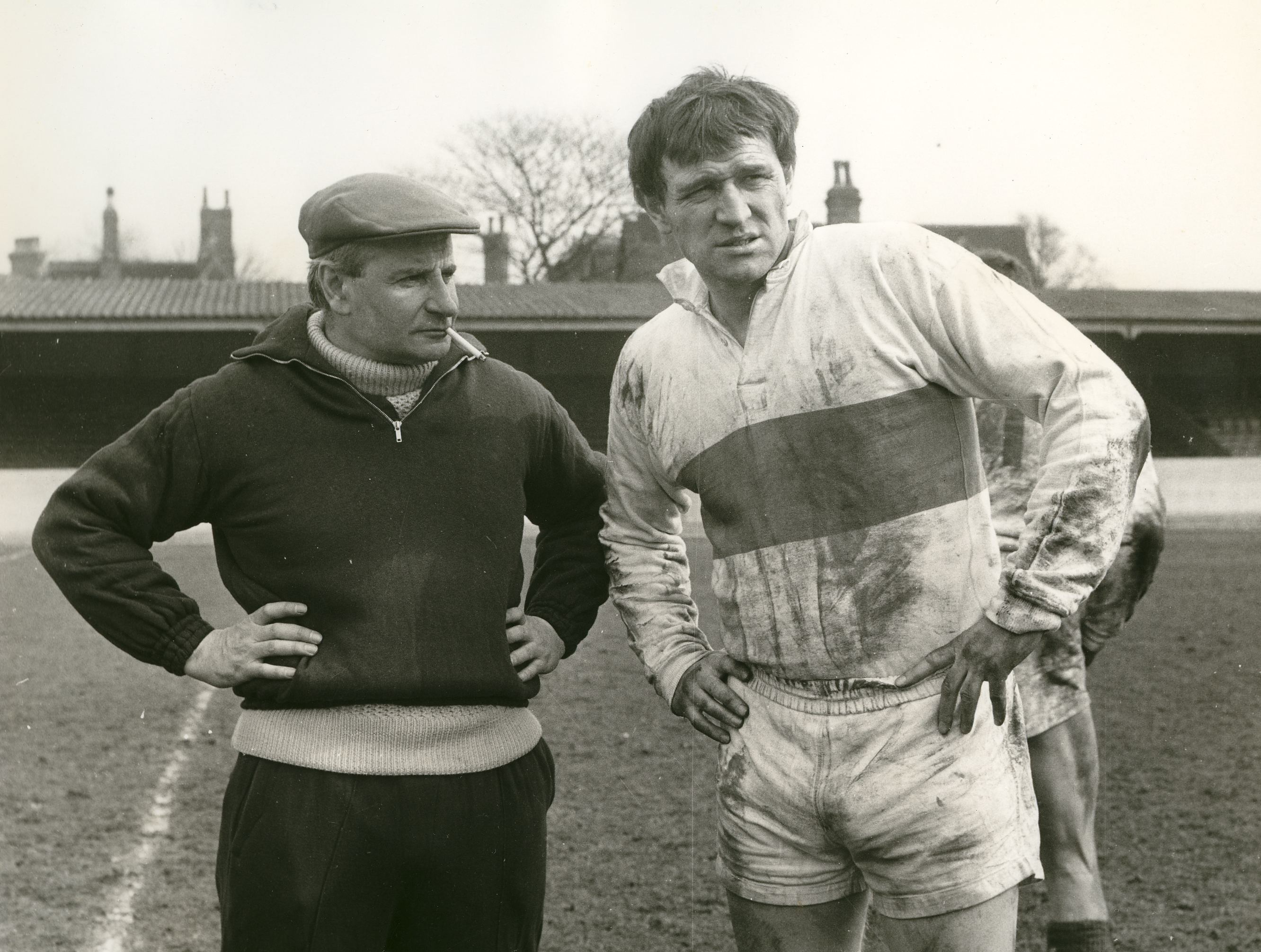
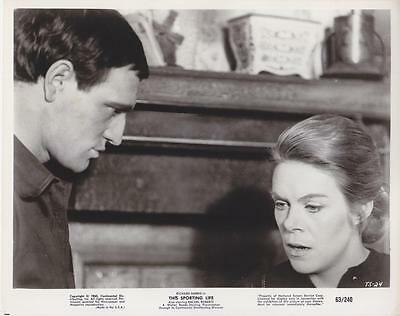
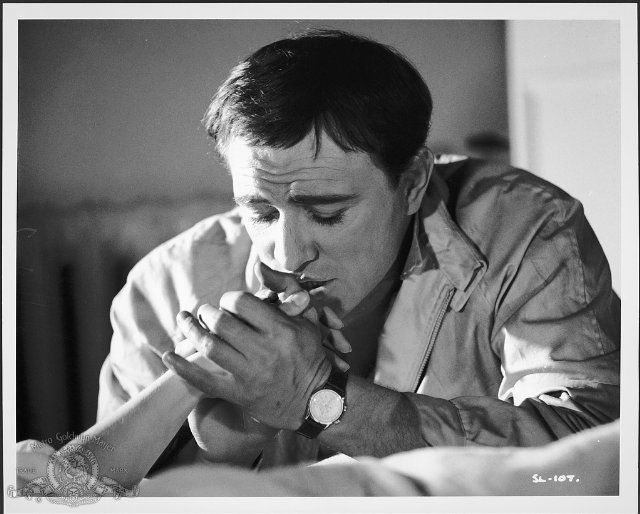
    We all have our natural registers and best leitmotifs to talk about our lives, however trite or banal they may seem. The subjectivity of individual experience is more compellingly tactile than the objectivity of the essence. The sporting life of one Frank Machin, a young rugged Yorkshire miner turned rough professional Rugby player, is a fugue of restlessness, passion, love, longing, and sorrow played by his instinctual drive in allegretto from beginning to end in the binary world of black and white. This Sporting Life (1963), directed by Lindsay Anderson, is gloriously innovative in its genre and triumphantly influential in its narrative in the fashion of La Nouvelle Vague, ‘French New Wave,’ despite the unanimous consensus of labeling this film as an epitome of the kitchen-sink film. Shot in blank and white without a glamorous, star-studded cast, nor memorable intelligent lines of the script. The film creates a tactile perception of realism seen through a lens of a celestial telescope as though by guardian angels who are with us but cannot interfere with our lives without divine permissions. We can see not only Frank playing the act but also why he does it the way he does, which makes him less of a hateful jerk but more of a pitiful man unfamiliar with the civil code of behaviors and the gentility of emotional intimacy. This Sporting Life is a powerfully moving narrative of a man confined in a field of his limited vision of the world and disoriented in the sense of purpose in life. The story begins with the segmented flashbacks when Fran) becomes unconscious under the anesthesia in a dentist’s office. However, the numbed pain receptors bring back the painful memories of his widowed landlady and object of love Margaret (played by Rachel Roberts). She outwardly resists against his amorous advances but inwardly fights her temptation to love him in tandem. Frank tries to find a meaning of his existence in life by holding onto Rugby as a vehicle to achieve self-worth and love by sporting his masculinity to the fullest extent possible. Still, he’s not tough enough to endure all of the pain and erase it all as if nothing happened. Frank often stumbles into moments of existential vertigo and even chooses to love his landlady Margaret, but it only plunges him to existential frustration. Franks loves her, in the same manner, he plays Rugby in the field because it is the only best way of showing his virtue of being excellently rough and tough. Rugby is a combatively aggressive sport, tackling and attacking whoever gets in the way for the goal. Still, Frank continues to play the game even outside the field with the attitude and mindset of the sporting Rugby player. The sport becomes his identity, selfhood that dominates his mode of thinking and acting, which Margaret feels too formidable to embrace. So, she also sports her love-and-hate tug of war with her dauntingly masculine lodger equally roughly.

    Frank is in a way like Stanley Kowalski in Streetcar Named Desire in terms of masculine physique and their similar fierce personalities. Yet, Frank, whose love for Margaret is uncompromising and loyal in his outcry in the darkness of aloneness, seems more vulnerable and sorrowful, hence deserving of our sympathy and understanding. His lack of regard for civil manners and the refined cultural taste is forgivable by his churlish naivete and artlessness manifested in his primordial way of dealing with emotions and feelings. This Sporting Life is not a movie about those Young Angry Men whose selfishly cosseted dissatisfaction with the world sounds no more than spoiled children’s whining. It’s about a man who wants to live a meaningful life but knows not where to find it. The film dramatizes one ordinary man’s existential dilemma in search of the purpose in life in defiance of resorting to being a provisional being as a wandering sportsman. This film will imprint the outcry of Frank in your mind’s wall and resonate with echoes of his pain for a long time.

  • celebration of National Classic Movie Day

    6 from the 1960s Blogathon
    courtesy of Classic Film & TV Cafe

    FOREWARD: In celebration of today’s National Classic Movie Day, this post is written as my contribution to 6 from the ’60s Blogathon for National Classic Movie Day’ as hosted by Classic Film and TV Cafe. Thank you, Rick, for this awesome invitation 🙂

    Ah, the 60s. Doesn’t it chime the bells of your cultural acknowledgment that resurrect all the images related to this provocative era? Whether or not you were a child of the ethos,   it was the age of new wave, it was the age of revolution, it was the epoch of change, it was the epoch of experimentation. The zeitgeist of the 1960s called for a new mode of thinking. Through the seditious waves of societal changes, the thematics of films needed swiftly to adapt to the changing circumstances. That’s why I regard the 60s as a renaissance of the film, which I dare say elevated its status to that of the classical theaters in terms of quality of the thematics that attempted to portray the complexities of human nature amid the changing social norms and values at variance. That said, here are my best films of the 60s.

    Paul-Newman-Melvyn-Douglas-Hud

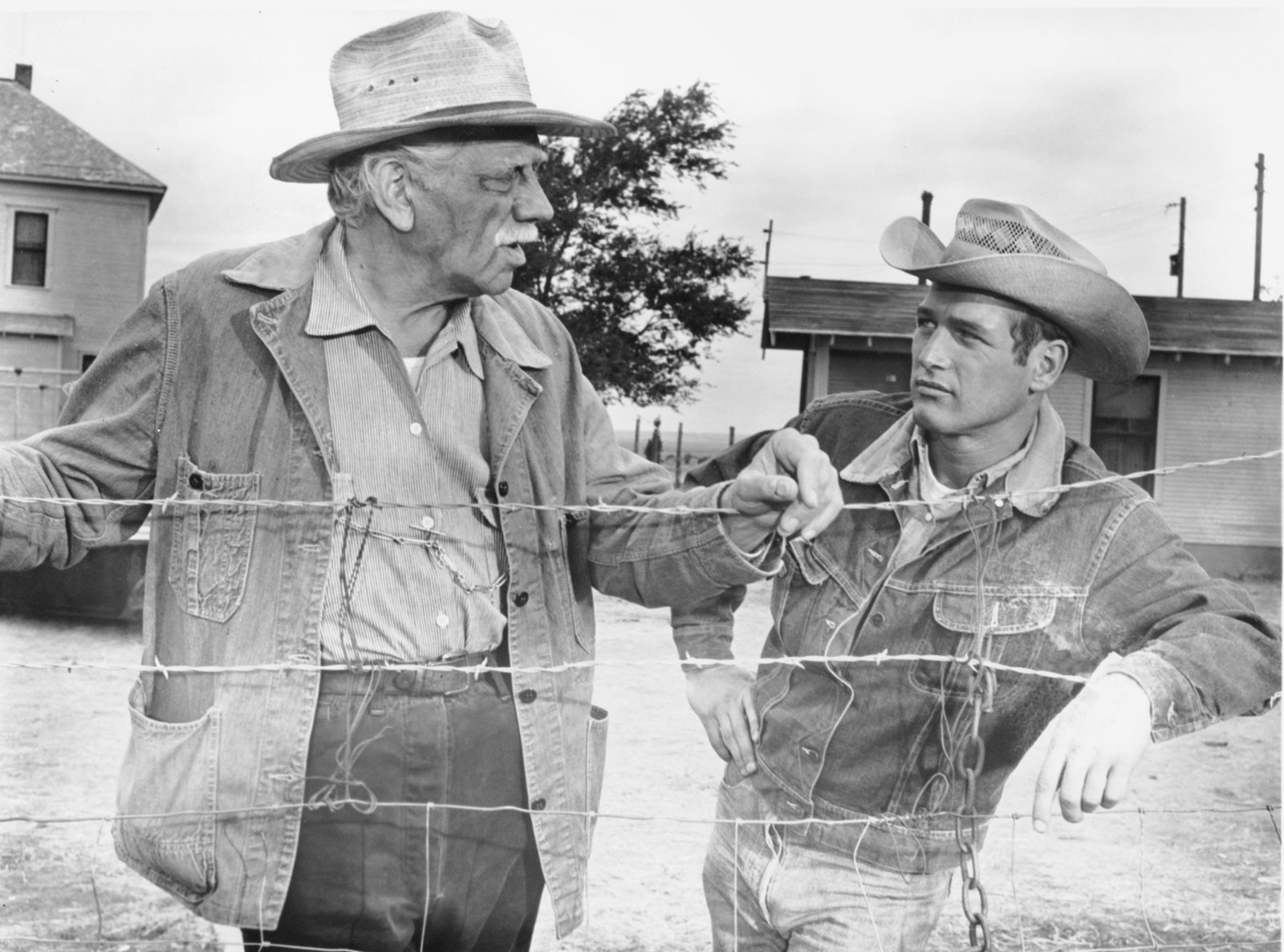
    “The Hud” (1963) – Although dubbed as a western, this film betrays its habiliment by representing the eclipsed glory days of cowboy machismo that seems incongruent and anachronistic amid the rapidly changing social circumstances. The characters struggle, tenaciously gasping on their cattle and Modus Operandi, but the results are all over but the shouting. I think it is also Paul Newman’s best performance that shines through the film as a fictitious embodiment of the collapsed grand narrative of American machoism. 

    ACE180613.original_ySIVHdd

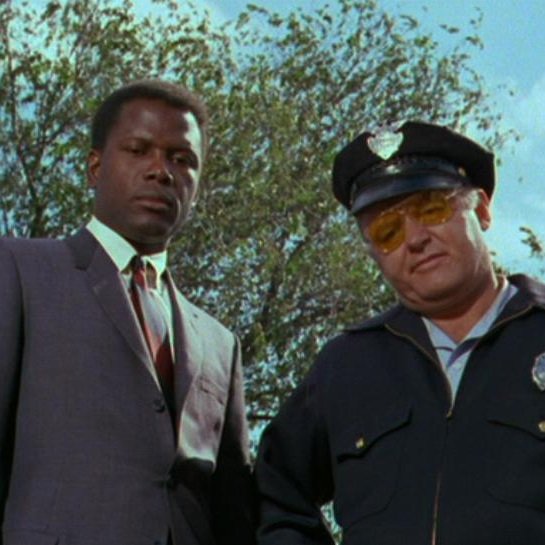
    “In the Heat of the Night” (1967) – Attempts to portray social injustice are most cleverly and artistically translated in this excellent film about policemen of members on the opposite social continuum. Rather than antagonizing the characters, the film connects them with a mutual goal of finding truth and justice in their own ways that are seemingly diametric yet ironically similar in their steadfastness in upholding the most common human nature: pride, ambition, and compassion.

    Sidney-Poitier-To-Sir-with-Love-James

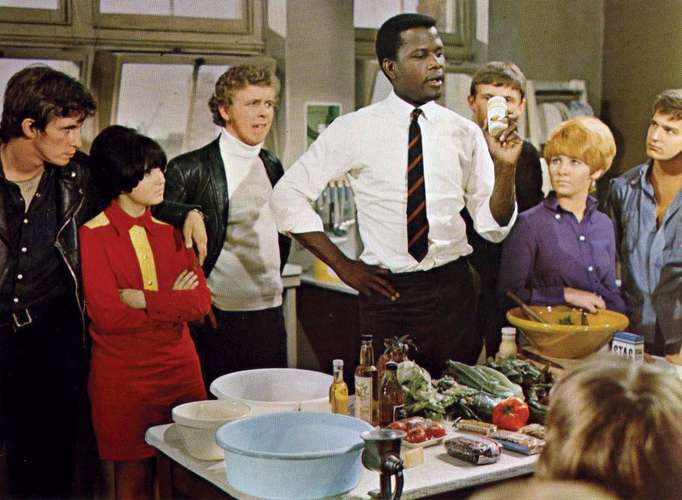
    “To Sir with Love” (1967) – Based on a true story, this British drama is packed full of visual and audio delicacy. This film doesn’t, however, turn out to be a grand grave social activist movie about racial tensity. It shows how a dedicated teacher with mind and heart can lead his recalcitrant but misunderstood students to responsible adulthood without sanctimonious pedagogy or reign of terror. It reflects Plato’s cardinal virtues of Prudence, Justice, Temperance, and Fortitude embedded in the way the brilliant teacher treats his students despite their outward rebelliousness and general distrust in adult figures. The selfsame song by Lulu gives the atmosphere of the film all the more alluring and unforgettable. 

    okmrdt5f33sooom3

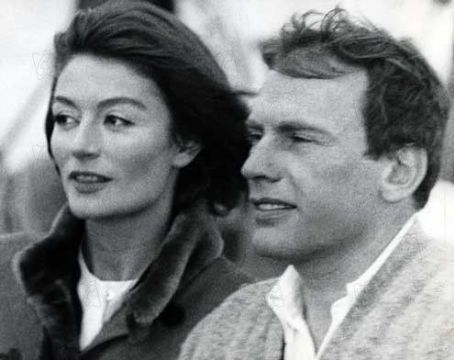
    “A Man and a Woman” (1966) – This French film that won a Grand-Prix in the Cannes Film Festival is an art itself, with beautifully ambient cinematography, doubled by the hypnotic leitmotif of a main musical theme that invokes the idea of ideal love that is never vociferously effervescent but quietly enduring, a perfect admixture of eros and psyche. The love between a man and woman can be this beautiful, and even smoking looks so artistically suitable to the theme of the film, making it all the more riveting.

    Unknown

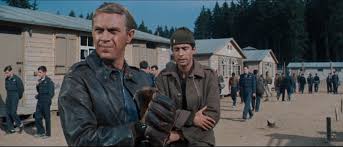
    “The Great Escape” (1963) – What I like about this film is not the luxuriant cast of top-class Hollywood actors but the underlying theme of fortitude, courage, and patience, wrapped in a package of humor even in the times of trial. Although this is regarded as a war movie, no undertones of the campaign against the enemy or propaganda promoting wartime vitriol are underlined here as the dichotomy between the captors and the captives is often blurred by their day-to-day personal interactions within the ambit of conscience and humanity. That said, even the Nazi prison authority headed by stern but fair and conscientious officers is hard to invoke animosity or contempt.  It’s more of personal ambition of achieving success in what the characters are driven to do – whether it’s escaping the prison or preventing it – This film is not about who escaped but who survived. 

    gbu33

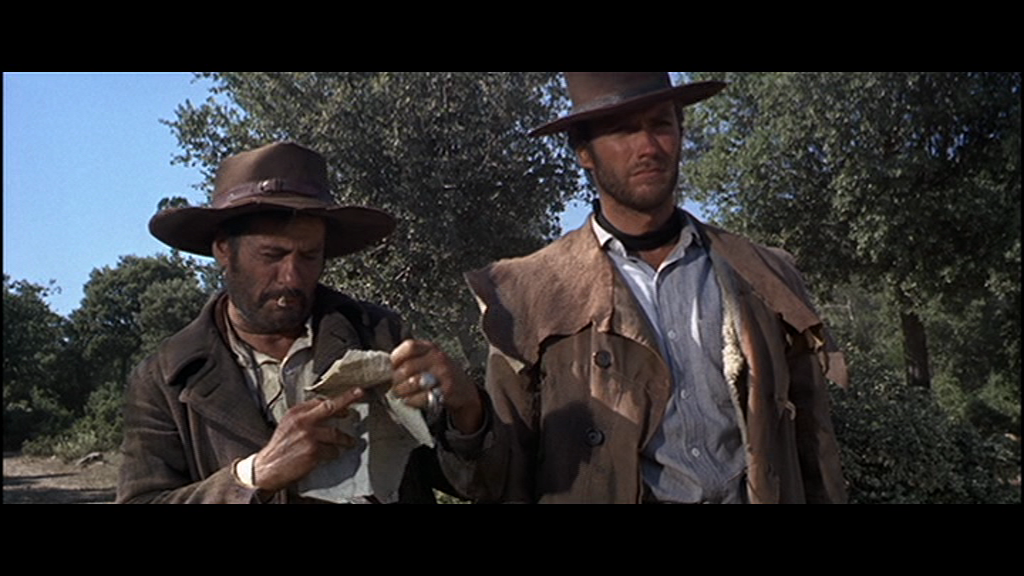
    “The Good, the Bad, the Ugly” (1966) – Who says that you have to be born into the culture if you want to talk about it? Often dubbed as a Macaroni Western, this is the most iconic western film made by a brilliant Italian director whose fascination with the Old West and artistic ingeniousness made him capable of crisscrossing time and territory as if he had been born in the 19th Century American west. Besides, unlike many American-made westerns, this film does not have black-and-white ethical characters, either extremely evil or angelically good in nature, nor does it propitiate moral values or didactic lessons. It also employs the music by Ennio Morricone as an effective vehicle for creating the mood of the film without superlative narratives or gratuitous action scenes. It’s all about the naked human nature surfacing when temptation beckons with irresistible allure. What’s more, the film was entirely shot in Spain that looked so much like California. 

    In sum, the aforesaid films are innovative in incorporating visual presentations of stories with ambient music to translate the world of make-believe reality onto the screen in the most natural way. They are also bodacious in choosing the thematics that reveal the changed look on society in general, rendering the verisimilitude to the stories in order that the audience can feel relatable and sympathetic. For these reasons, my selection of the six films, I think, stand the test of time and merit their own places in the classic canon of masterpiece theater of motion pictures.