Tag: creative story

  • Coffee with Bach and Thoreau

    la-patisserie-jean-beraud
    La Patisserie by Jean Beraud

    It was still early when she got to downtown. And it was still an hour early before her day at the office was to start. That feeling of earliness needed to be indulged by the leisure of solitary coffee time at her regular coffeehouse that had lovely outside seating where you could enjoy a capricious respite with a cup of coffee and watch the swing of things, the world in motion, and the parade of the human race. That time was precious time for Julie, and it was to be observed religiously  in a way the Vestal Virgins guarded the sacred fire in the temple lest it should die out, as that would mean the peril of the Eternal City. The aroma of freshly brewed hazelnut coffee could do so many wonders, and one of them is vitalizing your listless, half-awaken stupor under which you would find yourself an unconscious somnambulist or a peevish whiner. This rhapsody of morning coffee is also testified by a testimonial of Johann Sebastian Bach, the father of Baroque music, who described himself as a “roast goat” without having a cup of sensuously aromatic coffee in the morning.

    Julie, as a faithful myrmidon of the power of wonder beverage, got her first morning hazelnut coffee and placed herself in the corner of her regular coffeeshop to set her cognitive functionality for a work day in motion by reading her subscription on Kindle Fire and writing down some notes from the reading. In fact, there was a set of rules of reading Julie adhered to: reading hardcopies on her commuter train and Kindle in coffee-shops because she found such modus operandi of reading quite congenital to her mental exercise. So there she was, doing what she always did, unless otherwise there was anything else that called for her urgent attention to attend before her work hours began. Then when her silver pocket watch indicated twenty minutes to nine, Julie headed for the office. That was how Julie began her normal work days. That was how she began to live another existential everyday.

    That particular morning, which was Friday, was a lucky one, for no exigency was awaiting for her to execute first thing in the morning. Julie was a legal assistant at a litigation firm, where a myriad of pleadings, discoveries, settlements, and confrontations were norms of the trade. And it had been only a week since a happy chance placed her into the position offered by goddess Fortuna, who had finally countenanced her new future on the frontier. Yes, it was a frontier, a new land of unyielding dreams, high hopes, and exciting desires that Julie had felt deprived of in that grey, grim land by the Atlantic Ocean. Even Henry David Thoreau attested such tenebrous somberness of the ocean as a Sea of the Old Habits and Constraints that bound people in the Memory of their aborted wishes and crushed ambitions and encouraged them to migrate to the Elysian Fields by the Pacific Ocean, which he romantically compared to the River of Lethe in his poetic pathos. Reader, you might think it as a humbug or even a jest in your most postmodern mode of thinking in the ethos of textual parallax thriving on non-platform media. But when you become known that our life is still woven by the Fates under the supervision of Fortuna and that you are made of spirit, fire, and dew, you will swivel your head in wonderment in recognition of Thoreau’s poetic perspective on the Exodus to a New Land where nature is all the more conspicuous by the relative absence of the Gothic skyline that rudely dominates the vault of heaven on the Other Side of the Continent. Julie knew it all, and that was why she wanted to start anew in the West, where the Lethe of the Pacific flew, where the rugged hills and primitive mountains setting against the deep blue ocean still maintained the rustic charm of a village maiden.

    저장

  • Morning Train

    15624886771_c2ecc92688_b

    She should have caught the first-morning train to the city instead of debauching her first cigarette of the day upon her arrival on the platform. She knew smoking as the first thing in the morning wasn’t the most salubrious thing to do, but she had to. It was her way of relieving her mind of its cares, anesthetizing her strains of everyday life for the moment of her sybaritic indulgence, which was the only hedonistic practice Julie insisted on keeping because no other things were permitted to her, literally, apart from all the virtuous and sensuous delights of all human creatures that denied her access. That’s probably a pathetically lame excuse for smoking, and the militantly health-conscious, priggish, and principled public would love to lambast her and her smoking habit not because they really care about her health but because they just do it since anti-smoking is now the ethos of this ostensibly egalitarian era, the zeitgeist of New Social Totalitarianism that dictates Social Science Model Behaviors. And although Julie was never a forceful character, she was a free spirit with proud individuality, declaiming against the mob psychology that was grounded on suitably fashionable stance for demotic mores. She defied it in her own way, in her own solipsistic way.

    The act of smoking could be conceived as one of the most highly advanced forms of humankind ever since the dawn of civilization when Prometheus, an ingenious and recalcitrant Titan, a fashioned man out of clay and water, and then stole sacred fire for mankind to kindle civilization. In this regard, manipulating fire in the ritualistic process of lighting a cigarette and emitting smoke from it can be regarded as a sacred ritualistic performance to pay homage to the benefactor of civilization. Also, Ahura Mazda, a lord of heaven and light and the only true god of the prototype of Judaism, Christianity, and Islam – Zarathustra, aka Zoroaster by the Greeks, was manifested in the form of Sacred Fire, symbolizing Purity, Illumination, Warmth, Enlightenment, and the Zeal. And there were also the Vestal Virgins, the ancient Roman priestesses who kept the celestial fire of Hestia, the virgin goddess of the hearth, home, and domesticity.

    Like the tortured thinker Kierkegaard anguishing over his existential conflicts caught between actions and religion, Julie was wretched in this world of collapsed grand narratives, fake news, volatile subjective opinions, hypocritical truths, and inflated egos, all fallen apart and adrift on a sea of the postmodernist detritus. What are am I in now? Is humankind really progressing for betterment or gearing up for its own destruction?

    According to the ancient Greek peasant/poet Hesiod, known for didactic elements in his poems, there are Five Ages of Mankind: the first one is a “Golden Age,” governed by the Titans, the first generation of Greek mythology, where no words for sickness, war, and discord existed. You see, the Titans were alright for humans although their own children raised war against their parents, even castrating Uranos, the first ruler of the universe, the sky, Titan of Titans; the second one is a “Silver Age,” a reign of Zeus and the Olympians who were very much like us in temperament and characters with the exception of supernatural endowments of immortality, talents, and beauty (but not in the case of Hephaestus, the lame and ugly god of fire and blacksmith, and the husband of Aphrodite). Humans lived only 100 years, most of which was suspended in childhood, consequently making them sophomoric, childish, and disputatious; then came a “Bronze Age,” chockablock with warriors and more warriors spending their time in the office of war and conflict; the next “Heroic Age” was a modified version of Bronze Age in the sense that the characters of war were tinctured with noble and epic elements as in the case of Homer’s “Trojan War” in which Hector, a Trojan prince and the greatest warrior and Achilles, the Greek version of Hector, Odyssey, the timeless voyager, and Aeneas, a Trojan refuge who later founded Rome, the ancestor of the feral brothers Romulus and Remus; and the last and the lasting one is the “Iron Age,” in which we all live now. Hesiod might have foreseen where we are now in his poet’s eye; it’s a world of vehement contenders vying for the sponsorship and the possession of the beautiful, the powerful, the fortunate,… THE FITTEST. It’s a world of social Spencerism that yoked Darwinian evolutionism into philosophy to champion eugenics. And what will be the next age be like? Julie was curious, but then she was soon past caring because she wouldn’t live to tell anyway.

    All of the aforesaid musing triggered by her smoking kept her occupied while waiting for the next train to the city. Julie looked around her at the station that began to be full of another batch of commuters, more men than women at a glance. Funny, Julie thought. Are there more men working in the city than women in this town? Or is it because there are just more men than women in this town? Anyway, the men looked just average without distinguishing outward appearances. Julie knew that beauty was only skin deep, but being a highly aesthetically person, she could not help but observe physiognomies of whoever she saw in view. As a matter of fact, even the intellectual like Francis Bacon also took a person’s physiognomy into consideration that he even rationalized phrenology, a divinity by shapes of skulls. And then there was Karl Lagerfeld who realized that the look was what others made interested in your soul.

    Woe betides anyone who would disagree with this dictum of our time, for she or he would be a downright hypocrite! The human faculty is instinctive, sentient, and physical. Beauty is an essential objective of intelligence that calls a beholder’s attention to the other elements of its possessor in the sense that the poster of a movie gathers spectators to the doors of the movie theater.

    Moreover, Julie could see what others could not see or decided to ignore because it’s regarded as a trifle. Her sense, sensitivity, and sensibility were extraordinary to the point of exquisite uncanniness. Then, she jeered at the thought and dismissed it as hocus-pocus, all jumbled up with meaningless bits of harebrained abracadabra in a shambolic array of grim masks that languished with faint tweaking in the left corners of their lips. That was another way of visceral escapism she sometimes took to bring herself to a different place from the rabble that seemed to belittle her nondescript exotic existence that didn’t fit their circle, their legion of the beauty. That’s the existential issues Julie had to face every day – an acute sense of isolation, an unquenchable feeling of rejection, and a sentient awareness of her aloneness… To escape from the excessively dour, namby-pamby sentimentality, Julie looked at the magnificently rustic beauty of mountains and hills outside the moving windows of the train and fell into a reverie of the 19th century Wild West where she as a Pony Express Rider was riding on a rapid mustang across the land to deliver a Letter of Hope to a final station in the city.

    저장

  • trumpet volunary – beginning

    This is the beginning of my novella about a woman striving against the limitations imposed on her by reality with her fierce individuality and queasiness in her belief in destiny or fate. Her investment of spiritual discernment is her congenital gift, but that which makes her special defenestrates her to the perimeter of society like a cunning woman or herbalist in the Elizabethan England. Is she then a middling between an angel and a demon? Her search for the meaning of her so-called life, the secret of her existence is the linchpin of this daringly attempted story I have decided to conjure up in the peculiar alchemy of fiction. 


    van_gogh_vincent_5
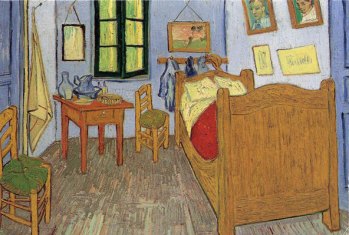
    “Bedroom in Arles” by Vincent van Gogh

    It was a cool, bright mid-Monday morning, but Julie was still in bed, in bed with her still tenebrous somber spirit returning to possess her once again because she – yes, that is Julie Faustine, a single, plain woman nearing to the acquisition of stoicism in life – fell into a reverie of perfidious rebelliousness. But let the description of Julie not complacently settle on your a priori premature postulation that she was one of those feckless, mediocre, and nondescript women deprived of what the world could offer to be a woman. Nary a bit. Her inner world was always in a perpetual restive tempest propelling her to sail adrift on her sea of life fraught with existential strains of life, which stunned her venturesome spirit and moored it in the stony stasis of inertia that was killing her softly. She was a hostage to fortune confined in existentialism that did not allow her all the privileges and rights of womanhood and femininity due to a covenant arbitrarily made and entered into by and among her ancestors and an ancient entity prior to her birth.

    All this, all this preposterous truth was nothing but a real, physical one that was intractably lodged in Julie’s mind, and it was killing her softly. Nothing would be changed on my own, except the sure case of death, which would be a total force majeur situation. Christopher Malowe’s Dr. Faust was in league with me. And if I physically – and metaphysically – disappear from this earthly place, nothing would change. With such monologue in mind, Julie’s wish was to find herself in netherworld when she woke up in every new morning. No, it’s not pessimism or fatalism, but realism, whether you would agree or not with a sneer. W.H. Auden confirmed it in his poem, “Museum of Beautiful Arts.” Just as all the world’s great and terrible events, such as martyrdoms and nativities, took place amid everyday life, other people continued to do what they had been doing for their own interests. Whether or not you existed would not matter to the continuation of the world.

    But as luck would have it, Julie woke up in this world yet again this morning, in this dysphoria of her failed and failing dreams, dwindled and dwindling aspirations, disappointed and disappointing facts, and frustrated and frustrating desires. How shall I die? It’s got be without inscrutable pains and gory details. Painless suicide will be the most cherished and coveted solution to expunge all my baggage. Thus contemplated Julie in her usual serious self. Then came the phantasmal display of the last day of Eva Braun and Adolf Hitler. When Eva and Hitler knew that their ends were impending as the Reich was soon to fall, they hastened to kill their lives together. Hitler chose a pistol, but Eva – being nothing but a woman herself with a reason none other than being a woman – mulled over which method she would employ to murder herself in the least painful but the most feminine fashion. Out of the musing came a method of poisoning herself because it would preserve her pretty face even after death in order that anyone, the Allied or her German volks, finding her corpse would still think she was a pretty being.

    This story and image of Eva Braun still imprinted in Julie’s mind and imbued her with the selfsame way of beautifully saying adieu to her pitiful life. Nevertheless, this was never realized or did not seem to be realized at any time soon for some clandestine reasons made by the Fate, or the Fury, or the beautiful goddess Fortuna. And where would God be placed among these pagan elements? He would eventually come and vanquish all in the name of one Omnipotent, Transcendent, and Infallible of All in no time.

    So much so that in Julie’s religiously conditioned mannerism of reconciling herself to the limits imposed by the Reality of This World,  the image of God existed as a Bureaucrat aged somewhere between the fifties and seventies with a Victorian-style mustache and gravitas that would sting you to fumble with awkwardness, making you feel like a nincompoop. Julie was not a forceful character, and she would turn herself away from this humiliating embarrassment and would figure things out for herself, even though it meant a series of trials and errors over a long period of time all alone. That was her daring independent spirit. That was her most treasured possession. That was what kept her going against her senses and sensibilities. That was her lifeline and only one.

    So it was another morning and the very first morning of a new week into the bargain. Intentionally waking up late in the morning, Julie forced herself to breakfast against her prior determination of foregoing food until she would find employment that would make her earn the bare necessities however little it would pay her. Would this be my home forever? Would I become visible in this new land? Would I start anew in this place? Then Julie’s innermost secret and hidden questions came to surface at last: Could I chance to love? Could a man love me despite my plainness? My paroxysm of moodiness? My humdrum presence? CUT THE CRAP, concluded Julie, for all these supplementary wishes and vain hopes were verbose and verbatim Without A Job. Surely, not all pretty women with jobs – good jobs like professional ones held by the writers of all those popular memoirs bestriding NYT bestseller list for weeks – promenaded with their beaus, but Julie, always angst-ridden and precariously sentient – moped around the whirls of her mental pagoda of melancholy. She could not help making parallels with her life, comparing herself with the illustrious careers of her peers.

    The third week of unemployment was hard to bear, and it was daunting to bear even with her renowned stoicism, but her real passionate self defied it, cursed it, and bitched it. Still worse, radio silence following so-called officious interviews was the worst bitch. “Don’t take it personally,” was a bromide, a humbug, hokum out of human kindness, only to be cruel. Of course, it’s PERSONAL, when the parties engaged in the formal occasions were all humans made of blood and flesh, not robotics of steel and wire. That’s an infallible truth, n’est-pas? That’s a res ipsa loquitur case of negligence of truth, no?

    All of this in her mind pushed her into the brink of a life’s cliff, leaving her one choice, and the only choice she could resort to: a Mephistophelean pact, it was. Yes, that’s darn right. She resolved to make a pact with the devil, and she was going to do it no matter what, either out of sheer spite against her fate or pure supernatural adventure or innocent curiosity. She’s up for it, and when she was in for the kill, she sure meant it. And it was today she would do it when the frivolous west sun was set, and the shadow of darkness began to cover the horizon in the way the sky god Oruanos covered the earth goddess Gaia to make love to her furtively in the dark.

  • Pleasure Garden, Emerald Thoughts

    IMG_4085
            Mary’s Proud Pleasant Garden

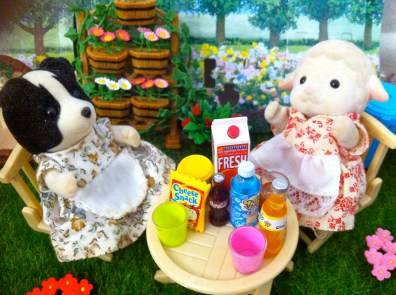
    What an immaculately beautiful sunny Saturday it is! The sun claims its indomitable superiority alone in the azure sky without the scatterings of clouds with occasional pleasant breezes sent from the nearby Pacific Ocean, or “the Lethe of the Pacific,” according to Henry David Thoreau, who saw the West as Land of Rebirth or Rejuvenation where you could exorcise all your past easterly mishaps and misfortunes by the baptism of water in the Pacific. In the poetic eyes of Thoreau, a Lethean stream flew through the West, and it was imperative we drink it to forget the Old World and its Institutions in order that we could start anew in the West. With this poetic justice rendered by Thoreau in mind, Mary Lamb, a benign spinster and loving aunt of Sally Lamb, couldn’t think of doing anything more pleasant and uplifting than tending to her lovely garden this afternoon.

    IMG_4088
       Everything grows with love.

    Mary is an expert gardener trained in her old family home in New Jersey when she was little. It was her father Ted who inculcated in  her the wonder of nature and the beauty of simplicity. On point of digressive notes, people think that it was Leonardo da Vinci who legitimatized the aphorism of “Simplicity is the ultimate sophistication.” But come to think of it, who would not have arrived at such stratagem of aesthetics throughout our human civilizations? It’s all about the merits of whoever said it. That is, your status weighs against the validity of sayings.  For what’s worth, Mary’s gardening skills and her love of gardening prevails on any such abstruse philosophical musings of influential talking heads just for the sake of its pleasantness.

    IMG_4086
    Homegrown organic vegetables!

    Laura Collie, a good neighbor of Mary and trusty confidante, calls on Mary’s to look at her lovely garden in the afternoon. Laura wants to decorate her backyard with flowers and hedges around it, but the whole task of doing it seems daunting because she has so many other businesses to attend to: a wife, a mother, a shopkeeper, and a member of church’s guild for women. Laura thinks that Mary’s spinsterhood imparts freedom from marital obligations to her, which sometimes Laura secretly covets. But then unlike Mary, Laura is always surrounded by her laconic but loyal and understanding husband Paul and their perky and smart daughter Julie at home. Surely, looking at Mary’s gardening makes anyone think about the life itself. It’s a visual exhibition of life with its vicissitudes, with its impositions, and with its obligations, all beautifully embroidered with flowers, plants, and trees.

    IMG_4089
          The laborer is worthy of the reward.

    When Mary finishes her gardening, she invites Laura to have refreshments with her in her proud garden to bask herself in the beauty of the sun and nature in general. It’s also very gratifying to have a glass of cold orange juice or Fanta after laboring on the nature’s work, which Mary regards as a religious experience of being a guardian of nature with the power of appointment by the Creator. Mary, who is also an admirer of Thoreau’s work, understands why Thoreau did not go to church despite being a Christian; it’s because of this feeling of sacred guardianship of nature conferred by the Creator, which can’t be felt by mechanical recitation of prayers without understanding the meanings. Although Mary’s unorthodox views on faith and the church worry religious Laura to a certain degree in a way that makes her unmarried friend look perched precariously on the brink of heathenism like a solitary village cunning woman in Elizabethan England accused of being a witch, Laura admires her spiritual friend’s tenderness toward nature and aesthetic expression of herself through gardening that is all the more resplendent with her erudition from reading many a good book, mostly classics pertaining to previous centuries. While enjoying the carpe diem of the afternoon, both Mary and Laura think in harmony that God is in his heaven, and all’s well with this world.

    thanks-for-reading-Rok-Hardware


    저장

    저장

  • Things can only get better

    IMG_3984
    Getting ready for work

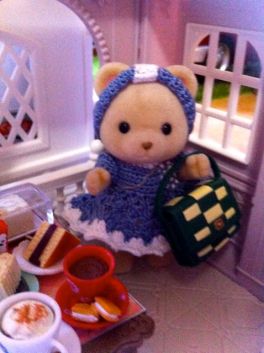
    Patricia has been recently working as a legal secretary at a personal injury law office in the city, the job she secured through her former boss Alfred Petersen, Esq., a high-profile defendant insurance lawyer at a powerhouse Gothic City law firm. Patricia, a principled, intelligent, and discreet character could have found a position commensurate with her ability and experience in the city had the hiring managers in the HR departments been understanding of a nine-month lapse after her resignation from the position of paralegal at a boutique real estate law firm in downtown last year. The reason for her leaving was that the field of law did not turn out to be her best match, pace her previously held naive anticipation that it would require of her less contentious meeting with demanding clients and less leg work that would push her to be out of the doors most of time. Besides, she did not get along with her boss, Susie K. whose whimsicality flitted though the ebbs and flows of her melancholia and in the weather of her sanity with all too frequent paroxysm of hysteria. Patricia wanted to keep her sanity and dignity rather than to succumb to the incivility of an irreparable solipsist. Hence the lapse in her work experience.

    IMG_3866
    At home

    When Patricia needed a helping hand to secure her employment with a B.A. degree that would leave you either overqualified or under-qualified in this ever volatile job market and the inglorious gaping period in-between employment history, she could not help but think of Mr. Petersen who was a lot like the empathetic boss of Bartleby the Scrivener in Herman Melville’s eponymous short story : that intellectually brilliant, characteristically benign, and professionally equable epitome of a “good” boss. Likewise, when Mr. Petersen whose heavenly blend of moral character and intellectual gifts endeared him to many of his admirers got email from Patricia out of the blue, he was willing to cast her a life jacket on a perilous sea under the aegis of his perennial benign influence. Since Mr. Petersen knew that Patricia was a good person who had not only the intellect but also the heart, an angelic admixture of humanity, he phoned one of his best lawyer colleague in town and connected him to her by sending him her resume via email for review and consideration that did not de rigueur need afterthought; it was the job to be had for the asking.

    So far Patricia has been well adjusted to her work routine in the new office and the work style of her new boss who’s fair and magnanimous. She only secretly wishes that the current state of things will remain unperturbed because she feels that she’s worthy of such reward after what she went through while being the subject of the vertiginous treatment that knew no reason and stratagem at the expense of her wailing spirit smothering in the existential daily duties and responsibilities. Isn’t it a crime for anyone to yearn such a continuation of equilibrium?

    thanks-for-reading-Rok-Hardware

  • Walking on Sunshine

    IMG_3914

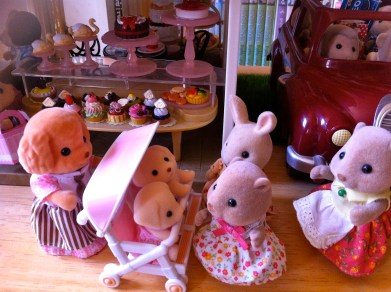
    After four consecutive days of rains and clouds, the sun is finally resplendent with its divine fiery halo in the high blue sky. What a pretty Saturday morning it is! Naturally, Bonnie could not help but perambulate the avenues and streets of Avonlea with her two twin brother and sister called Amy and Eddie in a perambulator. Bonnie and the twins became orphans when their parents died at sea from the sinking of Zeus five years ago. Since then, the children have lived with The Collies because Laura Collie is their distant maternal aunt. Laura and her husband consider them as one of their own, provisioning them with all the necessities of comfortable life. And yet, Bonnie feels that there’s a certain feeling of sadness, loneliness, and yearning all integrated into a crystal ball  of melancholy placed in a jewel box of her heart. It’s like having a dainty music box where you keep your sentimental treasure, such as jewels from your grandmother and your locket from your childhood, and put them on when you reminisce about the memories and are intoxicated with the fragrance of nostalgia that belongs only to you.

    IMG_3896

    “Good morning, Bonnie! Are these twins your brother and sister? They are so cuddly! What are their names?” Betty Beaver is so enthusiastic to see the babies that she is almost panting with excitement. Betty has her baby brother named tommy, aged 3, and loves him dearly. But seeing this pair of twins makes her heart leap with ebullient joy. “They are Amy and Eddie. Amy was born three minutes earlier than Eddie, who was actually holding her plump ankle while coming out into the world.” Bonnie regrets providing extraneous information on the moment of the twins’ birth because she doesn’t like to be overly talkative, revealing too much about herself. But then it’s such a pretty Saturday afternoon promenade with her brother and sister that she could be lackadaisical about it and all other existential dealings that lay ahead of her.

    IMG_3956

    After the nice brisk sauntering, Bonnie and Helen are having nice lunch together at Sylvanian Restaurant down on Petticoat Lane, where food is honest-to-goodness made on the premise 6 days a week. (The  proprietor is a very devout Catholic lady, so she attends every Sunday Mass.) Helen feels liberated from her domestic obligations for being a wife and a mother while she’s alone with her neighbor Bonnie. And Bonnie? Well, it’s not exactly freedom secretly entertaining because she never felt burdened with her duty to take care of her twins. But she could at least forget about worries and chronic anxieties about what tomorrow would bring  and dispel her occasional bouts of melancholy by wallowing herself in delicious food and confabulating with Helen. That’s a simple joy of life that Bonnie wants to keep with small pleasures that make her feel loved and content. Simple soul with streaks of melancholy as she may be, Bonnie ‘s philosophy of life is livable and lovable with all its artlessness and genuineness.

    thanks-for-reading-Rok-Hardware