Tag: creative writing

  • Fallen angel

    An angel is no angel any more
    When she begins to feel
    As a blue wind is blowing
    And knocking gently
    At the door to her heart
    With a sweet aeolian flute.

    The sorrow then enters
    With gossamer of longing
    She feels but knows not
    And the heart with the mist fills
    Like the nascent rain descending.

    The memories are betrayed,
    She keeps her wings still;
    Heaven is no home remembered,
    The world is an abode to be lived,
    Embracing hope for a new legend
    When she wakes up from the dream
    And shines brighter than ever.

  • ‘Buck and the Preacher’ (1971)

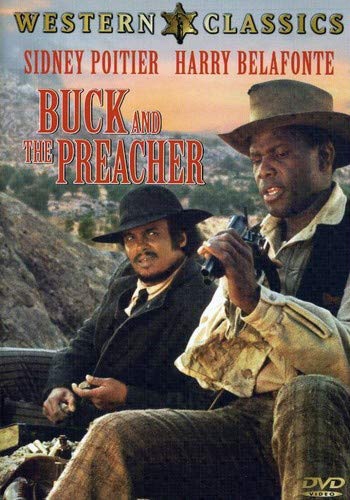
    Rousseau’s dictum of “Men are born free and are chains everywhere.” fittingly describes the condition of what it means to be free from slavery after the Civil War. Even so, freedom was recalcitrant to belong to them, and the hardships that came with the price of liberty from the carnage of the war still beset the newly freed along the trail of exodus to the new promised land in the west as articulated in Sidney Poitier’s classic western film “Buck and the Preacher” (1971).

    Buck (played by Sidney Poitier), a former Union sergeant turned scout, leads a wagon of freed blacks from Louisiana to the west, where they hope to start their new lives without a shadow of slavery. But alas, the shadow of slavery still haunts them. It is up for grabs in the form of renegade ex-soldiers, probably both of the Union and the Confederates, hired by the former enslavers to bring the migrants back to the chains of slavery. They attack the wagon, rape women, and kill the old and the young, constantly intimidating them to return to where they belong. But the pain of loss and death is even less painful than the thought of returning to the past, and the journey marches on. Buck protects the journey, and the self-proclaimed preacher conman artist (played by Harry Belafonte) a former slave, chimed in, despite his original ulterior motive of money-gaining. This unlikely dup proves to be something of Moses and Aaron, so to speak, in a way that they guide and protect the persecuted people from the sordid bondage to a new promised land even if it takes a nearly decimal lot.

    Then there are Indians across the wilderness as gatekeepers to the land of freedom. They are no outsiders to the persecution with their land taken away and their very beings threatened to decimate. The Indians live by the toll fees migrants have to pay when crossing their territories, not the least due to the paucity of livelihood resulting from the government’s confiscation of the land. When Buck implores the tribal chief to help them against the white attackers because they are all brothers, the chief retorts him by saying, “But black people also fought against us with the whites.” The mistrust is natural, as is the confrontation of the two peoples whose rights are put to contests orchestrated by the forfeiter of the rights. The class consciousness between the Indians and the blacks needs a manifestation of shared injustice and empathy, which both of them attest to an objective reality where they prove to be on the same side.

    This film is one of the great Sidney Poitier’s and finest as I have been watching as remembering this brilliant actor who has recently died. Always poised with a commending presence filled with natural confidence and will without being febrile and vociferous, Poitier exudes his irresistibly graceful charisma on screen in this memorable Western about blacks and Indians, who are often seen in the peripheral characters contributing to highlighting main white characters. But this is not a revisionist Western at all to polarize the thematic elements of the genre. Hardly so. Instead, “Buck and the Preacher” is an eye-opening Western film about the peoples who are likely to be cast as outsiders even if they also rightfully belong to, to quote Lincoln, “the family of freedom with a jewel of liberty” called Americans.

  • Birthday

    Today, whatever the Fates weave
    Shall still be worn with beauty by me;
    Today then don’t let you be told,
    How many chapters of life are turned;
    That you are old, and so I am indeed;
    Nor think dreams have waned with tears,
    And talk of the youth wasted with sighs.
    Tomorrow will always be tomorrow
    And nothing will change, even sorrow.
    But a thought from reason brings the truth
    An everlasting and brilliant truth,
    Which can, in spite of all smirks,
    Open your eyes and my ears
    To the evening star twinkling bright
    With sweet soft winds fluting in the twilight,
    Made of fire, spirit, and dew.

  • Rembrandt is Jacob and the angel

    There is something about Rembrandt’s (15 July 1606 – 4 October 1669) paintings that are fascinating, like Bach’s Baroque musical pieces that are profound and elegant. Rembrandt was Northern European art’s answer to Italian Renaissance art. Then there is more to this wonder of genius that touches humanity’s universal hearts and minds.

    What distinguished Rembrandt from his contemporaries was his choice of subjects that were both common and profound in the everyday setting, tinged with a religious theme. Although he was as Protestant as Bach and Handel in terms of his birth of origin being the proud Dutch, he had a Catholic cast of mind regarding the scale and ambiance of the biblical scenes he chose to express. His paintings are an exquisite admixture of sweet simplicity and magnificent sanctity communicated to the eyes then lingers in the heart. It is also realistically factual and mystically imaginative, producing a powerful pathos and awesomeness as though to play a great drama across the canvass in which the actions of the figures, even in still positions, give the impression that they are not suspended in the silence but caught in moments of action.

    To illustrate, one of Rembrandt’s most celebrated paintings, ‘ Jacob wrestling with the angel,’ epitomizes such fine moments of vigor and sereneness altogether, sensuously wrapped around in the forces of life of this world and the meaning thereof. Jacob represents our human life full of highs and lows, loaded with energies that fuel the muscles of desires and the heart of will. Jacob looks coarse, plebeian, and sturdy, simultaneously faulty and confused, whereas his angelic opponent is slender, patrician, and imperturbable. The angel of heaven is supra-meaning, the meaning of life, the refinement of life itself, the beauty of life that we strive to find through trials and foils. If Jacob is the Strength of the Human, the angel is the Spirit from within.

    Rembrandt is a kind of Artist who has the sense and sensibilities particular to Artist with heart, which matches the spirit of enlightenment that mind without humanity is not genuine intelligence that nourishes our mind. So Rembrandt deserves his constellation of stars shining bright in heaven’s dome in all brilliance.

  • Wanderlust

    For one hundred and twenty years
    Trapped in the maze of this mirage,
    Where I began, I can go back never;
    Here I stand and face the bare fate
    Or is it nothing but the illusion ever?

    As Aurora releases the first dewdrop,
    I go high over, down under
    From one end of the horizon to the other
    Across the five continents and six oceans
    Above the heavens, below the abyss
    Far into the milky ways and back to earth
    with the jewel of hope in beatitude.

  • New Odyssey

    Sail away to a new beginning
    sail away from an old harbor;
    Sail, Ship of Destiny, ongoing
    Across life’s wide oceans
    Thru the tides of fortune;
    The year has swiftly gone
    let her go, and look at the star;
    Sail away to the bright anon
    Sail away from the dark afar.