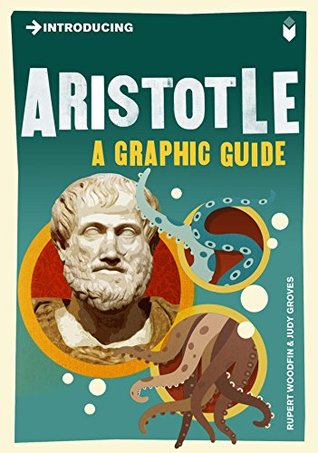
Socrate was a liberal, Plato was a conservative, and Aristotle? Well, he was an educator, an academic, an intellectual with perks and passions who was never dull. His school of thought dominated western Europe during the Middle Ages. It became a foundation of Christian theology because of the conciliation of humanities with science, especially biology, to approach the hows in the quest of whys and whats.
But don’t be intimidated by the dauntingly impressive resume of the philosopher. You don’t have to strain yourself with a burden to know the wondrous truth of our human life and the universe beyond. Woodfin’s illustrated guide to Aristotle will become your scholarly and witty Virgil to his circles of knowledge as seen in his mind’s casements. Through them, you are welcome to appreciate the panorama of Teleology, Thinness, the Four Causes, Beauty, Ethics, and the Cosmos like you never realized in plain language.
Suppose you want to know more about the man who taught Alexander the Great and Thomas Aquinas, the top Doctor of the Church, and assured the distraught that excellence comes from habit. In that case, this book deserves your attention – with delightful Eureka!
Since I don’t like the word “pet,” I won’t say it when I refer to my two-year-old tabby, tom Toro, a family member. Toro pays a portion of his rental fee and is a controller of rodents in our dilapidated humble apartment we long to escape. But that’s another story, and this story I am going to unravel is for Toro.
Toro before entering the clinic
It was that time again to get Toro’s annual physical exam, also required for his Hills prescription Urinary care food. So we took a trip to the vet at Little Tokyo, and all’s well that ended well. His weight was steady at 11 pounds, the same as the last year (what an excellent dieter he is!). He got his FVRCP, FelV, and nails done and was proven generally healthy. What a relief because I had been concerned about his taking more naps than usual and tired expressions with half-cast eyes. The doctor told me that it was customary for cats to show such symptoms as they grew bigger. So albeit my mom thinks that I am overly concerned about Toro’s otherwise fine status quo, aren’t we all concerned about the general well-being of our flurry fur babies?
Samuel Johnson and Hodge
It all makes me think of the story of Samuel Johnson and his cat Hodge. Samuel Johnson, one of the greatest men of letters from 18th century England and the author of A Dictionary of the English Language, had his beloved sale-furred cat Hodge, who was immortalized in literary works and as a bronze statue outside his guardian’s once resident abode. We first come to know of Johnson’s cat Hodge thanks to his lawyer friend and biographer James Boswell’s Life of Johnson. Johnson used to go out to buy Hodge’s favorite food, oysters. He refused to let his loyal and faithful Jamaican-born master-servant Francis Barber because he felt that it would be degrading to Francis to do such errands for him. But I like to think that it was more affection toward Hodge, whom he called thus: “He is a very fine cat, very fine indeed.” When Hodge was nearing to cross the rainbow bridges due to his old age, Johnson would get valerian, an herbal painkiller extracted from the flower to lessen his fur baby’s pain. But the end of Hodge wasn’t lost in the inner circle of the ether, for his life was memorialized in ‘An Energy on the Death of Dr. Johnson’s Favorite Cat’ by Percival Stockdale, published in 1778:
The general conduct if we trace Of our articulating race, Hodge’s, example we shall find A keen reproof of human kind.
Samuel Johnson is one of my most admirable literary persons because of his humanist rules of thought articulated in his mastership of the English language. Hence it gives me a feeling of kinship with his love of Hodge. His affection for Hodge felt genuinely caring and familial, which was never mawkish or superficial. So, likewise, my cat Toro is a muse of my writings: whimsical, independent, intelligent, and affectionate. Sometimes, I wonder if Toro is really a little boy bespelled a tom. Well, what more can I say? Toro is a very fine cat, very fine indeed.
Hodge’s bronze statue was inaugurated in 1997 by Sir Roger Cook, the then-Lord Mayer of London. Note the oyster at his paw as his eternal token of Johnson’s affection.
Happiness is her coveted poetry She’s kept away From writing Without knowing The face of love She’s seen only As in lovers’ faces Harvesting sunshine Reflecting starlight With a fragrance Of a perfumed powder She bought a long ago.
An astronaut may orbit the earth in spacecraft and colonize the moon, but an astrologer watches the constellations of stars that house the spirits like he’s done for thousands of years from the sacred stairs of the ziggurats of Ur and tells of the stars that made us.
As a hobbyist blogger with the temerity to write in English on her blog, it irks me to realize the pomposity of literature and the hypocrisy of classicism, especially in American writers. Take, for example, my ambivalent opinion on the book introduction about ‘Essays Two’ by Lydia Davis I read from the 12/11/2021 issue of The New York Times Book Review.
Knowing another language certainly gives you a unique insight into the world with a subtle but more caring timbre of sentiment and reason common to all human creatures. But the magical ability is not a prerogative of a brilliant professional translator of a high literate/academic echelon. Davis’s Marcel Proust is undoubtedly impressive, but Proust is not for everybody, showing that the literati excludes general readers. On the other hand, there are would-be, potential, or unclaimed writers whose narratives are to be reckoned with, from a refugee to an immigrant. Take Nobel Literature Prize winners Abdulrazak Gurnah (2021) and Kazuo Ishiguro (2017). Both used English as their literary tool to articulate their narratives with the images seen through their poetic “third eye” sense.
Davis and other translators-turned writers speak languages of the same language family. So, of course, the perspectives are similar. But, in all fairness, I want to see writers (and former translators) of all social classes writing about subject elements of particular views from a platform where they become universalizing, striking the chords of our human life. Isn’t that what literature is about?
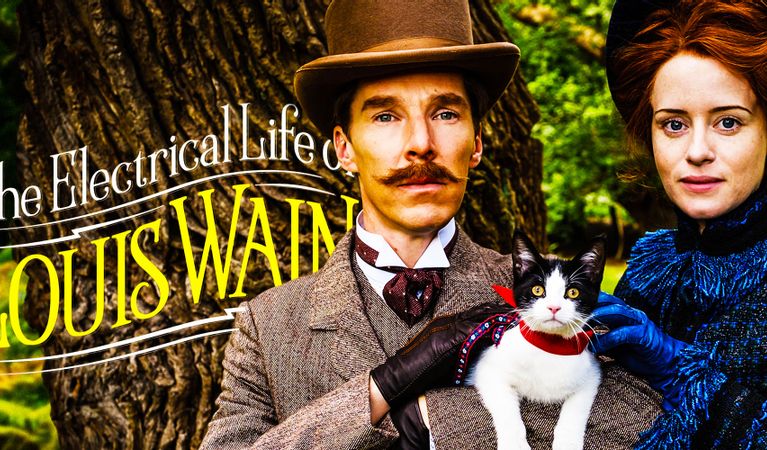
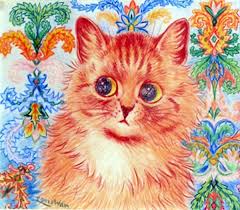
The Electrical Life of Louis Wain is joy and sadness, lightheartedness and seriousness, just like his paintings. It’s about love and art in the oddly beautiful vagaries of what it means to be a human (in the company of cats). Wain’s cats graced the epochs before Walt Disney’s Mickey Mouse (and Minnie) and His Gangs) debuted. But Wain was not Disney, and would he have even wished it? Perhaps, that is why Benedict Cumberbatch decided to give Wain a second chance to shine his name once more on earth in the magic of moving pictures that resurrected him from the lapse of time through the chapters of his story in this superbly narrative of the artist.
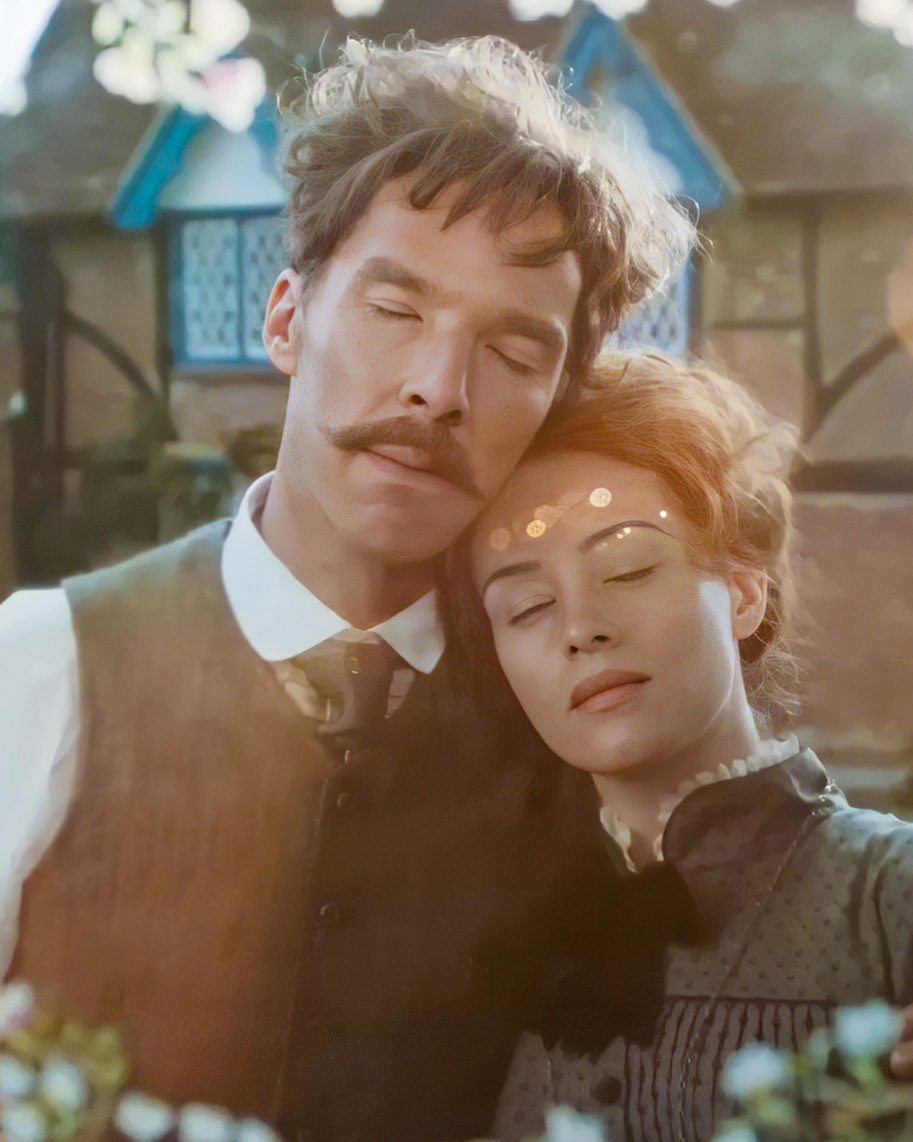
Louise Wain was a brilliant artist, a contemporary of French impressionist artists, such as Monet, Pissarro, Degas, and Renoir, and Dutch Vincent Van Gogh, all of whom were united in the brotherhood of independent spirits and resilient creativity. Yet Wain’s was a different sort, more existentially debauched in the provisional circulation of works, in the crossroads of the reality of being the only male figure in the parentless family led by the dominant matriarchal sister and of the ideal of ensconcing himself in the solitary niche. All artists are by nature sensitive, but Wain was extraordinarily sensitive, and the world was too much for someone like him to deal with. His wife, the light of his life, was the only happiness and love he felt and shared, but jealous God took her away from him and left him in the lurch of the familial duties and responsibilities in the somber household. This house eventually drove him and his younger sister into the oblivion of reason to the end. Yet, notwithstanding the personal tragedy, Wain’s unique visual world articulated with the sonar modulation of impulse that sparked his creative spirit yearning to soar up to the boundless ether on a par with constellations with stars.
Wain’s wife encouraged and supported him because she knew of his genius despite other people’s ignorance.
Benedict Cumberbatch, now universally recognized as the Sherlock thanks to the phenomenally successful BBC series, proved to be a superb character actor who became Louis Wain rather than merely playing the artist’s part. Ancient Greeks and Romans regarded actors as an equivalent of a spiritual medium whose body could be channeled into another spirit for a willful possession during a mysterious rite of sacred ceremony. If that was the case, as it were, that was how I felt watching Cumberbatch being Wain as if he had summoned the soul of the dead artist from the beyond and asked him how the artist’s life would be told. His naturally mild, gentle deliverance of character nuanced the inner fear, confusion, and frustration that Wain must have felt in dealing with the realities of everyday life as a reluctant and unlikely head of household. Yet, his passionate eyes and particular diction dictate that Wain was an artist of force, a man not of an age but for all seasons.





You must be logged in to post a comment.