Tag: English writing

  • Isaac Newton as he was

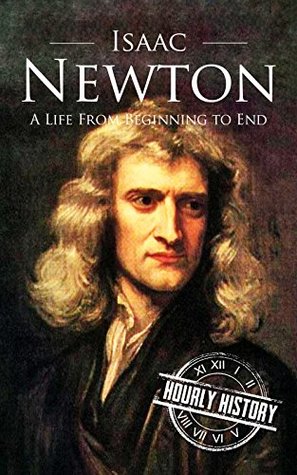
    Isaac Newton: A Life From Beginning to End by Hourly History

    My rating: 4 of 5 stars


    I never particularly liked Newton despite his paramount discovery of the law of Universal Gravity from the fallen apple tree in his mother’s little garden. Maybe it was his somber, irate facial expression adorned with a long white wig. He was a reluctant spiritual godfather of physicists Albert Einstein, Stephen Hawking, Michio Kaku, whose theoretical findings are based on and upgraded from Newtonian laws of physics. However, being a keen observer of human characteristics, I am inclined to write the review about Newton’s personality traits, not a drab biological chronology and analyses of his laws of motion.

    Isaac Newton was never the kind of chap whom you could be jovial with. If you caught Newton in a cafeteria or a coffeehouse and asked for an autograph, he would first give you a look with an exasperated grimacing and either reluctantly succumb to your request if he was in a good mood or curtly said, “I am busy.” His gaucheness in social interactions might be due to a deficiency in maternal affection and care. Newton’s mother willingly separated from her young and tender son when she married her second husband after the death of Newton’s father, whose name was also Isaac Newton. Although I object to profiling any kind and any person because it leads to a grave miscarriage of justice in many cases, Newton’s character profile doesn’t read favorably in any of his writings. To illustrate, Newton used to be harsh on his family servants, whom he often mistreated with corporeal measures and hit his younger sister. Nevertheless, his genius purchased indemnity for all his character flaws and beautified them as individual eccentricities endemic to the intellectual elites.

    But the illustrated Godfather of Science was also a discreet practitioner of alchemy in search of the Philosopher’s Stone to turn it into gold. I wonder if all of the laws of motion Newton discovered were unexpected comeuppance of his private practice of alchemy. Not surprisingly, Newton kept his behind-the-façade business, and it was until the mid-18th century that the truth came to shine in his journal. Despite its occultist nature and nuance, Alchemy was also not too far from chemistry in studying metals according to three principles: Salt, Sulphur, and Mercury, based on four elements of air, earth, fire, and water. To this fascinating manipulation of heaven and earth, Aristotle added the 5th element of aether that was believed to fill the universe beyond the terrestrial sphere. The weightlessness due to the absence of gravity occurs in outer space full of invisible aether propagating light waves. As Newton’s principal muse to inspire his scientific musings, Aristotle is plausible to understand Newton’s fascination with alchemy. He treated it not as a magical practice but as a branch of chemistry that would have looked magical to the uninitiated.

    Grumpy as he was, Newton was nonetheless a remarkable individual who devoted life to the pursuit of truth, a satisfaction of reason, in the temple of science, believing there are more than material bodies in this world, which became a foundation of quantum physics. With his head filled with the mystery of numbers and frail body subsisted on the nourishment on the mind, Newton was a lifetime bachelor without chivalric anecdotes or sybaritic tell-tales. Instead, he spurred his energy on his studies, wallowing in the delicacy of quiet and uneventful solitude. Newton influenced multidisciplinary studies including philosophy, and music, with his laws of motion, especially making the word “inertia” so democratically popular with the public that British pop band Blur made it a title song in their first Leisure album. You don’t have to like Newton to appreciate his contribution to the consilience of science and humanities. But it wouldn’t hurt you to learn what makes him enshrined in the Parthenon of civilization of humankind, even though he wasn’t a nice person to chat with.


    View all my reviews

  • the door of perceptions

    My cat sits in front of the door
    Like an ancient statue of Basset
    And looks at me with desire
    To break the spell of the moment.

    In the high night
    When the only light
    is iridescent emerald beams
    from his large green eyes,

    I open the door
    He believes to be
    The door of perceptions
    When there is only darkness.

    But he roams in eager eyes
    With a lamp of his cat’s eyes
    Searching for the wonder
    With neverending hopes.

    Alas, my elderly mother stops
    His hopeful night’s adventure!
    Still yearning, ever curious
    My cat tries it always tomorrows!

  • 2021 Nobel Prize in Literature goes to Abdulrazak Gurnah

    The great writers are capable of metamorphosis and travel across a gulf of time and a hiatus of cultures and continents because their narratives speak to the sentiments and reason common to all humankind. Enter Abdulrazak Gurnah, this year’s Nobel Prize laureate in Literature, in this celestial constellation of great writers. The following is what I think about Gurnah based on reading his interview with today’s Reuter.

    Gurnah, born in Zanzibar (now part of Tanzania) in 1948, went to England in the 1960s as a refugee fleeing from the political turmoil and social unrest of his native country. Then began his migrant’s song composed of multiple strands of his experience, thoughts, and feelings that became polyphonic acapella in variant notes and rhythms. Unlike many other laureates of prestigious literary awards or esteemed recognition, Gurnah is a champion of underdogs who were not expensively educated in private institutions and, above all, who were not born into the surroundings of English as mother tongue. Working at the places where his privileged literary peers would not think of, Gurnah wrote in English as Second Language as his Lingua Franca literary tool. The result is his enchantment of readers to a fantastic maze of his inner world. His narratives become Ariadne’s thread that guides his readers to the world that seems so unfamiliar yet oddly universal.

    Gurnah seems to be the kind of writer I sincerely respect and dare to emulate who have lived among ordinary people like a sun in evening declination with the soft but radiant scarlet hues covering the earth, reflecting its magnificent face in shining waters. I am delighted to confirm that you don’t have to be born into a culture that speaks English if you want to become a good English writer. It is not about the Perfect mastery of language but about articulating thoughts to become a great writer. Although the media emphasizes Gurnah’s being the second black African author to have won the award since Nigerian Wole Soyinka in 1986, I don’t think it’s about his race that draws attention to his books. His being a writer supersedes his race because writers are different kinds of the race with a unique eye to look at the world and show it to readers, standing together in the collegiality of human spirits.

  • Song to Artemis

    Stars sundry and allwhither
    Planets pompous and distant;
    But the Moon is only always
    Goddess excellently bright!
    Fairy Queen rides in her chariot,
    Ghosts rejoice in the moonlight
    Nature basks in moonbeams;
    I revel at sight wonderous
    Goddess excellently bright!

  • cathedral of forest

    She, with her wings clipped in shackles
    Sees the light above the high altar
    Through the dusk of leaves and boughs
    Beneath the dome of boundless skies
    Without spires and stained glass within.


    But why else when nature has it all
    Sermons in trees, brooks, and skies?
    From the haunt of life’s vicissitudes
    rests herself under the pillars of trees
    As the choristers of hummingbirds begin
    The hymns of hope in nature’s cathedral.

  • All for the best: a tale of ‘Candide,’ by Voltaire – book review

    Candide by Voltaire

    My rating: 5 of 5 stars

    Candide is a touchy-feely whimsical story about the absurdities of optimism against realism in a delightfully witty guise of romantic adventure fiction. An entertaining satire that is both intelligent and humorous at best, it is a collective coming-of-age story of a man whose anfractuous life passages enlighten him of the reality of life and the world.

    As the novella’s title betokens, the protagonist Candide grows from a naïve young man sheltered in the Edenic castle of privilege and prestige in the protégé of philosopher Pangloss. Pangloss indoctrinates in Candide Leibnizian optimism, which posits that all is best for the best of all possible worlds. Candide’s expulsion from the castle because he was fascinated with his uncle’s beautiful daughter Cunegonde marks his journey toward the truth to the purpose of his suffering and what it means in life. Doctor Pangloss, a parody of collective complacent philosophers, keeps telling him that it is God’s will and that his life change is a manifestation of immanence, an intellectual belief in God’s presence in the world concreted by Spinoza. He preaches a pre-established harmony in the world because it is already the best in its most perfect form. Pangloss is an abstract philosophy and institutional religion incarnate in his glorious scholastic appellation and unyielding intellectual pride that refuses to recognize truth.

    The adventure of Candide is similar to that of Gulliver in his travels to unknown worlds in Jonathan Swift’s Gulliver’s Travels. Gulliver is a ship’s surgeon full of ideals shaped by established a priori schools of thought until he encounters wondrous creatures in mysterious lands, all exhibiting the best and worst human characters manifested in their appearances. Swift wrote Gulliver’s Travels to criticize the ills of society’s need for reformation as one of England’s leading literary figures with social consciousness. Swift was also one of whom lent a kind hand to Voltaire when he stayed in England to avoid the growing fury of France’s church authority. Volatile Voltaire was known for capricious terms with his literary peers, but his admiration of Swift’s work and him as a brilliant satirist remained loyal. Voltaire’s Candide is more straightforward and realistic, sans mysteriously curious creatures of a wide arc of imagination. However, both Candide and Gulliver share the same thematic elements of parodying the hypocrisies of religious doctrines, and human nature laid bare in the style of chivalric adventure fiction.

    The story is a carnival of characters united by deceptive fallacies, chased by untenable ideals, tangled by insatiable desires, obstructed by variants of life, and succumbed to deceptive pleasures. Nonetheless, one can’t weigh the misfortunes of humans and set a just estimate on their sorrows just as Pangloss deigns to aver, for humanity is imperfect in the imperfect world. Therefore we must strive to make it better for the common good of society as best as we can. Voltaire dreams of a new community with callous palms of laborers conversant with more delicate tissues of resilience, self-respect, and heroism in real life, whose touch thrills the spirit in the most exhilarating way than the idle hands of thinkers and priests. By writing Candide, he creates a society of people who sailed through the vicissitudes of life in the triumph of epistemological a posteriori truth over ontological a priori precepts.

    Candide is surprisingly easy to read and wastes no time for boredom. Voltaire himself was a man of no-nonsense whose simple but effective use of words is reminiscent of Hemingway and Stephen Crane, who were titans of literary realism. John Milton’s metaphysical poem Paradise Lost rang hallow in its abstruse display of classical knowledge. Homer and Dante lost their luster in the words that people did not use any longer. An authentic intellectual lives among people and puts his learning into action for the good of people. Candide is an excellent company to console your weary spirit and sorrowful heart if you are tired of eternal optimism and forceful positive thinking that has become a still fashionable mass mantra.


    View all my reviews