Tag: essay

  • Prompt 8

    Are you superstitious?

    I read daily fortune telling according to my zodiac animal sign and sometimes horoscope in the newspaper or the internet more than daily passages from the Gospel or Psalms. I believe in the existence of the spirits of the dead, curses, hexes, and folk beliefs in what and how to act to keep off evil spirits. Oh, and I do believe in haunted places and stigmatized properties.

    Superstition is a manifestation of a belief system out of empirical truth that transcends the subjectivity of time and place. But being superstitious is different from being fanatic, pagan, or even satanic, all of which are dark and evil. In that regard, I am spiritual rather than superstitious and natural than religious.

    There are indeed more things in heaven and earth than are explained in books.

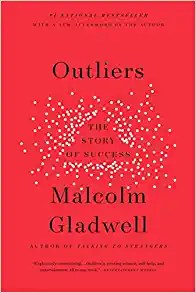
  • ‘Outliers’ by Malcolm Gladwell

    The personification of success equals the characterization of the person in our society that has established an unwritten pervasive eugenic rubric of material success in representing where you live. The stories of Rags to Riches are mainly to blame because they are modern-day mythology of heroes and heroines or fairytales to imbue the populace with slim hopes that can also be dangerous, like mass-marketplace placebo anti-depressants. From Hercules to Cinderella, those whose success from their humble origins we love is not self-made as they claim to be in their memoir or interviews but are made of chance and circumstances. This book reveals how these outliers are not outliers but are insiders of the leagues of winners in sociological terms and facts.

    The book opens with a remarkable bible passage from the Gospel according to Matthew, dubbed as the “Matthew Effect” thus: “For unto every one that hath shall be given, and he shall have abundance: but from him, that hath not shall be taken away even that which he hath.” It means that success results from accumulated advantage and vice versa. The accumulated advantage is a combination of one’s ability and ambition interacting with the particular circumstances surrounding their rise over difficulties or challenges. Indeed, people who make lots of money must have burnt their midnight lamps to arrive where they are, but they also have people who help them and time to achieve their goals without worrying about other cares of the world. Hence, I don’t like JF Kennedy’s proclamation, “Ask not what your country can do for you – ask what you can do for your country. You can criticize people on welfare as losers lacking motivation and diligence when they need personal structural guidance and constructive public assistance to help them stand on their feet. You can’t just leave those behind the race as being slow or inadequate for the race.

    In ancient Greek mythology, the human race was born of mud by Prometheus and imbued with intelligence by Pallas Athena. Prometheus then gave sacred fire stolen from Olympus to make a better life. In the Old Testament, God blessed Abraham with wealth, who also helped his chosen few from those who instigated his wrath. Although modern-day outliers are not prophets or demigods, they certainly have their lucky stars. As Shakespeare agreed, “it’s the stars that govern our conditions.” Even if you disagree, you should not judge people who make less money than you, or no employment, or live in humble housing, thinking their situations result from their faults.

  • Once More unto the Breach! Here comes my New Year’s Resolution

    Once More unto another year, once more!

    As the first day of the new year has almost ended, I feel the urge akin to duty to make a new year’s resolution. There’s not much but high hopes for low heaven, with a reasonable scope of expectation and humble measurement of happiness. And since none other writers know about the depth and breadth of humanity than Shakespeare, I deem it fit to match his quotes with the contexts of what I have resolved to make this year of Rabbit fruitful and blissful.

    1. Be Not Afraid of Challenges
      ‘This is a step on which I must fall down, or else o’erleap. For in my way it lies.’ – Macbeth
    2. Don’t be easily crestfallen
      ‘There is nothing either good or bad, but thinking makes it so.’ – Hamlet
    3. Read More, Write More, No Matter What
      ‘We know what we are, but we know not what we may be.’ – Hamlet
    4. Keep it simple with humor
      ‘I was born to speak all mirth and no matter.’ – Much Ado About Nothing
    5. Let not a curse be my light purse
      ‘I say, put money in thy purse.’ – Othello
    6. Be vigilant at all times
      ‘Love all, do wrong to none, trust a few.’ – All’s well that Ends Well.
    7. Overcome existential malaise
      ‘Then I defy you, stars!’ – Romeo and Juliet

    Nobody says life is easy, and we know it to the point that such a saying has become a cliche. But life itself shouldn’t be and is not because we are such stuff made of spirit, fire, and dew, harvesting sunlight and starlight. Now that I have listed my New Year’s resolutions as above, I feel fresh of spirit charged with new energy like the Energizer bunny to keep going in my life, even if perils will lie ahead. But in the meantime, let me be that I am who I am as I write this post in my tiny room with my two cats, Toro and Camille, and seek not to alter this moment of simple pleasure.

  • Beggars can’t be choosers?

    Have you ever felt why you are here facing the ugly realities of life, enduring insults right in front of you after you are invited? I have, and the experience is still so fresh that if I don’t manifest it in writing, the grief will knit up the overwrought heart and bid it shatter to pieces, which has already been cracked, broken, then repeated. Job interviews are arguably the most tricky and adrenaline-inducing passage of livelihood for which some introverts have to give in at the expense of our fairy-like stealth, Sanity. You can either win or lose at the impression on the interviewer, who is more often than not less cultivated, let alone understanding humanity, no matter the social status. But then, you should not let your dignity and Sanity be ripped off or broken apart because you deserve a good one.

    It all started when I got first called in for a zoom interview last Thursday. It was for the position of part-time legal assistant at a small family law office in Downtown Los Angeles (not to be confused with Downtown Abbey, LOL). The office proprietor, an old man lawyer, was a typical lawyer who must have inspired Shakespeare to exclaim, “Kill all the lawyers!” It was not so much a job interview as an immigration or any bureaucratic interview, I gather, because of the following: 

    (1) His question of whether I had any family member or friend with divorce experience is irrelevant, knowing that I had no experience in divorce law. When I said no, he cast a doubtful glance at me;

    (2) After the zoom interview, what was the need for a second interview in the office for a part-time position in such a small law office?; 

    (3) I referred him to my blog as writing samples at his request, but he never gave me feedback on them;

    The interview reminded me of a police interrogation I am familiar with by watching British and American procedural detective TV dramas. He questioned me and observed my facial expressions to find faults. He was cross-examining me with the questions he had already concocted in his petty lawyer mind and insulted my sensitivity. He seemed to be of a typical victorian/Edwardian bourgeoise (not even peerage) would-be employer pleased with himself for being so rich, so successful by his so clever lawyering. 

    I am seeking employment to make a living, but I don’t want to work for/under such a rude and unpleasant employer. I wasted my time on earth because of yet another traumatic experience of failing humanity. What change has been improved since the labor movements in the tacit relationship between the worker and the employer when I cannot speak my mind because ignoring it in the oblivious land of forced amnesia will make me fall apart, and I can’t take it anymore? And it didn’t end on that day. He dared to inform me of my not being hired the next day at NIGHT. Thank God for not giving me the job. And I wish it was all just a nightmare, and that’s all.

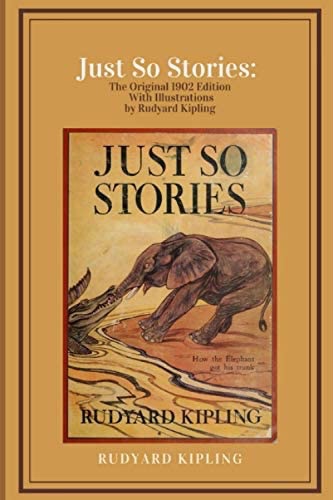
  • ‘Just So Stories’ by Rudyard Kipling – book review

    I believe history is a branch of literature full of events and stories made by artists and artificers weaving facts into myth, and vice versa, into a timeless tapestry of the world that was, is and will be. In that regard, Kipling is an artist who spins beautiful tales of how animals became what they look like into a poetic wheel of ear-delighting and cadenced words aided by gorgeous illustrations distinctively graceful and dazzlingly beautiful.

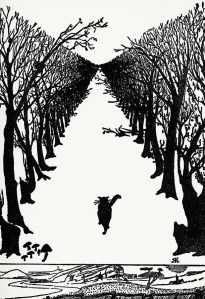
    Kipling’s evolution of animals explains why they look the way they are, such as a Leopard with spots, a Carmel hump, and many more. The stories become a fable and a history of its kind. It’s a literary version of Darwin’s Origin of Species, the wonderful menageries of Man and Beast that cannot live alone despite the differences in species because we are the inhabitants of this world, Earth. But, above all the fantastic tales of wonder, the Cat’s tale stands out in the story and the subject. Kipling’s Cat is proud but not arrogant, independent but affectionate, and vain but graceful. It’s a cat who walks by himself, and everything is alike to him and nothing else. The Cat is a beautiful stranger even if he likes to be a family, a kind of forever loner, the Puss in Boots with a cowboy hat and an empty holster. Kipling’s writer’s eyes saw the romantic solitude in a cat, and the result is one poetic Cat that rhymes well like the graceful way cats do their amazing somersaults.

    Just So Stories are not just for children even though it is classified in Children’s literature on the shelves of libraries. It’s a book for everyone who loves legends and magic, who still has a childlike innocence that refused to put away as an adult because it’s in nature. The stories are not for academic analysis or psychoanalysis but simply for the enjoyment of the mind and the delight of the heart. Remember Freud’s saying, “Sometimes, a cigar is just a cigar.” So are Just So Stories, so delightful and so pleasant.

  • Auto-correction and Titivillus

    Writing has never been easier these days than in the bygone days before the advent of the computer. If you are unsure about how to spell “Tomato,” then the computer will spell it for you by way of auto-correction. And it can even reconstruct your sentences like a pro. The magic is inside the computer, as if it has a mind and even a soul, as it were. This wizardly power of auto-correction can sometimes, however, lead you to an embroglio of nonsense, especially when writing emails or tweeting. Quite devilish, so I think and wonder: are things like auto-correction and the likes a wicked invention of science or science of diabolical existence? Hence, I am talking about Titivillus, the patron demon of scribes.

    The birth of Titivillus could trace back to the 13th century when Franciscan theologian John of Wales pinpointed the malicious demonic trickery for the scriber’s mistakes. That’s not a footless excuse for the faux-pas made in a beautifully ornamented medieval script. In medieval times, copying the passages of the Holy Scripture was a painfully punctilious task for a monk to accomplish with perfect penmanship and exquisite illuminations. And the job cost a good amount of his youth with arched back, squinted eyes, and cramped arms and fingers, not in the least due to the time spent scribing. Toiling (even though for the glory of God) and Rejoicing (for the joy of self-fulfillment), Sorrowing always hoovers over the glories. Titivillus often brings this Sorrowing by making the scriber err in labor, such as misspelling or miscopying. When that happens, a corrector scraped off with a penknife or an acidic solution was applied to loosen the ink. Or sometimes he just made little dots under a wrong word, meaning the reader should ignore that bit. In case of more significant errors, the passages were sometimes lined through, and the correction was written in the margin or copied on a smaller piece of parchment and glued into the book.


    To think of it, Titivillus has not returned to the Ninth Circle of Hell, always making himself a reason to stay as long as humanity continues writing. Writer’s block is a dark cloud hovering over the soul’s palace, the dome of thoughts. Philological carbuncles, including misspellings and awkward syntax, combine the demon’s interruption and the writer’s fear of writing. The fear is more than devilish trickery or neurotic obsession because it stifles creativeness and imagination of the writer. Still, I cannot help but think that today Titivillus manifests himself in the form of auto-correction, which can change the entire meaning of a whole sentence, often most embarrassingly and awkwardly. You agree?