Tag: essay

  • ‘Enlightenment Now: The Case for Reason, Science, Humanism, and Progress’ by Steven Pinker

    My rating: 5 of 5 stars

    Gods may be crazy, as the tribal men thought when they picked up a bottle of coke dropped from an airplane. But the world is not crazy and will not be crazier unless you wish it. So you’d better lose faith in the doomsday industry that prompts you to think so because our faculty is intuitive rather than reasoning, rather physical than metaphysical. Steven Pinker points out in this book that we need rationality or a habit of rational thinking to aspire to objective understanding lest we should fall back on the doomsday scenario of a dystopian world.

    To begin with, the enlighten movement is not a product of the west but rooted in human nature as the universal feature. The spirit of the enlightenment movement is “Dare to Understand,” which means applying knowledge to understanding our world to enhance our human welfare to the full effect and force. Enlightenment is comprised of Reason, progress, science, and humanism. However, the currents of modernity flow into global populist tractions that champion totalitarian relativism from individual modes of thinking to social and political policy-making in the name of progressive liberalism or conservatism, when it is not with the absence of Reason and humanism. The proponents of the ideologies described above take precedence of faith over Reason, nation, or culture over individualism and metaphysical over real because they couldn’t care less about it.

    The most impressive finding that I have described from this book is Pinker’s perceptive analysis of the counter-enlightenment movements run by both conservatives and liberals, especially in the States. As many people might conjecture, Pinker is not an ultra-right-wing intellectual because his view on former President Trump and his cult is logically solid and intellectually revoking. He explains that the philosophical roots of Trumpism are a synthesis of a militant derivative of Nietzchean school of philosophy and anti-enlightenment humanism. It’s not conservatism but racism lite, shading into authoritarian populism and romantic nationalism, harping on the good ole days, which weren’t good in respects of the quality of living conditions and level of human rights.

    Amid the bipartisan world of ideologies, the heightened pessimistic opinions of our planet from the environment to social services, Pinker’s education on what Enlightenment means on human progress shines like a beacon of light on Slough Despond. This book gives the world a sense of self-confidence in our cultural progress this far as a collective human enterprise. The history of the world is not cyclical or linear, but progressive and in progress as long as humanity continues. It is this humanity that Pinker emphasizes in the truest sense of Enlightenment that the thinkers such as Voltaire and Kant also professed to be an inseparable element of human progress. Progress without humanism is not progress. Humanism is not a sign of shallow intellectual culture akin to pastoral romanticism or unproductive ideals. Humanism represents the sense, as science reason, which are universal human traits common to all. That is what this book wants to teach us.

    View all my reviews

  • live to tell

    I just read an article from the January 2021 issue of BBC History about a British family’s real-life experience in China during the Chinese Cultural Revolution in the 60s. It was so engrossing a read that prompted me to put pen to paper.

    Kim Gordon’s live-to-tell childhood memories during the turbulent times in the country where he and his parents had believed to be a model communist haven as accounted in his diaries and letters put it on the same pedestal with Louise Malle’s Au Revoir Les Enfants and Anne Frank’s Diaries in the context of regarding political turbulences through the eyes of the tender age and the lasting impacts on the minds of the young.

    Gordon’s writings are a prime example of historical records, which George Orwell called a reason to write in his “Why I Write.” In fact, reading Gordon’s account of his memories of forceful detainment in Peking gives me an association with reading one of Orwell’s war correspondence and his first-hand experience as a voluntary tramp in London to report the reality of homelessness and unemployment.

    I think his writings deserve far higher recognition and broader readership in the publication of a memoir, for which I will read forthwith.

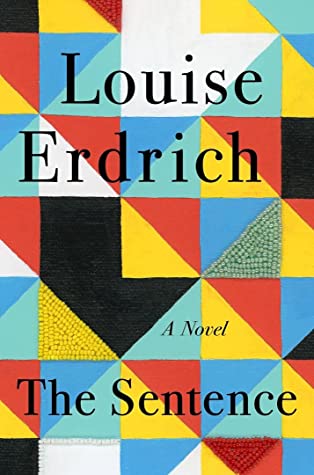
  • Spirit Away: ‘The Sentence’ by Louise Erdrich

    The Sentence by Louise Erdrich
    My rating: 4 of 5 stars

    The Sentence by Louise Erdrich is about the power of words, spoken or written, awakening the spirits of the author, storyteller, characters, and readers, all adrift and luminous as the boundary between the real and the ideal collapses. It’s a polyphonic work of trauma narrative, cultural studies, social commentary, and philosophical memoir interwoven in multiple strands of a joint account.

    The story evolves around Tookie, a doubting bibliophile who thinks books have everything you should know except what actually matters. Books are no more than a portal to mental escapade, a world of make-believe in the likeness of truth or reflected in the highest ether of reason and sentiment, which makes no defining impact on her checkered life as if it were her sentence from the judges of this world and the beyond. So much so that when Tookie finds that the newly deceased soul of a regular customer haunts the bookstore, she works at, she laments her fate of chaos that seems ever to stalk her small wish to live a quiet everyday life. Is it her sentence to live In perceptual existential malaise? And yet, Tookie ends up living daily life with a loving husband and daughter in a house of their own with a steady job as a bookstore attendant. Isn’t it what is considered an everyday life? So why can’t Tookie let the ghost alone when ghosts refuse to depart for the other until they finish their businesses in the world as part of their spiritual sentence?

    I decided to read this book after reading a review from the NYT Book Review a couple of months ago because of Tookie for being exceptional wanting to be ordinary. I felt for her, which was valid until the middle of the book. But as Tookie became settled with her husband in their own house burgeoning as a knowledgeable employee at a local bookstore, she began to lose her fabulous, unique luster. Indeed, I was all high fives for her happiness that I felt deserving, but the further I progressed to pages, the more my heart parted with Tookie’s existential frustration, except the touching moments of love between her and her husband. Also, unlike the book’s general introduction as a ghost story, It is not a supernatural book that will fulfill your cravings for an intelligent horror story. Instead, it is an extended short story featuring a ghost as a fire-starter of narratives connected by bibliophilia. The author believes bibliotherapy is a recipe for the existential malady to quiet the anxious mind. There is no more enchanting than a book, electronic or bound. The lifeless words become alive as the reader awakens the book’s spirit by entering the world of make-believe through the labyrinth of stories leading to the secret garden of truths that the author has fruited.


    View all my reviews

  • friends or foes?

    I always feel guilty about leaving Toro alone when I go to work. It would be best to add another feline companion, but the existential circumstance prevents it. Hence the flying tenants moved in. The new parakeets are Sera (Blue) and Pippi (Green), who demonstrate that the phrase “eats like a bird” should be part of the Woke movement of removal. They are also unknowingly clever and perceptive that I wonder if they are secretly enchanted humans serving their time for misdeeds till the spell is cast off.

    Toro, aka the Curious Cat, also seems to know that Sera and Pippi are a joint force to be reckoned with, so to speak, but nevertheless shows undeterred attention to every move the duo takes with feline discreetness. Timid but curious, Toro wants to touch the moving feathers of parakeets whenever they come out of the cage for sauntering. But the birds show no fear but irritation against the unwanted friendship from the lonely feline. Poor Toro. I console him after Sera pecks his little nose with her dainty beak in protest against his pawed touch. However, my original purpose of making the birds friends with Toro is still valid because both Sera and Pippi do not altogether repulse Toro with wild shrieks of danger.

    I hope the birds will be warm to Toro as time goes by till we move to a bigger and better place to live so that I can bring another cat to the family.

    Twinkle, emerald dreaming,
    Love flocks in blue and green,
    Curiosity stalks love’s gathering,
    Loneliness emboldens attempting
    touch of love fluttering in longing.

  • TikTok, the Orphaned Marmoset’s Story

    TikTok rescued from a miserable life courtesy of BBC.

    Whether it is my animal zodiac sign of Tiger that is believed to be highly incompatible with anyone with that of monkey, let me just clarify that monkeys are my least favorite animals. However, that doesn’t mean that I should not feel strongly about the article from a recent issue of BBC Wildlife about the U.K.’s primate trade accompanied by the title photo of the baby marmoset named TikTok. Call it milk of human kindness. I cannot just leave the pages closed and forget about it as a piece of memory. The images and words still haunt me, which prompts an enduring reckoning, resulting in writing this essay.

    The primate trade in the U.K. and here in the States evokes the human history of slavery. Under slavery, human lives were counted as chattel, and the families were continuously disintegrated because of volatile trade-offs. On the same token, keeping primates as pets seems no less different from colonialists or slave owners whose eyes were set upon the exotic physical attributes of the people they subordinated.

    The article has also taken me to my brief research into the U.S. primate trade with the following facts: in 2012, 19 states, including California, where I live, had outright bans on private monkey ownership. The primates are considered a threat to wildlife and public safety and health because their habitats and nature are not agreeable to our environment despite our conventional knowledge of primates as the closest to our species lost in the evolution tree. Come to think of it, the idea of “Planet of Apes” has a point in reversing the directions of gaze from humans to apes, and vice versa, showing us why the two species could not cohabitate by confining them in the opposite environments.

    We should not think of animals as live toys or ornaments that will satisfy our whimsical, capricious tastes. From pets to wildlife, animals are not our property but companions. I know it for sure when I feel a little heart of my cat Toro sleeping at my feet.

  • Triumph of the Will

    Like Hecate, the goddess of underdogs, I have a soft spot for writers and thinkers who arose above personal hardships and triumphed in the will. If they have not experienced human highs and lows, how could they write and explain the meaning of life? Take the Russian writer Fyodor Dostoevsky whose near-death experience on the gallows and subsequent travails shaped how he viewed humanity, the purpose of God, and the dichotomy of good and evil. I compared the life of Dostoevsky with that of Victor E. Frankl, the father of Logotherapy, who survived five death camps during World War 2 because both men’s intellectual fervor saved them from self-destruction in the darkest hours of their lives.

    Dostoevsky (hereinafter “D”) was a political prisoner sentenced to death for reading banned books. But the most incredible feat of luck pulled him out of the gallows, and he was sent to a Siberian work camp. He forced himself to channel a danger of hopelessness and resignation in such a squalid environment into the world of imagination. His characters were his alter egos trapped in a cycle of solipsistic containment of morality, religiosity, and social justice. In these attitudinal and creative values as a way of relieving himself from the slough of despond, D finds a kindred spirit in Frankl (hereinafter “F”), whose spirit never succumb to the hopeless situations in death camps where life seemed to be a curse. Instead, f kept himself busy by constantly devising his school of thought, analyzing it, and structuralizing the concepts in his head and on any writable medium he could find discreetly. The result is Logotherapy, the third Viennese school of psychotherapy that encompasses philosophy, religion, neurology, and psychoanalysis, whose nature and method are common to all humans and applicable to all regardless of age, gender, race, and culture.

    So much so for the reading of the brief article, but the effect is magnanimous and resonant with a pellucid tenor of a victorious high human spirit with humor as a handmaid to intellect (wit), which would otherwise be grim and dreary subject to temperamental bouts of depression and pessimism. Both men in their prime of youth had their sovereign rights of individualities in tatters and shackles, but their willingness to live and achieve their goals exceeded the compass of the malicious fortune and triumphed in perennial glory. They are, as Ben Jonson in his humor might have concurred, men not of an age but for all time.