Tag: essay

  • what if it all just happened at once? – book essay on the Denisovans by Charles River Editions

    The Denisovans: The History of the Extinct Archaic Humans Who Spread Across Asia during the Paleolithic Era by Charles River Editors

    My rating: 3 of 5 stars


    The case of Adam v. Ape in search of where humans came from seems to have waned since Charles Darwin’s seismic theory of the Origin of Species, by which we have become distant relatives of primates, whether we like it or not. The biblical Adam as the first man of Mankind is pitchforked to the first chapter of the Old Testament. The first human ancestor is now obdurately held to come from Africa, making Africans our universal ancestors. But how are we so sure about what we are as we are told to believe? What if the modern humanoid just came into existence as in the case of the Big Bang? How do you prove that the races of Caucasoid and Mongoloid originated in Africa, on the prima facie evidence of their present physical characteristics, pace the evolutionary scale of time in such a short biological time?

    The Sentinels

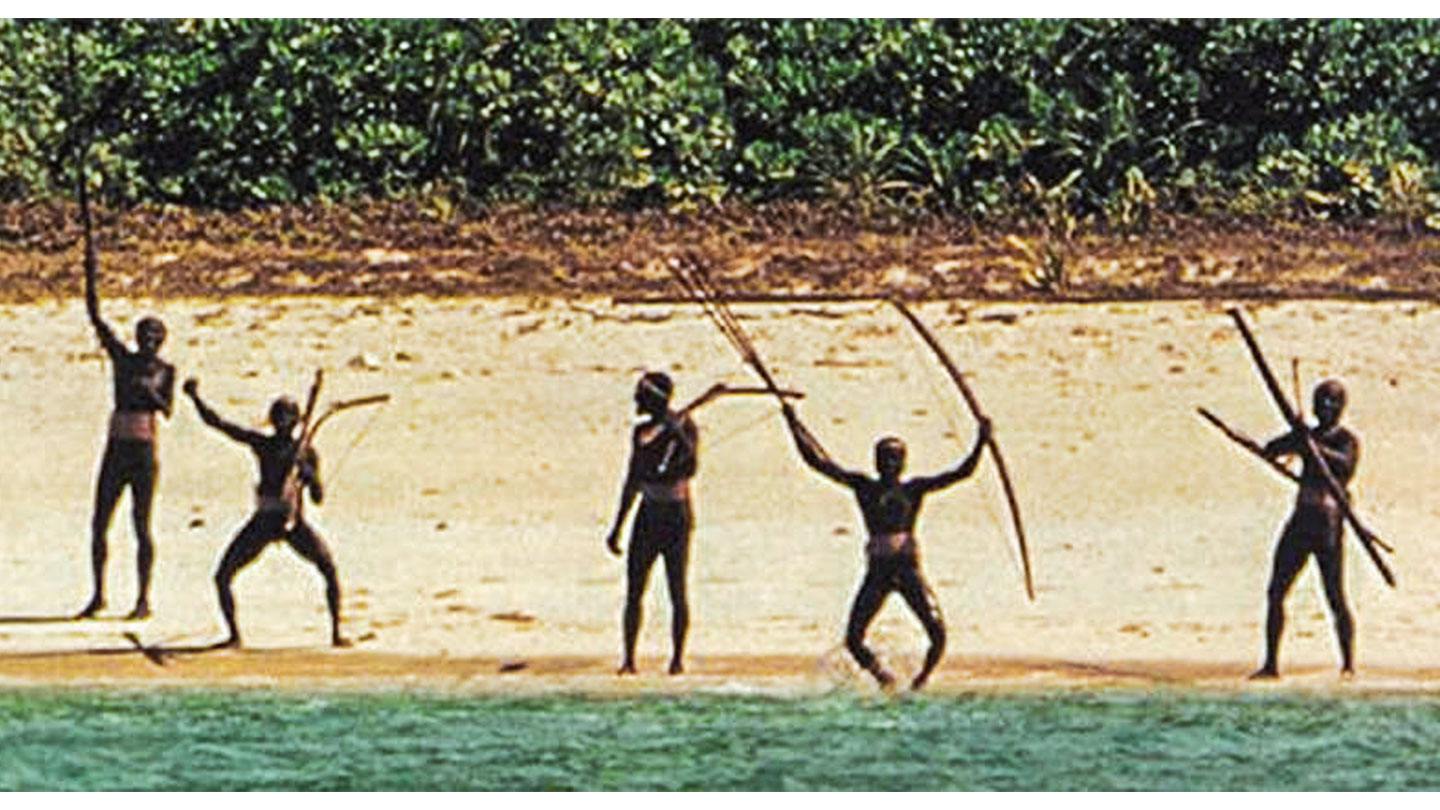
    The theory that all humans come from Africa has become infallible in the 21st century. After the fall of the Iron Curtain, peoples of nations have begun to worship ideology politics under the pretext of rewriting history, which in reality means upending the contemporary status quo of all social and cultural systems, even if some of them intended to remain valid. Then, for example, how would they explain the existence of the Sentinelese, the most primitive and dangerous tribe living on North Sentinel Island in the Indian Ocean? If all non-black races came from Africa and changed to what they look like today, why do these uncivilized people preserve the most representative features of Negroid in the most shockingly prominent way?

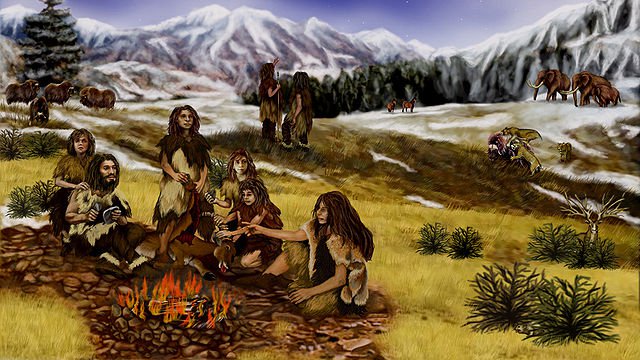
    Then scholars will retort with the theory that we all come from Homo Erectus that branched into humans, Neanderthals, and Denisovans. The missing link between the root of Homo Erectus and the branches would solve the key to what exactly our direct ancestral medium was. Would it be just another kind of primate that looked closer to humans? On the other hand, some scholars believe that modern-day humans have more Denisovan DNA than Neanderthal DNA. The latter migrated from Asia to Europe between the land bridge, just as ancient Asians crossed the Sea of Bering from Asia to North America, becoming Native Americans. Then a thesis of Africa as the cradle of Mankind requires a preponderance of onus to prove it a fact. As a matter of fact, Eurasian faces will exemplify how the ancestors of Europe would very much look like. The physical characteristics of East Asians attest to a hypothesis that the Neanderthals from the Asian continent migrated to Europe before prehistoric ears, breeding with what the population that had already existed there be it ever Denisovans or other tribes of Neanderthals.


    My view on the evolutionist theory also includes Adam as the first man after prehistoric times, the dawn of civilization. Hesiod’s Golden Age is equivalent to the archeological Paleolithic age. In the period described above, humans looked like us and produced handy tools and weapons essential for developing civilizations. If we think that Adam’s progeny dispersed all over the world a myriad of times ago, then it makes sense why we look like what we do. The gist of my argument is that race is not something that can be altered by itself. Neither a climate change nor a duration of time can change racial characteristics in themselves.

    View all my reviews

  • law of inertia

    According to Newton’s law of motion, inertia refers to a condition when a mass of an object determines a resistance to change. The bigger a thing is, the harder it is to be moved. What a splendid discovery when such truth has always existed! That is a difference between someone like Newton and other mortals who have seen it but cared more or less about it. The gist of my proposition is that inertia fits the state of my mind at present; the more I exert my cognitive facilities on articulating my thoughts, the harder they seem to operate the abilities with all their souls, with all their hearts, and with all their might.

    Today I looked into the statistics of my blog posts, realizing my literary fruits were turning sour with the leaves of the knowledge of tree desiccated in the arid land of pitiful ignorance. T.S. Eliot must have felt the same when he yeared for a benevolent pool of knowledge on the barren land of his mind, which is hardly likely to think about because – well, for what he is. No matter how much I try to use a craft of writing that I used to possess until three months ago, I realize the powers are gone with the wind to the ether and then to the blackest black hole in the universe. The words become weightless, and the images are as bleak as the Persian night. It’s like being in the middle of an adumbrating labyrinth with Ariadne’s ball thread missing or forfeited by whimsical divinity. Nothing scintillates, nothing promises, not even with a bluebird that used to guide me into avenues of hope. So whereas I still delve into reading voraciously, the words are flushed into a great abyss of darkness, a slough of despond, leaving me weeping and then crying alone. I wonder if this state of inertia can also be related to the dark night of the soul that St. John of the Cross experienced before his spiritual epiphany. Or I can identify the feeling to the sudden listlessness of Albert Speer, the mild-mannered, brilliant Hitler’s architect friend, during his long-term incarceration in the Spandau prison after the fall of the Third Reich.

    I have always professed to write for the sake of my sanity, the justice to myself with a tenacious grasp on a sense of purpose that I am not going to disappear without a trace of my existence on earth. Laura Ingalls Wilder, Jane Austen, Charlotte Bronte, and Lucy Maud Montgomery all endured the vicissitudes of life in dealing with the demands of daily life while cherishing their literary ambition and endeavoring to prove themselves as gorgeous writers whose credo was allegiance to truth and nature, using the ideal to make the real perfect and kind that God forgot to bestow upon them. They are my spiritual sisters whom I daresay can relate to due to my circumstances and kindred disposition.

    I write not to canvass celebrities for being a top-rated blogger. But then I want people to know that I write however imperfectly or abstrusely. I write because I like it, just as people like to take their selfies and post them on Instagram or make vlogs on YouTube. So while the cold receptions still vex me to my publishing of writing in my blog, my spirit resists giving it all up, which rebels against the law of inertia. Come to think of it, the witch in training Kiki in ‘Kiki’s Delivery Service’ laments about her suddenly losing the ability to fly her broomstick as she stumbled into a vertigo of existentialist distress, part of growing pain before blossoming into a wonderful full-pledged witch. Maybe I am going through the same thing, too. I like to think that way.

  • The princess fairy tale

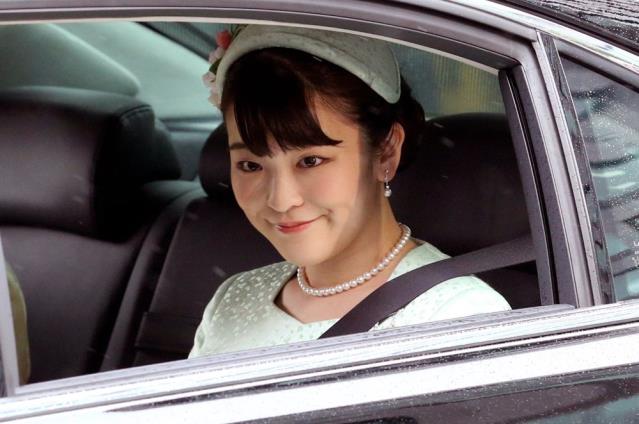
    First of all, let me clarify that I don’t believe in fairytales where beautiful poor girls achieve social escalations by marrying handsome princes and kings. Nor am I keen on the affairs of modern-day royalty whose lives are not even desirable. And yet, the news of Princess Mako’s marriage to her college sweetheart despite forced delays and oppositions is worth writing about because it is a fairytale of the most beautiful kind becoming a truth in reality. Would it be a bit of a stretch if I relate Mako’s heartaches and ordeals to Psyche’s Wanderings and Trials set by Aphrodite to separate her son Eros from the insolent mortal? It also shows that the crowned cannot escape from the intoxication of the heart that is worth denouncing the pomp and circumstances.

    Marrying a commoner is no new in modern-day history, starting from Edward VIII’s marriage to the American divorcee Wallis Simpson and his descendants Princes William and Harry. While those mentioned above British royal members married those outside the peerages, they were not the average commoners working nine-to-five or even more or fewer hours in ordinary situations where they had to depend on the whims and caprice of their employers for the secure livelihood. But Mako’s case stands most excellently because she was determined to give up the whole royal privilege to live as a commoner by marrying the one who is not from a wealthy, not even above average family. Moreover, Mako refused to receive a considerable amount of money as a gift from the royal family for marrying a commoner. On the contrary, Harry and Meghan are considerably wealthy, living without day-to-day financial insecurity about what might happen tomorrow. Their surrendering the titles publicly will not forfeit their assets as in the case of foreclosure that many struggling hard-working Americans are unfairly subject to. After all, why do they need to hold the titular positions to make more money outside the palace? People flock to the brave Meghan and her ever-supportive husband, but why do they do when their happiness illustrates no emblem of sacrifice without a sense of proverbial entitlement?

    I cannot help but compare Mako and Kei to the famously showcased ex-royal couple Prince Harry and Duchess Meghan. Besotted by the sensual charm of his renegade, free-spirited wife, Harry decided to move his young family to Los Angles, California, for good. He joined her Dissent Division to criticize his long-time family for being racist and cold-hearted. On the contrary, Princess Mako never decried her dissenting royal families against her marriage to a commoner, nor did she rebel loudly against the constitutional monarchy outside Japan. Instead, Mako kept all of her affairs of the heart discreetly, remaining true blue to her beloved Kei despite public uproar about his below-than-expected family background for being of a problematic single-mothered household. Forget the stereotypical Japanese politeness and the prejudice on the East Asian women’s submissiveness. Her graceful acts and decencies flow from her natural disposition and upbringing, which I have hardly seen in the famous royal family members.

    Watching Mako and Kei looking at each other with the eyes exchanging affection with radiant smiles in their serenely happy faces put me into a pleasant mood to make me wish for their long and happy life together. Mako is a brave princess who surrenders herself to the love of her choice, even if it means giving up her title and privilege that would make her married life comparatively comfortable to ordinary people. Mako’s decision to live the life of an ordinary wife seems anachronistic and incongruent. Still, not everyone wants to be an Amazon or Scythian warrior, nor does she want to climb up the career ladder to prove her abilities. Mako’s declaration of independence signifies an act of exercising her right to happiness by living with someone she loved dearly. What else could she do to prove her worth for love? It is a beautiful fairytale dissolving to the truth.

  • blah, blah, blah and lord of the flies

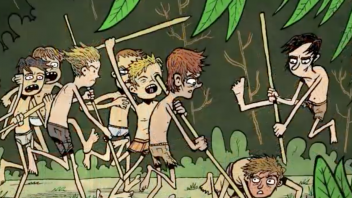
    Greta Thunberg is an 18-year-old environmental activist who has risen to a child crusader against the corruption of the world, not for incorrigibly persistent unequal distribution of wealth within society and among nations, but for the blahs of the world leaders who irk her nerves for not listening to her pleas to save the earth. In all fairness and recognition of her endeavor to raise red herrings on environmental issues, I applaud her to the very echo. But why is it that I see in the face of Greta talking “Blah, Blah” the faces of the boys chanting “Kill the beast! Cut his throat! Spill his blood!” from William Golding’s Lord of the Flies? Or is it that I am a seriously near-sighted adult whom Greta forthwith denounces as politically and culturally blinded conventionalist speaking the Blah only?

    It was interesting to read and watch Greta’s speech at Italy’s Youth4 Change, growing more prominent and bolder with a singular air of superiority. It bestowed upon her a right to mock the world leaders, including President Biden and Prime Minister Johnson, in their conference for environmental issues. Her English was flawlessly articulate, with accents that denote her fierceness of character and feistiness of personality. Indeed, such a high level of confidence is highly remarkable and undeniably recommendable. Still, there is a distinction between arrogance and confidence regarding the speaker’s manner of speech and demeanor. The subject brings me back to the wild Boys of the Lord of the Rings, in which the gentle-mannered protagonist Ralph is soon abdicated by the rebellious Jack, who provokes ids in the followers of Ralph to subvert the order and to rule the tribe. Greta’s rhapsody about youth as not being “blinded by realpolitik and the assumption of compromise” sounds like a youth manifesto from Peter Pan. He never gets old to build a society of the young only. But does Greta know youth is wasted on the young?

    Also, I wonder what Greta thinks about those at her age and younger underprivileged, mistreated, and malnourished worldwide if she is so concerned about the earth’s well-being, for we are the earthlings. Does her activist profession disavow acknowledging and addressing the humanitarian crisis because it is trivial compared to the lofty environmental ideal? Come to think of it; I have seen fewer youths making substantial movements toward eradicating hunger or preventing child abuse, including but not limited to sexual nature systematically worldwide. It comes to mind that people who use children for their political and social ideologies don’t regard such concerns as being worthy of being mobilized with the child drummer in the front. What is the difference between a child soldier recruited elsewhere in the world and a child activist under a supervision of a master adult activist?

    What I feel about Greta and her famous Blah address is probably no different from what Shakespeare must have supposed in Elizabethan England: “Woe to that land that’s governed by a child, tis much when scepters are in children’s hands, there comes the ruin, there begins confusion.” Maybe that is what William Golding envisions in his fictional island where children’s mutiny proved to be as catastrophic as those on the Bounty or even more. So that is my undiluted sentiment toward Greta, smiling, chanting “Blah, blah.”

  • Letter from the West

    Eight hundreds of suns and moons have passed since I was uprooted to Southern California from Northern New Jersey, and I have to say every day is still a new day on the frontier home in the Wild West. Cowboys, gunslingers, and drifters looking for chances and time for winning the Wheel of Fortune in life may have gone with the dust of wind. Still, I feel like a hardscrabble but resiliently brave and adventurous frontier woman I have seen in western TV dramas and movies with the central theme of Little House on the Prairie surrounding as a leitmotif for the story of My Life So Far in the Wild West.

    The great French writer and humanist George Sand once said that every place has place memories that influence the spirits of the site and people without them knowing it. Given this, the place memories of Southern California fill the domes of the spirits and palaces of the souls living in it with the characters endemic to the nature and shaped by the events artificers made based upon my empirical observations. People I have come across here are a curious mixture of friendliness and brusqueness added with a dose of saloon bravado and air of southern plantation riches under a high Californian sun.

    The charade of Californian Rhapsody continues thus: people reading in public, such as public transportation or coffeeshop, is as rare as finding Nemo in a vast ocean. In such an environment, I feel awkwardly vain to read in such places as if I were a showy blue-stocking, contrary to New York City, where readers are part of the landscape under the Manhattan skyline. It brings me back to my reading of Horace Greely’s experience of an overland journey from New York City to California. Greely, the famous 19th-century journalist, the editor of the now-extinct the New York Tribune and the rival presidential candidate of Ulysses Grant, also noticed the lack of intellectual cultivation in many Californians and thus called the attention of young single, educated woman from the East Coast to go west in a proliferation of civilization from the cultured East Coast.

    Part of me still longs for the convenience of city life in New York City, where people of all walks of life ride on the same bus and subway and eat at the same place. Nevertheless, what holds me to this immigrant land is its gorgeously untamed wild nature that whispers to my ear, “Tarry with me,” like a beautiful paramour. The wildflowers in the fields over the ridges are sweetness to the weary soul seeking a place for visual pleasure after being exposed to a miasma of an unpleasant office environment, even though I am still unaccustomed to the sight of palm trees with long unruly hair. Still, I like to think of myself as a 21st-century frontier woman living with an elderly ailing mother and a young tomcat in my care, trying to keep my foot on the ground and my eyes on the stars, to claim my happiness on a new land against all odds in this Wild West, Still and Ever.

  • the real logan’s world

    Since Oscar Wilde said a woman who reveals her age reveals all about her, I will not tell how old I am, but I am still far away from the Shakespearean age of the Old Man. If interested, hark thus. That is about the culture and tendency of the post 9/11 generation omnipresent in everyday life spheres from social media platforms to workplaces. Equipped with computer savviness with a flair for chic insouciance and minimalistic sentiment, this new generation has dominated all. So what’s the rap?

    The cause for such generational distance came in the figures of two young lawyers fresh out of law schools in my workplace. They were both in their late twenties – the post 9/11 generation – didn’t have any practical work knowledge, which could be understandable. Yet their work ethic and attitude were disgraceful because a lack of enthusiasm and willingness to blend in the environment was a sign of defiance of conformity and cooperation, which people mistake for a display of subservience or acquiescence in the surrender of the will. But, of course, diligence is not synonymous with servitude. I am not even talking about Stakhanovism, in which workers spend more time at their work than at home. But the new generation is an entirely new breed, a new type of people aversive to warmth and friendliness on account of personal space because goodwill is suddenly turned malice, goodness weakness nowadays. How about calling them, Les Enfants Terrible? Would the ancient Roman scribbler who wrote on a tablet that the kids in his time were all spoiled have felt the same way as I do?

    My sentiment toward the post 9/11 generation is, I daresay, dystopian, which pitchforks me into a scene in the movie “Logan’s Run.” In the film, everyone on their 30th birthday is executed under the euphemistic pretext of Renewal. It’s a cult of Youth synonymous with Beauty, and the human race means the everlasting beautiful Youth. Agism and lookism are principles of such utopia, conquering Racism, Sexism, and Classism. Women of the utopia use their Beauty to exert their prowess on their targeted subjects. Only young and beautiful rule the world, and the faces of the post 9/11 generation dissolve into the spectators of the Renewal ceremony in “Logan’s Run.”

    Nevertheless, who cares about what I feel about this new type of humankind that will soon dominate the entire generations in our time? Indeed, time is ephemeral, so is culture. Yet, the universality of reason and sentiment common (I hope) in all human creatures has remained since time immemorial. Will the world now turn into the Real Logan’s World in the future? Or maybe am I too serious about it? Suddenly Madonna’s “Live to Tell” sings in my ears.