Tag: essay

  • Who discovered America?


    The question of “Who discovered America?” lends itself to enlightening trivia pastime, spawning a series of plausible answers. Leif Eriksson and Christopher Columbus contend the discoverer’s title, possibly followed by Walter Raleigh and Francis Drake, except one John Cabot whose name is lost with his ship somewhere in the Atlantic Ocean just as his mysterious disappearance during the final voyage. 

    Giovanni Caboto, aka John Cabot, was a 15th-century Venetian maritime merchant, emigrating with his family to Tudor England in search of substantial royal sponsorship for his ambitious Far East expeditions. The age of expedition was imbued with the spirit of enterprise that propelled colonialism. England was no exception to the European competition. Spain and Portugal were the contenders for uncharted lands and undreamed waterways discovered by Christopher Columbus, Casco de Gamma, and Fernando Magellan. Cabot promised Henry VII that he would find the ways to the Shangri-La in honor of the land to the king with portions of profit for the homage. The king granted his royal patronage on the expedition in the hope of establishing a British mercantile empire around the world. After two misfortunate voyages, Cabot finally made it to what is now known as America in 1497 and called it “New Found Land.”


    However, unlike his contemporary peers whose deaths are recorded either orally or textually, Cabot’s end as an explorer is undeservingly clandestine and amorphous. It is said that Cabot was a victim of mutiny among the seamen on his ship or that he settled in the New Found Land and died there. What is more confounding than the mystery of Cabot’s whereabout is the seemingly less recognizance of his achievement than that of the rival explorers of his time and posterity. Cabot was the first explorer who paved the transatlantic waterways between America and Europe, principally the British Isles, for the progeny.


    Indeed, Columbus found the West Indies and the American continent by happenstance. Still, Cabot proved that rapid Atlantic travel was possible by sailing the west through the ocean, more substantially practical and influential than America’s ideologically symbolic discovery by Eriksson and Columbus. Would Cabot’s discovery of America under Henry VII’s banner be an issue for the recognizance of his achievement for independent minds of Americans liberated from the English sovereignty? Or, to put more blatantly, would the English royal sponsorship of Italian native Cabot’s exploration mar the spirit of American liberty? If England were still a Catholic country, would Cabot’s achievement have been of lesser brilliancy than those of his contemporary explorers? The questions of history require answers, but often they remain unheard and trail off in the wind of zeitgeist.

  • Arthur Conan Doyle’s Search for Truth

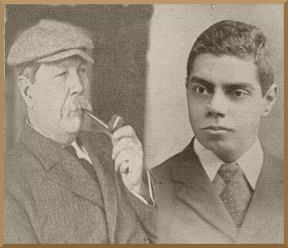
    Sometimes the truth is so strange and mad that you wish yourself dreaming when you awake. That is what Sir Arthur Conan Doyle must have realized when he got a letter from one George Edalgi. The story read springing from Doyle’s Holmesian stories. Britain’s beloved author, partly curious and mostly indignant at the case’s stupendousness, felt responsible for searching the truth as the creator of his alter ego, Sherlock Holmes. So Doyle met the client Edalgi face to face in a hotel in January 1907. 


    George Edalgi, the eldest son of Parsi-English vicar in the small mining village called Great Wyrley in England and former solicitor, served seven years of penitentiary servitude for the Great Wyrley killings of 1903 he claimed innocent. Edalgi’s case was an ipso facto example of miscarriage of justice on indubitably evident grounds of racially imbued personal vendettas against him and his family for who they were. The Edalgi family, despite Charlotte, the mother, and wife, being white, were regarded as heathen Indians encroaching upon the comfortable life of the English, or more precisely, the white privileges, which was the bastion of the eyes of the most villagers. Since the beginning of Reverend Edalgi’s vicarage, the family had been constant targets for racial slurs and hostility that perpetuated the peaceful family life. Even after George became a lawyer, the villagers continued to disrespect his presence, culminating in the notorious Great Wyrley killings of 1903 in which livestock, including horses and cows, were atrociously mutilated and left dead in horrible agony. As Wyrley was a closely-knit village of miners, the easy target for the blame goes for the Edalgis, especially for their eldest child George. He was a loner with distinctively ethnic physical features roving around alone in rumination on evenings. Any white person doing the same ritual would seem philosophical, sentimental, or poetic even, but it did not apply to George’s leisurely ceremony.


    Upon consulting George, who must have thought Doyle as the only person on the British Isles to listen to his truth, Sherlock Holmes’s writer has the hunch that the client could not possibly have committed such an abdominal crime for the following reasons. The trappings are so fitting to a conspiracy that they stink:

    1. George is noticeably near-sighted when reading. The animals’ mutilations indicate only good eyesight can perform such surgically precise cuts.
    2. The ethnic backgrounds of George and the cultural environment of the village are circumstantial evidence that the case is racially motivated from the beginning. If not, then the real culprit used George’s vulnerability to camouflage his crime.
    3. The police framed George for the killings, knowing the real culprit because of racialism led by the local aristocratic police chief GA Anson.

    Doyle’s real motivation for campaigning for George’s amnesty is curious speculation. Yet, it was the darkest night of the soul when Doyle answered the call for justice. He lost his wife Louise to tuberculosis while he was in love with Jean Leckie. Doyle took Louise’s death as a pang of his consciousness for seeing another woman at the time of her illness and regarded the letter from George as redemption of his soul to redirect the ship adrift after maelstrom. Whatever it might have been, Doyle was one of the most ardent campaigners for George’s pardoning to reinstate his legal career and restore his tainted honor. The fruition bears two tastes of the victory: the case led to the establishment of the Court of Criminal Appeal in 1907, and George was allowed to practice law again, which he did in London. However, the official government’s compensation for George’s time from the malice of injustice yielded nothing. Soon the case and the name George Edalgi became a thing of the past unless Arthur Conan Doyle chimes the bell with the forgotten.

    This story I read from a British history magazine makes me think of what an author should be. An author sees the corrupt humanity and ills that cause it, stands furious with the honest minds, and speaks to the corrupt minds amid the chaotic order of nature that goes against truths. Charlotte Bronte posited that an Author has a faithful allegiance to truth and nature. Bestselling or obscure, an Author represents humanity who can see what others oversee or trivialize in preference to magnitude in power and splendor in fame. In that light, Conan Doyle deserves special homage for his search for truth. That is why he is still a great author in posterity. 

  • Not impossible

    It is supposed to be about being a woman that binds all women regardless of race and ethnicity across a great divide of time. Forget all others and let us focus on the parallel circumstances and kindred experiences as women. But alas, that seems only a tale told by a romantic fool such as I am. If you think this is hyperbole, then I suggest you read the tweets and comments on the recent news that a black actress plays the role of Anne Boleyn, the second wife of Henry the Eighth and the mother of Elizabeth the First, in the upcoming British periodical drama, which went viral among the learned and the general.  In addition to the vehemently acrid narratives on the racial authenticity of Anne Boleyn – especially from fellow women-, the juxtaposition of the two women’s images, the actress Jodie Turner-Smith and the queen Anne Boleyn itself, belies the popular sentiment as though to mock the actress’s appearance in the fashion of the Tudor period by making parallels with the classical portraiture of the Anne of 1000 days.  It has produced vociferous tweets full of fury from people who regard the role as audacious cultural appropriation faithful to the PC ethos of the time. 

    Actress Turner-Smith’s playing the Tudor woman Anne Boleyn is indeed an innovational idea of breaking the typecasting based on the physical distinction for the roles thinkable and conventionally conceivable for the specific attributable characteristics of certain characters. Thus, non-whites playing the roles conceived for whites are seen as usurping the equilibrium of cultural heritage, upending the very foundation of national identity translated into racial identification, a sentiment prevalent even among the professed liberals anti-everything related to Trump, Republicans, and racism. The rejection of the race crossover representation on screen is supposedly due to the difficulty of following the story’s fluid narrative, unable to be absorbed in the story, not least because performers’ distinctive physical attributes mar the harmony of racial fluidity. But do we really?

    I have watched a few good dramas (British) in which the races of performers do not pin down them to the racially charged roles. To illustrate, in Benedict Cumberbatch’s Frankenstein, the wife of Victor Frankenstein was played by a black actress. Besides, his father, M. Frankenstein, is a black actor, a fine ensemble of excellent thespians whose energetic performance brought Mary Shelly’s original Gothic story to a theatrical feast to the eyes and the mind. While watching the drama, I was not distracted by the black performers’ appearances being the father and Genevan Victor Frankenstein’s wife. Instead, the powerfully emotional and assiduously methodological performances resurrected the textual characters to real humans, full of pathos with vigor and wonder. Also, British Asian actress Gemma Chan, who played the role of Elizabeth Hardwick in ‘Mary Queen of Scot’s,’ is known for her versatile roles transcending her racial background. Her recent performance as a cyborg with a touch of humanity named Anita in ‘Humans’ is as naturally harmonious as streams of a river flowing into a great ocean, not highlighting her physical differences.

    L-R Laura (Katherine Parkinson), and Mia (Gemma Chan) from ‘Humans’

    So why the fuss full of sound and fury of the people who cannot accept the black queen in the Tudor drama when they are boastful of the most advanced mind since the age of Enlightenment? In the wake of the global Black Lives Matter movements, people have become afraid of the wind of changes as a frightful tsunami to subvert social foundations, upending the social orders adverse to their belief systems. Although I don’t eschew their concerns for the wind of changes as I am also conservative, not conventional in belief, the current vehemently acrid opinions about the black woman becoming Anne Boleyn are tokens of latent racialized hostility surfaced by the deluged dissents pouring forth from the socially suppressed sentiments. Indeed, you can’t ignore the differences between the two Anne Boleyns. Still, there are more commonalities than the images seen through your optical sensory input: that they are both women of elegance and confidence who are not afraid of expressing what they can. The actress shows she can pull off the character with what she has, and the queen her the courage to confront the criticism for being the cause of subsequent religious turmoil that changed the face of Christendom in spades. Let not prejudice darken entertainment. 

  • Stephen King’s ‘Cat’s Eye’ (1985 Film) – Film Essay

    When I saw the movie poster of ‘Cat’s Eye’ (1985) on Amazon prime, I was at first hesitant to watch it because it showed the stereotypical association of the cat as a witch’s familiar or something to that nature of foregone horror repertoire. But perhaps I was more afraid of what I would see and reconcile to the stereotype that the cat could not be the dog. Despite all of the phantasmagorial display of the flights of thought, the cat of the poster’s uncanny resemblance to my seven-month-old tabby Toro won me over the resistance. I rented it for Saturday Afternoon Home Cinema with the expectation which was akin to curious Alice in Wonderland.  Be it ever magical or bewitching in a softly purring way, the result is one big wonder conflated with doses of warmth and mirth, whimsically betraying the genre classification as horror and the writer’s Craft of Gothic Fantasy like you never knew.
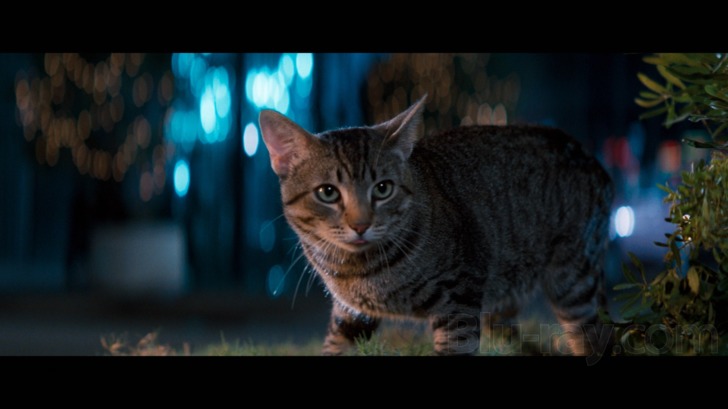
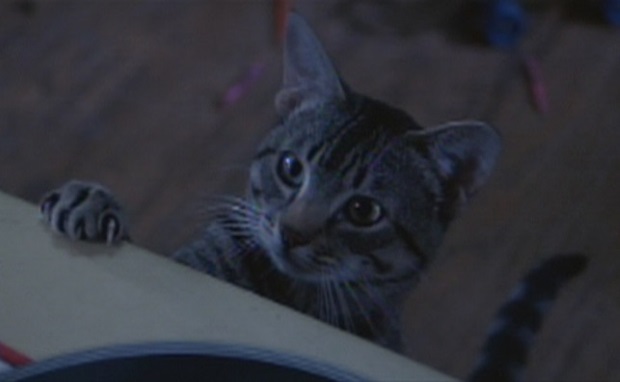


    ‘Cat’s Eye’ is a threefold anthology film based on Stephen King’s short stories, the first two from his “Night Shift.” King wrote the last story, especially for the movie. It tells a story of a traveling cat who comes upon three separate incidents during his search of the mission to save a life from danger, as annunciated by a spectral girl. In the first two stories, in which the cat takes an incidental role of witnessing human frailty and duality of evil and good, he goes by the names of “The Kitty” and “Sebastian,” showing the characters of the name doners per se. And who says that the cat is a harbinger of destruction as witch’s familiar? He is the judge of the character as if taking in the sun God Ra’s appearance, who was said to be meowing during what he was doing, representing the sun’s benefits for life on Earth in the Book of the Dead. Kitty and Sebastian do not directly intervene in the characters’ fates in the first two stories. It is the third story in which the cat takes charge of the narrative as the main actor with the name “General” on the stage.


    Stephen King is known for his excellent story-telling skills combined with supernatural and psychological elements of lonely and misunderstood characters with wounded hearts dealing with their enemies in extraordinary situations. In the tradition of Washington Irving, Nathaniel Hawthorne, and Ernest Hemingway, King’s narratives are always free from a baroque figure of speech with florid adjectives and complex sentences that flaunt the ego of an unapproachable writer on the mighty throne of English Literature. That is why King’s stories are attractive and widely acclaimed because they deal with the ordinary lives that are not ordinary when seen in close-up. That alchemical ingredient gleams through this movie, showing how our lives are vicariously interrelated, weaved by multiple strands of contemporary life that we all live now through the cat’s eye. Herodotus, the father of western narrative history, knew the connectedness of separate human lives and combined them into one vast story of humanity employing parataxis, individual narrative accounts’ integrity. King’s “Cat’s Eye” follows Herodotus’s narrative trail.

    The movie’s real star that brought the fiction into reality is undoubtedly the tabby, whose performance is so wonderfully natural and deeply impressive that it eclipses the human cast’s performance. And yet, there is no credit for the feline star without his real name and a shred of information. He is now long gone, but then I see my tabby Toro at home and wonder if the actor cat might have been his great-grandfather because of the striking physical resemblance and reflective demeanor. But then I think anyone who has a tabby may be delighted to feel that way because otherwise, King might not have written for this film charmingly, which is unusually lovely with high paws. 

    My Toro
  • Roger Ebert’s Cinema Paradiso

    A critic, according to Abraham Lincoln, has a right to criticize, but has a heart to help. Being a critic requires erudition drown upon a wealth of reading combined with a natural sagacity grown from enriched humanity wielded into an alchemy of words. A good critic with a poet’s heart guides the public with a lantern lighting the artist’s labyrinth in his world and helps us see the unseen in the far corner of a maze with a wealth of knowledge, sans arrogance of intelligence as Roger Ebert.

    Unlike his other contemporary peers, Ebert was liberal in views, conservative in beliefs, and fair in judgments, the commendable attributes shared by Samuel Johnson, a 17 century English social/cultural critic, essayist, and dictionarian. He wrote a public in his mind and showed no peremptory atmosphere typically attributable to influential critics showing off their mastery of language not accessible to all due to their expensive private high education. Once Ebert trenchantly criticized a specific movie for its crude violence, abject dystopian portrayal of reality, and shuddering absence of humanity. The director of the film remonstrated with him in a public letter that Ebert’s criticism ignored the fact of life, which is akin to earthly circles of hell. Ebert replied to the director that if that was how he looked at the world, then it should not be forced upon the audience’s minds, exerting his raw and one-dimensional creation of reality upon the sentiments and judgments of the audience. Ebert believed that the world was worth living because there’s hope among the odds to sparkle before our eyes with joy flitting at our sides. This belief should be an essence of Arts that gives off beauty, pleasing to our senses that grows into reason. That is the purpose of arts, to which film belongs.

    For this reason and my kindred perspectives on films in general, I miss Roger Ebert, although his writings are perennial. He didn’t grandstand with politically charged views on movies. He believed ‘Art is for Art’s Sake’ because films and books and paintings are not to be used as propagandas for a specific party ideology but to be appreciated for the minds’ food. W.H Auden said of his duty as a poet in society was to defend the use of language. I think Roger Ebert as a film critic in society was to defend the use of film as art to give life a shape.

  • Around the World in 72 Days

    The masts were solemnly lowered as the anchor was triumphantly docked in at a Hoboken harbor in New Jersey. Then there appeared a young woman with eyes of brilliance that glowed with joy and alacrity of departure from her race against the time. One hundred thirty-one years ago today was when one steely journalist named Nellie Bly broke the boundary of imagination and reality by completing her round-the-world race in 72 days at New Jersey. Bly’s phenomenal record was indeed transcendent of the realm of fictitious reality where Phileas Fogg, Jules Verne’s creation of gentleman adventurer, finished his globe-trotting in 80 days. The world record was not only a sensational media headline in her time but also a glowing manifestation of grit, resilience, and the power of the mind that Bly demonstrated on herself as a woman.

    Born Elizabeth Jane Cochran in 1864 in a small Pennsylvania mill town, Nellie Bly was her catchy nom de plume for the literary world, where she became successful. She was something of a frontier pioneer woman in investigative journalism and adventuring into unpathed areas of news reporting of the Dickensian world of crime and health bureaucracy, notably of the asylum at Blackwell’s Island in New York where she infiltrated as an undercover. However, a panoply of her achievements backfired when her pent-up yearning for holidays on a different shore agreed to a spectacular proposal by Joseph Pulitzer, the New York World owner, of the ingenious race-round-the world against the time. Bly’s decision to embark on the one-of-kind adventure was an apropos admixture of personal yearning to get away from the weight of reality and the publisher’s entrepreneurial aim to proliferate circulations.

    So there off, she embarked on the race with a trunk containing hygiene necessities, a few wardrobes, and some books to read, but without any weapon, not least because of her belief: “If you smile at the world, the world will smile at you.” She sailed across the Atlantic Ocean from New York, through Europe, the Arabian Sea, and the Far East, and then back across the Pacific to return to the homeland. During the voyage from Hong Kong to Japan, Bly heard that another contender emerged from the oceans’ edges: twenty-eight years old Elizabeth Bisland, the literary editor of Cosmopolitan, a rival publication of The New York World. Always achieving, always forwarding, Bly hastened to complete her race guarded by the goddess of fortune and blessed by Jules Verne, whom she met during the race in Europe and was able to trounce her rival journalist arriving five days earlier and Philias Fogg eight days.

    Bly was a supreme one of a kind, not most because she was a woman reporter who was some rarity. Instead, she was a person of indomitable determination, commendable work ethic, and insatiable curiosity, which were coveted attributes even to men of high aspiration. Bly demonstrated the Nietzschean will to power in her achievement by the epiphany of the noble soul to create capabilities to make the idea into an incredible and remarkable reality in the chapter of humankind’s history. Herodotus would have loved to record it.