Tag: essay

  • Teresa of Avila – book review

    Teresa of Avila: A Life from Beginning to End by Hourly History

    My rating: 4 of 5 stars

    Her epithet is deservedly illustrious, equal to her protean capacities for being multifarious: saint, mystic, and artist’s muse who was a curious kind of practical mystic with vision to match – that she would talk and hear God’s words from within and share them with the crowd in practice of charity, faith, and hope but never without heart. Protestant Elizabeth I of Great Britain might have envisioned the image of a Catholic nun of Spain a night before her Tilbury address that she had a woman’s body but had the bravery of a king. She is also the Doctor of the Church. She is Saint Teresa of Avila, the headstrong founder of the Carmelite Discalced and the woman of Lorenzo Bernini’s Ecstasy of Saint Teresa.


    My first encounter with this remarkable woman was not religious but academic; while researching women’s monasticism in the high medieval age during my college. Teresa saw many women who were too poor to pay dowry and didn’t want conjugal life found convents as shelters from social conventions without certain religious convictions. Consequently, convents became gossipy sonority houses populated with lackluster and jealous nuns backstabbing one another. The sad atmosphere of the convents used as a mere social institution propelled Teresa to establish the Carmelite Discalced – the Convent of Saint Joseph – with physical labor and disciplined monastic rules not without tenderness attended to individual nuns from all walks of life. She abolished land ownership and rent collections of and by nuns and instituted self-sufficiency of working without shoe but sandals, hence the name “Discalced.” The reformation within the Church was seismic but was a necessary medicinal receipt for the ailing monastic community.

    What is most brilliant about Teresa was to create the idea of “The Interior Castle,” a philosophy that the creator of the Universe dwells inside the castle of our souls. That God is from within us, rather than the beyond betokens the idea of personal God with whom we can communicate and thus become a literal mirror image of him for what’s best in ourselves. In fact, this revolutionary philosophy is also linked to Giordano Bruno’s “The Memory Palace,” from which the knowledge needs to be unlocked to bestow upon us the power and joy of the knowledge from within. Further, it is related to the idea of the Nine Muses, whose inspirations are invoked from our minds, not from the Olympus or oracles. All of the mentioned above shares one origin in the cognitive technique employed in Christian meditation developed from the essential reading and contemplating the Bible. But Teresa’s Interior Castle is a beautiful poetic license to enrich power that is never esoterically prideful but blissfully joyful. Where Bruno’s Memory Palace and the Artist’s Nine Muses are not all-inclusive, Teresa’s Interior Castle is universal with tender charity and faith even if it is not necessarily Christian God.

    Teresa of Avila was one brave and adventurous woman who was a prototype of feminist in the sense that she voiced out her mind to the patriarchal church authority in danger of being suspicious of heresy or witchcraft even in Catholic Spain, known for the Spanish Inquisition. But she was not a vociferous activist for abolishing the Church or would-be founder of an offshoot of the Church. Teresa was religious of the supreme kind. However, she never abandoned her femininity latticed with passion for helping a young priest in his spiritual crisis in war with physical temptation, tenderness for attending those in need of her consolation, and beauty that was both beautiful externally and internally. She shows us that a strong woman doesn’t need to shout out invective expletives or clamor for the reward for her damages in the name of womanhood when it is really for her sworn revenge. Aside from sectarian religious affiliations, Teresa of Avila deserves her reputation as a star in the Milky Way of the Great.


    View all my reviews

  • the world in my eyes

    On one fine day, a tiny Bushman in Southern Africa comes upon an empty coke bottle thrown from the cockpit of an airplane to desert sand. Thinking it is a gift from the gods, the man sets out a journey to return it to them. Along the journey, the Bushman encounters a pastiche of humanity in a kaleidoscope of the events he comes upon till he reaches an edge of a high cliff mysteriously enveloped by the rings of clouds and throws the bottle into the deep, exclaiming, “The Gods Must Be Crazy!” As I see now, I am in the chorus with him on the top of the cliff overlooking the world.

    Nevermore than now have I witnessed the epic moments of history that appear to be atavistic in terms of nature, motive, and consequence. A convenient way of relating the human tragedies to the scourge of gods and God will only put me on a par with Pangloss, the ever-positive pious philosopher who thinks all is God’s will for the best in the best of all possible worlds. The Taliban chanting the name of Allah in their will, Christians taking pride in being a new chosen people, and other zealots of any religion all have had recourse to their deities and used their belief systems as weapons of dominance over others. From the Coronavirus pandemic that forever changed our ways of life to the collapse of democratic Afghanistan by the Taliban and the devastating effects of Hurricane Ida in Louisiana, I see a phantasmagorical display of people’s faces in sorrow and distress in my mind’s theater.

    Following the news about the current situations of Afghanistan and its people links me to the Trojan War, which lasted about ten years with the Greek allied powers destroying Troy in the end. From the burning city of Troy comes Aeneas, a royal warrior who escapes the mayhem with his family, carrying his elderly father on his back, holding his little son’s hand besides. That image is always particularly heartfelt because of the Trojan hero’s humanness, unlike his more glamorous Greek victors. What happened in the past happens now and will always, such as the images of parents passing babies to soldiers across the sharp razor wire two young, Afghans falling from a plane climbing high in the sky, and the lifeless bodies of the young and the old, women and men strewn over the dusty ground outside the airport in the aftermath of suicide bombing.

    Back in the States, Hurricane Ida ravaged Louisiana, leaving thousands of people stranded, homeless without power (for about a month from now), and sufficient supplies of sanitation, clothing, and food. They lost everything, and nothing is what they have now. I cannot erase the image of a woman from a news interview who said the hurricane took everything from her family, then breaking into tears. Then there is news about an elderly man viciously attacked by an alligator in a flood presumed dead while his wife took a little boat to get help outside their flooded isolated community. Would the man have been swept away by the rapid stream of the flood? Would the alligator that had attacked the man have returned to him for more? Or would the man knowing or believing that was his end have let himself dissipated into the murky waters?

    Is this the same kind of significant feeling of epic moments I am experiencing as what George Orwell should have felt when witnessing the death of a Burmese condemned man on his way to the gallows, the carnage of WWII, and the tragedy of the Spanish Civil War? Orwell posited that one of the reasons he wrote was to record historical moments he was living with his own perspectives and feelings, not necessarily popular or compromising. My intention to write this essay is similar to Orwell’s but more with sheer egotism of getting the heartfelt sorrow off my chest and tears away from my eyes. But I am not so sure if that proves effective with the images still vivid in my mind.

  • Living in the historical moment – the Collapse of Kabul

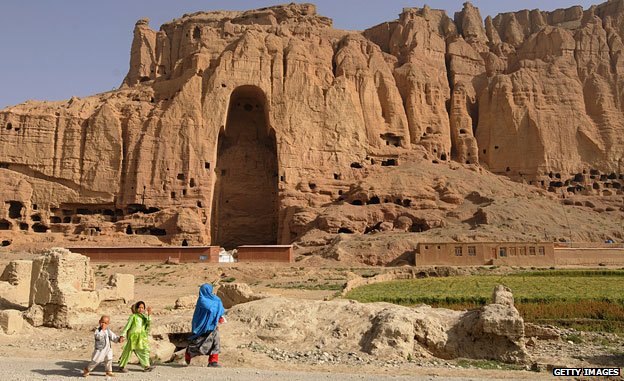
    The Buddhas of Bamiyan Valleys before the destruction by the Taliban

    One of the four reasons why George Orwell wrote was to record historical events in his time with a sense of writer’s responsibility to witness the moments for posterity. Imbued with the Orwellian spirit, but more egged on by the concern for the reign of terror, as a citizen of the world, I care to write about the current volatile situation in the Taliban regime of Afghanistan. Now I can see a danger of theocracy in which religion is a leviathan consistency master computer that controls people’s lives and psyches. Religion becomes an authoritarian Big Brother, the Demiurge that plays the absolute moral and ethical being in the mask of profoundly sacred deity leading to hatred of the physical world we live in. In this situation, the beauty of art intrinsic to our human essence is a decadent luxury, expendable to the bargain in the politics of heritage.

    The fate of Buddha before the killing

    The reinstatement of the Taliban government in present Afghanistan provokes the image of the great Buddha statues located in Bamyan, Afghanistan, until the Taliban obdurately and proudly destroyed in 2003 because the statues were idols opposite the teachings of Allah. The Taliban ignored pleas from the UN, including Islamic countries, that urged them to preserve the world’s treasure of civilization for humanity. The statues of Buddha represented Gandaha art, a wonderous syncretism of Hellenism of ancient Greek culture and Buddhism of Indus Valley civilization. It’s an exquisite synthesis of the West and the East, which tells us that people found a way to cross vast continents and seas and mingled to blossom into a new civilization even a millennium ago. Thanks to the one and only Macedonian Alexander the Great, emblematic of the wise and cultured political and military leader of all seasons, our human civilizations dispersed farther. They prospered further, as evidenced by the now begone great statues of Buddhas built by Bactrians, the descendants of soldiers in Alexander’s army who remained in modern-day Afghanistan by force and perforce and founded Hellenistic Bactria. By the way, there are still the descendants of the ancient Greek forefathers living in the area, even though their cultural expectation in the form of the statues of Buddhas have become mysterious wonders of the ancient world.

    The artifact of humanity is gone

    I am not condemning the religious whose faith is commensurate with their regard for others because a true believer of any faith is also a good person. The world’s representative religions do not promulgate violence and antagonism, at least not in their sacred texts per se. Still, misinterpretation or over-interpretation of the words have been the seeds of discord in history. I remember Mother Teresa of Calcutta once said that you don’t have to be a Christian to be a good person. If you are a Hindu, be a good Hindu, a Muslim, a good Muslim. I wish people of all faiths would take her words to heart. Then we could place the Republic of Heaven on earth.

  • On Philip Pullman’s Republic of Heaven

    A great writer of our time is Phillip Pullman in his moment of pleasure.

    Great writers are great because they know how to tell entertaining and enduring stories without religious and didactic overtones. Moreover, they are unafraid of speaking their minds without a qualm of conventional belief or sectarian principles. Yesterday, I read an essay called “The Republic of Heaven” from Demon Voices by Philip Pullman, a renowned British best-selling writer whose intelligently tongue in cheek styled narrative raises the dander of the Catholic Church for his acerbic view of the orthodox teaching. With my reading of Candide by Voltaire still fresh in mind, I find Pullman and his philosophy of free thought familiar with that of Voltaire and realize that true intellectuals think among people and live in social companions of public spirits for the good of humanity. Thus, here is my discursive impression of Pullman’s “The Republic of Heaven.”

    Pullman urges us to step aside from habit, a banal molded frame of life, to see the world outside the box, which will lead to an immense world of delight, the Republic of Heaven, for we are worthier than we think we know because we are such stuff made of wonder. Pullman’s heroine is Charlotte Bronte’s Jane Eyre, who has resisted against the magistrate of grim and gray puritanical ethos that decries an expression of feelings and emotions under religious disciplines. She remonstrates against the cold-hearted Mrs. Reed thus: “You think I have no feelings and that I can do without one bit of love or kindness, but I cannot live so.” Her demand for love stems from her need for it, which is an essential food for the soul that serves a purpose and pique for life. This sense of love so wanting in Jane cannot be quelled by false optimism that such distress is the best for the best of all possible world. On the contrary, it is an outcry of the soul desirous of warm and soft human touch that thrills the heart and invigorates the mind. Human beings cannot live by Reason alone, forced to utilize when the right of five senses is forfeited and bound by misconceived religious concepts and false moral measures.

    The founder of Logotherapy, the third Viennese school of psychotherapy, Viktor E. Frankl, witnessed a learned Jewish woman in his concentration camp killing herself despite daily recitation of wise sayings of the Torah supposedly being a consolation. Frankl affirms that we humans cannot live without the joy of life, that is, an appreciation of pleasure to the senses because otherwise, we will degenerate to a provisional being living day to day like prisoners of dreary dungeons in the darkness of hopelessness. Pullman agrees with Franklin the creative and experiential values of pleasure that keep a journey to live a purposeful and meaningful life.

    The creation and experience of art spark the joy of moments that can be synonymous with a meaning of happiness in life. Some find consolation in religion, but it does not give them whys to live for, nor kindness to show hows. Pullman’s concept of the Republic of Heaven comes to a head prominently when we are stranded in the chaos of existential vacuum, the kind of which the loyal and conscientious butler Stevens felt when he lost his faith in his idealized employer in Kazuo Ishiguro’s The Remains of the Day. However, if Stevens pursued his love for Miss Kenton and appreciated the pleasure of love he consciously denied, he would not have felt the sudden void in his life. The sense of delight in the physical world is the essence of the Republic of Heaven that he and we are conditioned to ignore. The point of Pullman’s philosophy is that we are too serious about the pleasure our physical world provides. And it’s not a chemical-induced euphoria for escape from the world but a new attitude toward our perspectives of it. Elenore Roosevelt also knew how to become a citizen of the Republic, thus: “Do one thing every day that scares you.” I should try that.

  • the world’s oldest musical instrument

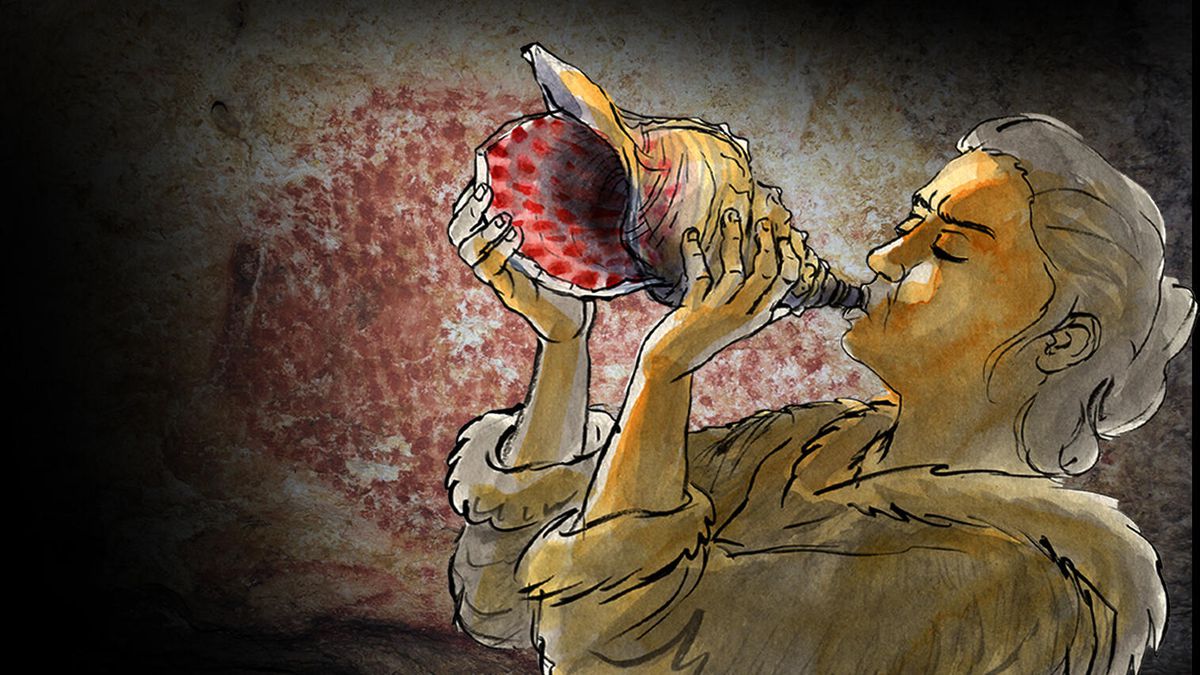
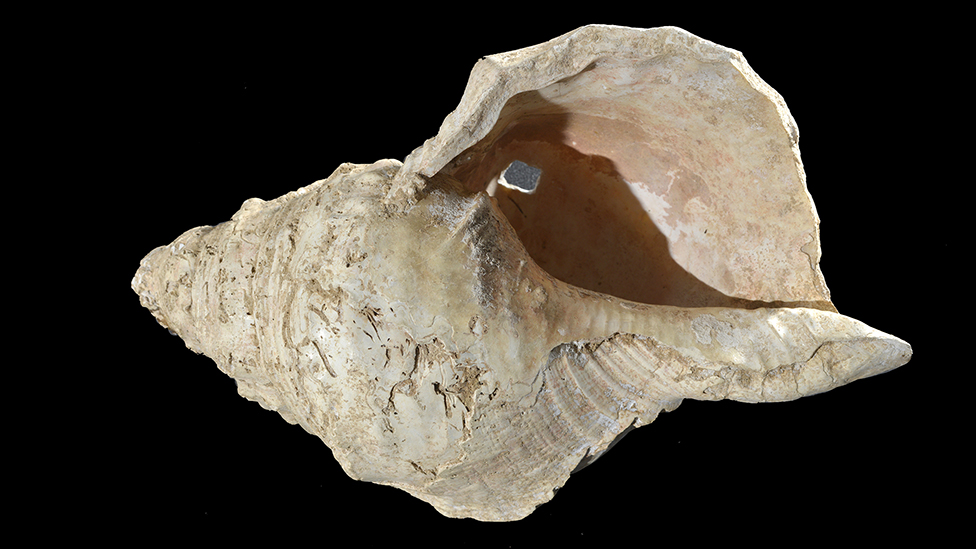
    A team of scholars has recently reexamined a conch horn discovered around the Marsoulas Cave in southern France, the famous cave art site, and concluded that the conch was more than just an ornamental artifact used for a drinking vessel or any other trivial purpose in Upper Paleolithic Age, aka Old Stone Age, dating from around 17,000 to 12,000 years ago. It was an age when Cro-Magnons, a Homo Sapiens nomadic tribe in western Europe, emerged as formidable hunter-gatherers of reindeers and horses from a new cold and gray prehistoric horizon in the dawn of the ages of man. They were Magdalenian, named after a rock shelter located in the French Pyrenees where the artifacts and human remains were discovered. They left the prehistoric legacy in the form of the Magdalenian conch.

    By using a carbon dating system and other state-of-art scientific apparatuses, the scholars posited that the conch horn was a musical instrument to enjoy the prehistoric Magdalenian symphony in the cave. The cause of reason for the hypothesis is a purposefully cut-off apex of the conch horn as if to adjust for blowing and making sounds. In fact, a modern music player tried playing it at its initial discovery and found out that the tunes were ranged close to the notes of C, C Sharp, and D, making it the oldest wind instrument of its kind to this date. Moreover, the conch patterns were similar to those appearing in the pictures of cave walls, which scholars deduced that they were significant in denoting cultural functions in the communes.

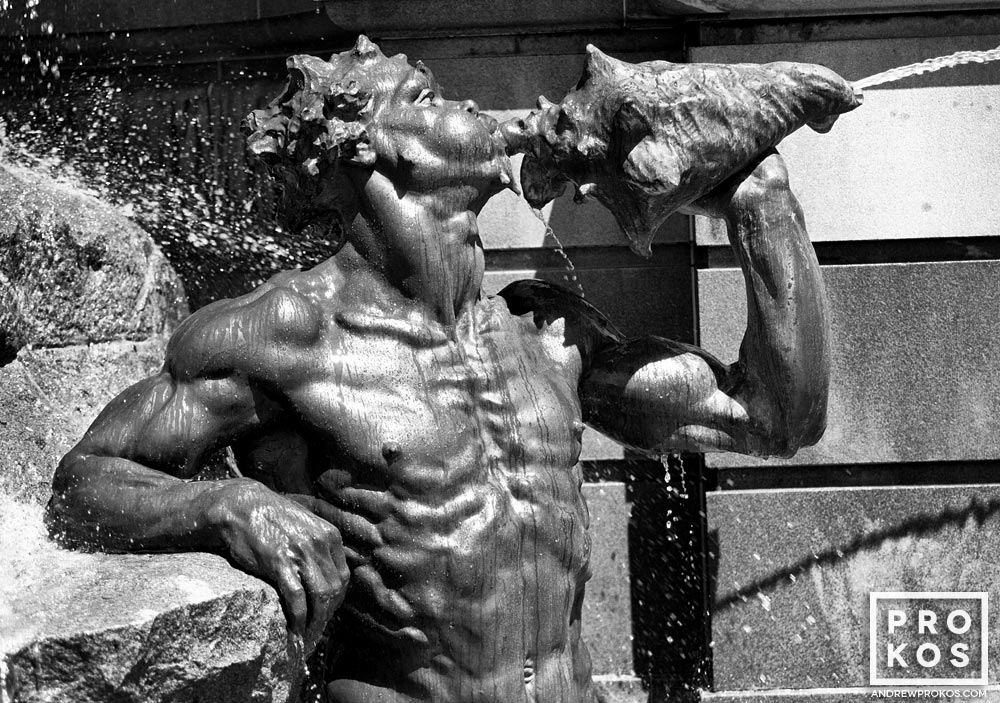
    However, although the connections between the cave art and the conch horn are intelligent hypotheses, the idea of the conch as a musical instrument doesn’t quite hold water to me. First of all, the image of a conch horn always conjures up the dystopian vision of the boys in William Golding’s Lord of the Flies. In the story, boys blow the conch whenever they convoke meetings, which usually spring from sinister motives resulting in gloomy consequences. Also, the god of sea Poseidon blows a conch when he heralds his formidable divine presence, shaking the waves of the oceans. The use of the conch was to be more of notification of alarm for political or social events, not of a musical instrument for cultural appreciation. Besides, as aforesaid, a conch is often associated with the sea, unfittingly matched with hunter-gatherers in the mountain or sea-locked regions. Although scholars pointed out that the Magdalenian could travel to the shore and brought a conch as a souvenir, using it as a pastime wind instrument is a bit of stretch, a romantic imagination about the cave people differentiated from ruthless, animalistic, highly advanced kinds of ape.

    If the scholars’ educated guess becomes a theory, then the Magdalenian conch horn will be entitled to the first place in the history of musical instruments. But considering the geographical reason and natural tendency related to a conch shell drawn upon historical and literary contexts, the Magdalenian conch shell must have been either a curiously collected souvenir from a trip to the shore or a valuable instrument to call upon meetings in the communes. Also, it could have been a convenient alarm to indicate a sight of animals for a hunt or protection. For melodious variations pleasing even to uncultured ears, the sounds of strings made from the leftovers of hunted animals hung on pieces of wood would be perfect for their hunter-gatherer entertainment.

  • Toro is back

    St. Frances de Sales’s advice, “Have patience with all things but first with yourself.” is no more so than with the three weeks’ heartbreaking ordeal to win back my cat Toro’s trust in me. His traumatic visit to the veterinarian now seems to dissipate across the feline Elysium slowly, or so I want to think. He is not hiding under the bed in my presence, becoming a sweet writing company on my desk once more.

    I have recently watched a YouTube that goes viral about an unlikely friendship between a stray cat and a young woman, which makes me think of my relationship with Toro and what it means to build trust between two lives. The woman found a stray tabby cat around her house and began to acquaint him with food. She named him “Tiger,” not least due to his perspicacious tiger stripes and adorable feistiness, giving him a distinct personality and charms that were all the more endearing to the sensitive woman who was also in need of company in her solitude.

    Thenceforth, they became complementary to each other for consolation, security, and most of all, love. Tiger is still his feisty self, and the woman is still trying to adjust herself to his whims and caprice. Still, they feel comfortable in their presence and love. The tears welled in the windows of her soul when she said that building trust between two took time and patience. You can’t make someone love you arbitrarily by force. You don’t need a love spell or magic potion to enslave someone into your desire of possessing the body and mind, as the ancient Greeks and Romans used to. Without Psyche, Eros would not/could not have culminated in perfecting the art of love as a primordial god of Love.

    Toro is in some way like Tiger: his name means a little tiger in Japanese with his distinctive stripes, and M signature proudly marked on his little forehead. Although not as feisty as Tiger, Toro has a remarkable personality of adventurousness, curiosity, playfulness, and resilience, all affectionately wrapped in his good nature. But I don’t take for granted that wonderful Toro is my cat, and therefore, I deserve his trust and love. Animals, especially pets, also have hearts that pump up the blood and feel the feelings. I regard them as friends, companions to enrich our existential human lives with a touch of sentimentality that we hardly express when we are among our species in fear of being regarded as a sign of weakness. And I am always thrilled to feel his little heart at my feet as a friend.