Tag: essay

  • Charles Dickens wanted to…

    untitled
    Letters revealing Dickens’ attempt to accuse his wife of being mentally unstable (from Google)

    All would have been well if the truth had remained buried under the dusty files of forgotten letters from the past in the bottom drawer of History.  Alas, it happened – a recent revelation of the letters delineating Charles Dickens, a literary great whom I admired, concocting a plot to send his sane wife to a mental institution in order that he and his 18-year old paramour could be forever together.   

    How and why these forgotten letters have been brought into light out of the blue are clandestine from my reading of the article about such letters from the recent issue of a history magazine. Besides, the possession of the letters is curiously divided between the Atlantic Ocean because some of the letters are held by Harvard University in the U.S., while the others by the University of York in the U.K. The article does not provide the reader with more detailed information as to whys and wherefores of such divisional custodianship of the letters, not to mention the background of such uncovering of the provocative textual artifact that would certainly do no good on Dickens in any way. Methinks it would be a possibility that a descendant of the estranged wife Catherine Hogarth or even of their eldest child might have staged this rather dramatic publicity of the letters revealing the other side of the great writer out of indignation as comeuppance for his sins of adultery and perjury, which in a twist of whimsical irony befits the ethos of #MeToo Movement.

    CatherineDickens200
    Mrs. Catherine Dickens

    The content of one such letter written by a neighbor of Catherine Hogarth details the following: (1) Dickens at the age of 45 fell madly in love with 18-year old actress named Ellen Ternan: (2) it was the death-knell of the marriage, pace Dickens’ complaints about his legal wife; (3) his wife confronted him when a bracelet meant for the young actress providentially was delivered to her, after which she separated from him by moving to a house in Kent with their eldest child. The rest of the children were in the care of their aunt, while Dickens continued his relationship with the actress until his death; and (4) after the separation, Dickens tried to seek for divorce from the court by trying to prove that his wife was mentally unstable and that she would be sent to an asylum. However, the attempt to seek such remedy was foiled by the absence of proof of her insanity.

    The whole scandalous charade of this great literary figure reminds me of the axiom by Ralph Waldo Emerson that the admiration of great works of geniuses should not become the worship of idols. That is, one must disembarrass the idea of a story from the person of the author, who is only a fallible, whimsical, temperamental human. The works of writers, I believe, are a separate reality based upon their epistemological knowledge magically alloyed in imaginativeness, ideals, and dreams in the peculiar alchemy of literature that deserves of distinguished approbation and recognition. In this regard, my disappointment with Dickens as a person should be kept separate from my admiration of the humane characters he created and the benevolent stories he entertained. Sometimes, it’s better not to know much about whom you like lest his follies and faults should dishearten you against your wishes and imaginations. For these reasons, I am more in sorrow than in anger upon reading this troubling article about Dickens, one of my all-time favorite writers, which leads me to the lamentation of Et tu, Mr. Dickens?

  • donut queen – review


    Place: Donut Queen

    Address: 2650 Ventura Blvd, Ste 105, Camarillo, CA 93010

    The first thing I have noticed since I came to Southern California is the absence of many common food franchises that have become something of a suburban landscape on the East Coast. Maybe I haven’t looked around much yet, but even such paucity of voluntary or involuntary excursion will not yield to a sudden discovery of Franchised Food Emporium. A scarcity of food franchises notwithstanding, these Southern Californians seem to be blessed with a wealth of local food proprietorial to regional characteristics, such as demographics as well as fauna and flora.

    95465d3821ae91541b407bc7276ae7f0That said, a place like Donut Queen is a gem for anyone who likes that bona fide classic tastes of homemade donuts with a cool view of the Wide Wild West. The interior of the store is not exactly up to the standards of the Michelin Star Admirers, but it’s cozy and clean enough to make a customer feel welcome. But the most of all, their selection of donuts is quite pleasing to the eye and delicious to the taste buds to make anyone sworn off donuts for dieting break the vow and become a lover of it. Surely, nothing in excess as written on the terrace of Delphi  should become a motto to stop anyone from inordinate indulgence, but the donuts at Donut Queen is one Witchcraft. Plus, the proprietorial ice coffee is a hidden gem of Donut Queen that tempts you to come back for it again and again.
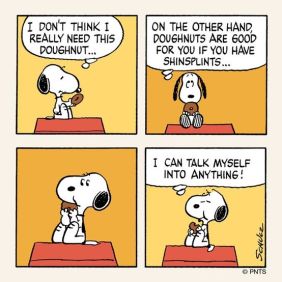
    It is said that nominal determinism really matters, and I guess it matters when it comes to a place like this Donut Queen. 

    Author’s Note: I have neither sponsorship nor affiliation with Donut Queen. My writing of this essay is unknown to the proprietress of the store. It comes from my appreciation of what I like about the place. 

    4a2680b1f7fb41cbacd7e5fa055445d9

  • coffee sonata

    52f3d1a8303a4

    There’s nothing like a cup of freshly brewed hot black coffee in the morning to start a day. So much so that the Father of Music Johann Sebastian Bach even wrote “The Coffee Cantata” and announced: “Without a cup of hot coffee in the morning, I am like a roast goat.” It also reveals us the following historicity: (1) coffee had already established itself as a popular refreshing beverage in domestic as well as social firmament; and (2) the standard of taste as regards the principle of sentiment is universal in humankind beyond a divide of times and places. What a sense of connectivity to those living in the days of yore it is by the love of coffee!

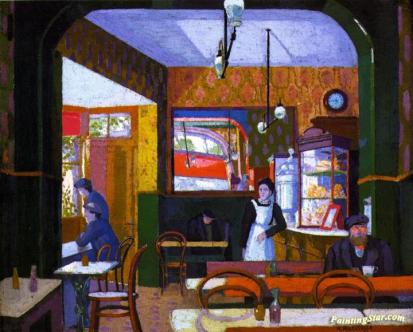
    The ubiquitous presence of Starbucks all over the world may be an cultural artifact of the 21st Century, signifying sleek urbaneness sometimes translated as being “uber cool,” belonging to our own time only. That is to say, anything out of different times is regarded as anachronistic, crude, or primitive if the divide of time gets bigger, whereas the counts of years on an evolutionary scale amounts to a microsecond on a twenty-four hour clock. Such example is illustrated in the diary of Samuel Pepys, an interesting English diarist who recorded the details of the 17th century everyday London life with wits and gusto that strikes the chords with the modern readers. Pepys commented on how he was being hooked on coffee until the inordinate consumption of the liquid caffeine made him feel sick. In fact, coffee shops are not the advent of our Internet Age. The first coffee shop in London was established in Oxford in 1652 with the proliferation of subsequent coffee houses where men of education and literary proclivities discussed business and social affairs. Beyond the British Isles into the grand continent of Europe across the Channel, coffee houses were burgeoning with artistic scenes in which musicians, writers, and painters commandeered their most favorite seats to proclaim them as their elbow rooms.

    Pitchforked forward in time, I am back at my regular Starbucks store, sitting at my favorite table with pen to paper writing this essay. I look around and see people in modern attire but doing essentially same as their ancestors in a coffee house in days of yore: conversing, reading, and writing with coffee that seem to relax the constraints of everyday life in their respite. The whole scene brings me back to universal truth that something never changes, and that is what continues the humankind – through the love of coffee, as it were.

    저장

  • music of life

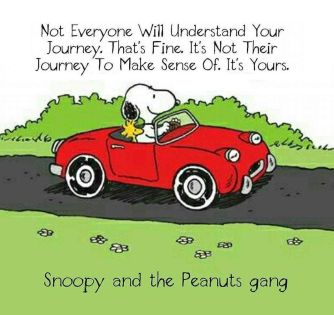
    1dc50954796a2e0491b7dc93d333effdPaul McCartney sings, “Long and Winding Road,” whereas Rod Stewart utters, “I am sailing.” Then Tom Cochrane brings life back to land by proclaiming “Life is a highway.” Whatever metaphor they confer upon life, one thing is certain that it has a meaning, a sense of sui generis purpose, which leads all humankind to the glory of Enlightenment. Methinks life is a very long marathon race toward the grande finale after sailing through the vicissitudes of human conditions in the course of solipsistic running. That’s why all life is priceless and worth the living. How fast I will run and what route I will take is totally contingent upon my sui juris decision. Frank Sinatra knew it as in My Way, and the Animals shout out, “It’s My Life.” Snoopy, as wisecracking as ever, sums it all of the above.

    Author’s Note: I came upon this felicitous Snoopy cartoon on the last train home. It gave me a fillip to this short vignette. You know what? I feel much better now. 🙂

  • a whim for writing

    One of my all-time favorite writers Paul Johnson, author of Intellectuals and Creators, pronounced that there’s nothing like a shot of gusto for creativity. This means that creativity value directly relates to our meaning of life, freedom of will, and will to meaning. It is a sovereign remedy for the vertiginous existential malady, and I believe it. Doing any kind of creative activity, such as writing, drawing, photographing, and filming no matter how skilled or novice you may be, puts you away from the constraints of daily life and takes you away from the humdrum existence. This is not grandiose hokum because subjects of creation can be just about anything.  Jane Austen proudly proclaimed, “Follies and nonsense, whims and inconsistencies do divert me.” How similar we are! That is why I made this very short video for a lark on the last train to home after work this evening. It is not a tour de force, but still it is my brainchild. That is why I cherish Kurt Vonnegut’s one-of-kind advice to all: “To practice any form of art, however well or badly, is to grow your soul. So just do it.” Sounds familiar? Then Think Nike. Yes. Just Do It.

    Caveat emptor: Readers’ whimsical and capricious opinions on my writings in the form of instant likes that disappear into the cyber ether are an aberration of civility and respect. It is a cruel form of mockery and indignity. Nietzsche might be right in defining that “Man is the cruelest animal.”


  • disgrace of street preacher

    0d380ebe-dcf9-11e8-9f04-38d397e6661cAll enthusiastic street preachers are alike; each passionate street preacher is passionate in his own fashion. One thing is certain that their fundamental guidance of street evangelization is simple and basic: that delivering the words of God incarnate in the bible is their sacred duty and responsible for the love of God. In fact, their authentic religious belief and conviction come straightly from the tenets of Reformation that advocated faith on the basis of the Scriptures alone. That said, Zealots they may be, but street preachers are not fire starters of civil disobedience or religious munchausens, forcing their religious convictions on passers-by. At least that had been a mores most civilized societies kept until a certain street preacher was arrested at a train station in London, England a month ago.

    His name is Oluwole Ilesanmi, 64-year old peripatetic preacher who emigrated from Nigeria to England 9 years ago. Ilesanmi has travelled all over Britain, preaching what he believes at train stations where crowds of strangers ebb and flow without really paying attention to Ilesanmi and his words of God because well, for the reason that we commonly have when we come upon the likes of Ilesanmi. But on that unlucky day, Ilesanmi was abruptly arrested by the police because he was being “racist”. The beginning of his public disgrace was Ilesanmi’s disobliging reference to Islam in which he called Allah “idol”. What could have/should have been just an ordinary preaching day otherwise turned out to be his day on the pillory of public humiliation, so to speak,  because Ilesanmi was handcuffed in front of the crowd of people who suddenly paid attention to the preacher and then rudely bundled into a police car. Furthermore, the police then “de-arrested” him by taking him to a remote area five miles away on the outskirts of London without money into the bargain! The poor preacher was finally able to return home thanks to a generosity of a kindly elderly man who paid for his bus ticket to home. It was indeed a humiliating and disheartening experience for the 64-year old street preacher.

    SnoopyimageThe police later said that Ilesanmi’s inappropriate remarks on Islam, such as “Idol” and “aberration,” were racial enough to apprehend the preacher. But it still does not seem to constitute any valid grounds of the mocking arrest of the preacher because he wasn’t clearly brandishing any weapon or even a banner in public to shout out racial slurs that would really make any passer-by of the target racial category feel threatened.  In other words, the police should intervene if someone is willfully intent upon harassing people with abusive words and physical intimidation. And Ilesanmi certainly wasn’t. Was he?

    The over-reaction of the police seems buffoonish as if it were an episode of Monty Python. If the police intended to exemplify the Ilesanmi’s unfortunate episode for a textbook case of religious intolerance in public, then they were mistaken because it was exactly contrary to democracy, sovereignty of individuals, by which people have right to express what they think about and believe in unless they use willfully physical and mental violence/intimidation with malice to pontificate about it.  What’s more, it was truly shameful of the police to cavil at what the solitary elderly preacher was preaching and poke on him when his presence was part of everyday city landscape. And if by the reason of sheer annoyance or even carbuncles that the police showcased Ilesanmi’s public indignity, then it was their misuse of power and authority because Ilesanmi wasn’t forcing his belief on anyone because his street preaching was always subject to casual dismissal at one’s discretion by the dint of robotic inattention to anything religious anyway. For these reasons, I feel strongly that the police owe the street preacher an apology for the indignities he had to suffer for the day. 

    Author’s Note: This essay is based upon my reading of an article “Arrest of Christian Preacher” by Tom Goodenough of the latest issue of “The Spectators” last night. What made me indignant about this article was that the police appeared to violate the old preacher’s dignity as well as his religious faith. Why did the police have to drop him off in the middle of nowhere without money? Did they think it as some sort of joke? It always seems to me that the authority and the powers- that- be like to hector the meek because they can’t touch or mess with the strong. So animalistic, that is. It shows that humans, despite the  intelligence and spirituality ascribed thereto, are not much different from the  other species in the Animal Kingdom. 

    untitled