Tag: fine arts

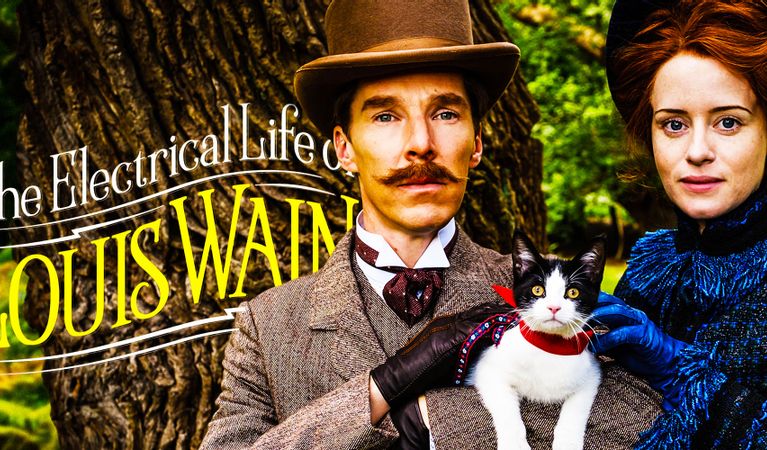
  • The Electrical Life of Louis Wain according to Benedict Cumberbatch

    The Electrical Life of Louis Wain is joy and sadness, lightheartedness and seriousness, just like his paintings. It’s about love and art in the oddly beautiful vagaries of what it means to be a human (in the company of cats). Wain’s cats graced the epochs before Walt Disney’s Mickey Mouse (and Minnie) and His Gangs) debuted. But Wain was not Disney, and would he have even wished it? Perhaps, that is why Benedict Cumberbatch decided to give Wain a second chance to shine his name once more on earth in the magic of moving pictures that resurrected him from the lapse of time through the chapters of his story in this superbly narrative of the artist.

    Louise Wain was a brilliant artist, a contemporary of French impressionist artists, such as Monet, Pissarro, Degas, and Renoir, and Dutch Vincent Van Gogh, all of whom were united in the brotherhood of independent spirits and resilient creativity. Yet Wain’s was a different sort, more existentially debauched in the provisional circulation of works, in the crossroads of the reality of being the only male figure in the parentless family led by the dominant matriarchal sister and of the ideal of ensconcing himself in the solitary niche. All artists are by nature sensitive, but Wain was extraordinarily sensitive, and the world was too much for someone like him to deal with. His wife, the light of his life, was the only happiness and love he felt and shared, but jealous God took her away from him and left him in the lurch of the familial duties and responsibilities in the somber household. This house eventually drove him and his younger sister into the oblivion of reason to the end. Yet, notwithstanding the personal tragedy, Wain’s unique visual world articulated with the sonar modulation of impulse that sparked his creative spirit yearning to soar up to the boundless ether on a par with constellations with stars.

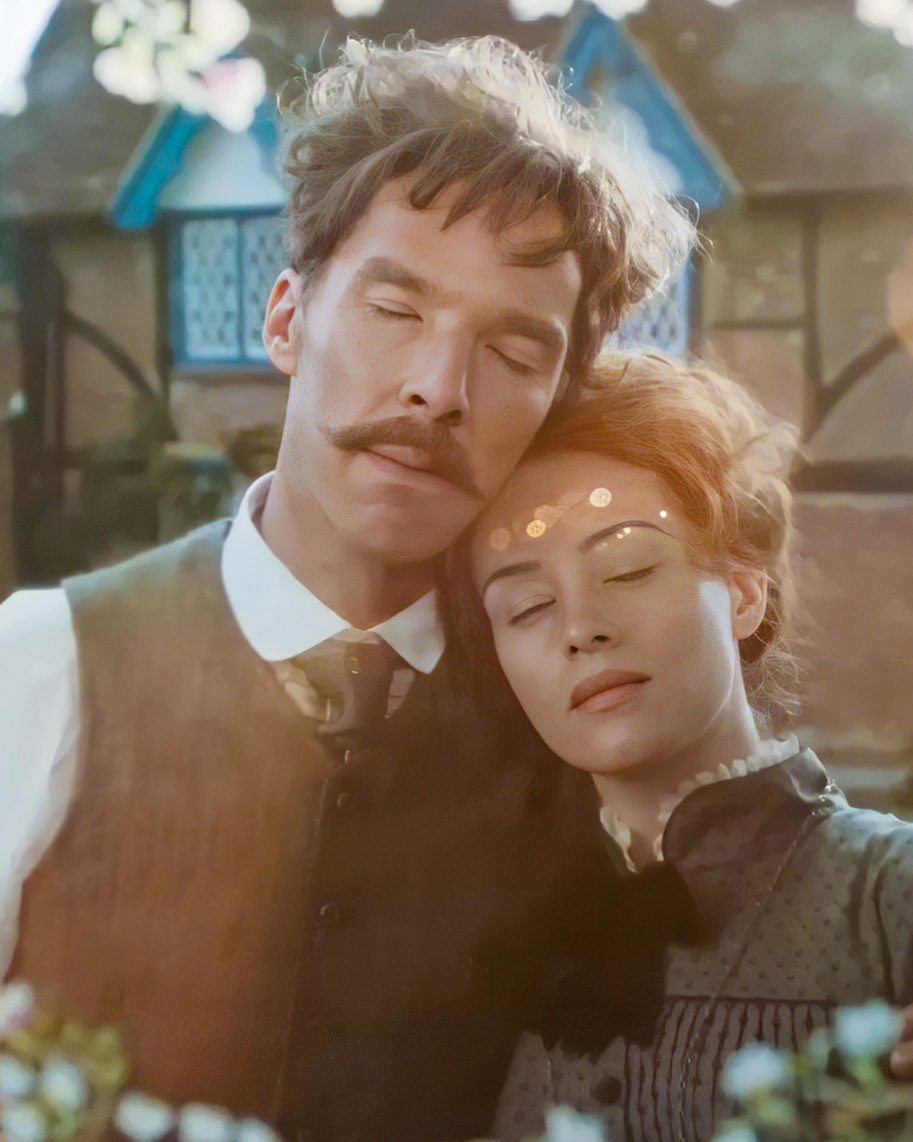
    Wain’s wife encouraged and supported him because she knew of his genius despite other people’s ignorance.

    Benedict Cumberbatch, now universally recognized as the Sherlock thanks to the phenomenally successful BBC series, proved to be a superb character actor who became Louis Wain rather than merely playing the artist’s part. Ancient Greeks and Romans regarded actors as an equivalent of a spiritual medium whose body could be channeled into another spirit for a willful possession during a mysterious rite of sacred ceremony. If that was the case, as it were, that was how I felt watching Cumberbatch being Wain as if he had summoned the soul of the dead artist from the beyond and asked him how the artist’s life would be told. His naturally mild, gentle deliverance of character nuanced the inner fear, confusion, and frustration that Wain must have felt in dealing with the realities of everyday life as a reluctant and unlikely head of household. Yet, his passionate eyes and particular diction dictate that Wain was an artist of force, a man not of an age but for all seasons.

  • ‘The Entity (1982)’ – film essay


    “The Entity (1982)” is an American film based on the real-life event of Dorothy Bither, who was habitually raped by evil spirits that followed her everywhere. In the movie, Dorothy is Carla Moran, a young, intelligent single mother of three whose life becomes a Circle of Hell incarnate on earth in which she becomes a sexual slave of the unseen unclean spirits. Despite the physical signs of attacks, her well-meaning but over-zealous psychiatrist Dr. Phill Sneiderman believes that her unhappy childhood and different anfractuous life experience generate the mind’s play. He then forces his belief into her with a superior sense of academic and professional pride, even if her children have witnessed supernatural powers are attacking their mother. Carla catches at straws in the form of parapsychology to set herself free from the demonic forces, even if the help is not entirely altruistic and may turn on a full circle of violation of her body, her heart, and her spirit.


    The film agrees to the truth on the supernatural essence of rape by portraying Carla as a woman of diligence, intelligence, and heart who goes to a secretarial school at night for a better future. Her love and affection for children are filled with kisses and smiles, even to her head-strong adolescent son. Her childhood memories and paths she treaded upon thus far might have been labyrinthine, but just because you have past wounds doesn’t mean you are stigmatized for the malady of the heart forever. Dr. Sneiderman’s attitude toward his patient Carla is reminiscent of the late Victorian and early 20th-century institutionalization of women with checkered lives, the victims of violence, into crudely primitive asylums where any sane person was sure to lose a reason before long. However, Carla rejects her telltale testimony to the supernatural terror to be nothing but a tale told by a lunatic woman, full of sound and fury that means nothing.


    ‘The Entity’ is a classic movie of supernatural phenomena in the ordinary surrounding of Los Angeles, CA. What makes this film classic in its pure literary sense is the absence of gory scenes accompanied by shrill screams of overtly acted characters who know what will happen to them. Nudity is present in the film not as gratuitous scenes of repertories of box-office horror movies but as realistic segments of what and how it happened all. I initially avoided watching this film by its thematic subject of rape and its naturally subsequent psychological narrative analysis as someone craving for a true supernatural story without frequent staccatos of blood splashes and big sharp tooth. It was a low hope for high heaven when the film was impressively indelible in my mind after I watched it last Saturday. If you prefer watching 70s and early 80s supernatural films over slash movies after the golden periods of the genre, ‘The Entity’ will entertain your sentiment and satisfy reason. And remember this: “There are more things in heaven and earth than are dreamt of in your philosophy.” Don’t forget that.

  • ‘Moonlighting’, (1982) – directed by Jersy Skolimowski – film review

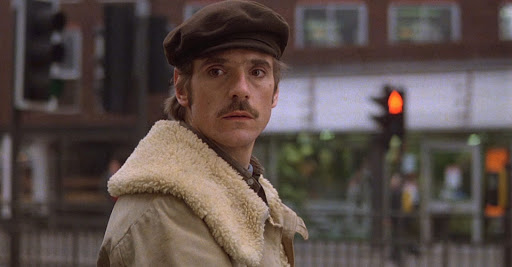
    The history of immigrants equals to the history of humankind. It has always been and will be part of the civilization of the world: Adam and Eve’s expulsion from the Garden of Eden, the Trojans’ migration into modern-day Italy, the Israelites’ exodus from Egypt, the Norman conquest of England, peoples of all continents landing on America, and many others still counting to this date. It is innately natural for man to move to a place for different reasons, whether they result from cohesion, or volition, or a little bit of both. Jersy Skolimowski’s “Moonlighting” (1982), a British film about a polish electrician named Nowak leading a team working illegally in Lonon, focuses on his daily moments of existential vertigo between the winds of the world and provisional needs of livelihood.


    Nowak is an intelligent laborer who accepts the offer from a Polish government official to renovate his house in London with lucrative promise, plus a taste of glamourous capitalism. Yet at the first taste of cold London and cold Londoner that makes his presence miserably pathetic and casually ignorable, Nowak decides to survive in a game of hide-and-seek as best as he can. The work is his only painkiller that rids anxiety and worries off his chest, but the effect is only temporary and minimal. As Rome is a great city when you have money, so is London, and Nowak and his team live their provisional days in hiding and stalking under the suspicion of their not-so-gentlemanly and kindly English neighbors. They regard the Polish workers as no more different than poor foreigners unsuitable for their daily English landscapes. Nowak chooses to be a Hector of his own with his crew of non-speaking polish in a vertigo of existential quandy.


    Setting in the early 1980s when Poland was going through her first labor pain of democracy with Lech Wałęsa leading Solidarity Movement, the film’s realistic portrayal of illegal workers’ dailiness is visually palatable. The narrative of Nowak transcends to a ballad of Man anxiously adhering to a sense of purpose that gives him a reason to live in a harsh land surrounded by strangers who don’t like them. It’s a film about how changes in the world affect an individual’s daily life based on a symbolic interactionist theory. The present and future of Nowak and his team cannot escape from the winds of changes crossing their faces, which change the compass of the wheel of fortune.

    The film is a hidden gem, starring the veteran English actor Jeremy Irons, whose excellent performance of Nowak deserves special recognition from the Polish audience. Irons is so convincingly Polish in appearance, manners, and speech that the non-speaking performance of the other Polish actors as his team of laborers serves to make his presence more outstandingly Polish. Also, the director being Polish himself contributes to the genuineness of the story’s narrative, which guards against patronizingly officious outsider’s perspectives of the people he wants to tell about because it is also his story. For these reasons, Moonlighting is a bracing film that makes you think whether existentialism in which experience proceeds essence is right.

  • ‘The Molly Maguires’ (1970) – film essay

    e867caa5-600f-4a39-8db8-3c6906605de3_1.383b15b9c449c0199f453c0ee7fa40e2

    There are two kinds of morality: one is speculative morality by which your thinking directs you to find the truth about the way things are. The other is practical morality, in which your eyes dictate you to find the applicability of your moral precepts to real-life situations. Since your ultimate end is happiness in life, you choose what deems to be reasonably advantageous means to achieve the purpose. Now here is where your moral dilemma arises from a crossroad of modus vivendi and modus operandi often directive of ego, the appetite of the sense, in the sovereign of free will beyond the boundary of Natural Law.

    the-molly-maguires-original-movie-still-n02-8x10-in-1970-martin-ritt-sean-connery

    The question of conditional morality in the face of life’s challenges is the thematic context of “The Molly Maguires” (1970), an American film directed by Martin Ritt. It is a drama of the secret society of Irish immigrant mineworkers led by Jack Kehoe (played by Sean Connery) battling to better conditions in the Irish immigrant community of coal miners in the 1870’s Pennsylvania. The story begins when Pinkerton Detective James McParlan (played by Richard Harris), employed to infiltrate the organization, arrives at the poverty-stricken mining village. McParlan himself is also an Irish immigrant from Ulster and sees his fellow compatriots slaving away at the worst working conditions in the gate of a subterranean pit of anthracite with the danger of death always lurking in all wither. The proverb of “Blood is thicker than water” may have smeared in his tortured muscles because McParlan can not be immune from the anger and vengeance that binds the Mollies together as he shares his sweats and laughs with them. The Mollies sabotage the means of production in their ingeniously effective ways and even kill the members of the powers that be if necessary, to deliver their resentment to the oppressors of failed wishes and frustrated dreams in the necessity of meager livelihood. The biblical message of “Refrain from anger, turn from wrath. Do not fret” rings hollow in the selfishness of leisured life that has no regard for those whose fortune’s malice overthrows their states.

    MOLLYMAGUIRESLC1

    The moral dilemma in which McParlan finds himself results from a clash of his id, speculative intellect, and ego, practical intellect, that binds him in the natural inclination to happiness, which he intends to obtain from a love of his landlady and prestige of social standing. Besides, as the fellowship of the Mollies enters a realm of his newfound fraternity of brotherhood, McParlan forces himself to subject natural human feelings to a rationalization of thinking under the sway of the reason for success. He sets his virtue by compromising moral precepts to realistic means of life in choosing what deems to be the most practical way of achieving his ultimate ends via a chariot of ambition without the charioteer.

    images

    This film does not turn out to be a grand social movie that its synopsis seems to present but a compelling drama of human nature and actions in contemplation of what constitutes moral actions. This film is not only about the Irish immigrant coal miners but also about those whose precious dreams and wishes are hard to materialize in the harsh reality of life. You will see that values are variable, and that virtue is a settled way of performing what you think right. Perhaps, Oscar Wile is right in saying, “Morality, like art, means drawing a line someplace.” Nevertheless, one thing is sure that you cannot do an immoral act for moral reasons, even if every human action is just as such right, come what may.

    download

  • About ‘Ben-Hur’ (1959)

    img_1989

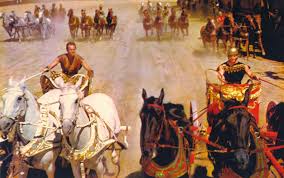
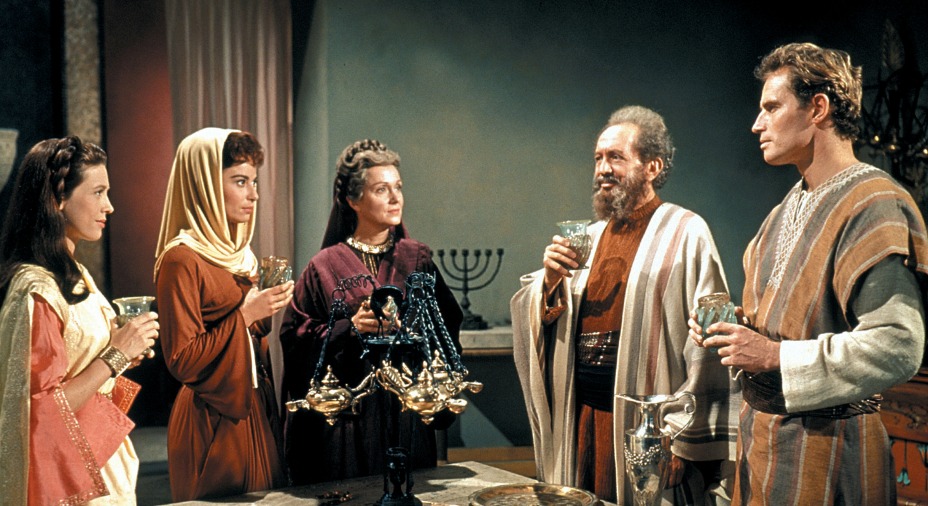
    A great film with a sincere message about life and human nature transcends a divide of time and a boundary of the territory. I believe that a good movie has a lasting sensory impact on the viewer and cultivates the mind with a visual efficacy of precipitation. In this regard, the epic historical drama ‘Ben-Hur’ (1959), directed by William Wyler, is an epitome of masterpiece cinema not for a time but all seasons. The remarkable triumvirate of the outstanding screenplay, the excellent performance of the cast, the fascinating cinematography produces supreme one of art that resonates with spiritual elements of humanity in the witchcraft of motion picture.

    ben-hur

    The film follows a history of Judah Ben-Hur, a young Jewish prince whose life is forfeited by a betrayal of trust and corruption of friendship. From the height of his prime to the fall, then to redemption, it is heroic acts of high human drama wonderfully conjoined with a tale of Christ whom Ben-Hur encounters by Providence. His wrath is untamed, and anger is the roaring of a lion. Ben-Hur chooses vengeance as a will to live in the march of death in the desert and the prison galleys on the Ionian Sea. He feeds on ire and utters curse every day until he intends to execute vengeance upon the perpetrator with recourse to the old retributory law of an eye for an eye, tooth for a tooth. Who can calm the turbulent vortex of the soul in despair and save him from the night of the soul?

    download

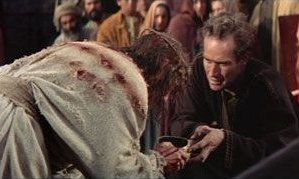
    The film revolves around Christ, and Ben-Hur is another disciple of his teachings through conversion into faith, charity, and hope. The figure of Christ is the central theme of the film, but his face is unseen, and his voice unheard. We can only see his rear, but it is the mysteriousness of the person of Christ that elevates the story of Ben-Hur to the sphere of hagiography. The providential encounters with Christ in the climactic moments of his life lead him to the way of Christ, which mirrors the process of Ben-Hur’s redemption from Wrath to Grace, from Desolation to Hope.benhur-christ-a

    Whether or not you believe in Christianity is not a prerequisite to appreciating this excellent epic drama because it would be a loss to any lover of arts to forego the spectacular beauty of the cinematography, not to mention the spiritual thematic of one man’s redemption from hopelessness. The grand epic scale of cinematography that depicts the tale of Ben-Hur in the trail of Christ from the Nativity to the Crucifixion is akin to watching Michelangelo’s remarkable frescoes of the Sistine Chapel that illustrate the story of humanity from the Genesis to the Last Judgment under God’s mysterious plan for mankind. In conclusion, ‘Ben-Hur’ is not a movie about a hero but about a triumph of hope over the desolation that saves a man’s soul from self-destruction, resonating with ‘Dum spiro, Spero,’ meaning ‘while I breathe, there is hope.’

    ben hur 3

  • ‘Intruder in the Dust”(1949), directed by Clarence Brown – film review


    lf

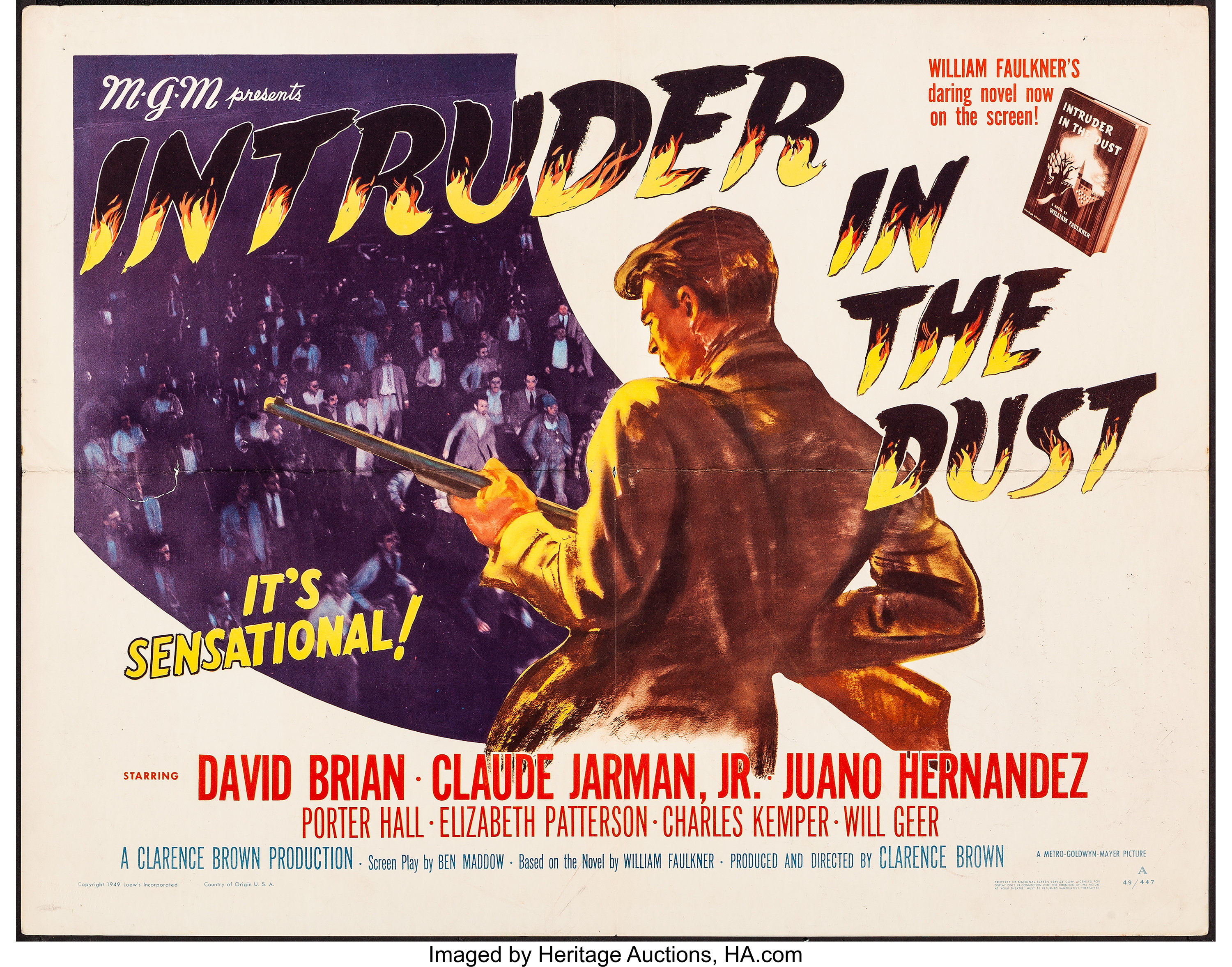
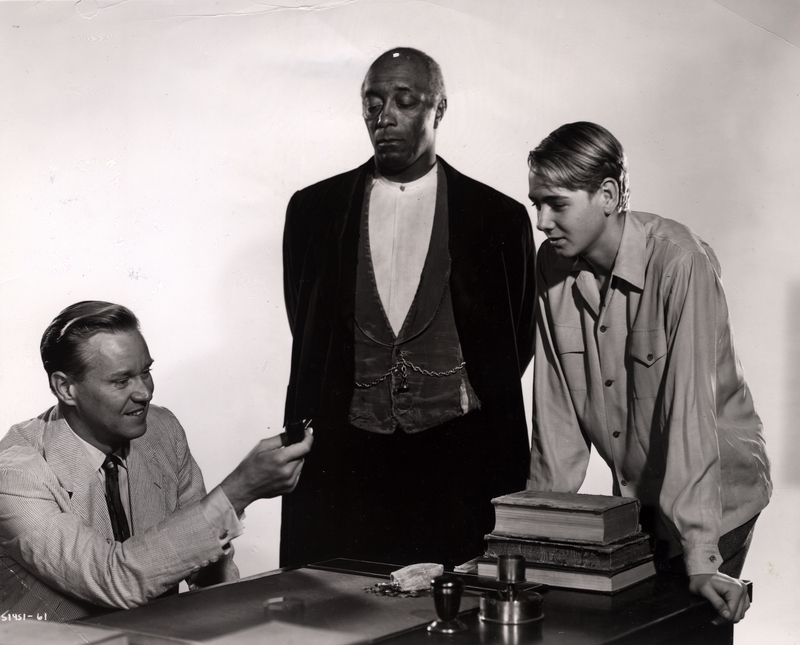
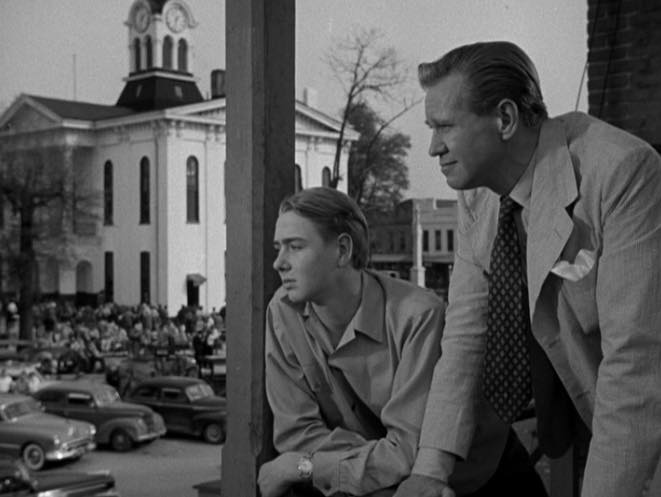
    Justice is the truth, and the truth is the satisfaction of reason. Reason complements emotions triggered by the sense and guides a man to a purposeful action as a beacon of judgment. What motivates the teenage boy Chick Mallison and the lawyer John Gavin Stevens to help Lucas Beauchamp, a respectful and affluent black farmer, accused of killing a white man, is the desire for finding justice, the truth. “Intruder in the Dust” (1949), directed by Clarence Brown, shows that the search for truth excels in the infirmities of whimsical human characters based on William Faulkner’s selfsame novel published to a wide acclaim a year before.


    Shot in black and white, the thematic of truth in the darkness of ignorance blinded by racial prejudice manifests itself in the transparency of facial expressions of the characters like ancient Greek theatrical masks to magnify the emotions and feelings of performers on stage. Lucas (played by Juano Hernandez) is laconic like an old Spartan. Still, his a few words carry the authenticity of truth, emphasized by his dignified aura surrounding the natural, confident being that commands attention to himself. As Shakespeare’s adage of true nobility as being exempt from fear, Lucas counteracts the mob psychology driven by the vacuously temerarious inquisition of popular sentiment in poised stoicism pleading for truth, not feelings.

    Three stars in intruder

    The subject of humanity is likely to be invoked for the anodyne ingredient to resolve the racial tension. Still, Falkner’s “good” white folks are more driven by a curious concoction of investigative natures, intelligent propensities, and occupational instincts blended well in the egoistic sense of fulfillment wonderfully producing a diamond of truth as though it were a wondrous alchemical process. The teenage Chick (played by Claude Jarman Jr.) and Lucas’s lawyer John Gavin Stevens (played by David Brian) are conscientious and principled, with whom we can refer to “good” white folk. Still, they are not entirely free from their prejudices about the colored, especially the blacks. Even Chick becomes indignant and intentionally drops the money when Lucas declines it from him as a token of gratitude and orders him to pick it up. The lawyer Stevens is neither particularly jovial with his client in the way he would be with his white client. However, both Chick and Stevens intend to descry the truth behind the machination of unreason that rains on the minds of the white people in the town because they are inherently good, even though they are biased. They are good people because their reason prevails upon unreason, and their search for truth outshines their prejudice. It’s what matters to the justice and life of Lucas, the black man who is not necessarily a chum of theirs.

    intruder-ending

    “Intruder in the Dust” may be parallel to “Who Killed a Mockingbird?” because of its similar subject and genre of the film, let alone their original novels that were written by southern writers. But what gives to “Intruder in the Dust” is its sense of realism in the likeness of truth. I find the characters in “Intruder in the Dust” more ordinary, more plausible, and more human. This film delineates a congress of human characters amid a universe of varied emotions and a sea of dangerous adventures, which illustrates both the never-ending dilemma and possible solution. The stellar performance of the excellent cast orchestrated by the astute director based on an excellent textual basis by William Faulkner culminates in this American Classic Masterpiece Film.