Tag: horror

  • Movies Digest

    Some indulge in drinking, some gaming, but mine is binge-watching supernatural/suspense movies when I am under dark spells. Hence this past weekend, I wallowed in the below visceral world of make-believe with my cats as guardians perched next to me on both sides like Odin’s two crows, Memory and Thought.
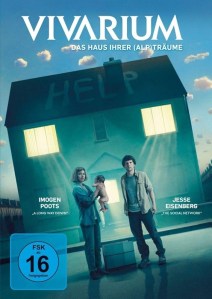
    Vivarium (2019): This is one of the most surreal movies I have seen. Some classify this movie as Si-fi, but it is Horror because it has no hope of escaping from the cycle of repetition with no end to the movie’s end. The young couple’s hopes of finding a new home could be this sinful. I am only asking because the movie’s central theme stems from the globally realistic issue of housing problems in the context of planning and paying. And the question of conformity dominates throughout the movie. Readers familiar with the YouTube sensation of the Backroom series will find a kind of deja vu phenomenon while watching this, but this is scarier because it happens to good people.

    The New Daughter (2009): Kevin Costner plays an affectionate father who wants to bring up his two young children to the best he can as a newly divorced father. It’s refreshing to watch such a movie that portrays a loving single father caring for his children when most movies show only single mothers struggling – of course, loving, with their circumstances. Although the film does not feature my favorite ghostly characters who are purely spiritual, it can be forgiven for the sinister consequences that show no mercy to good people.
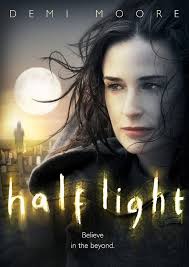
    Half Light (2008) – Demi Moore is a novelist in this movie who can’t get over the death of her beloved young son. She blames herself for him to drown to death while she is writing her new novel. The guilt-ridden mother retreats to a coastal village in Scotland, where she experiences supernatural phenomena so tangibly that it all seems too visceral to accept because of the preponderance of the awe. The lighthouse on a deserted island within such a small coastal village serves as a beacon of her spiritual guide, or could it be an alarm for the impending danger? But one thing is confident that the living must let go of the dead because once the soul leaves the body, then the soul belongs to no one, not even in the streams of love’s salty fires. If you really love them, set the departed free.

    Stephen King, whose name befits the sobriquet of King of Horror, once said that fiction is the mirror image of reality, sort of an alter ego of the real world. Horror reflects fear that hopes are only a vanity of imagination or, as Thucydides says, a dangerous daydreaming made of bodacious hubris. What if what we think of or see as real is not real but only the likeness of truth? That is Horror, which is all reflected in these movies.

  • Later by Stephen King

    What seems abnormal may be normal to you. Seeing dead people may not be the most pleasant talent, but if that’s what you are born with, then it’s normal, and you have to live with it through Kubla-Ross’s famous five stages of dying. That happens to Jamie in his narrative of the coming-of-age proclamation of his identity in this story.

    Dead people are like quiet people lurking in the background of Jamie’s life. They appear to him as the last moments of their earthly lives, talking and joking to Jamie, who can see and hear them, albeit rather unreluctantly, because he’s not much pleased with his uncanny ability. But then it’s the discerning talent -says the Bible – that helps him know who he is, like an epiphany of a family secret locked in his uncle’s lost memories, thanks to nature’s force of dementia. However, this story is not so much a psychological thriller as a supernatural drama that is so characteristic of Stephen King’s novels, with a level of uncanniness combined with realism that makes his stories all the more real and relatable. The settings, the dialogues, and the jobs the characters have are not far-fetched, fanciful, or bourgeoisie, all of which attest to King’s engagingly realistic storytelling skills.

    Later is a three-fold story of horror without goriness, mystery without glamour, and bildungsroman without teenage angst. King has a unique knack for incorporating popular entertainment with serious literature that attracts readers of all generations and classes. He is a literary descendant of Nathaniel Hawthorne, Washington Irving, and Edgar Allen Poe, who defined American literature in the constellation of the World’s Literature for the joy of the beholders from generation to generation. All in all, this book will be one of the stars in the constellation.

  • The Truth About Horror

    Stephen King, the King of Horror, said we make up horrors to help us cope with real ones. Some people drink themselves to numb their existential maladies of daily life, or some abandon themselves to unguarded sensual or psychedelic pleasure. But I seek refuge in the stories about the supernatural world that have to be the actual, not the second-hand replica of the author’s imagination that I find hard to be connected. That said, to descry the headline title ‘The Horror’ from a recent issue of the New York Times Book Review delivered on my kindle seemed too pat not to feel psychic about it with a jolt of fillip bolted to my neural circuits. Reading it allowed me to reflect on my affinity for supernatural scare about whys and wherefores.

    The article posits that horror movies scare us through exteriority with image and sound to create the illusion of danger, whereas horror fictions are more sophisticated and cultured to understand the complex interiority of the characters by passing over to the creator’s mind. But why do I have to play an amateur psychologist to analyze the inner world of an author when I try to find a niche for my battered spirit in a supernatural realm where no bullies, despots, or melees would follow me? My kind of horror has nothing to do with overtly thought-provoking fictional narratives that are more like psychological thrillers than supernatural ones. That is why I favor the Japanese ghost stories bereft of bodily fluids and materials but full of silent terror in the presence of a sorrowful dead refusing to depart for the Otherworld. Fear is universal. However, its expression is nuanced in the ordinary landscape of daily life, with the undead still among the living in their everyday attire as if they were still alive, not least because Japan is a country of spirits and gods dwelling in nature among the people.

    The article is correct in saying that a love of the horror is a part-time love with a mysteriously eerie beautiful parvenue in Howl’s Moving Castle. By wallowing myself in the supernatural, I feel anxiety loosened, nervousness coaxed, anger diverted, sadness halved, and depression diluted to a certain degree. You may say it is another form of a psychedelic illusion of escapade from reality, then let it be. After all, aren’t we all addicted to something to that effect to relieve ourselves from existential frustration in a socially acceptable way?

  • ‘The Signal-Man’, by Charles Dickens – review

    The Signal-Man (Original 1866 Edition): AnnotatedThe Signal-Man (Original 1866 Edition): Annotated by Charles Dickens

    My rating: 4 of 5 stars

    Charles Dickens wrote this short story of a lonely signalman in 1866 based upon the Clayton tunnel crash in 1861. The setting of the story was a station by this tunnel with a dismal and eerie atmosphere around it, which dovetailed with the ambiance of the story itself. But while I was reading the story and thereupon, I was unsure of who’s the ghost here: the narrator or the signalman? First of all, the image of the narrator calling the signalman’s attention to him from above seems to me uncanny enough to conjure up the calling of a spectre wandering about the haunted tunnel. Or it might be that the signalman, the station, and the train per se were all in fact illusions, bewitched elements of the tunnel crash victims eternally haunting the place, not knowing their demise. Or in terms of modern psychoanalytical perspective, either the narrator or the signalman saw his own representations of the reality in his own mind, the hallucinations, which were different from and invisible to the others. And that is what I found this story at once hauntingly rueful and lingering with the images.