
Tag: humanity

  • The Lives They Left Behind: Suitcases from a State Hospital Attic by Darby Penney

    51emoQ2iSAL._SX327_BO1,204,203,200_The Lives They Left Behind: Suitcases from a State Hospital Attic by Darby Penney

    My rating: 4 of 5 stars

    I believe that reality is always better than fiction in truth of events and artifacts that accompany the stories. Besides, if such story chimes the bell of my emotion even in the faintest decibel, I dive into it. In this regard, this book was a sure thing to read about people who were inflicted with “sacred disease” -as termed by Hippocrates – how they got there and what they were really like as individuals with dreams, memories, hopes, and wishes.
    jon-crispin-dmytres-suitcase-01
    One of the suitcases found in Willard Psychiatric Center courtesy of phaidon.com

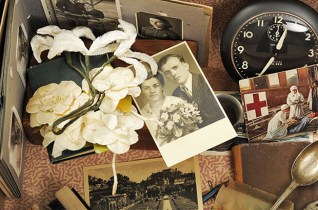
    Hundreds of derelict suitcases came into light when Willard Psychiatric Center in upstate New York were closed in 1995, ending its century long history of a public mental institution. Each suitcase has a story to tell with pictures, bus/train tickets, diaries, letters, and even teacups contained herein. In the eyes of the author, it was like the fateful revelation of the outcry of the people who had come to live in the hospital. What I have found in reading this book is that many of the patients do not seem mad or needful of being institutionalized. Many of them suffer from loneliness, abandonment, and ill treatments from others. To my consternation, if a spouse or a family member was regarded irksome, bothersome, and troublesome, a ticket to the lifelong institualization was a sine qua non solution to get rid of the person forthwith.

    A truly powerful testimony to the dignity of the people who found themselves on the edges of society, The Lives They Left Behind is comprised of heart-wrenching accounts of those whose lives were immortalized in the artifacts they forgot to claim ever more; that there is only a thin layer of difference between those within and without gives rise to requisite re-examination of what constitutes normalcy of behaviors as “socially and culturally” accepted because in one way or another we all carry a certain degree of “madness” within -for better or worse.

    저장

  • Sunday Episode – Avonlea Tunes

    Little ones’ sweet days (Click here for what they did.)

    2503958-0682811358-KKSli

    It’s still cold here in the town of Avonlea with the North Wind reigning his realm of winter. The snow has stopped falling since the last Tuesday, but the cold temperature still befalls the residents of Avonlea. However, the spirits of the little ones are all the more upbeat with their seemingly nonstop frolics and curious minds about what goes around them everyday.

    Yesterday after attending their 9:00 AM Sunday mass in the Church of St. Mary, the little ones gathered again at Mrs. Lompstrompf’s cafe to confabulate with one another with sweets and refreshments. It was a reward for their attending the early morning mass despite the frigid temperature added by frightfully pungent wind slapping he little faces without mercy as they had marched forth to the church. What brave souls they were! That’s why Jesus told that we should be like children to inherit the kingdom of heaven.

    So this was how they spent yesterday in Avonlea. However simple the story might be, it’s recorded in their chapters of life. That’s what a life is. The meaning of life depends upon whether or not we fulfill the demands placed upon our daily tasks. The little ones seem to know it. What about you, dear reader?

    hqdefault

    저장

    저장

  • Albert Speer: Hitler’s Architect

    Spandau: The Secret DiariesSpandau: The Secret Diaries by Albert Speer

    My rating: 5 of 5 stars

    Albert Speer was a very clever man; he managed to survive a death sentence at the Nuremberg trials and lived to tell his story of the Third Reich, Hitler, and himself as Minister of Armaments and War Production during WWII. Furthermore, Speer made a brilliant career of writing memoirs with many a television interview following his release from West Berlin’s Spandau prison in 1966 after having completed his 20-year sentence. This book, written between 1946 and 1966 in Spandau, is a collection of his diaries and letters to his family secretly kept against the prison regulations.

    The reason that Speer had written his diaries was to keep his mind disciplined and alert by using his mental faculties while serving his time at Spandau. He was afraid of undergoing mental and physical atrophy because the prison life to him was nothing but a repeated series of monotonous routines that would lead to mental stagnation and physical lethargy. Whether Speer had written diaries and other correspondence to his family with the thought of publishing them in mind is hardly probable because it was for the sake of his own ego arrested by a lack of social refinements and intellectual engagements during his confinements as well expressed in the diaries.

    There are many interesting anecdotes about his fellow prisoners who formed their own social cliques even inside the prison: Albert Speer and Rudolph Hess did not socialize with the other prisoners but spent most of their time alone. In fact, Speer was disliked by the other prisoners for his admission of guilt and repudiation of Hitler at the Nuremberg trials. So was Rudolf Hess for his reputed antisocial personality and conspicuous mental instability. The two former Grand Admirals, Erich Raeder and Karl Dönitz stayed together. Baldur von Schirach, the German Nazi Party’s national youth leader and head of the Hitler Youth, and Walther Funk, Reich Minister for Economic Affairs, were described as “inseparable”. It was Konstantin von Neurath whom Speer seemed to have a good opinion on for his amiability and amenability to all until his release in 1954.

    The book is not a history book or a testament to Speer’s apologetic gesture of doing public penance for his involvement in the Nazi regime. As Freud once said, “Sometimes, a cigar is just a cigar,” this memoir is a memoir, Speer’s personal journal, encompassing his intellectual capacities to observe and analyze what he saw and read in addition to his desire of being with his family, especially the sons who seemed to feel uncomfortable with their father when visiting him in prison. Upon reading this heavy volume of memoir, I am convinced that it was his sagacity and intelligence that saved him from death and that enabled him to launch a successful writing career afterwards.

    저장

  • A License to Heal by Steven Bentley

    A License to Heal: Random Memories of an ER DoctorA License to Heal: Random Memories of an ER Doctor by Steven Bentley

    My rating: 5 of 5 stars

    Steven Bentley, M.D., an American Board of Emergency Medicine certified ED doctor and also the author of this book with a fabulously fitting title, began his medical vocation in the mid-1970s with a naive but noble cause to heal the wounded and save human lives. His reason for choice of the ER Medicine was that it consisted of Minor Surgery and Emergency Medicine and thus gave him opportunities to practice a wider scope of medical knowledge and administer it to a wider range of patients.

    Over 30 years until his retirement in 2000s, Dr. Bentley was a commendable doctor equipped with an arsenal of immense medical knowledge combined with a sea of compassion and kindness to treat all the patients he encountered in the ER of a hospital in North Carolina regardless of their social and economic statuses. Unlike most impersonal, officious doctors, Dr. Betley “listened” to his patients and oftentime went out of his way to help a patient whose medical need was repeatedly and cruelly rejected beyond a reasonable measure.

    Welcome an old veteran man whose doctor was out of town, so he had to get his prescription for blood pressure control refilled at a VA hospital. However, it was such a painful ordeal for the old man, for he had encountered frustrating runaround from one hospital to another because they did not want to take a responsibility for refilling his prescription without his primary care doctor’s consent. So when the man finally came to Dr. Bentley, he burst out crying saying, “All I need is to get my usual prescription refilled…” Thereupon, Dr. Bentley wrote him a refill prescription and told him not to come back to the hospital. And off the man went out of the hospital with a relieved mind.

    The world of the emergency medicine as experienced by the ER doctor himself was a variety of fragmented views of human frailty, both physically and mentally, but it was also the world of the most human medical practice where compassion, kindness, and charity were witnessed to the hopeful eyes and shared by the staff and the doctors in the name of humanity.

  • How to Be Your Dog’s Best Friend by Monks of New Skete

    How to Be Your Dog's Best Friend: The Classic Manual for Dog OwnersHow to Be Your Dog’s Best Friend: The Classic Manual for Dog Owners by Monks of New Skete

    My rating: 4 of 5 stars

    One of my favorite saints of the Church is St. Francis of Assisi because of his humanity, compassion, sweet nature, and his love of animals with whom he is believed to communicate based upon the story of his converting the Wolf of Gubbio to a tamed animal. The story goes that while living in the city of Gubbio around 1220, St Francis volunteered to take leave and meet a ferocious wolf who devastated the country by attacking people and livestock. When St. Francis finally met the wolf, instead of punishing him for the offenses, he gently admonished the wolf to cause no more plight to the people and the livestock and promised him that he would be fed daily by the people of the city. The wolf was grateful for the compassionate promise and put his front paw on the saint’s hand as a gesture of accepting the advice. Thereafter, the Wolf of Gubbio kept his promise with the saint and became a tamed pet animal of the city.

    With this evocative image in mind of the gentle saint and the tamed wolf I had once seen on a prayer card, I selected to read this book by Monks of Skete of the Eastern Orthodox Church. In this regard, I was piqued by the facts that (1) these monks were reputable German Shepherd breeders and acclaimed canine-human relationship teachers; and that (2) the monks lived with the dogs in accordance with the teachings of the Gospel manifested in their healthy relationship with the dogs. However, the monks of Skete carefully avoid religious jargon in the book lest the book should be interpreted as a promotion of their faith. Instead, their faith is carefully incorporated into the belief of fostering their ideas about dogs with a philosophical and spiritual foundation for personal change because dogs mirror who we are by responding to the way we treat them without deception.

    The gem of this book is the monks’ views on salubrious human-canine relationship as appreciation of truths of the two worlds: one world of our own human prowess as a caretaker and one world of their own pristine nature as a guide to the wondrous natural world from which we have gradually distanced. While we provide them with food, shelter, and veterinarian care, dogs enable us to appreciate the beauty, the warmth, and the compassion that are deeply rooted in our humanity we often overlook or even try to suppress in the face of existential dilemma. In consideration of the aforesaid, I believe that the story of St. Francis of Assisi and the Wolf of Gubbio is not a myth but a truth.

  • Lists of Note by Shaun Usher

    Lists of Note: An Eclectic Collection Deserving of a Wider AudienceLists of Note: An Eclectic Collection Deserving of a Wider Audience by Shaun Usher

    My rating: 3 of 5 stars

    The act of note-taking is the prerogative of humans throughout the history of civilization; impromptu, interesting, and important, the nature of notetaking is to capture a train of thoughts that comes to one’s mind. This book by Shaun Usher is a pleasant compilation of such notes flooding vicissitudes of humankind. It is a sequence to his bestseller Letters of Note, which is a riveting compendium of letters of all kinds throughout the history of the world. Mr. Usher, who is very keen on collecting personal correspondence of people, has indeed again exerted great effort and time to make this project possible through the support of his fans via Unbound com, an organization which has helped writers publish their works since the 18th century in England.

    The book contains some very intriguing notes as follows: (1) Bill of Mortality which tells of the kinds of ailment English people of the 17th century died of, (and the reader will be surprised to find that one of the common causes of death was abscess); (2) an ancient Egyptian worker’s note on his absences recorded on a limestone; (3) Leonardo Da Vinci’s notes on what he would need to research for the anatomy of a man; (4) Michaelangelo’s list of food he wanted to eat with adorable pictures accompanied during his travel to and from Pietrasanta to extract marble used for the Basilica of San Lorenzo; (5) Sir Isaac Newton’s list of note revealing his peevishness with his mother and father, striking his sister and servant and neglecting to listen to a Sunday sermon in church; (6) Mark Twain’s list of note showing all the food he wanted to eat at home upon his returning from a long European trip; (7) Marilyn Monroe’s resolution to attend her new acting class without fail and to enroll in an English Literature class; and (8) Jack Kerouac’s note to his friend for writing tips in which he asserted the importance of free writing without grammatical, syntactical, and literary inhibition. These are just a few notable excerpts from the book, and the reader will have no time for boredom in reading this book.

    This is a quick read which one can enjoy without having to analyze the contents of the notes. The only foible about this read in Kindle version is that the original scripts of some of the notes are not clearly shown due to a mechanical aspect of the device. For this reason, it will be better to own a hard copy of the book as the notes are pictured in their entirety, so that the reader can see clearly the writing styles and discern the personalities and characters of the notetakers to a certain extent. The reader will realize that the act of note-taking, however simplistic and insignificant it may seem, is in fact a way of sketching the flow of thought from a world full of things assorted and flowing without a sense of purpose for composite significance.