 Through a Dog’s Eyes by Jennifer Arnold
My rating: 5 of 5 stars
If you are a dog person, reading this book will make you become better understanding of your dog or just any dog in sight – in his perspective. This book is written with knowledge and heart by Jennifer Arnold, the Executive Director of Canine Assistants, a school for educating dogs to help people with disabilities, including epilepsy, paralysis of broken spinal cords, and others that prevent them from functioning their ordinary tasks of daily lives . The author specifically emphasizes on the word “education” of her dogs, not “training” because the student dogs are taught to respond to foreseeable/unforeseeable situations that require their immediate problem-solving skills for the safety of their human partners based upon the author’s belief on ethology, the scientific and objective study of animal behavior, by incorporating Operant Conditioning method to modify a behavior by reinforcement and
punishment.
What Ms. Arnold avers in the book actually corroborates what I have always believed to be true: (1) that dogs do have feelings without filtering them through the intellect, which can be found in the cerebral cortex of human. But because of this absence, dogs are artless in expressing their emotions toward us; (2) that dogs’ characteristics of being loyal and empathetic indicates that consciousness, the state of being awake and aware, enables them to do what’s in the best interest of others; (3) that in no way, is a concept of “alpha dog” in a human-canine relationship useful or even sensical; and; (4) that operant conditioning with positive reinforcement (rewarding with a treat) and negative punishment (not giving it) works the best to reinforce intended behaviors.
You will find a kindred spirit in this book filled with laughters by the wonder dogs at the Canine Assistants, tears by the pains of those who were and are in need of their canine assistants, heartaches by those fallen dogs because of misunderstanding on our human parts, but most of all, joy by understanding our fido friends in their own paws.


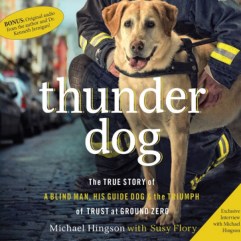
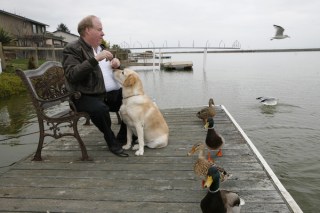 Mr. Hingson is truly someone I can look up to because despite his blindness, he did not escape from reality but always tried to do whatever he could to the extent possible among. Of course, there was a great family support who always treated him as if he had been a sighted person. But still the author had to do all things by himself outside the safety of home, such as bicycling around his town as a kid against the biased complaints from the neighbors who were afraid of any damages that the blind kid would cause on a bike. But Mr. Hingson did not yield to such unfair glances and kept on going. This is just one of many episodes that manifested Mr. Hingson’s resilient and brave spirit. Eventually, he graduated from university with a summa cum laude distinction and went on to become a regional manager of a company.
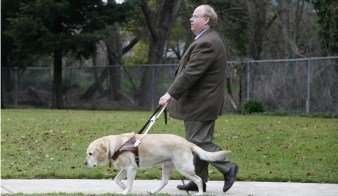 Roselle was the author’s guide dog that stayed with Mr. Hingson at the time of 9/11 tragedy in the World Trade Center. The author narrated that Rosell was not alarmed but behaved normally even while they were evacuating from the building after it had been hit by the hijacked airplane. (The only thing that made Roselle agitated was thunder because according to the author, thunder ionized the air with the formation of ozone, which produced a distinctive smell of the weather condition unpleasant to her. ) In fact, Roselle was more of a partner to Mr. Hingson in tackling challenges that both of them encounter ed in daily life.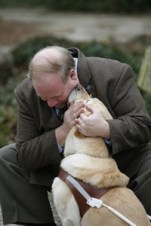


You must be logged in to post a comment.