Tag: journal

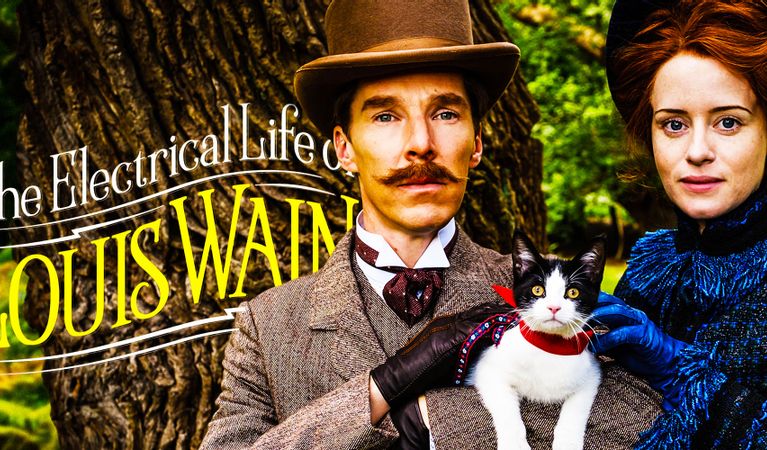
  • The Electrical Life of Louis Wain according to Benedict Cumberbatch

    The Electrical Life of Louis Wain is joy and sadness, lightheartedness and seriousness, just like his paintings. It’s about love and art in the oddly beautiful vagaries of what it means to be a human (in the company of cats). Wain’s cats graced the epochs before Walt Disney’s Mickey Mouse (and Minnie) and His Gangs) debuted. But Wain was not Disney, and would he have even wished it? Perhaps, that is why Benedict Cumberbatch decided to give Wain a second chance to shine his name once more on earth in the magic of moving pictures that resurrected him from the lapse of time through the chapters of his story in this superbly narrative of the artist.
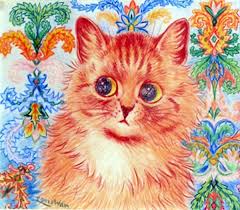
    Louise Wain was a brilliant artist, a contemporary of French impressionist artists, such as Monet, Pissarro, Degas, and Renoir, and Dutch Vincent Van Gogh, all of whom were united in the brotherhood of independent spirits and resilient creativity. Yet Wain’s was a different sort, more existentially debauched in the provisional circulation of works, in the crossroads of the reality of being the only male figure in the parentless family led by the dominant matriarchal sister and of the ideal of ensconcing himself in the solitary niche. All artists are by nature sensitive, but Wain was extraordinarily sensitive, and the world was too much for someone like him to deal with. His wife, the light of his life, was the only happiness and love he felt and shared, but jealous God took her away from him and left him in the lurch of the familial duties and responsibilities in the somber household. This house eventually drove him and his younger sister into the oblivion of reason to the end. Yet, notwithstanding the personal tragedy, Wain’s unique visual world articulated with the sonar modulation of impulse that sparked his creative spirit yearning to soar up to the boundless ether on a par with constellations with stars.

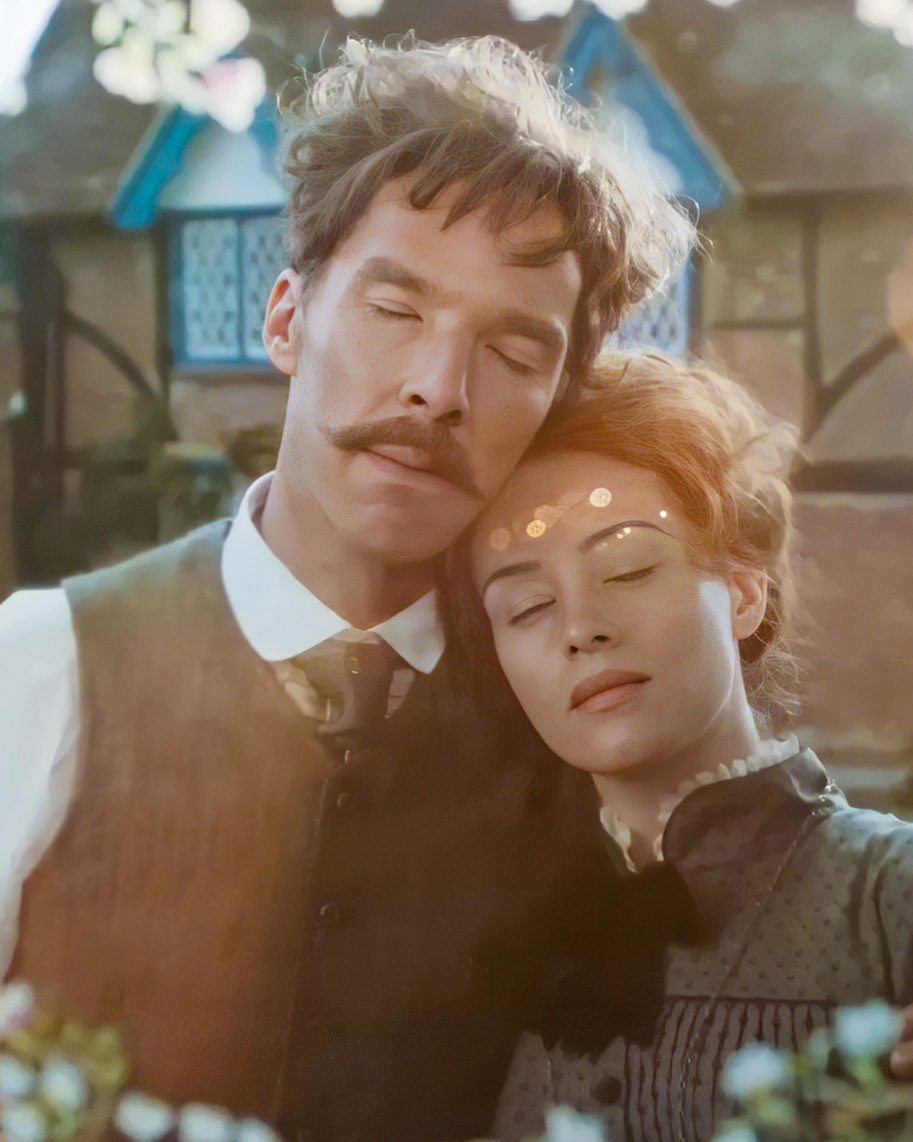
    Wain’s wife encouraged and supported him because she knew of his genius despite other people’s ignorance.

    Benedict Cumberbatch, now universally recognized as the Sherlock thanks to the phenomenally successful BBC series, proved to be a superb character actor who became Louis Wain rather than merely playing the artist’s part. Ancient Greeks and Romans regarded actors as an equivalent of a spiritual medium whose body could be channeled into another spirit for a willful possession during a mysterious rite of sacred ceremony. If that was the case, as it were, that was how I felt watching Cumberbatch being Wain as if he had summoned the soul of the dead artist from the beyond and asked him how the artist’s life would be told. His naturally mild, gentle deliverance of character nuanced the inner fear, confusion, and frustration that Wain must have felt in dealing with the realities of everyday life as a reluctant and unlikely head of household. Yet, his passionate eyes and particular diction dictate that Wain was an artist of force, a man not of an age but for all seasons.

  • Triumph of the Will

    Like Hecate, the goddess of underdogs, I have a soft spot for writers and thinkers who arose above personal hardships and triumphed in the will. If they have not experienced human highs and lows, how could they write and explain the meaning of life? Take the Russian writer Fyodor Dostoevsky whose near-death experience on the gallows and subsequent travails shaped how he viewed humanity, the purpose of God, and the dichotomy of good and evil. I compared the life of Dostoevsky with that of Victor E. Frankl, the father of Logotherapy, who survived five death camps during World War 2 because both men’s intellectual fervor saved them from self-destruction in the darkest hours of their lives.

    Dostoevsky (hereinafter “D”) was a political prisoner sentenced to death for reading banned books. But the most incredible feat of luck pulled him out of the gallows, and he was sent to a Siberian work camp. He forced himself to channel a danger of hopelessness and resignation in such a squalid environment into the world of imagination. His characters were his alter egos trapped in a cycle of solipsistic containment of morality, religiosity, and social justice. In these attitudinal and creative values as a way of relieving himself from the slough of despond, D finds a kindred spirit in Frankl (hereinafter “F”), whose spirit never succumb to the hopeless situations in death camps where life seemed to be a curse. Instead, f kept himself busy by constantly devising his school of thought, analyzing it, and structuralizing the concepts in his head and on any writable medium he could find discreetly. The result is Logotherapy, the third Viennese school of psychotherapy that encompasses philosophy, religion, neurology, and psychoanalysis, whose nature and method are common to all humans and applicable to all regardless of age, gender, race, and culture.

    So much so for the reading of the brief article, but the effect is magnanimous and resonant with a pellucid tenor of a victorious high human spirit with humor as a handmaid to intellect (wit), which would otherwise be grim and dreary subject to temperamental bouts of depression and pessimism. Both men in their prime of youth had their sovereign rights of individualities in tatters and shackles, but their willingness to live and achieve their goals exceeded the compass of the malicious fortune and triumphed in perennial glory. They are, as Ben Jonson in his humor might have concurred, men not of an age but for all time.

  • the unlikely family

    “So you have now the earth, the water, and the sky in your room! Awesome!” That was my brother when I told him over the phone about my recent adoption of a parakeet from a Petco. The paroxysm of excitement catapulted me into the awareness of a reality that I did bring a bird—those small but sharp beaks and those wrinkled tarsi feet manifesting the atavistic characteristics of dinosaurs, particularly the T-Rex. The truth that I now have to cohabitate with the least-likely coveted descendent of T-Rex still swivels my head in wonderment as if the ghost of Alice in Wonderland possessed me. So why the bird then?

    Dreaming of Sinbad and Serah

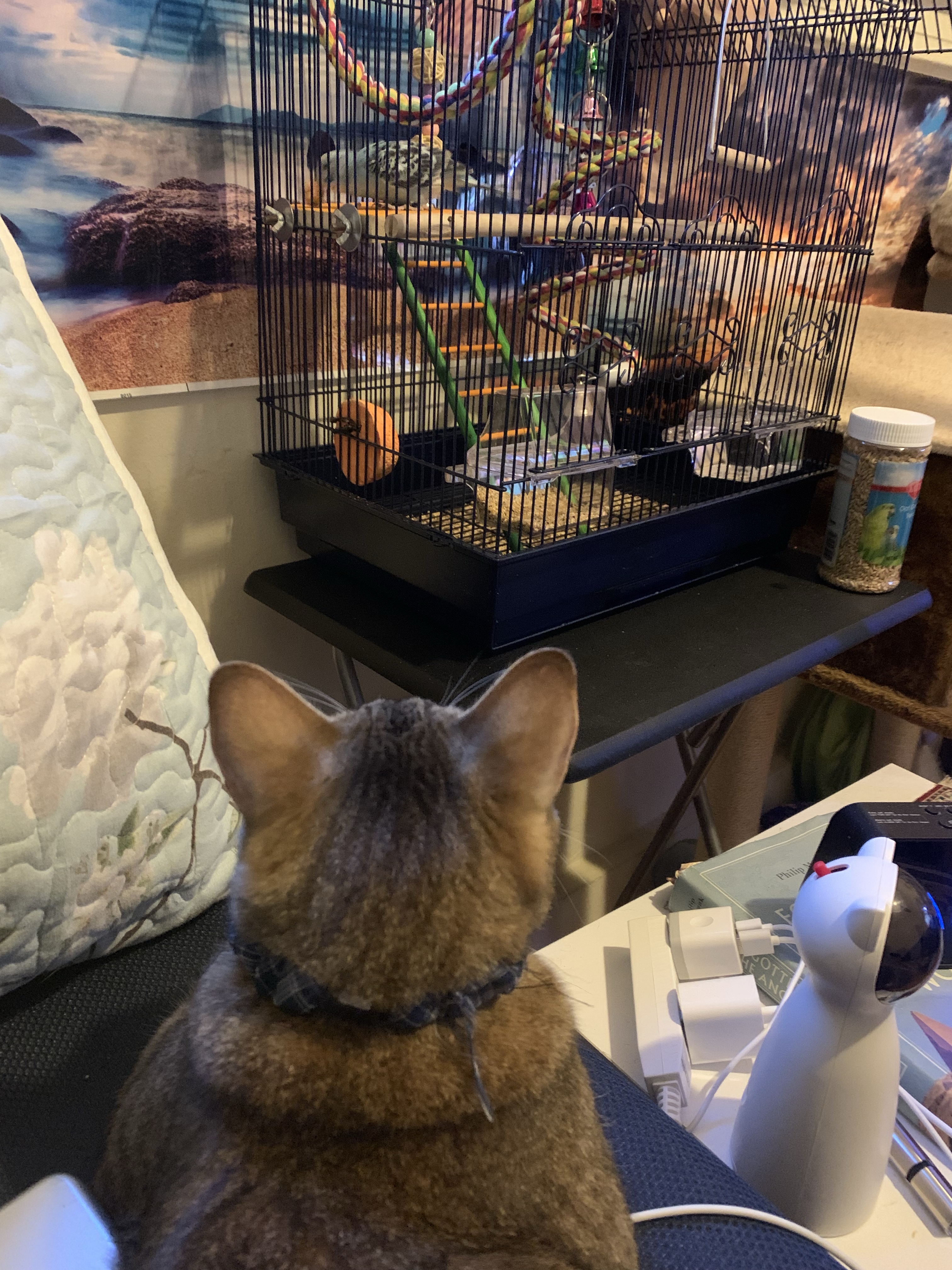
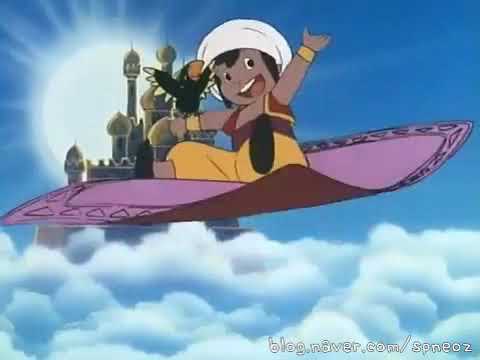
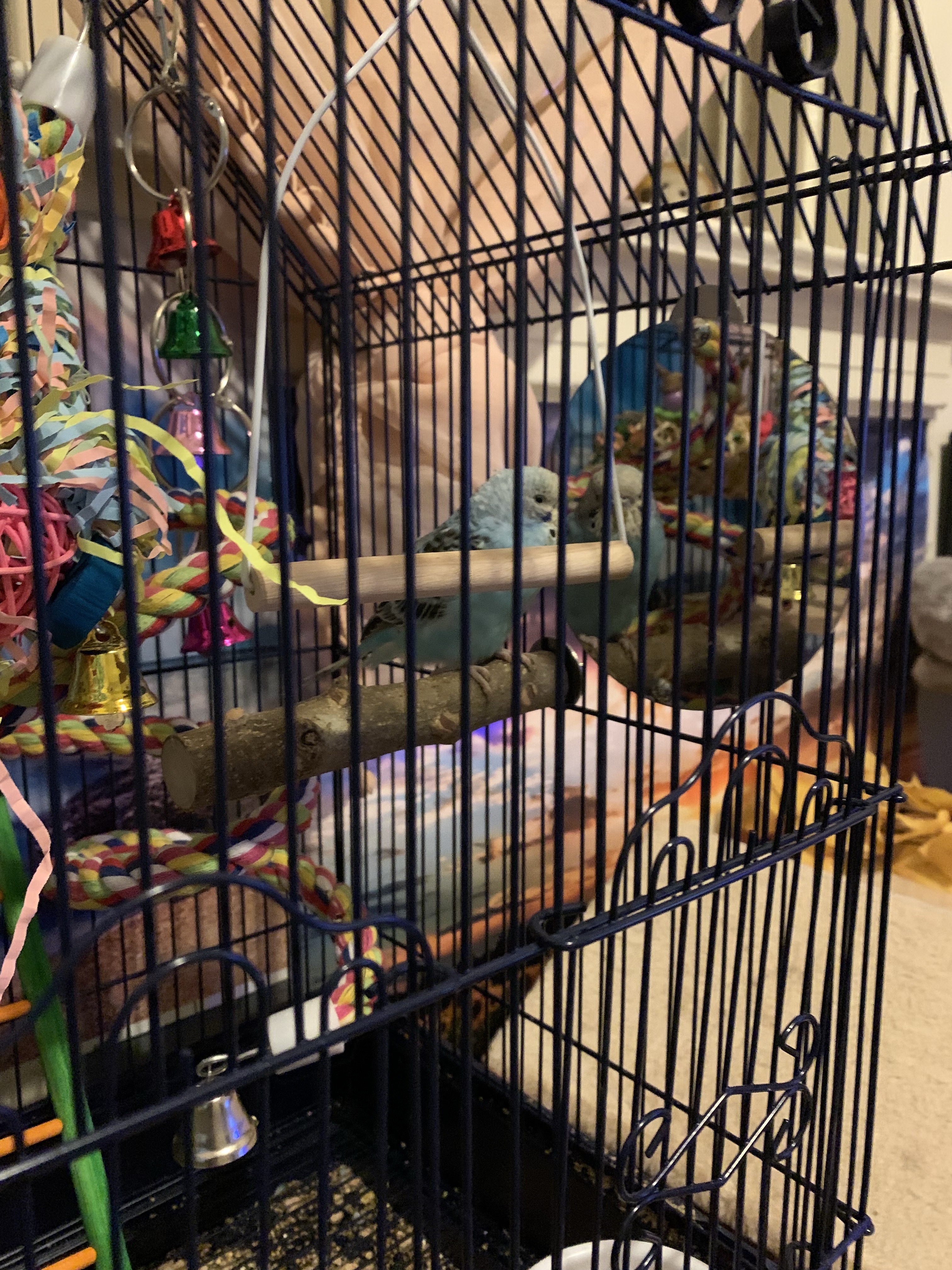
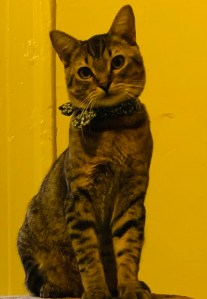
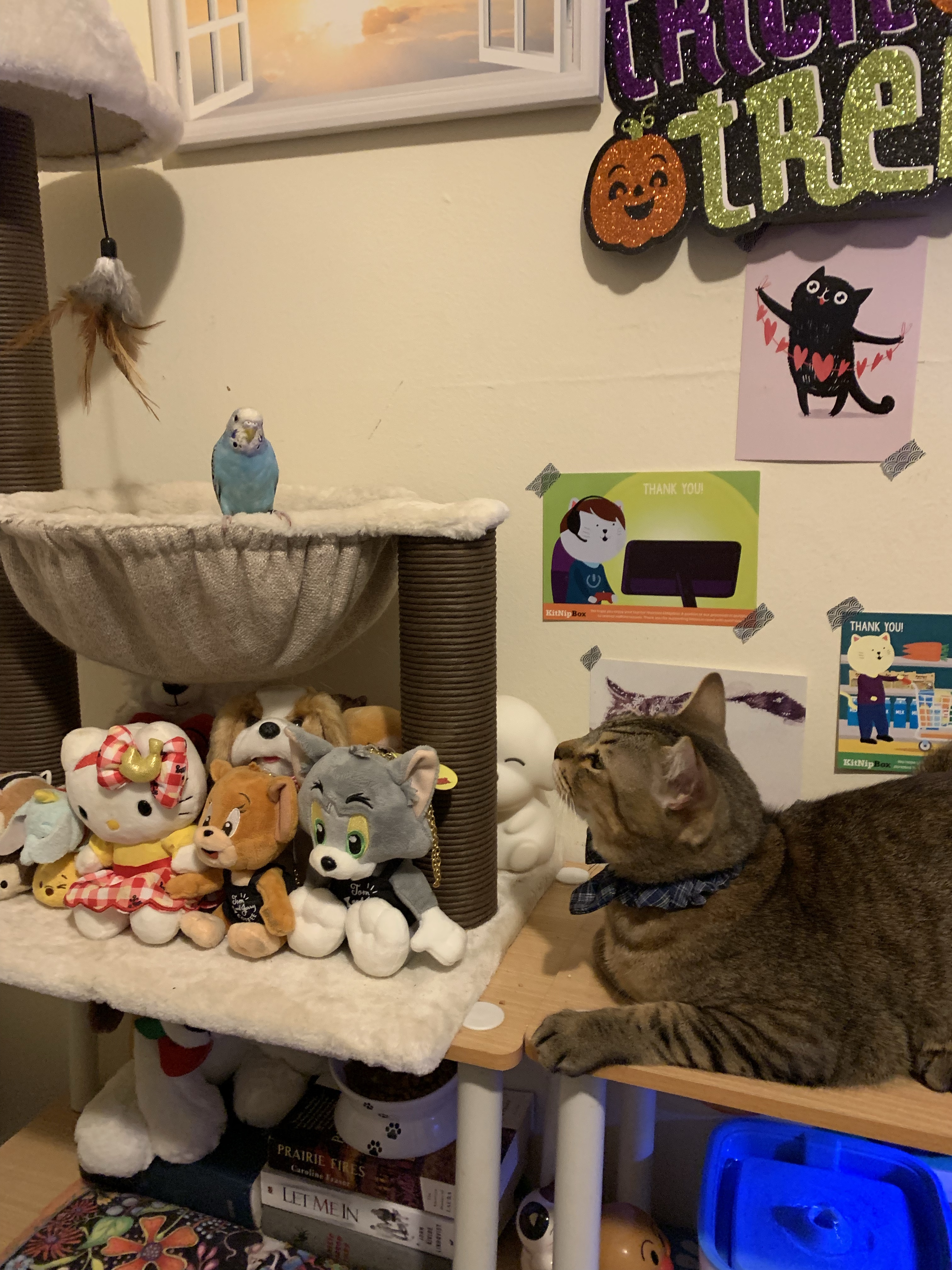
    While there might be the remotest chance of using my parakeet as a divine medium to consult my future, I have recently brought Sera home with great expectation of making a friend with the lonely Toro. Toro is now one year and four months old, and his growing curiosity calls attention for a playmate to share his enthusiasm and vociferous nocturnal stamina. Of course, the kinship of feline presence is the best option to fulfill the requirement. Still, the existential circumstances of present life eliminate it. Hence the lot fell into a blue parakeet I named Sera after the talking bird Serah, a travel companion of Sinbad the Sailor, from my favorite childhood cartoon. As you can guess, Sera is a girl who spends most of her time in front of the mirror and then trills in high soprano like a pretty and prim starlet prima donna.

    The crossed Sera befriends a reflection of loneliness.

    My endless attempts to tame Sera to sit on my finger and her constant ignorance of my presence are both disheartening and ireful. Toro is a susceptible and timid cat who denied looking at dead fish by turning away his head from the sight. Even though Toro wishes no harm on his new friend Sera, who fastidiously avoids him with all her feathers and beaks, she defends herself from him with all her might. Toro looks at me with his large sad eyes full of liquid heartaches whenever the conflict occurs, and I comfort him in my arms. Sera then flaps her tiny pretty wings, returns to her castle, and ensconces herself on a twiggy perch with a loud and snappy chirping as a sign of victory over the feline Goliath.

    I still don’t know if my decision to extra-species friendship is counterproductive amid Sera’s callous attitude toward Toro and me despite our apologies and continuous endeavor to reconcile with her. Perhaps I should not have taken Sera yet from the cage while she might have been still not familiarized with her new home. Still, there’s hope in my Pandora’s Box weaved in a rope of sparkling diamonds that promises a dazzling delight of trust and love filling the loneliness of the little hearts in our room. Who knows, one day Sera suddenly talks both Korean and English and tells me my todays and tomorrows? You never know.

  • On Aristotle and Philosopher’s Stone 💫⭐️✨

    Edgar Allan Poe expressed his contempt for readers who habitually flocked to books by famous authors on the sheer merit of their popularity without an individual appreciation of the contents. Likewise, I have a handful of the famous, the great people whose celebrity I hold no regard as I am going to unveil now. I have never liked Isaac Newton, albeit his genius is doubtlessly uncontested. Cantankerous, bellicose Newton was horrible to deal with, especially when you were his servant or maid or whoever he thought insignificant in his Elysium of high intelligence. He was also a closet occultist masquerading with the face of Rational Man with long-faced gravitas adorned in a long wavy wig. So how come Newton became a votary of Aristotle, who took the virtues to be central to a well-lived life? Since I tend to disassociate any such persona non grata (Newton, obviously) from one in my high regard (that is, Aristotle), I wanted to find out the incompatibility of the sullen scientist and the benign thinker.

    Aristotle’s ethics, or study of character, is constituted around the premise that people should achieve an excellent character as a prerequisite for living a meaningful life. It is an essence of metaphysics in which Aristotle holds that there must be a separate and unchanging being that is the source of other beings. Only by becoming excellent could one achieve eudaimonia, happiness/blessedness that constitutes the best kind of human life. This philosophical perspective also applies to the ideas of self-sufficiency by Ralph Waldo Emerson and of Amore fati, the intellectual love of life by Friedreich Nietzsche.

    Emerson regarded two separate elements as being united to create the world inside of you for the former. They are raw experiences gained from somatic sensory stimulation transformed into ideas and thoughts in the realm of reason, a process akin to a caterpillar transforming mulberry leaves into gorgeous silk. Nietzsche’s Amore fati is theologically conceived in an attempt to manifest the presence of Providence or God’s will with his infallible existence through Immanence by which an adequate idea of simple attributes of formal essence of God is applied to an adequate knowledge of the simple truth of things. It might be akin to the Eureka moment when Archimedes started running naked around the town in the enthusiasm of knowing the weight of the gold in the king’s crown from his water-filled bathtub. Or it could be the Ecstasy of Saint Teresa captured by Bernini as a cherub was mischievously thrusting the arrow back and forth into the heart of the virgin. In sum, Aristotle was right in saying that knowledge isn’t innate or guaranteed prima facie but gained from the reports of the senses and logical inference from self-evident truth.

    I still believe that someone like Newton had no regard for moral excellence any more than gaining the knowledge of the universe because studying humanity was anathema to his lofty vision of the world and beyond, such as the alchemical realm. Newton was keen on Aristotle’s theory of the 5th element on top of the earth, air, fire, and water – that is, space of aether. Methinks, Newton was trying to get Rosetta’s stone in manipulating the 5th element proposed by Aristotle. He had not known that it would have become such a magical element to turn stone to gold. Notwithstanding Newton’s beguiled ambition to be a perfect Gargamel with the help of Aristotle, so to speak, my appreciation of Aristotle’s metaphysical school of thought decides that his brilliance is brighter than Plato and on par with Socrate in the constellation of philosophers’ stars.

  • law of inertia

    According to Newton’s law of motion, inertia refers to a condition when a mass of an object determines a resistance to change. The bigger a thing is, the harder it is to be moved. What a splendid discovery when such truth has always existed! That is a difference between someone like Newton and other mortals who have seen it but cared more or less about it. The gist of my proposition is that inertia fits the state of my mind at present; the more I exert my cognitive facilities on articulating my thoughts, the harder they seem to operate the abilities with all their souls, with all their hearts, and with all their might.

    Today I looked into the statistics of my blog posts, realizing my literary fruits were turning sour with the leaves of the knowledge of tree desiccated in the arid land of pitiful ignorance. T.S. Eliot must have felt the same when he yeared for a benevolent pool of knowledge on the barren land of his mind, which is hardly likely to think about because – well, for what he is. No matter how much I try to use a craft of writing that I used to possess until three months ago, I realize the powers are gone with the wind to the ether and then to the blackest black hole in the universe. The words become weightless, and the images are as bleak as the Persian night. It’s like being in the middle of an adumbrating labyrinth with Ariadne’s ball thread missing or forfeited by whimsical divinity. Nothing scintillates, nothing promises, not even with a bluebird that used to guide me into avenues of hope. So whereas I still delve into reading voraciously, the words are flushed into a great abyss of darkness, a slough of despond, leaving me weeping and then crying alone. I wonder if this state of inertia can also be related to the dark night of the soul that St. John of the Cross experienced before his spiritual epiphany. Or I can identify the feeling to the sudden listlessness of Albert Speer, the mild-mannered, brilliant Hitler’s architect friend, during his long-term incarceration in the Spandau prison after the fall of the Third Reich.

    I have always professed to write for the sake of my sanity, the justice to myself with a tenacious grasp on a sense of purpose that I am not going to disappear without a trace of my existence on earth. Laura Ingalls Wilder, Jane Austen, Charlotte Bronte, and Lucy Maud Montgomery all endured the vicissitudes of life in dealing with the demands of daily life while cherishing their literary ambition and endeavoring to prove themselves as gorgeous writers whose credo was allegiance to truth and nature, using the ideal to make the real perfect and kind that God forgot to bestow upon them. They are my spiritual sisters whom I daresay can relate to due to my circumstances and kindred disposition.

    I write not to canvass celebrities for being a top-rated blogger. But then I want people to know that I write however imperfectly or abstrusely. I write because I like it, just as people like to take their selfies and post them on Instagram or make vlogs on YouTube. So while the cold receptions still vex me to my publishing of writing in my blog, my spirit resists giving it all up, which rebels against the law of inertia. Come to think of it, the witch in training Kiki in ‘Kiki’s Delivery Service’ laments about her suddenly losing the ability to fly her broomstick as she stumbled into a vertigo of existentialist distress, part of growing pain before blossoming into a wonderful full-pledged witch. Maybe I am going through the same thing, too. I like to think that way.

  • the door of perceptions

    My cat sits in front of the door
    Like an ancient statue of Basset
    And looks at me with desire
    To break the spell of the moment.

    In the high night
    When the only light
    is iridescent emerald beams
    from his large green eyes,

    I open the door
    He believes to be
    The door of perceptions
    When there is only darkness.

    But he roams in eager eyes
    With a lamp of his cat’s eyes
    Searching for the wonder
    With neverending hopes.

    Alas, my elderly mother stops
    His hopeful night’s adventure!
    Still yearning, ever curious
    My cat tries it always tomorrows!