
When Oberon, the king of Fairyland in Shakespeare’s The Midsummer Night’s Dream, demands that queen Titania yield the human child whose mother is a votary of her order, she remonstrates thus: “Set your heart at rest. The fairyland buys not the child of me.” The queen is adamantly protective of her human changeling for the sake of his well-being. Then I see one of the famous photos of the war children, which was taken in the wake of the Korean War, as shown above in this post. Where is their Queen Titania in her fairyland? Or more tragically, has she forsaken these little children in their own care? What would have happened to them?
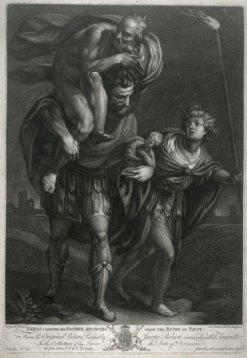
The face of a doleful young girl carrying her little brother before the tank needs no assistance of words with a surge of the pathos of child refugees who were forced to grow fast in the reality of war. Wandering about their whereabouts now in mind conjures up the mental picture of Aeneas carrying his elderly father on the back, escaping from the carnage of the war behind. Both the elderly father and the younger brother are prone to any seismic events because of their weak mentality and physical strength, and therefore require special care at all times. Aeneas, the man destined to become a founder of Rome and the nameless girl, is, in fact, are brought together by the collective experience of war, bound by the familial duty that requires sacrifice.
Notwithstanding the official cease-fire agreement unwillingly made and entered into by and between the Two Koreas, the tension, the disbelief, and the conflict of the political, social ideologies are still in the consciousness of the North and the South, keeping the amber of the war volatile around the 38th Parallel Line. This current unfinished state of the war is arguably akin to the 10-year long Trojan War between the allied forces of ancient Greece and of Troy during which the Trojans continued to carry about living in the semblance of the ordinariness of life. The compelling, emotive picture of the little Korean siblings attests to the atrocity of war that forfeits the innocence of childhood that every child in the world should have. It pleads in silence that we as citizens of the world should prevent a reprise of the Trojan War not only in the Korean peninsular but elsewhere in the world so that no more war children of their kind will be begotten by the tragedy of war.
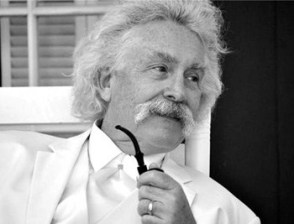 Let’s go back to the time when the great American humorist and writer Mark Twain (1835-1910) regularly featured in the nationwide newspapers with his trademark scintillating remarks on just about any subject that piqued him; but none other than reading articles about his own deaths twice in the New York Times would have perturbed his otherwise usual sanguine nature. After the first ignominy, the writer told the Times that it was an exaggeration. But after the second occasion, when the Times suggested that he had been the victim of a yachting accident, he thought he had it enough for such media farce and remonstrated to the Times with a public complaint that he would make a thorough investigation of the fallacious report. To think that a respectful newspaper such as The New York Times published such fake news of the famous writer of the time twice is something of a bitter pill to swallow, but it also shows that reputation isn’t necessarily likened to integrity or even probity.


You must be logged in to post a comment.