Tag: life

  • On Reading “Student of Desire” — Adelle Waldman

    Saturday, August 22, 2026

    “Can intellectual recognition itself become desire?”

    Will an intellectual man fall in love with a woman of equal or greater intelligence? The question has become so entangled with sexism that it seems to invite textbook answers such as, “Beauty is only skin-deep.” But this is not about feminism or social activism. It is an intimate question: “Can you love me even if I am smart but not so pretty?” Waldman’s disappointmentpromptss her to ask about her existential value as a woman, not merely as a writer or intellectual, because the personal stakes are toohighg to ignore.

    Seeing her ex-boyfriend with a beautiful woman is painful enough to prick the pride of an intellectual woman who is supposed to believe that real love resides not in looks but in the mind. Or so it seems. Waldman extends the existential question into the erotic hedonism of The Professor of Desire, whose protagonist seems to vacillate between a whore and a virgin but never reconciles himself to the truth, always yielding to the pleasures of the senses. While I understand Waldman’s disappointment at seeing a smart man fall for a bimbo, she seems to explain his gorgeous new girlfriend as the result of animal instinct: Eros alone, without marrying Eros to Psyche.

    Call it the male subconscious urge to prove sexual prowess. Or immaturity. To me, a man’s intelligence or cultural refinement does not necessarily equate to his moral fitness. Think of the ancient Greek symposium and its beautiful and intelligent courtesans. Men, I think, are often more readily stimulated by the visual than women are. I remember reading that Updike had a voracious sexual appetite and engaged in sexual excesses. And that’s not the end. Arthur Miller’s marriage to Marilyn Monroe—even though she was herself intelligent, read books, and took literature classes at night—and his novella Plain Girl: A Life tell us that intellect does not necessarily determine physical attraction. After all, the plain girl finds her soulmate in a blind musician who loves her not with his eyes but with his mind.

    I know how Waldman felt when she saw him with such a beautiful woman. I think Waldman wants to believe that she is right: that a woman’s intellect can stand equal to beauty—par pari. I think Shakespeare is great because he recognized this human nature in everyone, including the rivalries of love:

    “Love looks not with the eyes, but with the mind;
    And therefore is winged Cupid painted blind.”

    But remember: Cupid is blindfolded. He does not know whom his arrow will strike.

  • On A Woman’s Story by Annie Ernaux

    On returning to the quiet joy of reading, one discovers that some stories are not only theirs but yours too. Annie Ernaux’s A Woman’s Story was one of those stories—hers and mine.

    It was one of the days I visited my mom at the convalescent hospital for the elderly when I started reading this story, sitting by her bedside. Call it providence if you are religious or coincidence otherwise, but I wasn’t expecting it to become my story as well about my mom, who had been hospitalized since her stroke in January of this year. It was as though Ernaux was speaking to me as a daughter to daughter about her mom and mine, collapsing time and place and the cultural and social differences between us. No wonder I wanted to finish reading it at one sitting.

    This book is not of a certain literary genre. To call it a biography of her childhood and her mom’s influence on her misses the point of why it took her a year to finish the book. It’s much more than that. The absence of her mom made the author realize her mom’s place in her memory. Her mother was the first witness to Ernaux entering the world naked, and later, to her becoming the woman she is. It’s both a biological and an existential view of the author’s raison d’être. That there is no longer anyone on the other side of the first relationship, which has ended forever. It aches. It lingers. It evanesces. And before all of this will vanish into the ether, Ernaux lives to tell about the presence that was so familiar with her being that not seeing, hearing, and feeling it is painful to bear without letting it take the form of writing because writing is personal yet public, pensive but assertive, and quiet but powerful.

    I can understand the kind of ache the author felt after her mother’s death. Whether you loved her or not, you would never see her in life again. She may live in your vision of the past, but her person as a presence does not exist in this world. And that realization of forever disappearance would throw you into the abyss, stifled, blinded, and muffled—by the ineffable sorrow mixed with mystical longing.

    I think about my mom and me. What if she leaves this world soon—tomorrow, the day after, or anytime soon? Oftentimes, I wake up with indescribable terror at the thought that soon I will lose her to eternity if I breathe, like a panic attack. And it dawns on me that it is this feeling of detachment from the relationship, as the bond between mom and daughter is severed forever.

  • I love you, my dear Camille

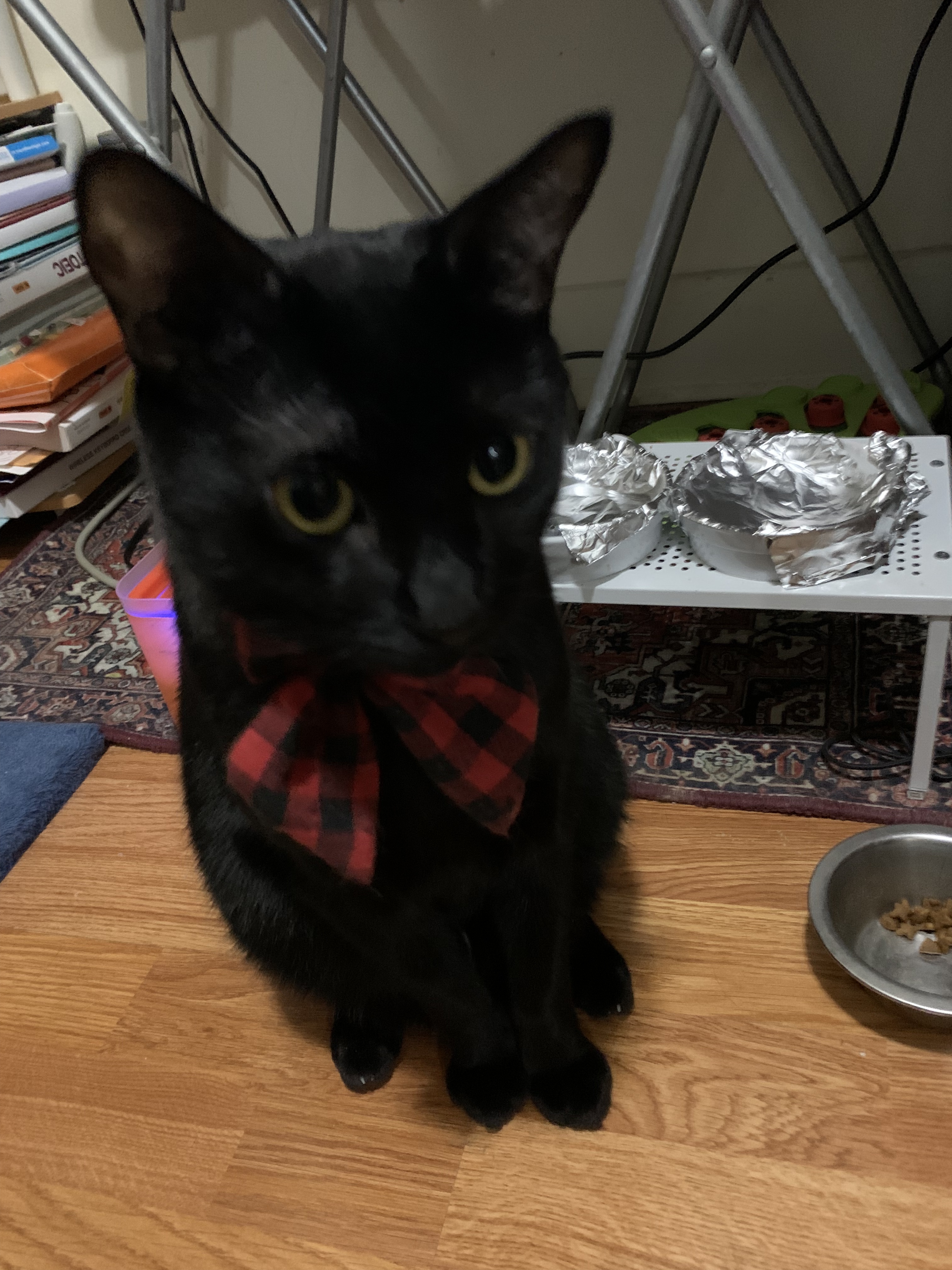
    My Camille is unwell now. He eats, drinks, and defecates, but I know there’s something wrong with his demeanor, mood, and aura. No, it’s not a hyped reaction from an overly protective spinster guardian, but I ohknow. It worries me to death; it pains me to no end. I am so thankful for his little heart pumping beneath his sleek, straight black fur, and on the other hand, I inwardly recoil in fear that what if it begins to slow and then stop? 

    I have noticed that when I pet Camille, he secretes a fluid with a noticeable smell, which isn’t terrible. I thought it was his way of expressing content when petted, and my research shows it’s partly true. Partly it is due to his anal gland charge, which worries me. So, I think maybe it’s a complication of the anal glands and other organ infections, such as liver or urinary. 

    And it plunges me so low into the abyss of grief, echoed in guilt for Camille’s condition because I have not been so loving or patient with Camille’s urge to play. He tends to eat frequently, almost every 10 minutes or so. Even though I always ensure my cats’ bowls are full of dry food with water, Camille prefers wet food. He eats small but many times. It might indicate diabetic symptoms. I feel like a terrible guardian, and more terrible is losing him – which is unthinkable! Let present fears less than horrible imaginings! 

    I just made an appointment with a vet to check him this Saturday. I hope Camille is not seriously ill. 

  • prompt 212 – fish out of water

    Tell us about a time when you felt out of place.

    Hopeful when alone

    When I read the story of the stranded Beluga whale who died in France’s Seine River in 2022, I felt like my spirit was in communion with hers because I could feel what she might have felt—what was once hopeful turned into disappointment and loneliness.

    No one knew what caused her to separate from her pod and end up in the river, but I think she wanted to see the world herself, with the images of kind humans she had once seen on the ocean in her memory. So she came to our world full of expectations for welcoming faces and smiles, but instead, she found herself in a murky gray urban river that made her loneliness more conspicuous, more incongruent.

    Likewise, that’s how I feel when I find myself surrounded by crowds that make my presence awkwardly conspicuous, shielded by an invisible wall of willing ignorance.

  • ptompt 113 on morning rituals

    What are your morning rituals? What does the first hour of your day look like?

    The mornings are the busiest time in my daily life. It starts with fresh drops of liquid eye lubricant, followed by a simple morning prayer devoid of meaningless mechanical abracadabra. I am unsure if my letter of wish is delivered, but I think it is because otherwise, the whole world seems apocalyptically hopeless and lifeless.

    Then my eyes meet the eyes of my cats, Toro and Camille. I say, “Good morning,” and, “Let’s have a great day!” After that, each of them does his morning rituals: Toro goes out to the living room, and Camille wants to eat breakfast. Boy, is he a voracious eater! Although he is agile and lithe, Camille eats at least five times daily, contrary to Toro, who prefers snacks. I wish I could be like Camille, but then that’s Camile, and I am this.

    While my cats are doing their rituals, I clean their toilets and make sure the litter is fresh and ample. After that I begin my toiletries and dressing up. The last ritual is to make iced Americano and pour it into my favorite Starbucks tumbler that keeps iced coffee until I return home in the evening.

    Sometimes, I wish my morning to be more relaxed so I can start my work day more fresh and have time to ease my nerves. But what I am always amazed after I wake up in the morning is I am still alive. Otherwise, I may miss all these morning rituals.

  • prompt 103

    Have you ever unintentionally broken the law?

    The Accused 😅

    Breaking the law springs up a grim faced judge with a wig with a gavel prone to sentence: “Death by hanging.” But no one is immaculately clean, and to err is a human. I broke the following laws, but I am not a hypocrite, as supported by Robert Frost: “Far more violence has been done in obeying the law than in breaking the law.”

    1. Diatary Law – I enacted this law on the first day of 2024 to return to the disciplined dieting I used to keep five years ago. I broke the sections of eating after 6:00 pm, indulging in carb-enriched food articles at home, and consuming a load of junk food. Now that my doctor has ordered me to lose weight until a follow-up visit in three months, I shall abide by the law in full force and effect.

    2. Law of Affirmation – I have violated all of the sections of the law: Imagination, Visualization, and Manifestation, all of which unintentionally – and intentionally. It is unintentional because when things do not go well as I expect them to or life seems unkind to me, my eyes become blind, my ears mute, and my head blank. I become comatose, thus violating the law. Intentional in the sense that when I am lost of all, including the will to live, the law seems needless, just as I am not here.

    The consequences of the violation come not in they do a single spy but in a battalion. Health risks, such as high cholesterol and diabetes, may be foreseeable. Mental health will be put in critical care if they do not adhere to the above laws. Give me a month as a corrective period, and I will reinvent myself.