Tag: literature

  • Saturday Reading Notes on Bitter Water Opera

    September 12, 2026

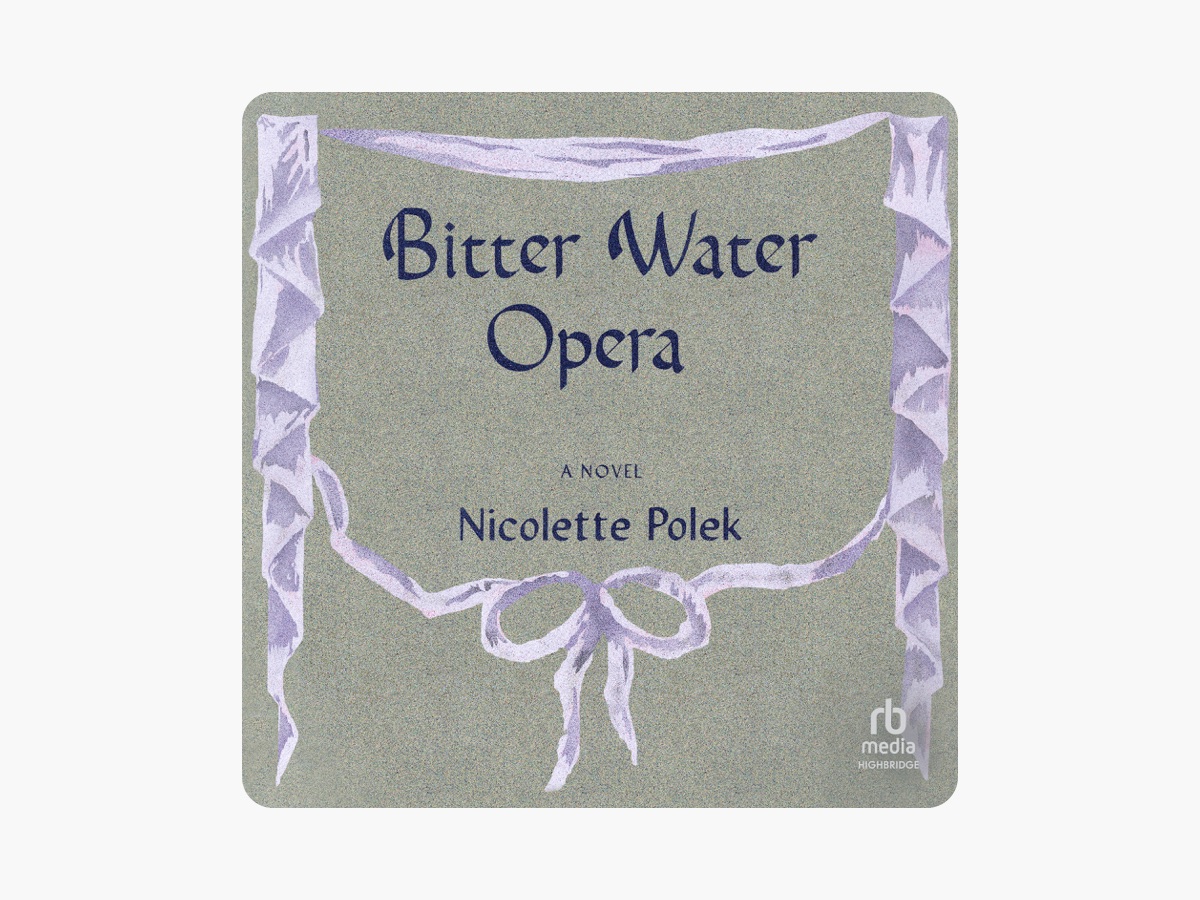
    My reading today of Sophie Golub’s review of Nicolette Polek’s Bitter Water Opera is a literary matryoshka: a reflection on a review of a book I have not yet read. Yet Golub’s elegant summary of the story reveals the book’s undertone: a woman’s admiration for a particular artist. It is a story embedded within a story, conveyed through a reviewer’s reading of a writer’s book.

    The story revolves around a woman named Gia. She is the narrator, who sends unaddressed letters to Marta Becket, an artist whose art and inner life draw Gia into her solar system, which Gia tries to adopt as her own, because Marta is Gia’s kind of artist and person. She is at a point in her life where she needs direction. She needs a clear purpose in life, so she turns to Marta, who has already become a ghost hovering at Gia’s front door. Gia tries to find a reason to live in others’ lives rather than contemplating her own. She needs to see her own reflection in someone or something outside herself. Marta becomes that reflection, though Gia doesn’t realize she may have been chasing her own shadow.

    But I also get Gia’s point about why she favors artists who are dead and out of reach. I read this distance as Gia’s protective shield against the corruption of artists in the real world. In her mind, the familiar image of successful writers is shaped by publicity funded by their publishers and amplified by the media, all too obviously for profit. Likewise, I tend to be drawn to writers who have become ghosts because they are frozen in time; their human faults and imperfections cannot easily interfere with my admiration for their work. Both Gia and I internalize our own artistic principles and judge other artists against those internalized principles.

    I may not have read the review in the way it was intended. But basically, the review centers on Gia’s “existential ennui,” a state in which Gia loses her sense of meaning and desperately needs a model with whom she can identify. I can see something of myself in Gia because we are both interested in people with unique stories. Yet Golub does not allow Marta to remain a flawless model: Marta and her theater also need saving, and Gia’s final transformation is stated more clearly than it is felt.

  • Sunday Letter – 2

    Sunday, September 6th, 2026

    Hi Freddo,

    It’s September, and fall will arrive soon. In fact, the cooler temperatures are already its harbingers, and I am all for it. How’s the weather in Rome? And how are your projects coming along? Last time I heard, you were working on a translation of a certain book from English into Italian. Are you still working on it? Can you tell me what the book is about?

    I want to show you my prose poem I wrote yesterday. It’s one of my recent experiments with story-like poems. I write poems that read like prose. The best thing about prose poems is that there is no complication of characters with existential dilemmas and metaphysical questions about who they are—questions that not many people care about. But these days, too many poems and stories can read like ideological catalogs, social agendas, or personal traumas that are not easy to read and take to heart. While I get that shared traumatic experiences may help those who find themselves therein, that is not my cup of tea. I don’t want to write about my ethnicity or race in the context of living in America as an Asian immigrant woman. I don’t want to be labeled as an “ethnic” woman writer whose work is shelved outside of the so-called mainstream book sections in bookstores. That is why I admire someone such as Kazuo Ishiguro, who wrote The Remains of the Day. His background does not prescribe the consciousness, subject, or voice he is permitted to inhabit; you would not necessarily know that a Japanese-British man wrote it in posh British English. There are no boundaries of race, gender, or age in the language of the mind and heart. You can be whoever you want to be and show the world the way you are.

    Today’s letter reads like a rant from an anxious woman irritated by a boisterous party of popular or best-selling writers. So be it. I do not want to be restrained in the realm of written words where I can be myself. I do not like being boxed in by what people expect me to be and write, because that is not who I am. You would find it a bit hard to relate to my literary zeal to write the truth about myself because you would not feel the pressure of ink in your own color, but that is okay. I do not expect you to understand my stance. However, I would be incredibly happy to see you on my side when people scoff at my poems and prose.

    Dreaming of a dusk on the Aventino Hill looking over Rome with you,

    Stefania

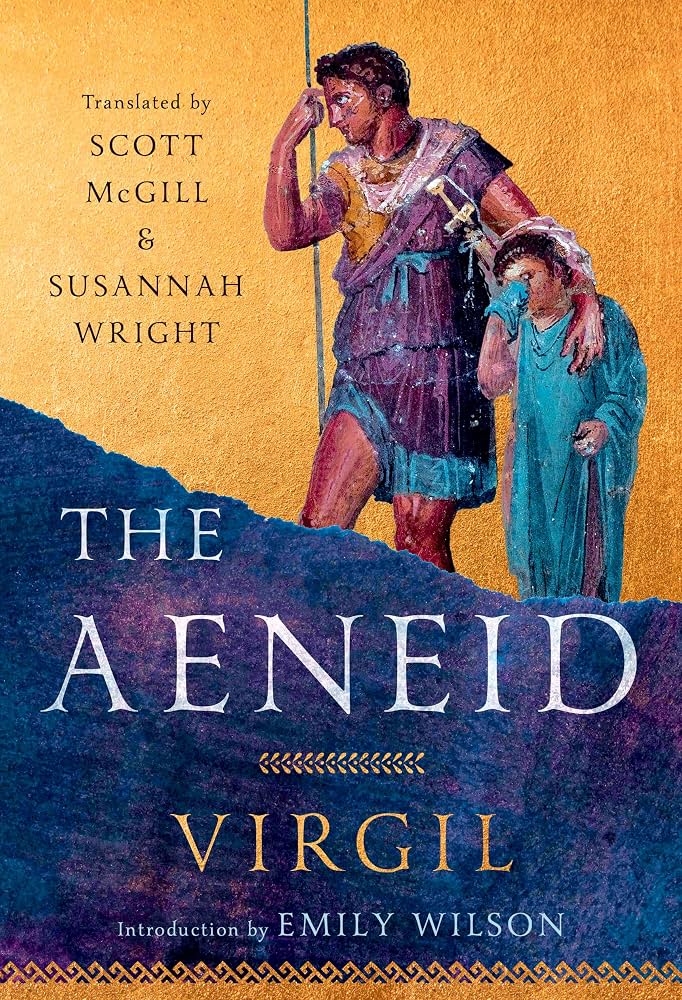
  • Reading on A Review of the Aeneid, Translated by Scott McGill and Susannah Wright, by Deborah Warren

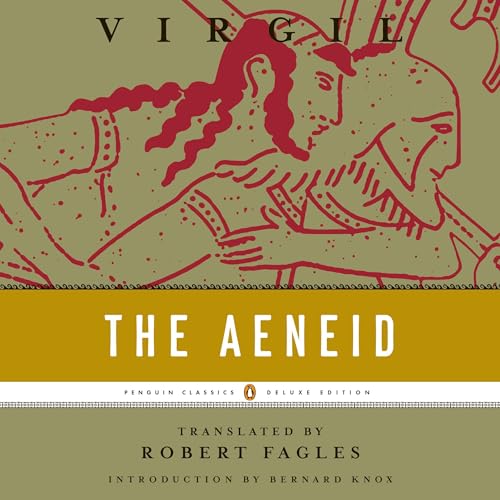
    First, let me confess that I have not yet read the translation of The Aeneid by McGill and Wright. Maybe I will after I finish reading Robert Fagles’s translation. So, while it would be unfair for me to judge which translation better serves readers of the twenty-first century, I can say that Fagles’s translation of Virgil’s epic narrative of Aeneas reads like a prose poem to me, simply because its language and arrangement suit my taste.

    This essay is not for general readers but for readers with an academic background in Latin. Therefore, for general readers such as myself, its comparison of the original Latin with the English translations—in terms of metrical structures, the choice of words, and their juxtaposition—may not ring a bell. My interest in reading The Aeneid comes from a purely personal curiosity: I want to understand why Aeneas is the way he is, breaking the hearts of the women who loved him dearly. In that regard, Fagles’s translation chimes the bell of my heart and soul because his words are poetic and, at the same time, go straight to the heart. Take a look at these translations:

    Fagles:

    “Wars and a man I sing—an exile driven on by Fate,
    he was the first to flee the coast of Troy,
    destined to reach Lavinian shores and Italian soil.”

    Robert Fitzgerald:

    “I sing of warfare and a man at war.
    From the sea-coast of Troy in early days
    He came to Italy by destiny
    To our Lavinian shores,
    A fugitive, this captain . . .”

    McGill and Wright:

    “I sing of arms and of a man displaced
    by Fate, the first to leave the coast of Troy
    for Italy and its Lavinian shores.”

    Fagles’s version of “Wars and a man I sing . . .” clearly expresses Virgil’s intention to sing about a man destined to put duty before feeling. By placing the mainstay of The Aeneid—the fate of the man—at the beginning, Fagles conveys to his readers that Aeneas was not born to be a romantic figure, or even a heroic star, but to be a man torn between what he wants and what he must do.

    Through Fagles, we hear Virgil sing of Aeneas, a demigod and an excellent soldier: the embodiment of the Roman ideal, whose pietas and gravitas signify personal virtue as well as martial prowess. But Virgil was not a soldier; he was a poet. Bernard Knox, however—the classicist who wrote the introduction to Fagles’s translation—brings the crack of a horsewhip to it. A former U.S. Army captain and World War II veteran, Knox had literally followed in the footsteps of Antony and Octavian during the Italian campaign. He must have carried Euterpe and Calliope with him—the Muses who had also stood behind Virgil thousands of moons before.

  • The Aeneid — Book I Reading Note

    Version 1.0.0

    Book I begins in the middle of Aeneas’s journey to his fated destination of Italy. Virgil seems to sympathize with the man who surrenders his personal feelings to the public duty of building a new Troy, as arranged by the Fates. Gods can interfere but cannot change his fate. It’s a case of Thus Spoke Zarathustra—but who is Zarathustra here? Aeneas, or Virgil speaking through him?

    If it’s Aeneas who speaks, then he does so through Virgil as his advocate for the glory of fulfilling pietas with gravitas. Cupid is not for him, but for Dido, who became enamored with a man whose vulnerability was braided with virility, clothed in beauty. Then Juno’s absurdly violent rage against the Trojan general, who laments his fate, forces him to wander across the seas through the vicissitudes of gain and loss, loss and gain. But that doesn’t mean Aeneas is a man of steel, because when Venus appears to him in disguise as a wanderer, he rebukes her for behaving like an immortal rather than a mother, even when she is trying to help her son.

    Book I presents Aeneas as a man who agonizes over the conflict between his desire and pietas, born of a mortal father and an immortal mother. It is the dual nature of man: physical and spiritual. This could later be applied to the Christian teaching that the will is strong, but the flesh is weak. In Virgil’s view—his imagination still cloaked in the Republican toga, albeit under Emperor Augustus—Aeneas was the model Roman man and soldier who placed honor and valor before beauty and love. He was Virgil’s kind of man, one who would build the grandeur of Rome.

    Book I ends with a scene in which Dido, the queen of Carthage—Juno’s beloved land—is infatuated with Aeneas after Cupid sprinkles powdered amour upon her. This is Venus’s machination to secure protection and refuge for Aeneas and the Trojans. Would this be a plot of Fate too? Then, does it mean that Venus is also a gambit in Fate’s chess? Then, what is the meaning of living a life in the mirage of hope?

  • On Reading “The Thorn in the Flesh”

    Reading Day — Thursday, August 20, 2026
    On D. H. Lawrence’s “The Thorn in the Flesh”

    Lawrence must have hated the military. Well, more exactly, the rigid discipline used to tame the naturally untamed. It is against nature, against free will: the controlled mindset that conditions you to believe that if you fail, you are a loser to be put in the pillory. Not a man. Not man enough.

    Is that really so? Lawrence asks. No. A man is a man when he witnesses his desire being reciprocated in the body of his lover. Virility is true manhood because it requires no weapon of killing.

    The young German soldier in this story recovered his lost confidence through sensual passion, which collapsed the wall between institutional dehumanization and being fully alive. Naked with his lover, the soldier felt no shame in wanting and loving her. The erection of sexual passion restored physical vulnerability.

    We know Lawrence for his controversial Lady Chatterley’s Lover. So, it may be convenient to call him a sensationalist whose agenda was to challenge religious doctrine and restrictive social norms. Instead, he was a writer who stood at the heart of humanity and showed us the beauty of being human in the expression of passion, in wanting and being wanted.

    The Thorn in the Flesh is Lawrence’s version of Dostoevsky’s “Only beauty can save the world.”

    — Stephanie Joori Suh

  • prompt returns

    Daily writing prompt
    What’s a promise you made to yourself that you’ve actually kept?

    I collect promises like Swarovski jewelry, from necklaces to earrings, to bracelets, and more. I love pretty things, so I change them, but it all comes down to a few select ones that I usually wear to my heart’s liking. So are my promises. There are many, but only a few of them remain, and one of them makes it out to a World Cup final.

    I have always wanted to write a book that I can leave as my legacy, just so to prove I have lived, that I, Stephanie Joori Suh, lived, saw, and wrote. The thought that one day my body will become a speck of dust or ashes gives me a panic attack amounting to losing my eyesight completely. The ancient Greek poetess Sappho also felt the same, as found in one of her surviving fragments. Besides, there is something in me urging me to write as it is my nature. My father once told me that he had the same urge to write poetry, as his mother did too. Maybe it’s in the genes, like a family of practicing ancient secret rites.

    What I have done is to write my first chapbook of poetry this year. It is a collection of poems I wrote from my East Coast years to the present West Coast years. I auto-published a short story before as a Kindle Read, but this is my first time submitting a poetry chapbook to editors of ten presses. Some of them are for chapbook prizes, and some are regular chapbook submissions. And… one of them sent me an email last Wednesday that they wanted to publish my chapbook. I do not want to open a champagne early until I have an actual chapbook of mine in hand. Still, I feel I am in the procession of poets from the misty past and continuing as long as humanity remains.