September 12, 2026
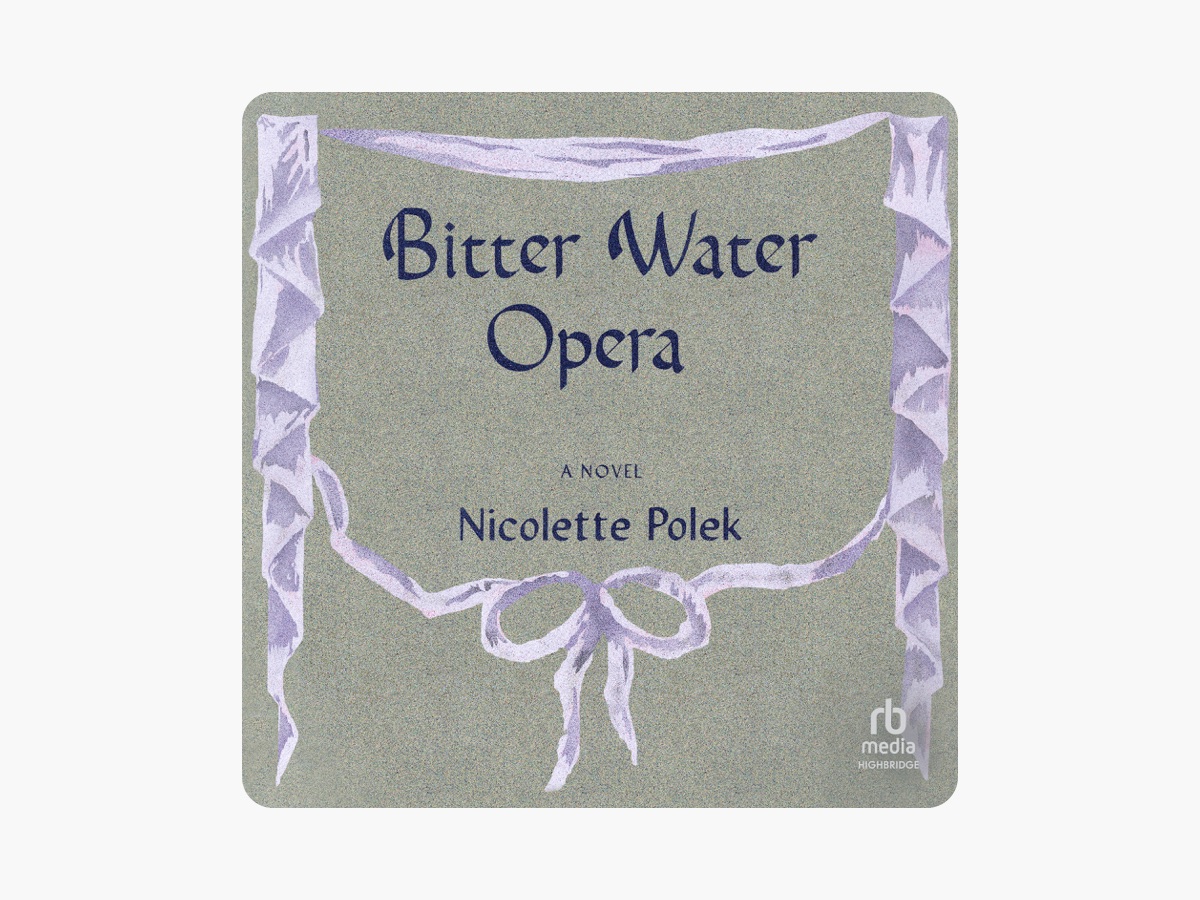
My reading today of Sophie Golub’s review of Nicolette Polek’s Bitter Water Opera is a literary matryoshka: a reflection on a review of a book I have not yet read. Yet Golub’s elegant summary of the story reveals the book’s undertone: a woman’s admiration for a particular artist. It is a story embedded within a story, conveyed through a reviewer’s reading of a writer’s book.
The story revolves around a woman named Gia. She is the narrator, who sends unaddressed letters to Marta Becket, an artist whose art and inner life draw Gia into her solar system, which Gia tries to adopt as her own, because Marta is Gia’s kind of artist and person. She is at a point in her life where she needs direction. She needs a clear purpose in life, so she turns to Marta, who has already become a ghost hovering at Gia’s front door. Gia tries to find a reason to live in others’ lives rather than contemplating her own. She needs to see her own reflection in someone or something outside herself. Marta becomes that reflection, though Gia doesn’t realize she may have been chasing her own shadow.
But I also get Gia’s point about why she favors artists who are dead and out of reach. I read this distance as Gia’s protective shield against the corruption of artists in the real world. In her mind, the familiar image of successful writers is shaped by publicity funded by their publishers and amplified by the media, all too obviously for profit. Likewise, I tend to be drawn to writers who have become ghosts because they are frozen in time; their human faults and imperfections cannot easily interfere with my admiration for their work. Both Gia and I internalize our own artistic principles and judge other artists against those internalized principles.
I may not have read the review in the way it was intended. But basically, the review centers on Gia’s “existential ennui,” a state in which Gia loses her sense of meaning and desperately needs a model with whom she can identify. I can see something of myself in Gia because we are both interested in people with unique stories. Yet Golub does not allow Marta to remain a flawless model: Marta and her theater also need saving, and Gia’s final transformation is stated more clearly than it is felt.
 Flame, Glass and Ink are Poems, essays, and reading notes by Stefania Joori Suh
Leave a comment