Tag: logotheraphy

  • The Glass Castle by Jeannette Walls

    The Glass CastleThe Glass Castle by Jeannette Walls

    My rating: 5 of 5 stars

    Dickensian world of poverty is so abominably tenebrous that we tend to think of it simply as an anachronistic, if not antediluvian, work of fiction apropos of a bygone Victorian era, without translating its elemental essence of nobleness of human spirit that arises from predicaments into our own zeitgeist. The fictitious characters of Oliver Twist, David Copperfield, and Pip are the embodiment of such resilience, phoenix-like spirits enduring sordid conditions that life could impose upon us to the extent possible. Spinoza, the Dutch thinker and watchmaker, once said that it is Amor fati, love of fate, by which man’s inner strength could raise him above his outward fate. In fact, Nietzsche centuries after corroborated by saying: “That which does not kill me only makes me stronger.” Given the above axioms, what if someone in our contemporary time a fortiori lives to tell such victory of human spirit? That was the reason that I chose The Glass Castle by Jeannette Walls. All of the aforesaid noble triumph of human spirit over existential horrors of life is substantively and stoically recorded in this compelling living memoir with all her spirit, with all her intelligence, and with all her heart.

    The story starts as Walls invites us to board her memory train and travel back in times until we return to where we depart along the long and winding railroads of her windy but beloved past. We meet her charismatic, intelligent father whose engineering feats are passed in smolder by his ever independent, anti-establishment, recalcitrant spirit a fortiori emboldened by a spirit of Dionysian portion. The artistically inclined mother is all liberality: She is a devout Catholic – although far from being sanctimonious – and has a heart of gold, save a practical sense of the world. Then there are one brother and two sisters, all of whom are highly intelligent and well-behaved thanks to the moral upbringing by their parents. The parents do not have the gumption to support their children, let alone themselves in terms of economic security, which was the cause of the existential ills of the family, pushing Walls into a position of  a de facto breadwinner of the family.

    What is most profoundly august about Walls through living amid the straits of constant economic insecurity, frequent threats of family separation by social agencies, and dangers of physical harassments was her strong sense of responsibility for her life and for her family that enabled her to endure the existential predicaments. Many people mired in such situations might have develop disputatious streaks of rebellion against everything ascribed to them. However, Walls and her siblings took different attitudinal values to their existential dilemmas: they held on to a sense of purpose and a tenacious grasp on togetherness nurtured by their yearning to achieve a higher aim in life. In fact, such attitude toward life corresponds to one of the tenets of Logotheraphy: in order to find a meaning of life however trivial or nihilistic it many seem, taking a different, constructive stance on what is ascribed helps us to rise above biological, social, and cultural inhibitions during a difficult times because we give our suffering meaning by the way in which we respond to. Which also brings us back to Spinoza’s Amor fati axiom: a different approach to our suffering is sublimated into supremeaning of life in travails by believing in its meaning to every situation with will to live a meaningful life, which then ceases to be a suffering itself.

    The literary merit of this memoir lies in its absence of unbridled namby-pamby outpourings of emotions in the narrative with a certain air of stoicism. Ironically, Walls’s frank, touchy-willy, matter-of-fact manner of discoursing her story belies her overwhelmingly heartrending heartaches, disappointments, and dismay smothered under factual descriptions of her past that renders the authority of truth and the power of reality without hindrance of prohibitive emotions that often results in fabrication. In her literary confession, Wall achieves catharsis by putting what was in her mind on pages after pages, pushing her pen through in expense of her will to come to terms with her parents, let alone herself, producing forgiveness of her parents’ wrongdoings and acceptance of their frailties in a package of love and tenderness.

    All in all, Walls’ s message to her reader is clear: you can’t choose your fate, such as a family, but you can choose what to make out of what you are given. In one way or another, the story itself chimes the bells of emotions and thoughts of many of us: the problems and issues that the Walls had and the ones we have or had are not oranges and apples through our voyages of life. Walls shows us that notwithstanding all the vicissitudes of life, self-reliance, resilience, and determination helps us to sail through with cheerfulness and humor as handmaids to courage. This honest-to-goodness tale of a woman rising above the planes of her inhibitions speaks straightly to our hearts. This book is a one-of-kind testament to its veracity and quality that upon reading this book, you will feel as if you knew Walls telling a story with a sense of elemental kinship which you can relate to. Moreover, this bona fide memori gives us a sense of relief that no family is perfectly blissful, which resonates with Tolstoy’s view of families as inscribed on the first page of Anna Karenina: “All happy families are alike; each unhappy family is unhappy in its own way.”

     

  • Time to Make the Donuts by William Rosenberg

    Time to Make the DonutsTime to Make the Donuts by William Rosenberg

    My rating: 4 of 5 stars

    Before Starbucks claimed a monopoly on franchised coffee-houses around the world, Dunkin Donuts had been arguably one of the most popular American food service franchises in the States as well as other countries. With its signatory Munchkins and famous slogan of “American runs on Dunkin” presented by Super Mario-look alike Fred the Baker (although he retired from the public in the late 90s), the famous coffeehouse brand has made its mark on the American urban culture thanks to its straight-talking, no-nonsense founder William Rosenberg who drew up his case history of being a successful entrepreneur against personal all odds in this simple but admirable memoir written during his last days of life while succumbed to a cancer.

    Rosenberg’s business philosophy of what works and what does not in business to share with the public forms the basis of this book whose inception was first conceived by encouragement of Mario Puzo, the author of The Godfather in the 60s. Straightforward and enterprising he was, Rosenberg’s sharing of his own experiences with the reader for altruistic motive without a sense of entrepreneurial machismo is traceable in every chapter. What he lacked in formal educational background because he had dropped out of school at age fourteen in the height of the Great Depression in 1930, was compensated by the simple but timeless tenets of achievements: diligence, persistence, determination, risk-taking, diligence, innovation, vision, and passion. Surely, all of the aforesaid seems bromidic, but oftentimes, it is these simple elements of life that we oversee as trifle and insignificant without pondering over Leonardo Da Vinci’s truthful adage: “Simplicity is the ultimate sophistication”

    In fact, there are parallels that the reader can make between Rosenberg’s elements of success and the three values for meaningful life in Logotherapy, the third Viennese school of psychotherapy established by the great Viktor E. Frankl whose experience in Auschwitz was a testament to its veracity and validity of Logotherapy, which is to help us find a meaning of life by freedom of will and will to meaning. Throughout the book, Rosenberg emphasizes that it is what we do with the challenges that determine our failure of success because learning from errors is the sine qua non of success. Whatever the circumstances may be, a person can find a way to succeed, and it is attitude that makes it possible. Having a good-hearted but violent-tempered father did not stop him from going out of his way and establishing world famous Dunkin Donuts. This forthright attitude links to attitudinal value of Logotherapy signifying our triumph over biological, social, and cultural inhibitions during difficult times with a discovery of meaning of suffering by the way in which we respond to. That is, how we respond to challenges will make a heaven out of hell, a hell out of heaven.

    Also, a sense of humor is a must-have for taking us a long way to succeed in life. “Work hard, play hard,” was Rosenberg’s mantra. Yet to put it lightly is to miss the gist of the meaning; humor is a prerogative of human that can help us take on a different view of life in a light-hearted way, so that we can be soundly assured that unpleasant things we may be going through are not everlasting and that they are occurring because there is a meaning to them. This, in fact, also relates to humor as a vehicle to turn our backs against emotional distress in life that may hamper our continuation of searching for a meaning of life. Whether or not Rosenberg might have been aware of Logotherapy in his lifetime, the reader will find at every turn analogy between Rosenberg’s business philosophy and Dr. Frankl’s Logotherapy.

    Philosophy aside, there is plenty of interesting information on how the brand name came up with, the origin of Munchkins, and revolutionary way of operating the stores . To illustrate, the catchy name of “Dunkin’ Donuts” came from “You dunk a donut,” Munchkins, previously called Dunkin Donuts Donut Holes sold for 19 cents per set, got the name of a character from “The Wizard of Oz” with the right to utilize the name exclusively in the food service business. After all, the famous Munchkins have become a household name throughout the States and achieved a unique status in the food firmament.

    This is an interesting read that the reader will find both practically helpful in applying Rosenberg’s elements of success to his own set of principles for betterment in life and entertaining to discover the history of the franchise in pastime. The reader will also find that the narrative will reflect the author’s artlessness, cleverness, and forwardness in this engaging book that matches its topic worth the writing.

  • For Love of Fate: Book review on Man’s Search for Meaning by Viktor E. Frankl

    Man's Search for MeaningMan’s Search for Meaning by Viktor E. Frankl

    My rating: 4 of 5 stars

    Many books are to be tasted or swallowed, whereas certain books are to be chewed and digested for the nourishment of our minds and souls, such as Man’s Search for Meaning by Viktor E. Frankl, the founder of Logotheraphy, the third Viennese School of Psychoanalysis, along with Freudian psychoanalysis and Adler’s individual psychology, that deserves of its recognition of being one of the books of our time for its content as well as its origin. This book is not of survival literature of the Holocaust but of a memoir of a courageous human soul that did not succumb to despondency. It is less about what he suffered and lost as a prisoner at four concentration camps during World War II than it is about the sources of his intention to live through it, attesting to the words of Nietzsche: “He who has a why to live for can bear almost any how.”

    Man’s Search for Meaning is a fruit of Frankl’s resilient soul ever resisting the existential horrors of situations that life could afford; whenever the miserable conditions of the camp suppressed the spirit, Frankl diverted such negative energy to reconstructing the manuscript which he had lost in the disinfection chamber of Auschwitz and scribbling the key words in shorthand on tiny scraps of paper. In fact, it was a way of intensifying his inner life full of intellectual resources and spiritual freedom to which he could retreat from his terrible surroundings by forcing his thoughts to turn to another subject, which made him enable to rise above the situation, above the sufferings of the moment.

    In addition to the willful act of deluding anxiety and negative feelings, Frankl ensures us that a sense of humor is another of the soul’s weapon in the fight for self-preservation and can afford an aloofness and an ability to transcend any situation, for developing a sense of humor and seeing things in humorous light is a kind of trick learned while mastering “the art of living.” That is, by laughing about any sordid or callous situation, we ease our mental distress and are able to take on a different stance on the situation in a less negative way that is essentially not overwhelmingly stressful or unbearable. After all, humans are the only biological organism that can laugh, and thus this sense of humor is our prerogative as human.

    It is also interesting to learn that the prisoners who did their utmost best to look good even in the sordid surrounding survived the dreadful experience because they looked “fit” for survival. This act of grooming links to will to meaning – that is, a will to live- that has physiological bases of psychic energy which rejuvenates the body and the spirit to see a why to live. On the other hand, there was a young inmate in the camp whose sudden loss of hope and courage to live affected his already typhus-stricken body so adversely that such mental condition lowered the man’s temperature and resistance against typhus, which ultimately caused his premature death. This episode shows us that what we believe becomes our truth and thus can alter our reality with another one, a virtual reality as a product of psychosomatic effect, which also links to the three sources for meaning of life as follows:

    Creative Value – Doing something meaningful, such as Frankl’s scribbling the manuscript
    Experiential Value – Appreciating beauty of the Arts or love, such as his thinking of his wife in another camp whenever he was on the verge of falling into an emotional distress; and
    Attitudinal Value – Triumphing over biological, social, and cultural inhibitions during difficult times, such as Frankl’s endless efforts to divert his thought to another object of lofty value. It is this value that gives to our sufferings meaning by the way in which we respond to.

    Man’s Search for Meaning by Viktor E. Frankl testifies to Nietzsche’s dictum as aforesaid that suffering can grow out of existential frustration in the sense that there is a point to sufferings, that there is a hidden meaning in the guise of suffering, as there is only one right answer to the problem posed by the situation at hand. The essence of existence, which is search for meaning of life, underlies our awareness of a possibility against the background of reality – that is, what we can do about our given situations, not depending on the happenstances. Our emotions, which are interpreted as suffering, cease to be suffering as soon as we form a clear and precise picture of it by applying the three sources for meaning of life. Viewed in this light, this book is a veritable guide to how to overcome the struggles of our lives and achieve demands imposed upon our daily tasks however insurmountable they seem, which gains utmost credibility against the backgrounds of his own anguish in Auschwitz.


  • The Moon in the Water

    girls-night-moon-water-lily-painting-beautiful-mood
    courtesy of google.com

    Like the Moon in the Water,
    She’s soaked in a desire
    to fill her with full of light,
    the virtue of high mind, the sublime pursuit,
    spurning airy celebrity.


  • Cycle of Love

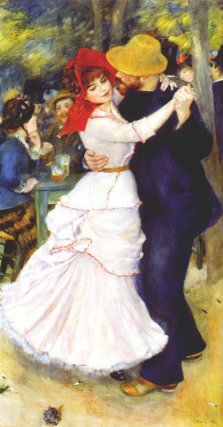
    Dance-at-Bougival-1883-Pierre-Auguste-Renoir
    Dance at Bougival (1883) – Pierre-Auguste Renoir courtesy of https://learnodo-newtonic.com

    To love is,

    To know, to think, to fancy, to cherish,
    to search,

    To want, to run, to fall, to face,
    to reach,

    To arrive, to see, to feel, to free
    to quench,

    To give, to listen, to light, to bring,
    to match,

    To surrender to one another.

  • Bluebird Interview

    photo

    She was born when Saturn and Uranus were housed in the Aquarius. That says pretty much about her. The Aquarian are known for their independent spirits, compassionate and caring nature, and unquenchable wants of knowledge, all enveloped in mysterious estrangement even among the crowds. Yet, Stephanie, the writer and the editor of her two-year old Web log, “The Stylus,” (formally known as “Offbeat) is generally quite approachable and genial although she is never too loquacious at a first meeting. In fact, you might find her quite interesting to talk to, especially when you strike up a conversation with her about books written by classical writers or about history, dogs, or cultures. And if any of these appertains to one of her writings published on her digital log, “The Stylus,” you will see her soul being elevated to the ether with her eyes sparkling like stars on the Persian night sky. On Monday morning at a cozy cafe in Avonlea, Bluebird had the pleasure sitting down  with a cup of warm hazelnut coffee to talk with her about her blog, from the inception, the purpose, and the future thereof.

    BD: Hi, Stephanie. As Oscar Wilde has said that a woman who would reveal her age would tell anything about her, I won’t ask you how old you are because I suspect that you will not anyhow.

    Stephanie: I appreciate your judiciousness. (Smile) And yes, you are right in saying that I won’t tell you my age. (Smile) But I am neither teen-aged nor maturely aged, single, like one of those 10 vestals in the ancient Roman Empire. (Smile)

    BD: Okay, then let’s start talk about your Web log. What was the idea behind the creation of this log of yours? Did it occur to you all of sudden that you wanted to have yours like everyone else?

    Stephanie: Well, I first started thinking about having my writing log about 2 years ago. I had always wanted to write things about what I liked and to convey it in written letters because I think writing revels one’s soul in his/her genuine self without worrying about the physical appearance and how to present the self externally in public. In that regard, writing is non-discriminating of all social and biological differences. And I always thought that in people’s writings I could see the intelligence and nature of the writers because people would tell about their innermost feelings by means of writing rather than by speaking, which I think, sometimes seems a bit pompous and artful.

    BD: So, is this why you came to create your blog to write about what you think and feel that cannot be shared by speaking in public?

    phoo

    Stephanie: Partly so. And partly it’s because writing seems easier to communicate than speaking, which requires of me instantaneous faculty with dialogue that necessitates breaking from shyness. You see, English is not my mother tongue. Being a native Korean, the language differences between the two languages are as wide and deep as the Pacific Ocean: The English belongs to the Indo-European lingual family, while the Korean to the Ural-Altai to which the Japanese, the Turkish, the Finnish, and the Hungarian also belong. The syntax and the grammar are of course very different. So, it will be much different from, say, someone from any Western European country speaking and writing English because Western European languages belong to the same family as the English. Nevertheless, I want to break from such syntactical, grammatical, and literary inhibitions to craft the art of writing, just as Jack Kerouac felt the same about it.

    BD: That’s a sublime motivation to create your blog. Then how about the name of your blog? It has recently gone through some changes…

    Stephanie: Yes, indeed. But for the good reasons. First, it was started as “Offbeat” because one of the teachers at the language school I currently work at told me that my blog seemed to carry this offbeat vibes, a sort of New York feel, the independence, the avant-garde spirit that knew no boundary of subject matters of writing. So I thought it was a cool name for my blog and kept it until the last week. But suddenly I came to think that it needed name changing just for a change of scenery; you know the kind of moment when you want to reinvent your image with a new haircut.

    BD: Okay, Stephanie. By the way, what are your readers like? Do you have many followers?

    WK-AK224_BOOKS2_20071011174112

    Stephanie: To be honest with you, I am more concerned about the qualitative likes I get for what I write from fellow bloggers who also love writing and publish qualitative posts by which I mean the writings, such as musings, creative stories, poems, and/or book reviews. The reason I say this is that recently there has been someone who creates several unsolicited blogs that only contain commercial stuff, copied works of others, or nothing just to get to my blog. And I tell you that I only appreciate the likes from those qualitative bloggers. And I also tell you that I don’t appreciate those of illegitimate ones’ likes. How do I know they are illegitimate? Well, can you like my writing as soon as I publish? That means that person does not bother to read my writing, which I take it as an offense.

    BD: Who is that one plaguing your blog with empty likes? Have you done something about it?

    Stephanie: First, that one appeared in my spam comment section. He said he liked my blog and asked for some advice of writing. I think I was too naive to even reply to him, thinking that he was going to have his meaningful blog filled with writings, but no… I should have never done that…. This is my character flaw; that I bring trouble and pain on myself through pity and compassion… In that respect, I sympathize with Katherine Cookson, who said the same thing in her memoir Before I go, about which I have also written.

    BD: You must be really frustrated with that person… Sorry to hear that.

    betty beaver

    Stephanie: I even contacted an engineer at wordpress. about this issue in effort of stopping him from visiting my blog, but was told that because it’s in a public domain, there’s no way I could do that… And you know it’s really disheartening to see it happening in my blog because it is a sheer form of sabotage to my blog because my blog is not an object of popularity… Although my current followers are 52, what I care about is my works being duly appreciated by fellow writers, amateur or professional. Nevertheless, I don’t want to canvass for liking my writings. It’s just not me. But if you like any of my writings in terms of the contents regardless of any grammatical errors, that makes me feel fulfilled. And any comment is always welcome.

    Don’t be shy to comment on any of my posts because I am a human being, too! (Smile)

    BD: Stephanie, I understand how you care about your blog and your love of writing in this interview. Any word to your readers?

    Stephanie: I just want my readers to know that I write because I like to portray what I feel about things in my heart in poetry and what I think about books I read in my mind in belief that taste and reason is universal in all human creatures regarding principles of judgment and of sentiment common to all mankind, as Edmund Burke averred in his essay On Taste. So Many Thanks to You, Dear Readers with My Whole Heart.

    BD: Thank you, Stephanie. I hope your writings will have a wide range of loyal noble readership.

    Stephanie: Thanks! Have a lovely day!

    img-thing

    저장

    저장