Tag: love

  • “A Man Called Otto” (2023 Film)

    If you run into Otto on the street or in a store, your eyes will see him as a grumpy old man who would cavil at one cent for everything. But if we look at him with the mind, he is quite a character for sure, and you will fail to dislike him once you know him and his secret. He is very good at fixing machines, from dishwashers to radiators, bicycles, and cars. He is also a fine babysitter and a great driving instructor. But as God is arguably fair in evenly distributing talents in us, Otto has a hard time mastering one thing: the art of killing himself. And boy, shouldn’t he thank God for such failed experience?

    Otto is a lonely man in his sixties who lost his love of life and dear wife, Sonya, to cancer. Sadness comes not in a single spy but in the battalion, for he has just been forced to retire from his long-term job due to the juggernaut of changing generations at his workplace, as with other places. He has no children but himself, and as Sonya was the beacon of Light in his already reticent and shy life, he sees no light, joy, or meaning in life. The world suddenly turned grim and dreary. Otto is wrapped in his sorrow and besieged in loneliness under the roof of distress. We are privileged to look into the psychology of the destitute in the darkest night of the soul distressed in utter loneliness, which can be broken with a light of kindness and humor as shown by Otto’s new lively and lovely neighbors Marisol and her family. 

    Humor is a handmaid of Hope, which Otto needs on the dark night of his soul. So, as the name suggests, Marisol and her pleasantly vivacious family bring the beauty of Sea and Sun to Otto’s Dungeon of Despondency with lots of laughs followed by tears and more laughs that will make anyone harnessed with a yore of life lightened. And since Otto is secretly a big-hearted person – literally and clinically – he slowly but surely warms to the warmth of friendship and love and shows his true colors as radiantly gorgeous as afternoon sunshine showering the brilliantly golden orange trees in summer. Oh, and there is a homeless cat that seems to be Sonya’s familiar in cat skin sent by her from heaven to be his company.
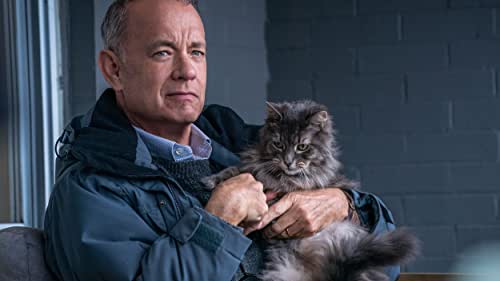
    Otto is one lucky person to be surrounded by a loving community of neighbors, who becomes an alternate form of a family with emotional support and care, often overlooked and ignored by overtly advocated individualism with no face of humanity. Indeed, that doesn’t mean returning to agrarian society or something to the effect of the notoriously puritanical Salem, where everyone cast a jaundiced and suspicious eye on the targeted loner in the community, with trademark gossiping and ostracizing. Showing care shouldn’t be complicated because one can just say hi by trying to understand why the person behaves the way they are. I believe that is how we can prevent suicides by detecting sadness from the person instead of devolving the person to a therapist or counselor or ignoring them as if they were invisible or a burden to care. Just like Marisol and his family have shown, Light defeats Darkness. And everyone deserves Laughter.

  • TikTok, the Orphaned Marmoset’s Story

    TikTok rescued from a miserable life courtesy of BBC.

    Whether it is my animal zodiac sign of Tiger that is believed to be highly incompatible with anyone with that of monkey, let me just clarify that monkeys are my least favorite animals. However, that doesn’t mean that I should not feel strongly about the article from a recent issue of BBC Wildlife about the U.K.’s primate trade accompanied by the title photo of the baby marmoset named TikTok. Call it milk of human kindness. I cannot just leave the pages closed and forget about it as a piece of memory. The images and words still haunt me, which prompts an enduring reckoning, resulting in writing this essay.

    The primate trade in the U.K. and here in the States evokes the human history of slavery. Under slavery, human lives were counted as chattel, and the families were continuously disintegrated because of volatile trade-offs. On the same token, keeping primates as pets seems no less different from colonialists or slave owners whose eyes were set upon the exotic physical attributes of the people they subordinated.

    The article has also taken me to my brief research into the U.S. primate trade with the following facts: in 2012, 19 states, including California, where I live, had outright bans on private monkey ownership. The primates are considered a threat to wildlife and public safety and health because their habitats and nature are not agreeable to our environment despite our conventional knowledge of primates as the closest to our species lost in the evolution tree. Come to think of it, the idea of “Planet of Apes” has a point in reversing the directions of gaze from humans to apes, and vice versa, showing us why the two species could not cohabitate by confining them in the opposite environments.

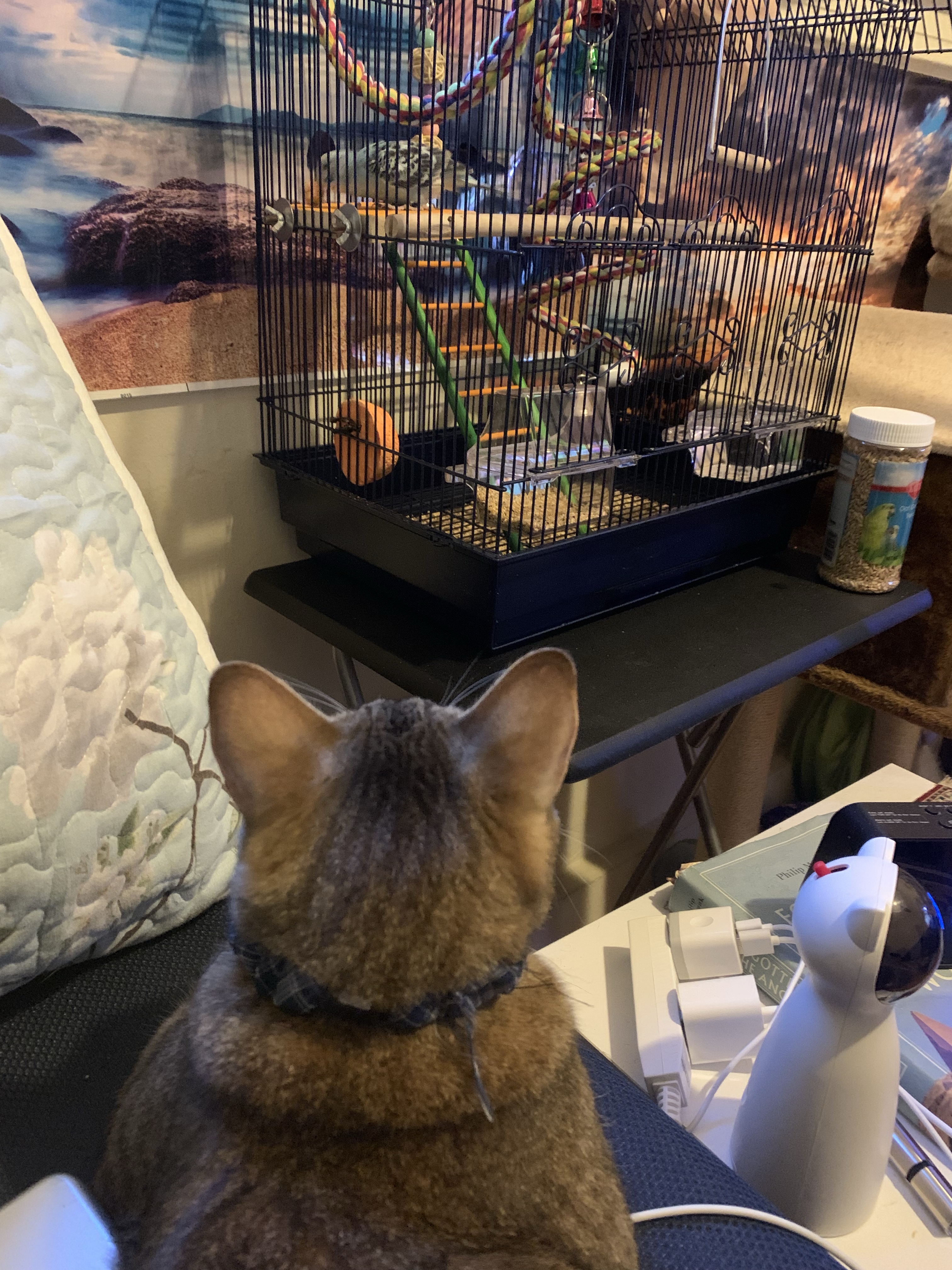
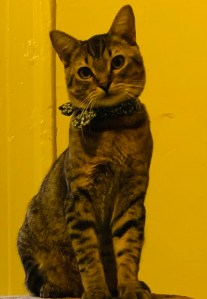
    We should not think of animals as live toys or ornaments that will satisfy our whimsical, capricious tastes. From pets to wildlife, animals are not our property but companions. I know it for sure when I feel a little heart of my cat Toro sleeping at my feet.

  • the unlikely family

    “So you have now the earth, the water, and the sky in your room! Awesome!” That was my brother when I told him over the phone about my recent adoption of a parakeet from a Petco. The paroxysm of excitement catapulted me into the awareness of a reality that I did bring a bird—those small but sharp beaks and those wrinkled tarsi feet manifesting the atavistic characteristics of dinosaurs, particularly the T-Rex. The truth that I now have to cohabitate with the least-likely coveted descendent of T-Rex still swivels my head in wonderment as if the ghost of Alice in Wonderland possessed me. So why the bird then?

    Dreaming of Sinbad and Serah

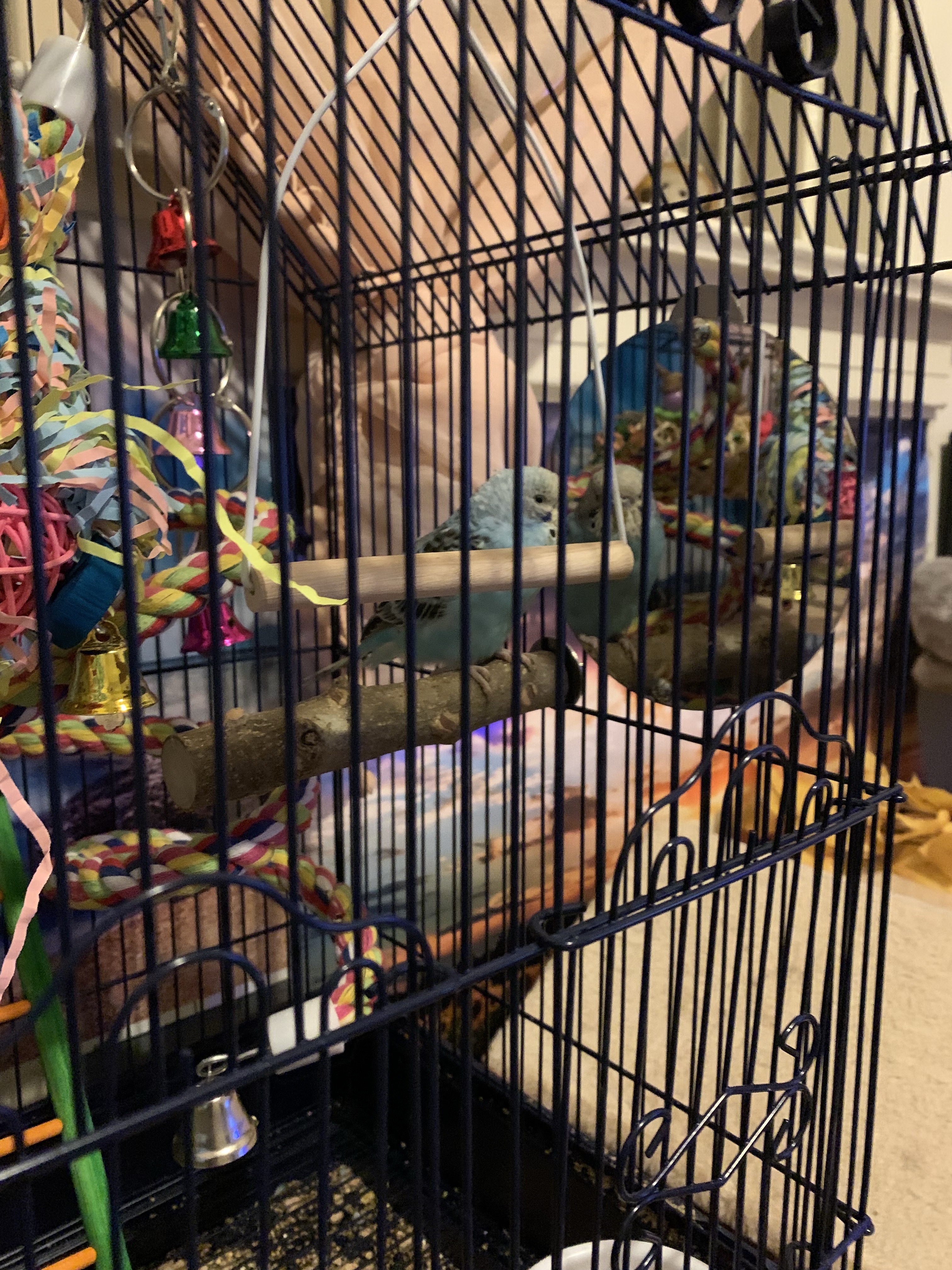
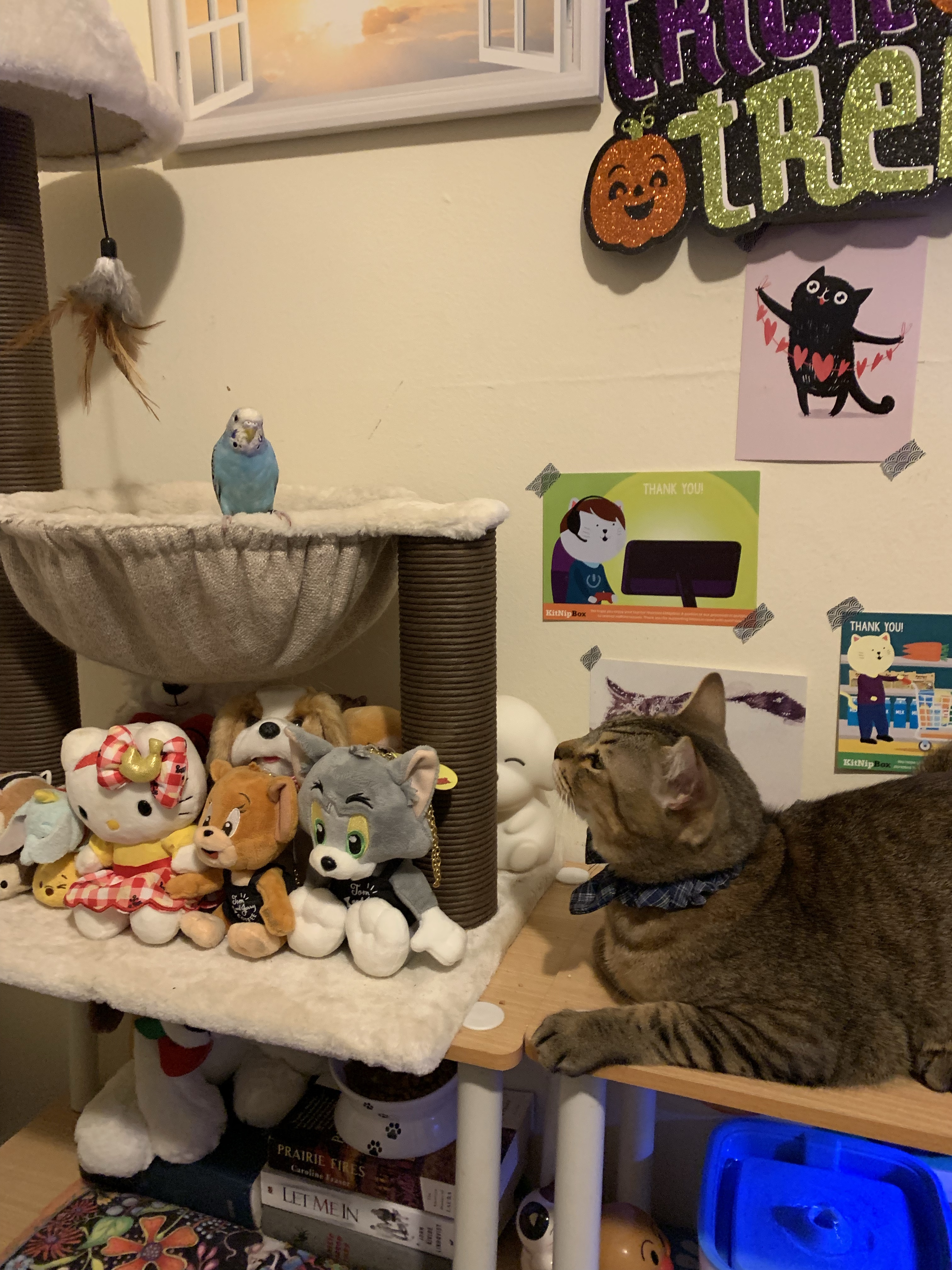
    While there might be the remotest chance of using my parakeet as a divine medium to consult my future, I have recently brought Sera home with great expectation of making a friend with the lonely Toro. Toro is now one year and four months old, and his growing curiosity calls attention for a playmate to share his enthusiasm and vociferous nocturnal stamina. Of course, the kinship of feline presence is the best option to fulfill the requirement. Still, the existential circumstances of present life eliminate it. Hence the lot fell into a blue parakeet I named Sera after the talking bird Serah, a travel companion of Sinbad the Sailor, from my favorite childhood cartoon. As you can guess, Sera is a girl who spends most of her time in front of the mirror and then trills in high soprano like a pretty and prim starlet prima donna.

    The crossed Sera befriends a reflection of loneliness.

    My endless attempts to tame Sera to sit on my finger and her constant ignorance of my presence are both disheartening and ireful. Toro is a susceptible and timid cat who denied looking at dead fish by turning away his head from the sight. Even though Toro wishes no harm on his new friend Sera, who fastidiously avoids him with all her feathers and beaks, she defends herself from him with all her might. Toro looks at me with his large sad eyes full of liquid heartaches whenever the conflict occurs, and I comfort him in my arms. Sera then flaps her tiny pretty wings, returns to her castle, and ensconces herself on a twiggy perch with a loud and snappy chirping as a sign of victory over the feline Goliath.

    I still don’t know if my decision to extra-species friendship is counterproductive amid Sera’s callous attitude toward Toro and me despite our apologies and continuous endeavor to reconcile with her. Perhaps I should not have taken Sera yet from the cage while she might have been still not familiarized with her new home. Still, there’s hope in my Pandora’s Box weaved in a rope of sparkling diamonds that promises a dazzling delight of trust and love filling the loneliness of the little hearts in our room. Who knows, one day Sera suddenly talks both Korean and English and tells me my todays and tomorrows? You never know.

  • The princess fairy tale

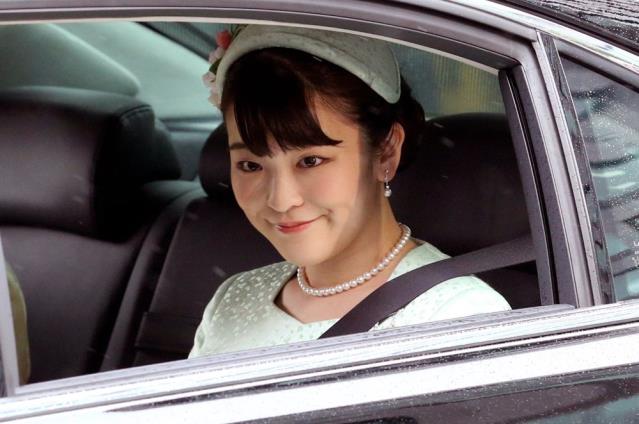
    First of all, let me clarify that I don’t believe in fairytales where beautiful poor girls achieve social escalations by marrying handsome princes and kings. Nor am I keen on the affairs of modern-day royalty whose lives are not even desirable. And yet, the news of Princess Mako’s marriage to her college sweetheart despite forced delays and oppositions is worth writing about because it is a fairytale of the most beautiful kind becoming a truth in reality. Would it be a bit of a stretch if I relate Mako’s heartaches and ordeals to Psyche’s Wanderings and Trials set by Aphrodite to separate her son Eros from the insolent mortal? It also shows that the crowned cannot escape from the intoxication of the heart that is worth denouncing the pomp and circumstances.

    Marrying a commoner is no new in modern-day history, starting from Edward VIII’s marriage to the American divorcee Wallis Simpson and his descendants Princes William and Harry. While those mentioned above British royal members married those outside the peerages, they were not the average commoners working nine-to-five or even more or fewer hours in ordinary situations where they had to depend on the whims and caprice of their employers for the secure livelihood. But Mako’s case stands most excellently because she was determined to give up the whole royal privilege to live as a commoner by marrying the one who is not from a wealthy, not even above average family. Moreover, Mako refused to receive a considerable amount of money as a gift from the royal family for marrying a commoner. On the contrary, Harry and Meghan are considerably wealthy, living without day-to-day financial insecurity about what might happen tomorrow. Their surrendering the titles publicly will not forfeit their assets as in the case of foreclosure that many struggling hard-working Americans are unfairly subject to. After all, why do they need to hold the titular positions to make more money outside the palace? People flock to the brave Meghan and her ever-supportive husband, but why do they do when their happiness illustrates no emblem of sacrifice without a sense of proverbial entitlement?

    I cannot help but compare Mako and Kei to the famously showcased ex-royal couple Prince Harry and Duchess Meghan. Besotted by the sensual charm of his renegade, free-spirited wife, Harry decided to move his young family to Los Angles, California, for good. He joined her Dissent Division to criticize his long-time family for being racist and cold-hearted. On the contrary, Princess Mako never decried her dissenting royal families against her marriage to a commoner, nor did she rebel loudly against the constitutional monarchy outside Japan. Instead, Mako kept all of her affairs of the heart discreetly, remaining true blue to her beloved Kei despite public uproar about his below-than-expected family background for being of a problematic single-mothered household. Forget the stereotypical Japanese politeness and the prejudice on the East Asian women’s submissiveness. Her graceful acts and decencies flow from her natural disposition and upbringing, which I have hardly seen in the famous royal family members.

    Watching Mako and Kei looking at each other with the eyes exchanging affection with radiant smiles in their serenely happy faces put me into a pleasant mood to make me wish for their long and happy life together. Mako is a brave princess who surrenders herself to the love of her choice, even if it means giving up her title and privilege that would make her married life comparatively comfortable to ordinary people. Mako’s decision to live the life of an ordinary wife seems anachronistic and incongruent. Still, not everyone wants to be an Amazon or Scythian warrior, nor does she want to climb up the career ladder to prove her abilities. Mako’s declaration of independence signifies an act of exercising her right to happiness by living with someone she loved dearly. What else could she do to prove her worth for love? It is a beautiful fairytale dissolving to the truth.

  • at the sea

    I have seen the insidious sea
    Lull the children of the shore
    With the sweet aeolian lullaby
    And the pretty nymphs appear
    From the bottom of the ocean
    To bring them into the palace
    Where their father, Poseidon
    Keeps the souls of the sea
    As is his mighty brother Zeus
    For the world above and beyond;
    Woe betides those who forego
    The fates of the young souls,
    For their grandfather, whose eyes
    See the insidious machination
    Fascinate the innocent hearts
    In the whirlpool of rapid waves!
    The old man’s fury is greater
    Than the furious god of the sea;
    He dives into the angry waters,
    Fighting against the god in spades
    With his bare arms cutting the waves
    Like swords that could kill ghosts
    And wins of his two grandchildren;
    From the god whose wrath sees
    No end until it grows the waves
    Into the myrmidons of madness
    And carries the old man into the abyss.

    P.S.: This poem is based on my reading of a newspaper article that a sixty-one-year-old British grandfather died while trying to save his two grandchildren, aged seven and ten, in the sea off the island of Crete, Greece. The man got into the sea, fighting with the rapid, treacherous waves like Caligula, who declared war on the sea, whipping the waves furiously to invade Britain. Finally, his grandchildren got out safely, but alas, the old man was engulfed by the wrath of furious waves and drawn to the bottom of the sea. I could not just forego my feelings upon reading the story with poetic elements that also bring me the mythological image of Laocoon, the Trojan priest punished by Poseidon who sent the great serpent engulfing him and his two young sons for his discovering the Greek ruse about the wooden Trojan horse. Hence this little poem is in memory of the brave and loving grandfather.

  • the door of perceptions

    My cat sits in front of the door
    Like an ancient statue of Basset
    And looks at me with desire
    To break the spell of the moment.

    In the high night
    When the only light
    is iridescent emerald beams
    from his large green eyes,

    I open the door
    He believes to be
    The door of perceptions
    When there is only darkness.

    But he roams in eager eyes
    With a lamp of his cat’s eyes
    Searching for the wonder
    With neverending hopes.

    Alas, my elderly mother stops
    His hopeful night’s adventure!
    Still yearning, ever curious
    My cat tries it always tomorrows!