Tag: magic

  • “Insidious” (2010) – film review

    “Insidious” (2010), directed by James Wan is an intelligent movie with an entertaining flair to hold the attentions of both serious and light-hearted movie lovers. I am glad to have watched it last night on Netflix after reading a book on the history of ancient magic and ritual, and I must say there must be some kind of strange reason that I came upon the movie. It always seems so pat to find a supernatural movie orbiting around me and materializing at an apropos time that it gives me chilling fillip to my suspected element unrealized from within. Whatever it may be, and apart from all the mysterious signs hinting at something about my unknown anima, I am pleased to write about the movie herein.

    The movie is anything but a faulty horror movie. Not “Insidious.” Hardly Ever the criticism of flamboyant cast. Never the limitations of a seemingly infinite range of imaginations that the writer wrote and the director portrayed. It is beautiful alchemy of the harmonious performance of the stellar cast and brilliant storytelling of the extraordinary event in the ordinary existence, all fascinating and riveting. Like an incantation of a professional sorcerer, the narrative slowly builds mystery around the atmosphere. It brings up images of the beyond at the zenith of the ritual when everything seems ready for demons or the superiors to appear before your very eyes.

    The magnet of the movie is the Elise character faultlessly played by Lin Shaye, who began to change my perspectives on a psychic that if there is one like her in real life, I would love to chat with her and possibly work for her even as a part-time assistant. Elise reminds me of an ancient Cumaean Sybil who helped Trojan refugee Aeneas meet his father’s spirit in the Underworld with a gentle but powerful voice elucidating her beautiful spirit. But to call her psychic doesn’t do justice to her essence and vocation as a mystic helping people in distress. She balances her spiritual power with a rational mind by scientific methods to discern the origins of the spiritual maladies of her clients. And she does it in the gracefulness of a good witch performing white magic that I believe even priests would be envious of.
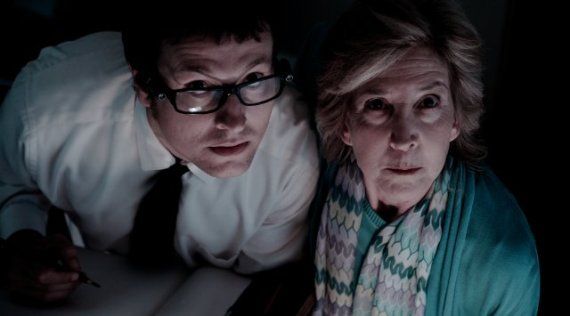
    What makes the movie on par with the timeless supernatural film is the universal subject of the world beyond our sensory perceptions and across religious dogmas. It’s the world of “Further” where spirits lost wander around and dammed lurk in the darker corners of the crossroads. Elise helps the lost spirit of the boy in the Further find his way back to Here and goes further than she should save people’s lives from the evil power even it means to be at her expense.

    “Insidious” is a thoughtful movie dealing with a supernatural thematic element that is harder to play on the screen than it is to envision in the mind’s theater. The movie’s impression spreads into a mind’s garden and stays there in alterations like an insidious charm of ghastly sightseeing so incredible that you can hardly dispel it. If you like to watch a good, decent ghost movie without mutilated bodies and ear-shattering screams, but ghosts or demons only, this movie may do.


  • ‘Howl’s Moving Castle’, by Diana Wynne Jones – review

    Howl's Moving Castle (Howl's Moving Castle, #1)Howl’s Moving Castle by Diana Wynne Jones

    My rating: 5 of 5 stars


    Whether it is for the pursuit of artistic aestheticism or indulgence in sheer egoism, writers tell their stories in books where, in the peculiar alchemy of words dipped in imagination, they blend the real with the ideal. That said, Diana Wynne Jones’s Howl’s Moving Castle is a beautiful world of magic and witcraft that cast a spell on the gloomy reality to make it a gorgeous fantasy.

    A melancholy of vertiginous existential crisis in a life fraught with responsibilities and duties morphs into a fantastic narrative of the imaginary world where magic, wizards, witches, and demons mingle with ordinary people and even fall in love with them like those of Olympus gods with mortals until Hesiod’s Heroic Age. Sophie Hatter, the book’s heroine, is Jones’s alter ego, only younger in age and freer in status. Still, everything else about her is Jones herself, most prominently her being the eldest child responsible for all things adult – by alas, birthright. Sophie’s self-analysis of being the oldest for the principal cause of misfortune applies to Jones’s family background, being the oldest of three sisters just as Sophie is for Martha and Lattie. I remember reading elsewhere that at the time of writing this book, Jones was going through the crisis in adulthood: a sickly husband, live-in mother-in-law, friends in need, children to take care of, etc. Despite Jones’s degree in English Literature from Oxford University, she felt injustice for her talent and mind eroding in the seemingly endless Sisyphean maneuvering of rolling up a daily boulder. So she took a pen to paper and wrote the book to spur her reservoir of existential frustrations on writing her story in the guise of fiction.

    However, after the book’s success, Jones withstood from telling it a reflection of her inner world. She referred it to a certain boy who wanted to create a moving castle. Although the integrity of the inspiration belongs to the author’s literary license, Jones appeared to be reluctant to admit that she told her story in the book due to her celebrity. On a personal note, I could understand her volition to employ a more lovely pretext in safely hiding her existential frustration in privacy. Still, the book’s background written at the time of a crisis of adulthood puts together tesserae in a fanciful puzzler. The agency of magical elements in the story enables Jones to free herself from the mental inhibitions to depict the world’s realism, which seems too dreary and drab, gloomy and harsh, for the reader to be burdened with the author’s frustrations. Instead, Jones created the world populated with witches and wizards not looking like creepy worshippers of the devil and a fire demon far from being diabolic. All the menageries of wondrous characters neutralize the pathos of Sophie.

    I read the book with a kindred spirit of being the firstborn child in the family, so it was a pleasure to know that I was not the only person who felt burdened with family and others’ cares. Witch of Waste’s turning Sophie into a ninety-year-old spinster adumbrates Jones’ feeling of oldness in her soul that affects her appearance due to her continuously solitary labor of care. Yet, Jones is kind to Sophie with the eccentric but wonderful Howl and other helpful characters, including Calcifer, a fire demon, all of whom recognize Sophie’s worth and beauty of heart with respect and care that she deserves so much. Jones does a fabulous job of transforming a vehement narrative of angst as an adult in the real-world into a fairytale of love and luck, where those who feel burdened with the weight of life will be awarded fabulous surprise long overdue.


    View all my reviews

  • beginning

    Look at the sky and find a day moon,

    Go and catch the borrower with a pin,

    Tell me where all pasts have gone,

    Or who has tricked the fire demon,

    Teach me to hear nature’s whisper,

    And to walk in the sky, beautiful.

  • Sheep may safely graze

    sky-clouds-wallpaper-preview

    I look at the blue sky

    And see the wind

    Carry a herd of clouds

    Like a ghost shepherd

    Skybound, westbound,

    As I’m earthbound, spellbound.


    Author’s Note: I always regard the cloud as the sheep in the sky ranch as if the wind being a phantom shepherd or cowboy were driving them into a glazing pasture where they can graze peacefully on the celestial meadow under his watchful eyes. Watching the moving clouds always amazes me as a nature’s panoramic play of wonder.  

  • ‘Thirty Seals & The Seal of Seals’ by Giordano Bruno – review

    Thirty Seals & The Seal Of Seals (Giordano Bruno Collected Works Book 4)Thirty Seals & The Seal Of Seals by Giordano Bruno
    My rating: 3 of 5 stars

    The art of memory has been a popular subject for occultism and academicism throughout the centuries. The subject deals with our incredibly flexible human intelligence with its general multipurpose learning strategies that can work wonders if the doors of imagination are opened to the mystery of the knowledge without constraints of religiosity and fears of the unknown territories of human possibilities. Of the intellectual trailblazers of the craft of memory, none other than the figure of Giordano Bruno stood out blazingly even at the burning stake as an accused wizard. For it was akin to a witchcraft of perfect knowledge as expounded in his Thirty Seals & the Seal of Seals, the book banned by the Church in fear of losing the faithful to the Power of Knowledge.

    The book illustrates a set of “basic” rules that reads more like Euclid’s Elements or Pythagorean Theorem, which means it is not written for general readers. This is because the book was part of a job application for a teaching post at the Oxford in the Elizabethan England, demonstrating his admirable erudition, superb command of the English language as a foreigner, and naked flattery to the academics at the university. Bruno got a few lecturing opportunities at the Oxford, but his cerebral mind devoid of wit in addition to his short, unprepossessing appearance was regarded as far-fetched and unfavorable to the attainment of the sought-after position at the Oxford. In fact, this book does not provide the reader with special spells for obtaining perfect memory but gives the method of encoding letters or syllables of the name of the thing into a set of predetermined images. It is magic in the sense that if this method is perfected, it works wonders. It’s a psychological mind game, the magic of psychology per se.

    This magical book, this banned book will betray anyone who expects it to be something of magical Rosetta Stone for obtaining the secrets of perfect or better memorization. But that doesn’t mean the book is entirely abstruse to enjoy; the idea of the intellectual trinity comprised of Pallas Athena (The Senses), Vulcan (Imaginations), and Mars (Judgment/Reason), all of whom are overseen by Jove (the Soul) is quite intriguing and related to Socrates’s idea of reasoning. As a matter of fact, this book is not so much an esoteric book as deeply psychological literature that boasts Bruno’s indomitable intelligence and recalcitrant individualism that stigmatized him as a renegade. Maybe that’s the reason this illustrious intellect was burned at the stake as a dangerous pagan.

    View all my reviews

  • Fairy summoning in the Florentine Renaissance period

    41a59389f2e8e71b94e50f9d1ae7d39a--vintage-fairies-vintage-artwork
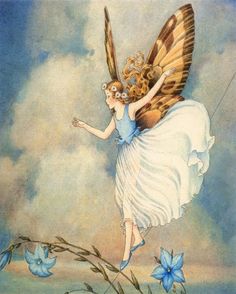
    A supernaturally pretty fairy deludes men’s hearts.

    There are magical elements in religion, and there are religious facets to the practice of magic, as succinctly summed up by Sir Walter Raleigh: “The art of magic is the art of worshiping God.” That’s how I feel and what I see during my Dutiful Sunday Morning Masses, the ancient rite of the Church, a perennial panoply of syncretism with its splendid paraphernalia of prayers and the liturgical ceremony of rites and mechanical recitation of prayers; it is the melding of religions or beliefs of the similar elements but of different origins. Hence, to come upon an article in the recent issue of BBC History Magazine about an academic study by a certain British scholar of the existence of fairies in the context of the validity of cultural and historical artifacts gave me an uncanny pleasure.

    Dr-Faustus
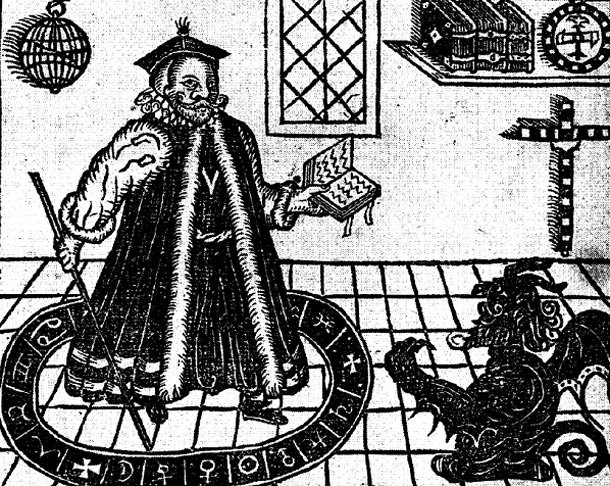
    The famous Dr. Faust, summoning Mephistopheles for his service

    In fact, Religion (that is, Christianity) and Magic (in the forms of divination and sorcery) are not to be seen as polar opposites and antithetical systems of belief because they are interdisciplinary agencies of attempting to seeking and offering a panacea to our dilemmas – physical, metaphysical – competing for supremacy in propitiation. Such mysteriously syncretic elements of the two different agencies of beliefs became the academic subjects of intellectuals, such as Francis Bacon and John Aubrey who accepted the potentialities of physiognomy as an infallible guide to predicting one’s character and argued for the validity of non-Christian practice based on certain intellectual bases therein. With this in mind, you would not be surprised to learn that fairy summoning rituals were all the rage in the Renaissance period (15th~17th centuries), indiscriminately practiced by all strata of society, learned or ignorant, rich or poor, Christian or pagan. The author of the article informed the reader that the early Renaissance idea of fairies was pretty nebulous and varied with a wide arc of wonder and trepidation and that the dainty image of ever famous “Tinker-bell” was a Victorian construction of the whole fairy race.

    Then, how did the “real” fairies look? Although there is no magisterial, definitive version of the physiognomy of a fairy, a collective description gleaned from various records boils down to it as a supernaturally attractive man/woman imperiling the souls of whoever it was summoned to, which is reminded of incubus/succubus, consecutively. Notwithstanding the dubious nature of fairies, the invocation of fairies halfway between angels and devils was widely used in hope to (1) acquire medical knowledge, such as whereabouts of herbs and their properties; (2) delight in the highest degree of sensual ecstasy; and (3) reveal the future and prevent from misfortune in advance. Be it as it may seem wholly pagan, the summoning ritual was surprisingly required for God’s intervention because it included periods of purification through abstinence, fasting, and prayer in preparation, all of which would testify to the sanctity of the performer ministering to the moral and ethical character. God willing, a fairy at request manifested to the summoner, but he should not come out of the circle he had drawn because it protected from sudden maleficence of the ambiguous fairy.

    Delphic_Sibyl_Michelangelo___21969.1501257269
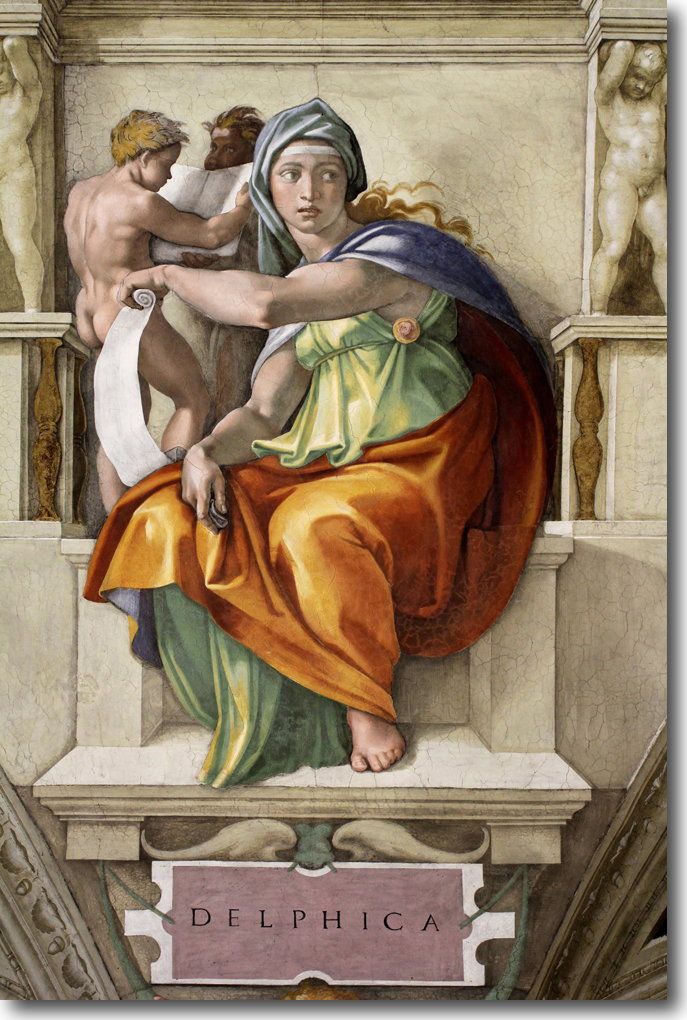
    Delphic Sibyl from the Sistine Chapel fresco by Michelangelo

    In sum, the article was an elegant primer for a further interdisciplinary study of literature, religion, and folklore from the medieval times to the Reformation period and possible stretching to this date. The exemplary texts that spring to my mind are Religion and The Decline of Magic by Keith Thomas and Christopher Marlowe’s version of the legend of Dr. Faust, both of which are excellent testaments to the contextualization of the esoteric knowledge on the grounds of intellectual bases into academic studies of social, cultural, and historical facets of different zeitgeists, which also serve as invaluable literary artifacts to epochal changes. But for all that is worth, this relation between religion and magic is commensal, exhibiting a mesmerizing consilience of gods and God, profane and holy, pagan and ecclesiastical, forbidden, and disciplined, as superbly unfolded in the Sistine Chapel fresco, prodigiously expressed by Michelangelo.


    저장