Tag: Miscellany

  • Prompt 17

    Which aspects do you think makes a person unique?

    Oscar Wilde was right in saying, “Be yourself; everyone is taken.” A person’s uniqueness results from the courage to express oneself, confidence in being oneself, and love of oneself without making oneself parallel to the outlook of others for their beauty or power.

    Nowadays, women’s beauty has never been so outrageously uninformed than before, thanks to social media, where famous or not pretentiously show off their surgically created beauties to mold into a standard beauty manufactured and advertised by the media in the form of celebrities. As Edgar Allan Poe averred, “There is no exquisite beauty without some strangeness in proportion,” no beauty is perfect, no one is perfectly beautiful as Plato confirmed we live in the imperfect world, where no perfect beauty exists. I think everyone of us in this world has one thing or more beautiful internally as well as externally if each of us looks into the eye of one another, whether it is a stranger or acquaintance. But in this millennials, Generations Z and Alpha dominated 21st century, my talk of the simple and sophisticated beauty at once is only an outcry of a madwoman, full of sound and fury, signifying nothing.

    As times go by with the leaves of my tree falling off in my season of life, I am disheartened by people’s comments about the years passed manifesting on the external castle of my soul, which I always retort with a quick denial because age cannot wither me away, nor custom can stale my unique character reflecting on the windows of my soul! I would rather be a lonely beautiful witch than a cantankerous woman complacent with her stage of life, always gossiping and crude.
  • Prompt 15

    How often do you say “no” to things that would interfere with your goals?

    There are differences between a sycophant and a yes man/woman. The former curries favor from an influential person employing flattering, whereas the latter- usually the meek and vulnerable- tries to protect a self from retaliation or bullying by sacrificing even a little leisure of comfort within a castle of own as a luxury to survive in their rule of the jungle. In that regard, I consider myself the latter who hardly says no to egoists.

    I am something of Diana, the beautiful friend of Anne Shirley of the Green Gables, the sweet but also fiercely passionate literary blue-stocking girl whose headstrong pride and vividly adventurous spirit put her soft-spoken, amiable bosom friend in trouble. Diana’s fragile sensitivity and delicate femininity deter her from voicing out her mind. Hence she is seen as meek or less intellectual even than Anne, who is a vivid talker able to account a thread of stories woven by her trademark imaginativeness. But that’s not what it seems, and we know it. Well, at least I do because I relate myself to Diana in terms of timidity translated into self-consciousness. But then it is also a quick and painless way to judge one’s character based on the appearance and social backgrounds. Isn’t it so?

    I say yes to those who bully, dislike, and disregard me to avoid unnecessary confrontations that will shatter the windows of my glass heart. No, I am not a coward, never, because a coward blindly gives into the will of the other.

  • Prompt 11

    You’re going on a cross-country trip. Airplane, train, bus, car, or bike?

    Since I have already crossed the country from New Jersey to California by Greyhound bus, I will choose the Armtrak train on returning trip to New Jersey to enjoy the beautiful scenery across the country without being crammed into a flying compartment on air, not being able to move around for hours at a high price. And forget about driving a car, which may sound adventurous but is dangerous.

    Dangerous because what if I happen to encounter some vile group of people who have pledged allegiance to their secret creed of violent belief hell-bent on harming fellow human beings as in the movie “End of the Road,” in which the Queen Latifah character and his family on the road to Texas future from California past encounter series of manacing racist strangers. On the contrary, traveling in the company of people, although strangers, provides me some sense of security and relaxation, freed from maneuvering navigation and driving, which sometimes will prevent me from appreciating the pleasure of watching scenery listening to music, the moody sweets of my spirit.

    It was in the same manner that emigrants -not necessarily foreigners but those from the east coast- crossed the continent on oxen-driven wagons as accounted in Horace Greeley’s An Overland Journey from New York to San Francisco in the Summer of 1859 in which the renowned editor of the New York Tribune and once a president hopeful opposite Ulysses Grant. This book inspired me to come to California by bus, which I considered a modern-day equivalent of a wagon. What used to take a good 6 or 8 months for the easterners to arrive at West overland by wagon took me a week to reach California by bus. Notwithstanding any inconvenience in the road trip, it was my version of reenactment of the Oregon Trail in the spirit of frontierwoman to start anew in the Wild West.

  • Prompt 10

    How would you rate your confidence level?

    The question about self-evaluation reminds me of self-criticism used at people’s court in totalitarian communist countries, especially during the cold war era. It was also the same question from the assessment test for a job I applied for, for which I had to choose from levels 1 (the lowest) and 10 (the highest). My answer was, with a pang of conscience and shadow of remorse, 10, protesting inwardly to the origin and purpose of such a meritocratic question that no one will answer truthfully anyway.

    It’s easy to numerically evaluate one’s value on a scale of 1 to 10 as if it were a gymnastic game. But life cannot be measured in pythgoratic calculation. A level of confidence can fluctuating, contingent on many factors, such as biological or environmental factors. No, such a question contradicts human nature that cannot be evaluated by meretricious material success. The ancient Greeks believed that we could not change our fates but that our response to what the fates might have destined for us in our lives, however checkered and arduous they would be. The worship of heroism in ancient Greece was more noble and honest at same time than the worship of rich, power, and fame in our society.

    Sociologist Robert Cooley’s “Looking Glassed Self” denotes that we become what others think we are, whether you disagree with a grimace. Accordingly, confidence is built upon the feedback from others, although often erroneous, prejudiced, overlooked, or careless, depending upon where the subject of the feedback comes from. A confidence level is an oxymoron because it can’t be measured, is precarious, and is variable and subject to one’s mood, environment, and social/biological background.

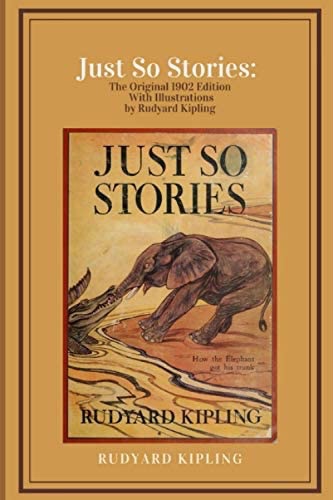
  • ‘Just So Stories’ by Rudyard Kipling – book review

    I believe history is a branch of literature full of events and stories made by artists and artificers weaving facts into myth, and vice versa, into a timeless tapestry of the world that was, is and will be. In that regard, Kipling is an artist who spins beautiful tales of how animals became what they look like into a poetic wheel of ear-delighting and cadenced words aided by gorgeous illustrations distinctively graceful and dazzlingly beautiful.

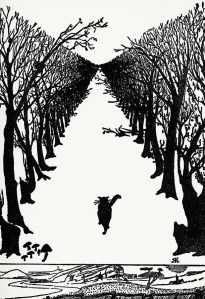
    Kipling’s evolution of animals explains why they look the way they are, such as a Leopard with spots, a Carmel hump, and many more. The stories become a fable and a history of its kind. It’s a literary version of Darwin’s Origin of Species, the wonderful menageries of Man and Beast that cannot live alone despite the differences in species because we are the inhabitants of this world, Earth. But, above all the fantastic tales of wonder, the Cat’s tale stands out in the story and the subject. Kipling’s Cat is proud but not arrogant, independent but affectionate, and vain but graceful. It’s a cat who walks by himself, and everything is alike to him and nothing else. The Cat is a beautiful stranger even if he likes to be a family, a kind of forever loner, the Puss in Boots with a cowboy hat and an empty holster. Kipling’s writer’s eyes saw the romantic solitude in a cat, and the result is one poetic Cat that rhymes well like the graceful way cats do their amazing somersaults.

    Just So Stories are not just for children even though it is classified in Children’s literature on the shelves of libraries. It’s a book for everyone who loves legends and magic, who still has a childlike innocence that refused to put away as an adult because it’s in nature. The stories are not for academic analysis or psychoanalysis but simply for the enjoyment of the mind and the delight of the heart. Remember Freud’s saying, “Sometimes, a cigar is just a cigar.” So are Just So Stories, so delightful and so pleasant.

  • My Cat Toro and Samuel’s Hodge

    Toro is a very fine cat indeed

    Since I don’t like the word “pet,” I won’t say it when I refer to my two-year-old tabby, tom Toro, a family member. Toro pays a portion of his rental fee and is a controller of rodents in our dilapidated humble apartment we long to escape. But that’s another story, and this story I am going to unravel is for Toro.

    Toro before entering the clinic

    It was that time again to get Toro’s annual physical exam, also required for his Hills prescription Urinary care food. So we took a trip to the vet at Little Tokyo, and all’s well that ended well. His weight was steady at 11 pounds, the same as the last year (what an excellent dieter he is!). He got his FVRCP, FelV, and nails done and was proven generally healthy. What a relief because I had been concerned about his taking more naps than usual and tired expressions with half-cast eyes. The doctor told me that it was customary for cats to show such symptoms as they grew bigger. So albeit my mom thinks that I am overly concerned about Toro’s otherwise fine status quo, aren’t we all concerned about the general well-being of our flurry fur babies?

    Samuel Johnson and Hodge

    It all makes me think of the story of Samuel Johnson and his cat Hodge. Samuel Johnson, one of the greatest men of letters from 18th century England and the author of A Dictionary of the English Language, had his beloved sale-furred cat Hodge, who was immortalized in literary works and as a bronze statue outside his guardian’s once resident abode. We first come to know of Johnson’s cat Hodge thanks to his lawyer friend and biographer James Boswell’s Life of Johnson. Johnson used to go out to buy Hodge’s favorite food, oysters. He refused to let his loyal and faithful Jamaican-born master-servant Francis Barber because he felt that it would be degrading to Francis to do such errands for him. But I like to think that it was more affection toward Hodge, whom he called thus: “He is a very fine cat, very fine indeed.” When Hodge was nearing to cross the rainbow bridges due to his old age, Johnson would get valerian, an herbal painkiller extracted from the flower to lessen his fur baby’s pain. But the end of Hodge wasn’t lost in the inner circle of the ether, for his life was memorialized in ‘An Energy on the Death of Dr. Johnson’s Favorite Cat’ by Percival Stockdale, published in 1778:


    The general conduct if we trace
    Of our articulating race,
    Hodge’s, example we shall find
    A keen reproof of human kind.

    Samuel Johnson is one of my most admirable literary persons because of his humanist rules of thought articulated in his mastership of the English language. Hence it gives me a feeling of kinship with his love of Hodge. His affection for Hodge felt genuinely caring and familial, which was never mawkish or superficial. So, likewise, my cat Toro is a muse of my writings: whimsical, independent, intelligent, and affectionate. Sometimes, I wonder if Toro is really a little boy bespelled a tom. Well, what more can I say? Toro is a very fine cat, very fine indeed.

    Hodge’s bronze statue was inaugurated in 1997 by Sir Roger Cook, the then-Lord Mayer of London. Note the oyster at his paw as his eternal token of Johnson’s affection.