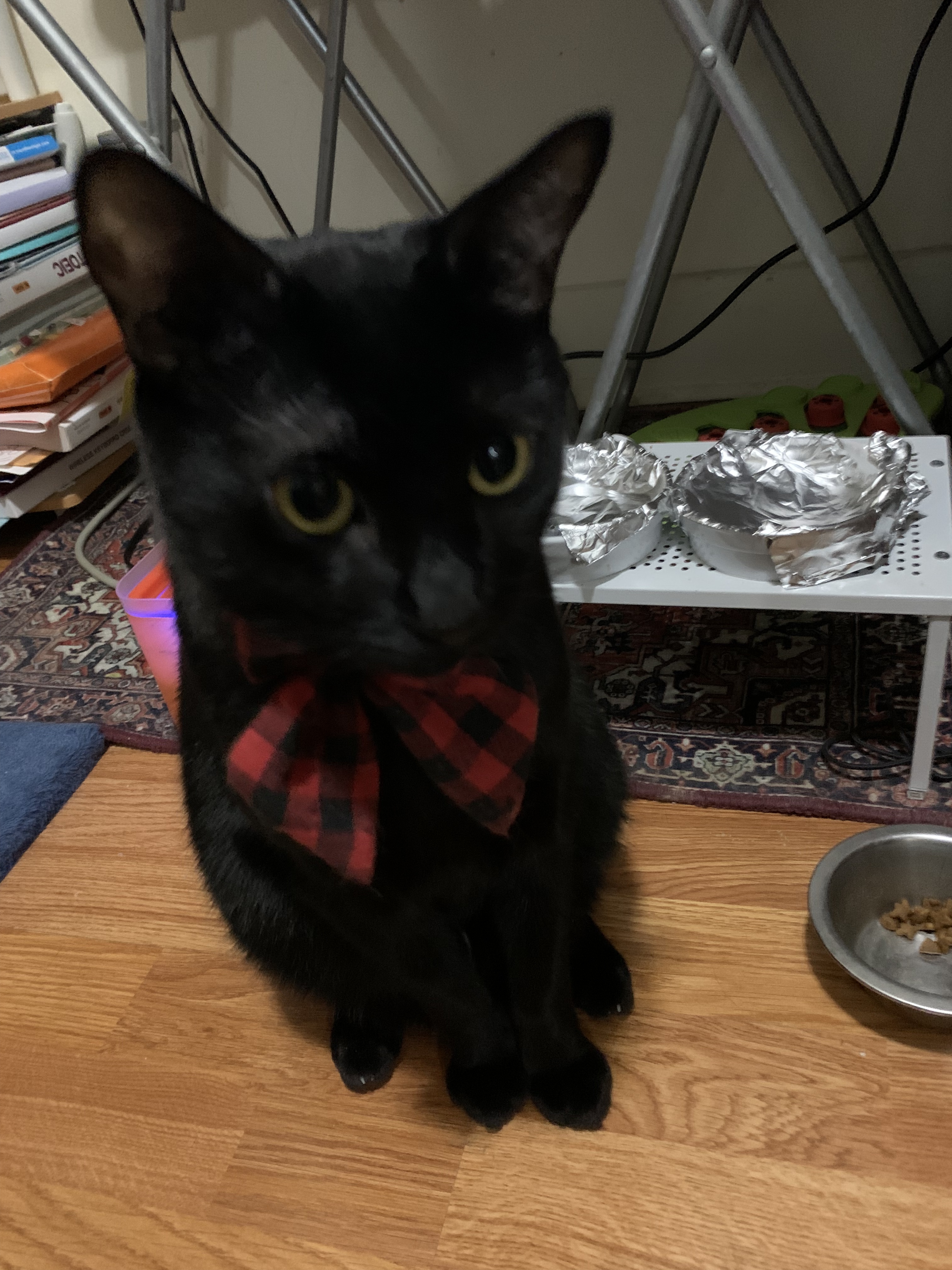
My Camille is unwell now. He eats, drinks, and defecates, but I know there’s something wrong with his demeanor, mood, and aura. No, it’s not a hyped reaction from an overly protective spinster guardian, but I ohknow. It worries me to death; it pains me to no end. I am so thankful for his little heart pumping beneath his sleek, straight black fur, and on the other hand, I inwardly recoil in fear that what if it begins to slow and then stop?
I have noticed that when I pet Camille, he secretes a fluid with a noticeable smell, which isn’t terrible. I thought it was his way of expressing content when petted, and my research shows it’s partly true. Partly it is due to his anal gland charge, which worries me. So, I think maybe it’s a complication of the anal glands and other organ infections, such as liver or urinary.
And it plunges me so low into the abyss of grief, echoed in guilt for Camille’s condition because I have not been so loving or patient with Camille’s urge to play. He tends to eat frequently, almost every 10 minutes or so. Even though I always ensure my cats’ bowls are full of dry food with water, Camille prefers wet food. He eats small but many times. It might indicate diabetic symptoms. I feel like a terrible guardian, and more terrible is losing him – which is unthinkable! Let present fears less than horrible imaginings!
I just made an appointment with a vet to check him this Saturday. I hope Camille is not seriously ill.
It was an A-ha concert on April 8th, 2022, at the Wiltern in Los Angeles, California, which was in my town. It was my second time seeing them in concert since I attended their New York City concert in 2012.
I went there alone, but many came alone to see their first puppy loves or idols in real life. As the band became old, so did their fans, which proved that time was non-discriminating, visiting the doors of huts, villas, and palaces. Here they were, my old hot flames, once so young and dashing, now ripened with the years of experience, seasoned with the echelon of exercises. A-ha indeed grew mature, but they were more relaxed and confident, which endowed them with a different sensuality that the green salad days of youth can never have.
The most interesting thing I noticed at the concert was that fans brought their young and grown children with their spouses to see their old loves. Although their children didn’t quite seem to enjoy the same level of pleasure that their parents were having, it was an excellent concert where people had a good time returning to the days of their begone youth by the witchcraft of music taking all of us to that time.
a-ha from left Magne Furuholmen (Keyboards), Morten Harket (Vocals), and Pal Waaktaar-Savoy (Guitars)
After the two years beneath the gray clouds of the pandemic, a-ha came to town with the halos of seasoned veteran wizards of pop music. They entered the world’s music scene like brilliant comets four decades ago with the catchy hit ‘Take on Me’ and continued to travel into the universe all the more brilliantly over time. Indeed, age could not wither them away, nor custom could stale their musical alchemy.
With the opening song ‘Sycamore Leaves’ with its characteristic guitar riffs and heavy drum beats, a-ha came on the stage. The fans were instantly enchanted by their charismatic appearances, like the Three Musketeers of Pop. Magne Furuholmen (Keyboards), Morten Harket (Vocals), and Paul Waaktaar-Savoy (Guitars) were now veterans of the music industry. They were all methodically professional and effortlessly entertaining to present what the fans wanted the most by coming to their concert after two bleak lockdown years. They gave all they got by mainly playing the songs from the first and second albums because those two albums were best known and loved by their US-based fans. The result was the touchy-feely, feel-good atmosphere of the concert. Viktor E. Frankl, the father of Logotherapy, acknowledged that the moments of pleasure in appreciating arts equal the happiness in finding the meaning of life. That night at the Wiltern, a-ha gave the happy moments of life to their fans as their music pleased our senses and sensibilities, allying our passion for what our existential life outside the concert hall had brought to us just for the moments.
Music is the most potent magic in conjuring up the memories in the phantasmagorical display of images of the misty past, vivid and vital, all adrift then aglow in condensed particular energy, becoming nostalgia in the sweet melancholy of romantic solitude manifested in the music of a-ha. Looking at the audience, I thought that we all came to go back to our days of innocence when the pleasure of listening to a-ha’s music on the radio and records required no dreadful existential worries of the world. That night at the Wiltern, a-ha transported us back to our memory lane in the soft sweet melodies of the past and then to the present, lingering in the heart’s windows and staying in its garden forever with the triumphant ‘Take on Me’ ending on a high note in the encore.
My heart is longing Though my mind is confused. My soul is tired of sighing, My spirit is revolted, Time flows rapidly, Woes disappear slowly, I’m tired of repining, Will the universe conspire To reset it all anew As if all of this were a dream In the likeness of truth?
According to Newton’s law of motion, inertia refers to a condition when a mass of an object determines a resistance to change. The bigger a thing is, the harder it is to be moved. What a splendid discovery when such truth has always existed! That is a difference between someone like Newton and other mortals who have seen it but cared more or less about it. The gist of my proposition is that inertia fits the state of my mind at present; the more I exert my cognitive facilities on articulating my thoughts, the harder they seem to operate the abilities with all their souls, with all their hearts, and with all their might.
Today I looked into the statistics of my blog posts, realizing my literary fruits were turning sour with the leaves of the knowledge of tree desiccated in the arid land of pitiful ignorance. T.S. Eliot must have felt the same when he yeared for a benevolent pool of knowledge on the barren land of his mind, which is hardly likely to think about because – well, for what he is. No matter how much I try to use a craft of writing that I used to possess until three months ago, I realize the powers are gone with the wind to the ether and then to the blackest black hole in the universe. The words become weightless, and the images are as bleak as the Persian night. It’s like being in the middle of an adumbrating labyrinth with Ariadne’s ball thread missing or forfeited by whimsical divinity. Nothing scintillates, nothing promises, not even with a bluebird that used to guide me into avenues of hope. So whereas I still delve into reading voraciously, the words are flushed into a great abyss of darkness, a slough of despond, leaving me weeping and then crying alone. I wonder if this state of inertia can also be related to the dark night of the soul that St. John of the Cross experienced before his spiritual epiphany. Or I can identify the feeling to the sudden listlessness of Albert Speer, the mild-mannered, brilliant Hitler’s architect friend, during his long-term incarceration in the Spandau prison after the fall of the Third Reich.
I have always professed to write for the sake of my sanity, the justice to myself with a tenacious grasp on a sense of purpose that I am not going to disappear without a trace of my existence on earth. Laura Ingalls Wilder, Jane Austen, Charlotte Bronte, and Lucy Maud Montgomery all endured the vicissitudes of life in dealing with the demands of daily life while cherishing their literary ambition and endeavoring to prove themselves as gorgeous writers whose credo was allegiance to truth and nature, using the ideal to make the real perfect and kind that God forgot to bestow upon them. They are my spiritual sisters whom I daresay can relate to due to my circumstances and kindred disposition.
I write not to canvass celebrities for being a top-rated blogger. But then I want people to know that I write however imperfectly or abstrusely. I write because I like it, just as people like to take their selfies and post them on Instagram or make vlogs on YouTube. So while the cold receptions still vex me to my publishing of writing in my blog, my spirit resists giving it all up, which rebels against the law of inertia. Come to think of it, the witch in training Kiki in ‘Kiki’s Delivery Service’ laments about her suddenly losing the ability to fly her broomstick as she stumbled into a vertigo of existentialist distress, part of growing pain before blossoming into a wonderful full-pledged witch. Maybe I am going through the same thing, too. I like to think that way.
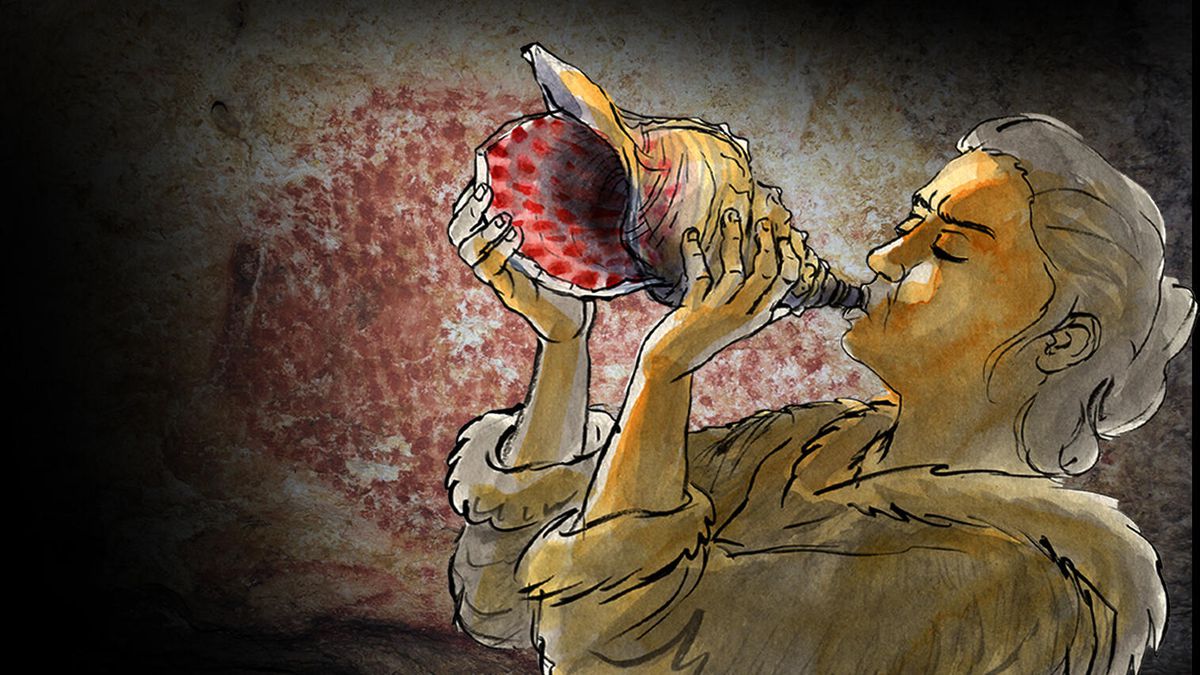
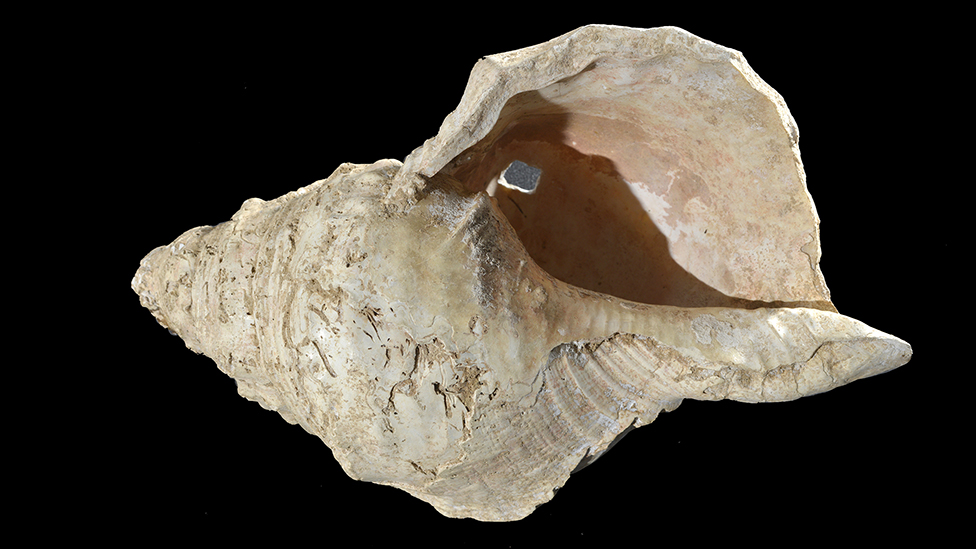
A team of scholars has recently reexamined a conch horn discovered around the Marsoulas Cave in southern France, the famous cave art site, and concluded that the conch was more than just an ornamental artifact used for a drinking vessel or any other trivial purpose in Upper Paleolithic Age, aka Old Stone Age, dating from around 17,000 to 12,000 years ago. It was an age when Cro-Magnons, a Homo Sapiens nomadic tribe in western Europe, emerged as formidable hunter-gatherers of reindeers and horses from a new cold and gray prehistoric horizon in the dawn of the ages of man. They were Magdalenian, named after a rock shelter located in the French Pyrenees where the artifacts and human remains were discovered. They left the prehistoric legacy in the form of the Magdalenian conch.
By using a carbon dating system and other state-of-art scientific apparatuses, the scholars posited that the conch horn was a musical instrument to enjoy the prehistoric Magdalenian symphony in the cave. The cause of reason for the hypothesis is a purposefully cut-off apex of the conch horn as if to adjust for blowing and making sounds. In fact, a modern music player tried playing it at its initial discovery and found out that the tunes were ranged close to the notes of C, C Sharp, and D, making it the oldest wind instrument of its kind to this date. Moreover, the conch patterns were similar to those appearing in the pictures of cave walls, which scholars deduced that they were significant in denoting cultural functions in the communes.
However, although the connections between the cave art and the conch horn are intelligent hypotheses, the idea of the conch as a musical instrument doesn’t quite hold water to me. First of all, the image of a conch horn always conjures up the dystopian vision of the boys in William Golding’s Lord of the Flies. In the story, boys blow the conch whenever they convoke meetings, which usually spring from sinister motives resulting in gloomy consequences. Also, the god of sea Poseidon blows a conch when he heralds his formidable divine presence, shaking the waves of the oceans. The use of the conch was to be more of notification of alarm for political or social events, not of a musical instrument for cultural appreciation. Besides, as aforesaid, a conch is often associated with the sea, unfittingly matched with hunter-gatherers in the mountain or sea-locked regions. Although scholars pointed out that the Magdalenian could travel to the shore and brought a conch as a souvenir, using it as a pastime wind instrument is a bit of stretch, a romantic imagination about the cave people differentiated from ruthless, animalistic, highly advanced kinds of ape.
If the scholars’ educated guess becomes a theory, then the Magdalenian conch horn will be entitled to the first place in the history of musical instruments. But considering the geographical reason and natural tendency related to a conch shell drawn upon historical and literary contexts, the Magdalenian conch shell must have been either a curiously collected souvenir from a trip to the shore or a valuable instrument to call upon meetings in the communes. Also, it could have been a convenient alarm to indicate a sight of animals for a hunt or protection. For melodious variations pleasing even to uncultured ears, the sounds of strings made from the leftovers of hunted animals hung on pieces of wood would be perfect for their hunter-gatherer entertainment.






You must be logged in to post a comment.