Tag: mythology

  • Spirited Away

    poppy-flower-9
    from google

    The funeral offerings by a sepulcher for Eternity to a soul departed,
    Crossing the River of the Styx to the gate of the Underworld,
    Paying a fee to Charon for carrying the soul of the departed,
    For without it, he will refuse to let him board his ferryboat indeed,
    And the soul will wander around the shore for a hundred years stupefied
    By Eternal Slumber in the amidst of the laments sung by those left behind
    Until they are heard no more, seen no more, believed no more, and banished
    Into the ancient all with his shattered dreams shuddered with fear – all in nil ended,
    Are burnt in the funeral pyre as the embers spirit away in great red.

    저장

  • The Birth of Humanities: Mythology by Edith Hamilton

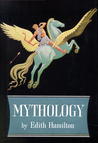
    MythologyMythology by Edith Hamilton

    My rating: 5 of 5 stars

    The essence of myths is threefold: it is a branch of natural science, trying to explain what humans saw around them. It is also a genre of pure classical literature. Besides, mythology is religion, the deepening realization of what human beings needed in their gods and goddesses. That is, mythology is a way to show us the way the human race thought and felt untold ages ago. Through mythology we are connected to the men who had close relationship with nature, who had no real distinction between the real and the unreal, unchecked by reason but with the spirit. In this light, Edith Hamilton’s Mythology breathes life into the Greek, Roman, and even Norse myths, which are the bedrock of the western civilization – the stories of gods, goddesses, and heroes that have imbued the humankind with multifarious creativity from time immemorial to present.

    The aim of this book is to produce knowledge of the myths that had been recorded by ancient writers and poets. In fact, the myths as we know now are the creation of great poets, one of which is the Iliad by Homer. Unlike the Egyptian, the Greeks made their gods in their own image and breathed them with their emotions and feelings. It is uncertain how the genesis of the Greek mythology came into being; however the earliest Greek poets arrived at a new point of view which had never been dreamed of in the world before them. It was at this point that mankind regarded itself as the center of the universe, intent upon producing the beauty of human, which was the very consummation of reality.

    According to Hamilton, what distinguishes Greek mythology from others is it’s foundation on the factual reality. The nonsensical took place in a world, which was essentially rational and matter-of-fact. For example, Hercules always had his abode in the city of Thebes, save when he took of a journey to accomplish his twelve labors; Aphrodite’s birthplace was just offshore from the island of Cynthera; Pegasus’s comfy stable was in Corinth. There was a sense of reality in the mythological world but no place for magic.

    Mythology is not a tome that requires of modern readers perquisites for scholarly knowledge of academic languages, intellectual superiority, or historical knowledge of the ancient time. It is an anthology of entertaining and inspiring tales of gods, goddesses, nymphs, and mortals who fell out of favor with the divine, written in plain English; it’s like listening to a very well-read story-teller. In Mythology, we meet all from the mercurial gods and jealous goddesses on the Mount Olympus even to Norse gods in Valhalla. We are fascinated with tales of Cupid and Psyche, Odyssey’s Golden Fleece, and forlorn Clytie whose love for Apollo pined away. We discover that Paris of Troy used to live with a nymph called Oenone before deserting her for Helen of Sparta. Also, we listen to the legends of constellations of the stars as well as many other references for literature, paintings, and music that have been deeply inspired by Greek mythology.

    Mythology is the most comprehensive and lucidly accounted tales of mythology based upon Hamilton’s extensive collection of the sources from great ancient poets and writers. Of all other books on mythology of the western civilization I have encountered, this book is by far the most excellent in providing readers with both entertainment and knowledge without academically esoteric approach or literary pompousness. Mythology succeeds in  offering education and appreciation of art that has been passed down to our present time for thousands of years. For this reason, Mythology by Edith Hamilton is a touchstone for books on mythology.


    저장

    저장

  • About Bluebells

    static1.squarespace.com
    “Bluebell Haze” courtesy of ArtTudor Store

    The tears of dryads in a forest, naiads in waters

    over the death of their beautiful prince

    morphed into the flowers of dainty bluebells

    vowing to the constancy of doleful remembrance

    of the once fair face of their beloved with kisses.


    P.S. I love the flower words of Bluebells: Loyalty and Constancy. 

  • Fairy fancy

    78d789322c55e7945f25166f57a3d010--night-quotes-fairy-art

    She wishes he would love her,
    When his eyes smile at her.
    But she is like a fallen fairy
    Who can’t be with a mortal any.

    His smiling eyes as always,
    It’s just her infatuation.
    Her wish she fancies secretly,
    It’s just her imagination.

  • Billy Budd by Herman Melville

    Billy Budd, SailorBilly Budd, Sailor by Herman Melville

    My rating: 4 of 5 stars

    The ageless question of human nature pertains to the paradoxical mysteries of human personality shaped by our perception of the world, as reflected in ancient mythologies. Herman Melville saw this intricate irony in this representation of reality in connection with the development of complex human personality in the characters of Billy Budd, John Claggart, and Captain Vere in this nautical novella.

    (1) Psychoanalytic perspective: The characters are emblematic of Freudian elements of personality. They are id represented by Billy (intuitive mind), ego (conscious mind) by Claggart, and superego by captain Vere (ethical consciousness). Billy’s ingenuousness, unalloyed beauty both in physical appearance and inner qualities, and young age symbolize the earliest phase of development of human personality. Hence the name “Budd” seems to betoken this emerging state of metamorphosis into early adulthood. When Dansker warns him of Claggart’s malicious intention to do harm on him, Billy dismisses the advice and insists on Claggart’s friendly treatment of him. In Billy’s representation of reality, Claggart exists as what he sees: a kind officer who does not give him a hard time. In fact, it is this innocent child-man like quality that becomes Billy’s fatal flaw.

    Billy Budd is doomed to be ruthlessly crushed when he is transferred as a foretopman to the naval ship HMS Indomitable. Here he meets his Valkyrie John Claggart, Master-at-Arms equivalent of Chief Police Office or discipline officer, who is always down upon Billy, for a reason indicated none other than his being divinely beautiful and angelically kind. It is the old veteran sailor named Dansker who regards Billy as his little child and informs him of Claggart’s devious motive. All these characters are at the helm of Captain Vere (whose name is derived from the Latin word Verite, meaning truth. Here the vessel is a model of representation of reality surrounded by seas, which is the world it anchors in.

    Claggart’s reason for his hatred of Billy is clandestine. He appears to act according to his ego, the conscious mind which Socrates considers as spirit. It seems that Claggart’s loathing of Billy becomes inflamed when Billy accidentally spills pea soup on his feet because he believes it to be Billy’s intentional effrontery. Claggart seems to act by his emotions based on the purely abstract reasoning of the mind. Therefore, Claggart’s model of reality is a result of his own way of interpreting the situation with his faulty assessment of the character that defiles his mind with dangerous antipathy toward the youth.

    Captain Vere, a figure of authority that convenes both Billy and Claggart on the subject of alleged mutiny as instigated by Billy, represents the ethical mind, the superego, the reason. He acts as an executor of justice to gird up the loins of discipline among his crew amid the revolutionary wars on the sea. Vere feels that Billy is innocent; however, when Billy hits Claggart to death at his false accusation of him as a mutiny leader, Vere is convinced of Billy’s alleged guilt and orders his execution by hanging. In a way, Vere represents an amoral authority figure dealing with individual citizens or subjects according to law and order minus spirits and appetites.

    (2) Mythological perspective: It is also interesting to look at this story of Billy Budd as folklore tinged with a mythological undertone of heroism akin to Norse mythology. The figure of Billy Budd reminds the reader of an ideal hero dying young; the hero can prove his nobility of character by death because often heroism depends on lost causes. The young welkin-eyed Billy Budd’s death gives rise to the high concept of this Nordic hero because the real power of good is shown by continuing to resist evil while facing certain death as the legacy of Billy Budd is immortalized in the seaman’s ballad. In my opinion, this story of the welkin-eyed young hero reflects Melville’s model of a heroic individual whom he once envisioned in his sailing days. Or perhaps, Billy Bud could be what Melville wished his two sons lost in unfortunate occasions (Malcolm, the eldest, who died of a self-inflicted gunshot wound in 1867 and another Stanwix, who died in 1886 in San Francisco) to be like. It would have been Melville’s mournful tribute to the deaths of his sons as enshrined in the mythological figure of Billy Budd.

    The book is written in an intricate prose style with the literary vocabulary used in the 19th century and historical allusions to the revolutionary wars and the great Admiral Nelson’s naval wars to give to the story a more realistic setting. Melville, who was a seaman himself in his youth and later settled as a customs inspector in New York City, wrote this novella in 1891, the time of his death. It was actually his postmortem work, published in 1924, 33 years after this death. And it was this work that kindled widespread interest in Melville’s works.

    Reading this tale of an angelic sailor will give the reader a sense of reading a Norse mythological tale because the protagonist of the story is evocative of pathos flowing from the complex human nature that is sublimated into heroic triumph over the face of the harsh reality of the world.